

RDN Race Heats Up: Who Will Emerge as the Dark Horse?
Hypertension is one of the most prevalent underlying conditions in humans and the single largest risk factor for mortality, representing a major global health challenge. More than 1 billion people worldwide suffer from hypertension, including 245 million patients in China. Pharmacological therapy remains the primary treatment modality; however, the overall control rate is suboptimal, standing at only 23%. As a non-pharmacological intervention for hypertension, renal denervation (RDN) has garnered significant attention since its introduction. With the conduct of various clinical trials, RDN research has continued to deepen, while ablation devices and techniques have undergone continuous innovation and improvement. The antihypertensive efficacy of RDN has been validated.
At the recently concluded Great Wall International Congress of Cardiology, renal denervation (RDN) was undoubtedly a major highlight. The congress featured in-depth and extensive discussions on trial design, product iteration, criteria for successful ablation, patient populations, and disciplinary development. The release of the SPYRAL HTN-ON MED Expansion results in the early hours of yesterday morning effectively fired the starting gun for the final leg of the RDN race.
It is important to note that the cardiovascular sector, currently the most prominent field, features not only multinational corporations taking the lead but also domestic enterprises advancing in tandem. Who will emerge as the unexpected dark horse? With results from multiple clinical trials yet to be released, let us examine the project registration progress of four companies that have received FDA Breakthrough Device Designation and represent mainstream technologies with unique innovations:
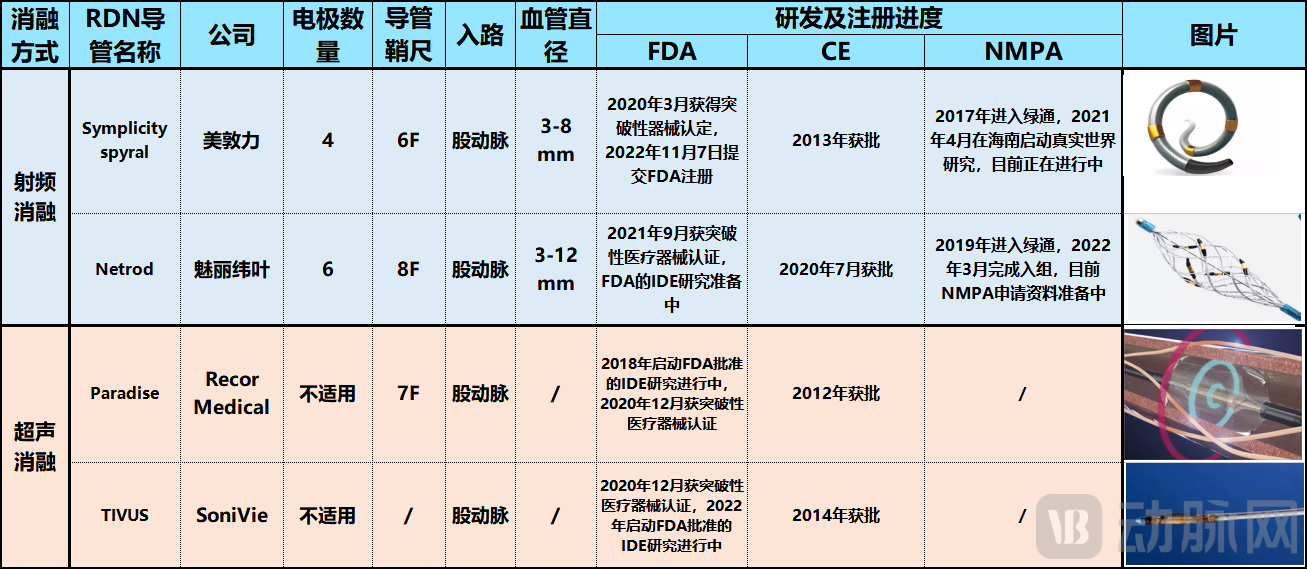

As shown in the figure, between 2020 and 2021, the FDA successively designated the renal denervation (RDN) products of four companies—Medtronic, ReCor Medical, Sonivies, and Shanghai Meili Weiyue—as “Breakthrough Devices.” Among them, Shanghai Meili Weiyue, hailed as a “pride of domestic innovation,” is the only Chinese company to have received the U.S. FDA Breakthrough Device designation for its locally developed product. In 2021, both the European Society of Hypertension and the Society for Cardiovascular Angiography and Interventions issued expert consensus statements, affirming the efficacy of RDN and defining the appropriate patient populations.
In the early hours of yesterday, Professor David Kandzari, the principal investigator of the SPYRAL HTN-ON MED trial, presented the 6-month follow-up data from the full-cohort study at the Late-Breaking Clinical Science session of the American Heart Association (AHA) Scientific Sessions.Medtronic has successfully submitted the Symplicity Spyral PMA (Premarket Application) for FDA approval.
The SPYRAL HTN-ON MED trial is a global, multicenter, randomized, controlled study designed to evaluate the efficacy and safety of the Symplicity Spyral RDN System for the treatment of uncontrolled hypertension. This clinical study enrolled a total of 337 patients with uncontrolled hypertension, who were permitted to take up to three prescribed antihypertensive medications. Participants were randomly assigned in a 2:1 ratio to either the RDN group (n=205) or the sham-controlled group (n=132), with a 6-month follow-up period.Results from the SPYRAL HTN-ON MED Full Cohort Study Show:
● Patients taking antihypertensive medications and treated with the Symplicity Spyral renal denervation radiofrequency ablation system exhibited a significant reduction of 9.9 mmHg in office systolic blood pressure (OSBP) (P=0.001) and a significant reduction of 6.7 mmHg in 24-hour ambulatory nighttime systolic blood pressure (ABPM) (P=0.01).
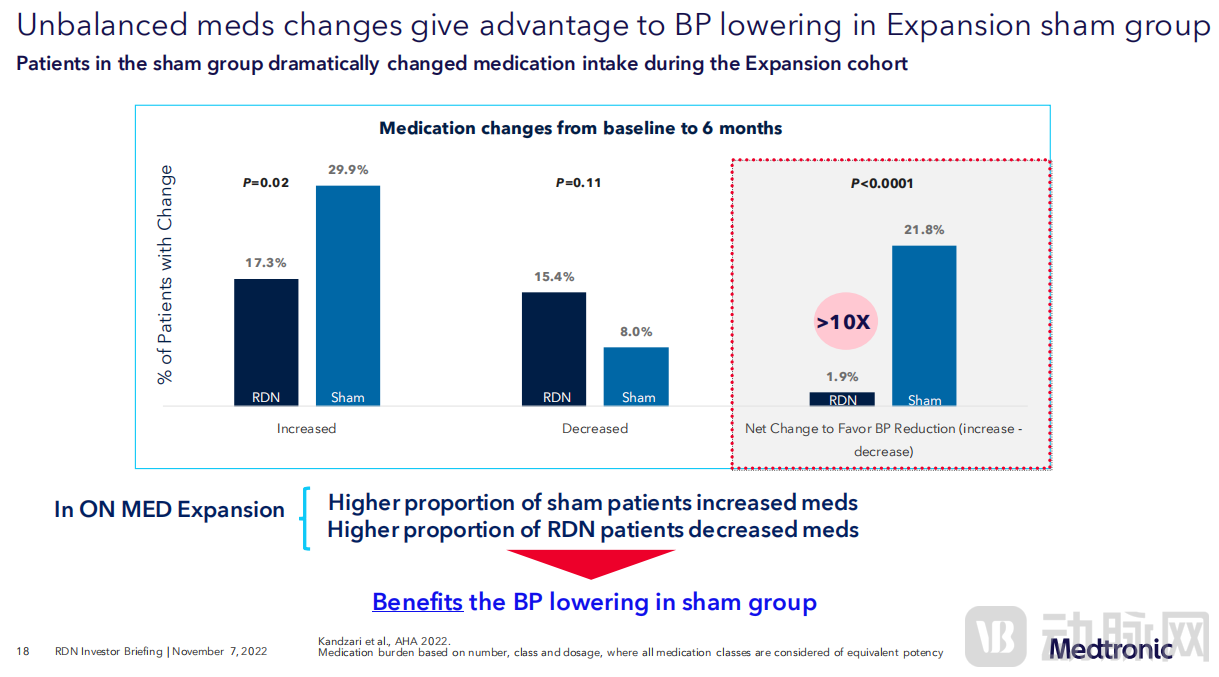
● Patients in the sham-operation group had a higher medication burden due to poor drug adherence, and were affected by the COVID-19 pandemic during follow-up; consequently, there was no significant difference in the reduction of 24-hour ambulatory blood pressure at 6 months between the RDN group and the sham-operation group.
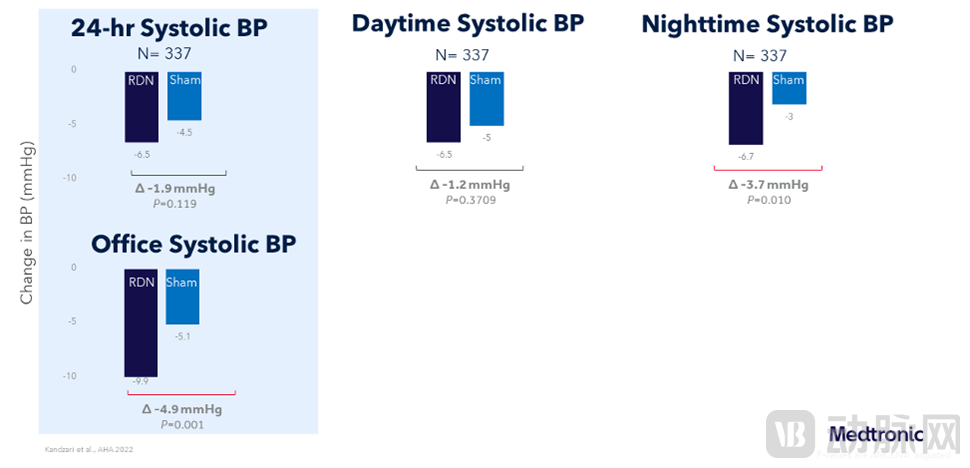
Figure 1: Six-Month Follow-Up Results from the Full Cohort of the SPYRAL HTN-ON MED Study
● The study met its primary safety endpoint, with a major adverse event rate of only 0.4%
● The study employed win ratio analysis, evaluating a composite endpoint that considered the blood pressure-lowering effect of 24-hour ambulatory blood pressure monitoring and differences in medication burden after renal denervation (RDN). The results showed that the win ratio in the RDN group was 1.5 times that of the sham procedure group.
● At 6 months, the medication burden in the RDN group was significantly lower than that in the sham procedure group (2.9 vs. 3.5, p = 0.04)
● The time in target range (TTR) for blood pressure control was higher in the RDN group than in the sham surgery group (16.0% vs. 8.5%, p<0.01)
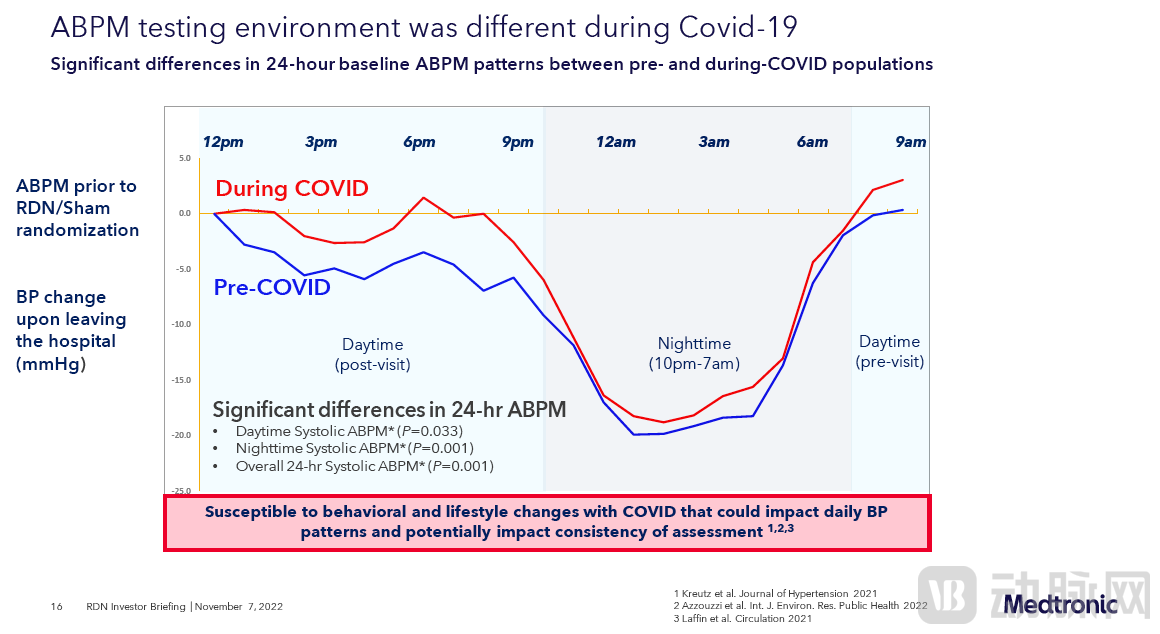
Professor David Kandzari, the principal investigator of the SPYRAL HTN-ON MED trial, stated, “The ON MED study confirmed that renal denervation (RDN) significantly reduces office blood pressure, which is the most commonly used assessment method in clinical practice. Although RDN reduced 24-hour ambulatory blood pressure, the antihypertensive effect showed no significant difference compared with the sham procedure group. More than 80% of patients in the study underwent follow-up during the COVID-19 pandemic. Compared with patients enrolled before the pandemic, those enrolled during the pandemic had significantly different baseline 24-hour ambulatory blood pressure levels, likely due to changes in patient behavior and lifestyle during this period. More importantly, patients in the sham procedure group increased their medication intake compared with those in the RDN group. These factors may have attenuated the observed reduction in 24-hour ambulatory blood pressure in the RDN group.”
Following the release of the study results at the AHA Annual Scientific Sessions, how did cardiovascular experts in China evaluate these findings? We interviewed Professor Sun Ningling, Chief Expert in Hypertension at Peking University People’s Hospital, President of the Hypertension Branch of the China Medical Promotion Association, and Chairman of the Hypertension Branch of the Beijing Medical Doctor Association; as well as Professor Zhou Yujie, Vice President of Beijing Anzhen Hospital affiliated with Capital Medical University, Vice President of the Cardiovascular Physicians Branch of the Chinese Medical Doctor Association, and Academic Leader of the National Clinical Research Center for Cardiovascular Diseases.

Professor Sun Ningling
Professor Sun Ningling believes that the results of the Spyral ON-MED trial are overall effective. Although no significant difference in ambulatory systolic blood pressure was observed between the two groups, she remains optimistic about the clinical study findings and provides the following commentary:
1. The failure of the Spyral HTN-ON MED pivotal clinical trial to meet its primary efficacy endpoint may be attributed to factors related to trial execution: although the trial designs for Spyral HTN-ON MED and OFF MED incorporated substantial improvements over Symplicity HTN-3, operational challenges during clinical implementation—particularly the impact of the COVID-19 pandemic and a marked increase in medication use among the sham-control group—prevented the primary efficacy endpoint from demonstrating superiority.
In fact, further analysis of this study suggests that the reason lies in:
1) During the extended follow-up period, a greater proportion of patients in the renal denervation (RDN) group reduced their medication intake, whereas those in the control group predominantly maintained or increased their medication usage. The medication burden in the RDN group was one-tenth of that in the sham-operated group, thereby amplifying the apparent blood pressure-lowering effect in the sham-operated group.
2) There were certain differences in the testing environment for ambulatory blood pressure monitoring (ABPM) before and after the COVID-19 pandemic. Based on experimental data, they inferred that COVID-19 had, to some extent, altered people’s behaviors and lifestyles, thereby potentially affecting the consistency of the experimental results.
2. In various clinical trials previously conducted by Medtronic, renal denervation (RDN) demonstrated consistent absolute reductions in office systolic blood pressure, with sustained effects across all stages of the clinical trials. Therefore, RDN can significantly and clinically meaningfully reduce office blood pressure.

Furthermore, long-term follow-up results from multiple Medtronic clinical trials have also demonstrated the durability and consistency of their products in reducing absolute office systolic blood pressure.
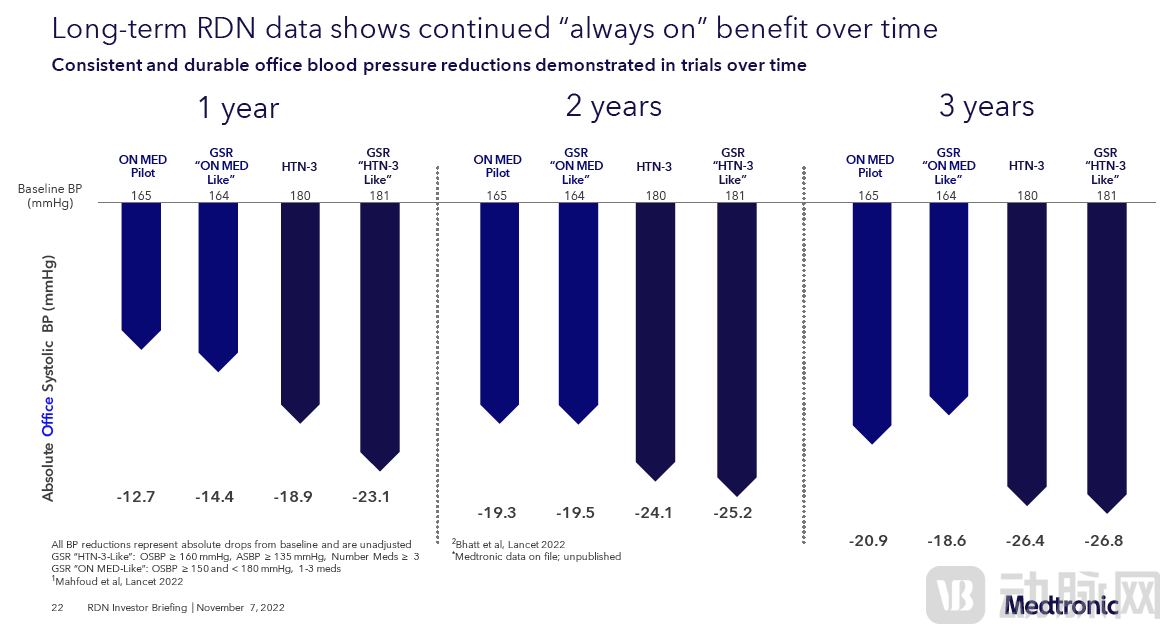
3. It is worth noting that in the HTN-ON MED extension study, although there was no significant difference in 24-hour ambulatory systolic blood pressure between the two groups, the RDN group had significantly lower nighttime ambulatory blood pressure than the control group. Studies have shown that nighttime blood pressure is more closely associated with the risk of cardiovascular disease (CVD) mortality; therefore, controlling nighttime blood pressure can reduce the risk of cerebrovascular and cardiovascular diseases.[1]。
4. Evidence of Product Safety: The primary safety endpoint and the overall augmented safety endpoint were both met in the HTN-ON MED and HTN-OFFMED studies.
In summary, the results of the SPYRAL HTN-ON MED Expansion clinical trial demonstrated the sustained and consistent efficacy of renal denervation (RDN) in lowering blood pressure and reducing medication burden, with clinical significance, and confirmed the safety of the RDN procedure.

Professor Zhou Yujie
Professor Zhou Yujie noted that the latest results from the HTN-ON MED Expansion trial showed that at 6 months post-procedure, the renal denervation (RDN) group experienced a 6.7 mmHg reduction in nighttime ambulatory systolic blood pressure, compared with 3.0 mmHg in the control group (between-group treatment difference: −3.7 mmHg; p=0.01). Additionally, office systolic blood pressure decreased by 9.9 mmHg in the RDN group versus 4.9 mmHg in the control group (between-group treatment difference: −4.9 mmHg; p=0.001). Compared with the SPYRAL HTN-ON MED pilot study, this trial featured an enlarged sample size and demonstrated overall efficacy. Robust evidence of effectiveness was derived from the entire cohort, supporting the expectation that submission to the U.S. Food and Drug Administration (FDA) will yield the anticipated regulatory approval outcomes.
Furthermore, there is still room for further optimization and improvement in ablation devices. In fact, Medtronic already has plans to update and improve its offerings, including catheter design, upgrades to the ablation generator, and new ablation energy modalities, all aimed at enhancing therapeutic efficacy.
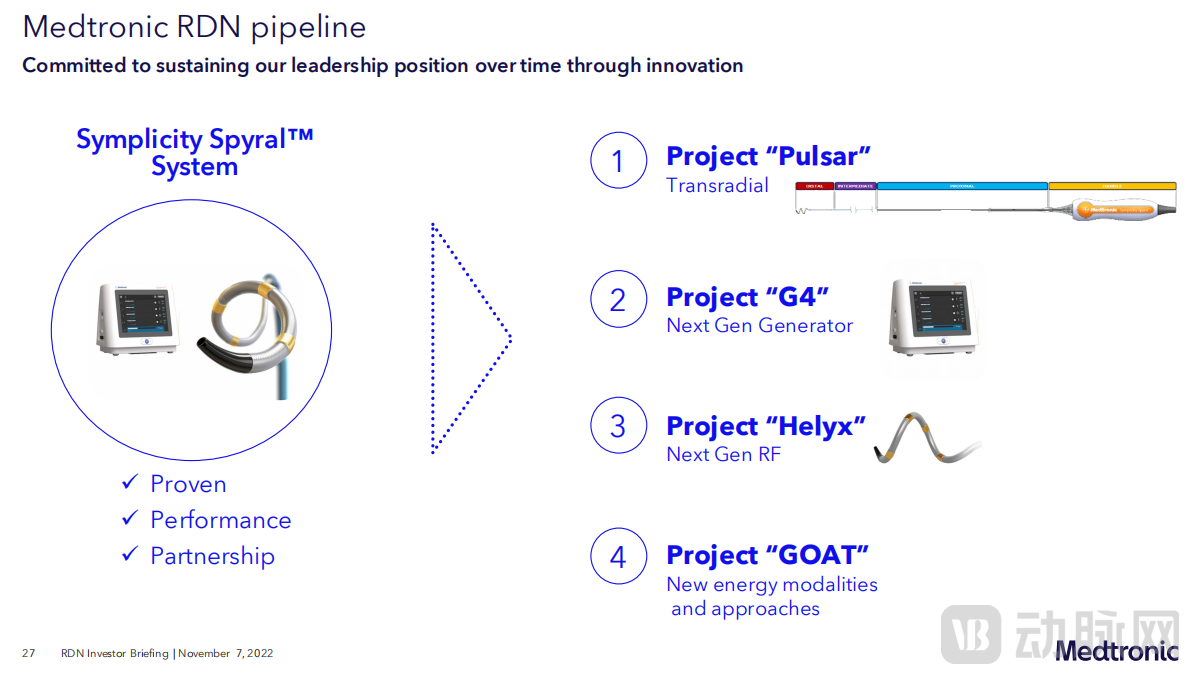
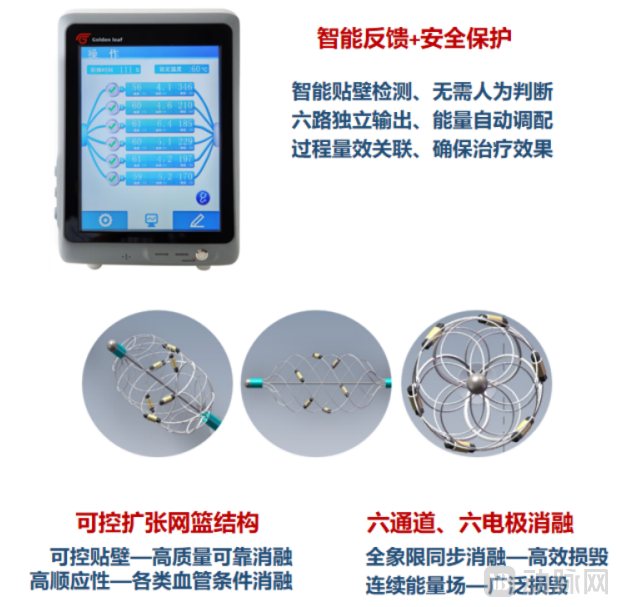
Professor Zhou introduced that the technological and product development of renal denervation (RDN) should be grounded in the anatomical structure of the renal arteries to facilitate technical improvements and product iterations. Currently, the domestically developed Netrod six-electrode basket-type radiofrequency ablation catheter is undergoing clinical trials. In terms of product design, this catheter adapts to various vascular morphologies and diameters, ensures excellent wall apposition, and enables synchronous ablation with six electrodes to create a continuous energy field, thereby achieving higher ablation efficiency and efficacy. Meanwhile, the entire system integrates monitoring of temperature, power, and impedance, along with intelligent wall-apposition detection and ablation effect assessment, significantly reducing operational difficulty for physicians and saving procedural time. The clinical study is currently preparing documentation for submission to the National Medical Products Administration (NMPA). As the lead research institution, Beijing Anzhen Hospital looks forward to the release of the formal study data.
Medtronic has officially submitted a Premarket Approval (PMA) application to the U.S. Food and Drug Administration (FDA). How will the FDA evaluate it? We interviewed Dr. Zhang Mingdong, former Medical Officer at the FDA’s Center for Devices and Radiological Health. Dr. Zhang believes that, first, the FDA adheres to the principle that patient benefits should outweigh risks when approving products, emphasizing the “totality of evidence” regarding overall effectiveness and safety, rather than relying on the results of any single clinical trial. Second, the statistical significance and the actual clinical significance of product clinical trial data are considered separately, with greater weight given to clinical significance.
Medtronic has already initiated the development of an expert consensus statement with the European Society of Hypertension (ESH), and renal denervation (RDN) is expected to be included as a recommended procedure in the ESH Hypertension Management Guidelines in 2024. Meanwhile, Medtronic is actively advancing its commercial strategy. At the same time, leading domestic companies are catching up rapidly. After more than a decade of R&D, RDN technology is poised to enter a phase of rapid development, generating further clinical evidence and benefiting a broader patient population.
Among the four companies in the industry that have received FDA Breakthrough Device Designation, Medtronic (Meili Weiye), a domestic enterprise, has abandoned the design concept of directly translating cardiac electrophysiological ablation techniques to renal denervation (RDN). Instead, it has developed an innovative six-electrode basket-style ablation catheter based entirely on the anatomical and physiological characteristics of the renal arteries and the surrounding sympathetic nerve distribution. It is reported that Medtronic (Meili Weiye) completed clinical trial enrollment in the first half of this year, and its study data will soon be submitted for approval by the National Medical Products Administration (NMPA).
RDN Sector Poised for Takeoff: Who Will Be the Dark Horse? Obtaining a registration certificate is merely an entry ticket; who can deliver the greatest benefit to patients? How should market access be planned? How can commercial strategies be optimally structured? RDN companies will soon reveal their answers. Let us wait and see who emerges as the winner.
[1]Yang W-Y, Melgarejo JD, Thijs L, et al. Association of offifice and ambulatory blood pressure with mortality and cardiovascular outcomes. JAMA 2019;322(5):409-420.