

Navigating the Downturn and Intensifying Competition: Finding Certainty Across Cycles | Huagai Capital Healthcare Early-Stage Fund Investor Conference
Has the healthcare industry entered a "winter" period? This has almost become the most discussed topic within the healthcare community since the outbreak of the pandemic.According to the latest data from the National Bureau of Statistics and the Ministry of Finance, China's gross domestic product (GDP) grew by 2.5% year-on-year in the first half of the year, while health expenditures increased by 7.7% year-on-year.
It is certain that, despite the slowdown in China's economic growth,The healthcare sector will continue to maintain robust growth. As long as the industry continues to grow, there will undoubtedly be abundant structural opportunities within it.
In fact, since the nascent stage of the healthcare industry in 2008, national industrial policies have consistently demonstrated long-term support for its development. Whether it was the implementation of regulatory policies in 2015 or the liberalization of listing policies in 2018, these measures have driven a significant influx of industrial resources and rapid growth across the sector, further accelerating the maturation of China’s healthcare innovation ecosystem. After years of development, the healthcare sector now possesses the capacity to incubate high-quality projects, while emerging innovative initiatives have already achieved the potential for commercialization.
In this light,The long-term outlook for the healthcare industry is inevitably optimistic.
Yet, in an era brimming with change,Focusing solely on long-term optimism may lead to a loss of prudence. Conversely, excessive caution may result in missed opportunities for long-term investment and collaboration in high-quality projects.Therefore,How to strike a balance between long-term optimistic outlooks and concrete practical execution is a question that both practitioners and investors must currently address.
At the Huagai Medical Early-Stage Fund Investors’ Conference, attendees included Tian Zhigang, Academician of the Chinese Academy of Engineering, Professor at the School of Life Sciences, University of Science and Technology of China, and Director of the Institute of Immunology; Xu Zengjun, Former Chief Scientist at the Center for Drug Evaluation (CDE) and Founder of Aistakon Pharmaceuticals; Zou Peng, Chief Healthcare Industry Analyst at China International Capital Corporation (CICC); Xu Xiaolin, Chairman and Founding Partner of Huagai Capital; Zhang Yi, Managing Partner of Huagai Medical Early-Stage Fund; and Deng Liang, Partner of Huagai Medical Early-Stage Fund.Drawing on in-depth industry insights, we shared a wealth of practical expertise on the current development trends in the healthcare sector from multiple perspectives., and attempt to answer the above questions to clarify the path ahead for investors and practitioners.
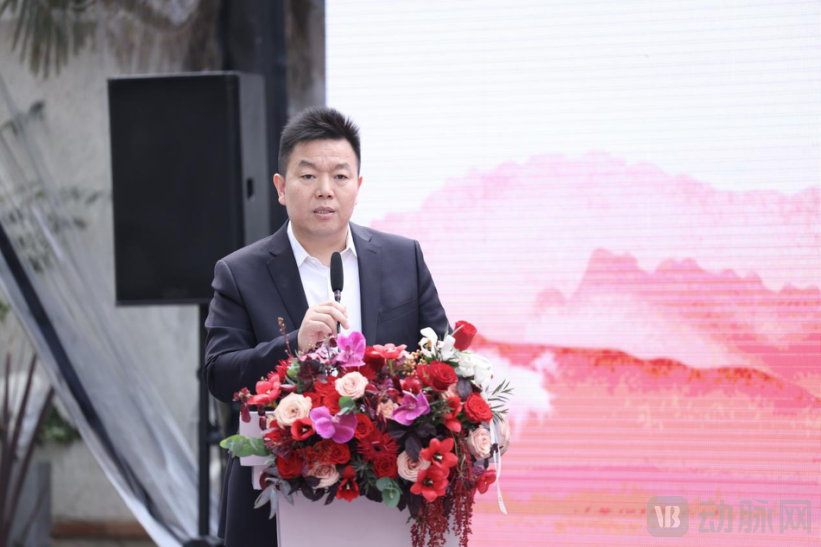
Xu Xiaolin, Chairman and Founding Partner of Huagai Capital, discussed the significant development trends in the healthcare industry in recent years at the conference. He noted that the sector has entered a “3.0 era,” characterized by more pronounced involution and higher demands on companies’ core competencies. The market is increasingly raising its bar for projects, requiring greater internationalization of teams and globally leading product capabilities.
Xu Xiaolin stated“Whether in the early stage, growth stage, or mid-to-late stage, the trend toward market consolidation has become increasingly pronounced. As investors, we must first select companies with the potential to become leaders in their respective niche sectors. Secondly, as the industry evolves toward greater refinement, investors need to delve deeper into specific niches to achieve precision investing. The establishment of Huagai Capital’s early-stage healthcare fund team is a strategic decision that aligns with industry development trends and prepares for the advent of the 3.0 era. We will continue to identify companies capable of driving international innovation and possessing the potential to become niche market leaders, accompany them throughout their growth journey, and thereby propel the development of the healthcare industry.”
VCBeat has compiled and distilled the key insights from Huagai Capital’s Early-Stage Fund Investor Conference. These perspectives hold significant value for both investors and practitioners in the healthcare sector, potentially serving as a solid foundation for their ongoing progress and decision-making.
Whether it is the reform of medical insurance payment methods or the implementation of measures such as the establishment of medical databases, these efforts are all contributing to the construction of a more benign industry ecosystem. In the future, with improvements in regulatory efficiency, payment efficiency, and financing efficiency, the healthcare industry will develop a more robust ecosystem. As the market continues to expand and payment efficiency gradually increases, the industry will inevitably foster more competitive enterprises.
——Zou Peng, Chief Healthcare Industry Analyst at CICC
The healthcare industry has transitioned from the 1.0 era, characterized by guiding companies to capital markets, and moved past the 2.0 era, marked by a wave of scientists returning to China to start businesses. It is now entering the 3.0 era, where involutionary tendencies are becoming increasingly pronounced. Investors currently place higher demands on projects’ comprehensive capabilities, the international leadership of their products, and the global composition of their teams. Consequently, polarization within the industry and the trend toward involution have become evident. The peak phase of 2021, when “everything rose,” is no longer attainable.
Amid this trend, many companies will inevitably fail, and the market will revert to the normal 10/90 or 20/80 rule. While this may appear to signal the arrival of a healthcare winter, its essence remains a natural market turnover and healthy selection process.High-quality products can still break through the intense competition, while the era of companies achieving easy success with low-tech offerings is over. The healthcare industry has clearly entered a challenging yet necessary new phase, and healthcare investment has shifted toward an era focused on deep, product-centric strategies.
From a micro perspective,Precision manufacturing is one of the best-performing sub-sectors in the secondary market.. From a macro perspective, in the long-term competition between China and the United States in the future,Industries capable of achieving import substitution domestically while simultaneously capturing global market share represent the development directions encouraged by the state.
As a critical component of high-end manufacturing, the pharmaceutical industry is not only a key area encouraged by the state for future development but also a fundamental pillar of the nation’s future strategic landscape.The European market access process is complex. Only China and the United States boast the world’s largest and second-largest markets, respectively, and possess sufficient venture capital and funding to support the development of the pharmaceutical industry. From this perspective,The industry will inevitably shift toward competition based on product quality and hard-core technologies. Therefore, in pharmaceutical investment, caution is warranted against both value traps and business model innovations, while the value of small and medium-sized enterprises deserves greater attention.
Although the current market still requires time to mature, once Chinese enterprises achieve the capability for comprehensive global expansion and truly compete with U.S. counterparts in the global marketplace, the market ceiling will rise from billions to tens of billions. For both investment institutions and industry practitioners, the immediate priority remains to solidly strengthen their position in the domestic market.
Currently,Regardless of whether companies are in the early, growth, or mid-to-late stages, the value of industry leaders has become increasingly evident.Therefore, for investors, the primary focus should be on companies with the potential to become leaders in their respective niche sectors. Secondly, investment strategies must be refined, requiring deep engagement within each subsector and profound insights into corporate product pipeline development, core technological barriers, and future industry trends. Finally, as the market approaches saturation, the key to breaking through lies in addressing significant unmet clinical needs, strategically positioning in specific innovative fields, investing in the most innovative and high-potential early-stage companies, and incubating or establishing frontier innovation enterprises.
Subsequently, investors and industry participants held a dedicated discussion on how biotech startups can break through the intense competition and secure financing under the new landscape.
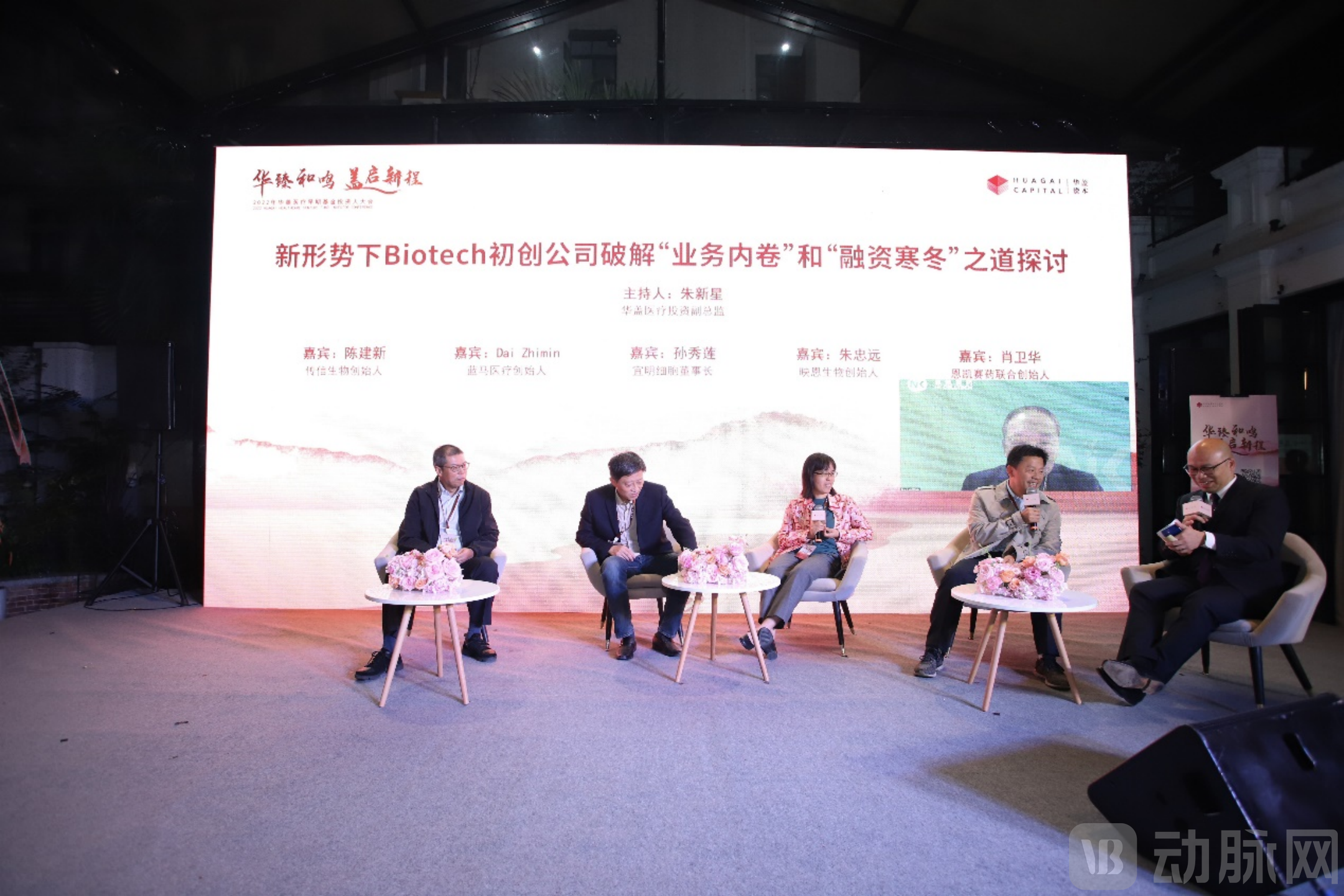
Zhu Zhongyuan, founder of Duality Biologics, believes that: “The so-called ‘involution’ is essentially a form of healthy competition. However, I have personally felt the chill of the economic downturn, particularly as financing has become increasingly difficult in recent years. Fortunately, our company is progressing smoothly. Our platform has generated robust preclinical data, with an objective response rate (ORR) of 80% when compared against the best antibody-drug conjugates (ADCs) globally. Although the winter has arrived, companies that possess reliable clinical data or strong products can still survive.”
Sun Xiulian, founder of Yiming Cell, believes“Whether it is involution or competition, both are beneficial to the development of companies and their respective sectors. Although enterprises are engaged in competition, this process drives them to further strengthen management and reduce costs. The advent of the era of domestic substitution will also further propel enterprises to iterate their technologies to enhance quality. In the face of an economic winter, the best path for enterprises is to fortify their internal capabilities. I believe there is no need for anxiety; instead, one should learn to find certainty amidst uncertainty.”
Steven Dai, founder of Lanma Medical, believes that: “For innovative drugs, intense competition is a positive development. As more companies compete to find optimal solutions, it will inevitably benefit the industry’s overall growth. While everyone can feel the current winter chill, I believe we should approach it rationally. This, too, is a good thing: stronger companies survive, while those lacking capability are eliminated, leading to healthier industry development.”
Chen Jianxin, founder of Chuanxin Biopharma, believes“In the mRNA vaccine niche where we operate, it seems as if numerous new mRNA vaccine companies have emerged overnight. Intense competition, or ‘involution,’ appears to have indeed set in. We must devote more time to contemplating how to achieve differentiation. However, as industry practitioners, we should adopt a more proactive and positive perspective, learning to focus on our products and establish differentiation within the competitive landscape. Regarding the so-called ‘capital winter,’ both investors and industry participants emphasize aligning with long-term trends and becoming ‘friends of time.’ While there may be short-term uncertainties, the overarching trend remains intact. For enterprises, the priority is to continue striving toward their goals, regardless of whether they ultimately emerge as dark horses.”
Xiao Weihua, Co-founder of Enkai Cell, believes“Involution has become the norm, but fortunately, the involution in China is a form of benign competition, with the core focus being on a company’s internal capabilities. Therefore, whether it is involution or an economic winter, their essence is the result of cyclical fluctuations; what companies need to do most is to forge their own core technological barriers.”
Investment institutions can only achieve explosive performance in the secondary market through continuous cultivation and sowing in the primary market. If we view China’s biopharmaceutical sector as following a wave-like upward trend, then precisely at the troughs of these waves is when we must sow our seeds. As the market shows clear signs of improvement, investors in the primary market will reap their due rewards.
— Zhang Yi, Managing Partner of Huagai Capital’s Early-Stage Fund
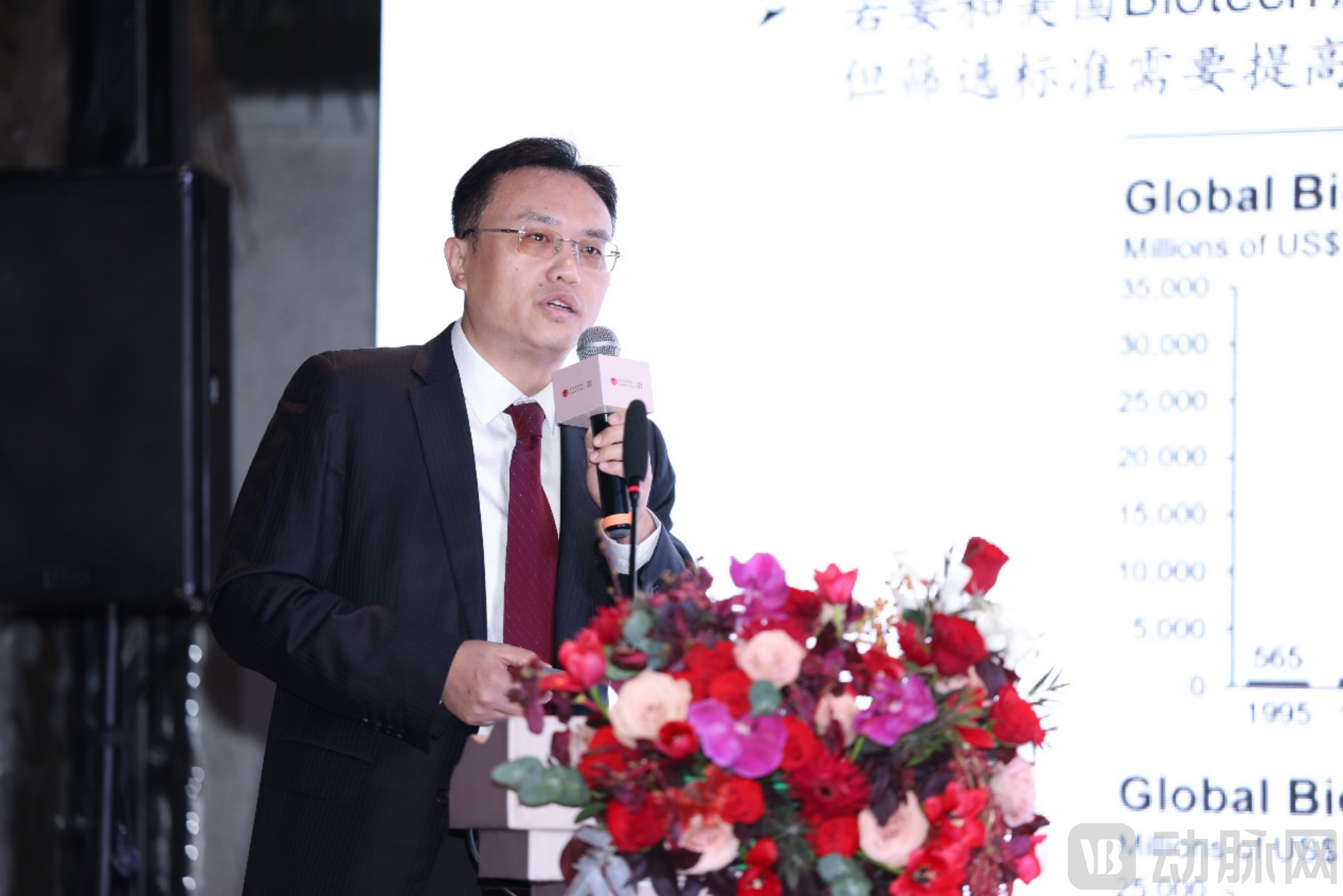
Amid the overarching trend of accelerating economic downturn, investors in the primary market have become increasingly cautious. Yet it is precisely when the industry hits a trough that investment institutions need to persistently cultivate and sow seeds in the primary market, thereby fueling growth in the secondary market.
However, sowing is by no means blind.Investors should not focus solely on long-term optimistic growth prospects while overlooking the very specific and realistic limitations and constraints that may arise in the short term.Therefore, investment valuations and standards must be raised, and valuations must even be controlled. This requires a balance between corporate value and growth trends. AndIt has become a consensus among investment institutions to maintain a long-term perspective, invest prudently, and mitigate risks by controlling valuations.
Throughout the process, the greatest challenge lies in striking a balance between macro-level optimism and short-term rationality, and in identifying certainty amidst uncertainty. Deeply anchoring one’s perspective within the industry and grounding it in industrial needs is the methodology shared by Huagai Medical’s early-stage fund.
Huagai Medical’s early-stage fund focuses on aligning with the overall development trends of the industry, avoiding speculative capital frenzies, and making forward-looking technological assessments. Guided by industry demands, it seeks out innovative technologies or early-stage companies with the potential to create structural opportunities. By controlling valuations and evaluating whether projects can generate industrial value, the fund identifies certainty amidst uncertainties, thereby further enhancing the reliability of its investments.
In the post-pandemic era, there has emerged a strong demand for domestic substitution in the life sciences sector. To achieve domestic substitution, drive innovative development, and maintain competitive advantages, enterprises must meet numerous challenges.During the roundtable discussion at the early-stage fund investors’ conference of Huagai Medical, participating guests shared their insights and perspectives on how to navigate the uncertainties of the post-pandemic era.
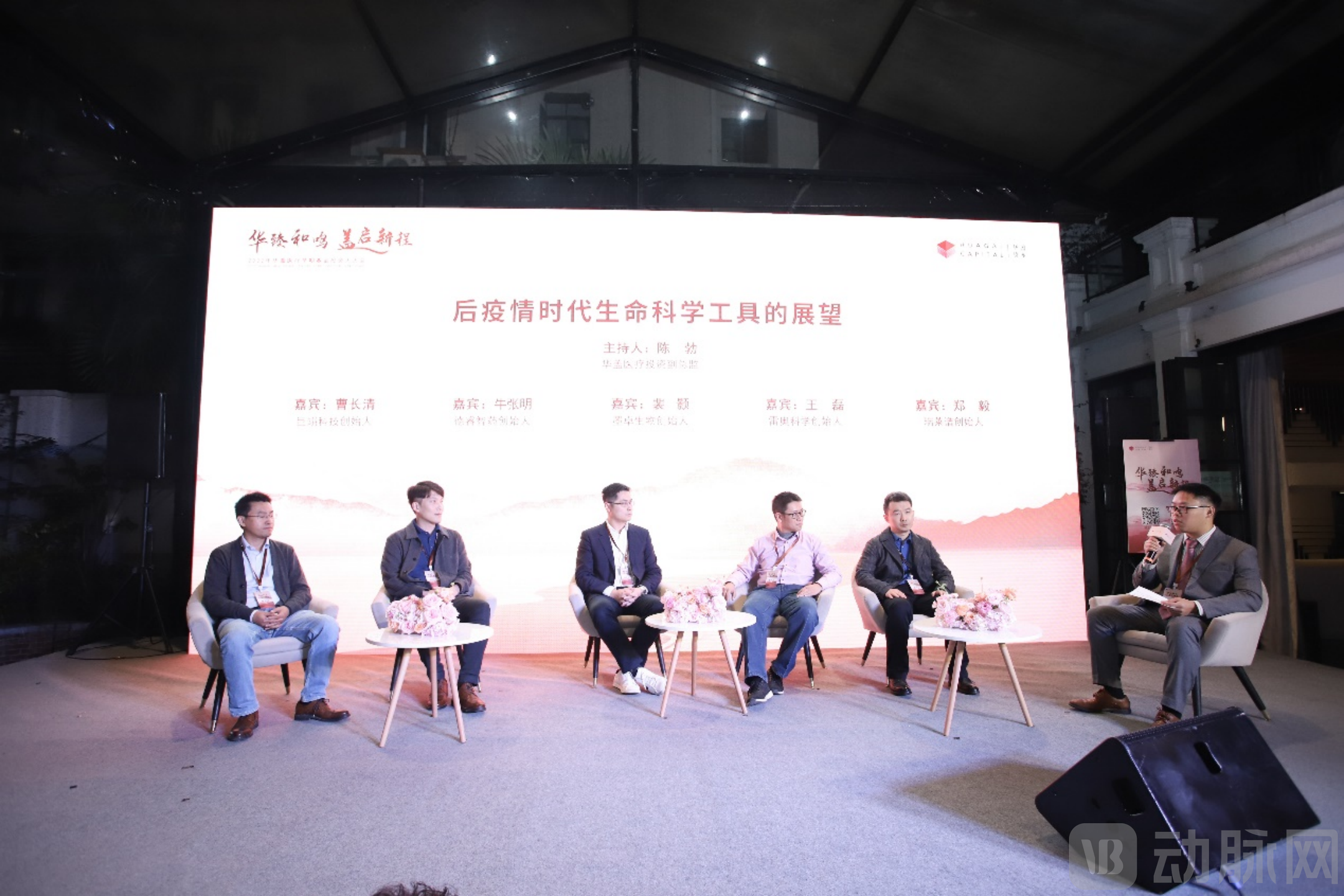
Zheng Yi, founder of Relai Medical, shared insights based on the company’s development journey:“Ruilapu did not enter the traditional general-purpose instrument sector at its inception. Instead, it first secured a leading industry position in the clinical healthcare track before evolving into a general scientific instrumentation company. I believe that the strategy to uphold in the post-pandemic era is to first become a leader in a niche segment, and then strive to transform into a platform-based enterprise. To compete with global companies in the future, enterprises must continuously build their intellectual property portfolios and establish differentiated product positioning during their development. Once a company has developed distinctive features and differentiation, leveraging China’s local R&D and manufacturing cost advantages, it should then expand overseas for global deployment.”
Wang Lei, founder of Leo Science, believes: “Innovation targeting industry pain points is the core strategy for domestically produced life science tools to break through in the post-pandemic era. Innovation stems from automation; therefore, companies must continuously enhance their levels of automation and intelligence to accelerate drug R&D efficiency and deliver reliable, stable results to biotechnology firms as quickly as possible. Furthermore, talent is another crucial source of innovation. Enterprises need to leverage China’s local manufacturing advantages, combined with innovative ideas, to truly create automated products and systematic solutions that address clinical pain points, thereby maintaining a competitive edge in the post-pandemic era.”
Pei Hao, founder of MoZhuo Bio, believes:“Currently, this field does not require business model innovation; instead, it is a direct competition based on data, technology, and core competencies. High-quality data naturally leads to high-quality products. Therefore, in the face of challenges in the post-pandemic era, technological development should be the central focus. Secondly, companies should leverage local advantages to reduce R&D costs by incorporating domestically produced products that deliver equally robust experimental results into the product development process. Finally, rather than merely catching up, the goal should be to surpass competitors.”
Cao Changqing, founder of Juyi Technology, believes:“The window of opportunity for domestic substitution has arrived, and enterprises must courageously embrace the challenges that may arise during this process. Although multinational corporations possess significant advantages in product R&D, many of their devices are relatively traditional, fail to adequately address critical pain points in Chinese clinical practice, and cannot rapidly respond to end-user demands; furthermore, they do not hold an absolute competitive advantage in terms of product cost. This precisely constitutes the advantage and opportunity for Chinese life science instrument companies. We are closer to clinical practice, equipped with newer technologies, enjoy cost advantages, and can rapidly respond to end-user needs. Although achieving domestic substitution, fostering innovative development, and maintaining a competitive edge entail numerous challenges, I remain confident in the domestic market.”
Currently, the biopharmaceutical sector, the medical device sector, and platform-based service companies within these two sectors are absolute high-potential stocks.
The biopharmaceutical sector demands sustained attention; halting investment may result in forfeiting the excess returns that should be captured during the next upswing in the capital markets.Huagai Medical’s early-stage fund will further raise its investment standards over the next 9–12 months, focusing on the top three companies in niche segments or the sole domestic player. Meanwhile, it will continue to avoid red-ocean markets and prioritize platform-based enterprises in emerging technology sectors. Finally, by collaborating with industrial capital for joint screening and co-investment, the fund aims to identify growth opportunities for projects that successfully integrate technology with industry.
Medical devices constitute a growth-stage sector driven by policy and market forces, presenting substantial opportunities for import substitution.Addressing critical technological bottlenecks and achieving genuine import substitution constitute the fundamental basis for investment in China’s medical device sector. It is precisely for this reason that valuation models, capitalization pathways, future market development, and investment logic in the medical device field differ from those in the biopharmaceutical sector. While technology lies at the core of medical devices, application scenarios are key. Huagai Medical’s early-stage funds not only focus on technological innovation but also place significant emphasis on whether such innovations can align with industry demands to generate new opportunities.
Platform-based service enterprises represent a high P/E ratio segment, requiring a meticulous, in-depth analysis., emerging sectors such as CGT CXO, nucleic acid CXO, exosome CXO, synthetic biology platforms, and biomanufacturing present significant growth opportunities within high-potential niche industries. These opportunities are poised to deliver value to the industry and generate returns for investors.
The economic winter is a reality. Under such conditions, industry participants must first accept this fact while seeking certainty across market cycles and devoting more energy to understanding technological and industrial development trends. Furthermore, they should learn to be friends with time, establish their own investment rhythm, accurately assess trends, and patiently await investment returns. Ultimately, they must become integral parts of the industry, immersing themselves within it to co-create value with outstanding founders, thereby reinvesting industrial value back into the sector.
“During periods of relatively sluggish growth in the healthcare industry, uncertainty often threatens to overwhelm us. We strive to identify certainties that can transcend market cycles amidst this uncertainty, thereby injecting greater confidence into the industry’s development. This has been the consistent mission of Huagai Capital’s early-stage healthcare funds, and it is the core message we are eager to convey to the outside world..” said Deng Liang, Partner at Huagai Medical Early-Stage Fund.

At the early-stage fund investors’ conference of Huagai Medical, industry experts, scientists, and practitioners shared numerous valuable insights from various perspectives.
Professor Tian Zhigang, an Academician of the Chinese Academy of Engineering, Professor at the School of Life Sciences of the University of Science and Technology of China, and Director of the Institute of Immunology, proposed an innovative model for enterprises to address risks in light of their future development strategies.
Tian Zhigang stated“Synergistic development often yields a synergistic effect where the combined impact far exceeds the sum of individual efforts. I am highly optimistic about this ‘dual-wheel drive’ development model. For two enterprises that are theoretically rooted in the same origin, if they can mutually leverage each other’s technologies and conduct in-depth collaborative research on their theoretical foundations, it will enhance their overall external competitiveness. This approach not only strengthens their risk resilience but also boosts their capabilities in global expansion, typically generating greater benefits than operating independently. To mitigate future risks and reduce costs, the dual-wheel drive development model represents a viable pathway.”
Internationalization is one of the mainstream trends in the development of the healthcare industry. However, due to changes in the global development landscape, whether the path to internationalization can truly succeed has become a matter of significant concern within the industry today. In response to this issue, Xu Zengjun, former Chief Scientist at the Center for Drug Evaluation (CDE) and founder of Asticon Pharmaceuticals, has shared his perspectives based on his own observations.
Xu Zengjun stated“There are abundant opportunities in both clinical research and the global expansion of innovative drugs. We should not reject the path of internationalization due to the current state of Sino-US relations. Instead, we must firmly pursue internationalization and strive to surpass international standards. This is the only viable path; we can never afford to work in isolation. In the process of going global, what we lack is a deep understanding of product ‘differentiation,’ thorough exploration of clinical needs, and critical reflection on our own projects. In the future, as practitioners gain a better understanding of the overall landscape, domestic companies will overcome these challenges and achieve greater success.”
MindRank AI’s platform has been recognized multiple times in Europe and the United States. After returning to China, Niu Zhangming, the founder of MindRank AI, summarized his development experience both overseas and domestically.
Niu Zhangming stated“In the past two years, breakthrough technologies in machine learning have continued to emerge, marking the dawn of a new era. We are also witnessing the thriving development of the entire domestic industry (CRO/biopharmaceutical hardware products), with new tech companies continuously launching advanced technology platforms and developing highly competitive domestically produced alternatives. MindRank focuses primarily on preclinical new drug development, leveraging its self-developed AI-driven drug discovery platform to efficiently generate high-quality pipelines of new drug candidates at scale. With support from domestic CROs, MindRank has achieved cost-effective and efficient access to the high-quality data required for its AI models.”
Last year, Huagai Capital completed the fundraising for its early-stage healthcare fund, raising approximately RMB 800 million. The fund invested in fifteen companies: Libang Medicine, RelaiPu, Yiming Cell Therapy, Chengyi Biopharma, Juyi Technology, Innovent Bio (Ying'en Bio), Jijing Pharma, Lanma Medical, Chuanxin Bio, Mozhuo Bio, Axter, Enkaise Pharm, Lei'ao Science, Derui Zhiyao, and Carmine. The average investment holding period was less than six months, and the fund’s overall internal rate of return (IRR) exceeded 80%.
At the Huagai Medical Early-Stage Fund Investors’ Meeting, the Huagai Medical Early-Stage Fund team shared extensive insights. It is evident that the achievements of this early-stage fund team are closely tied to its investment strategy, capability in leveraging industrial resources, and development roadmap.
It is understood that the early-stage fund team of Huagai Medical is primarily based in Shanghai, Suzhou, and Hangzhou. Through this strategic layout, the team can more rapidly identify high-quality early-stage enterprises, maintain close proximity to them, and establish deep connections. By focusing on identifying the most outstanding teams within niche sectors, Huagai Medical aims to become their most significant investor and partner during the early stages, jointly incubating projects and supporting corporate growth.
To date, Huagai Medical’s early-stage fund has invested in 15 companies within less than two years. The firm’s “full-stage + full-industry-chain” investment strategy—encompassing early-stage funds, growth funds, and PIPE funds—has been initially established. Looking ahead, Huagai Medical’s early-stage fund will continue to focus on industrial development trends, address unmet market needs, prioritize early-stage projects, and consistently and steadily deploy resources to drive industry advancement.