

Central Special Lottery Public Welfare Fund Rare Disease Project Alleviates Diagnostic and Treatment Burden for Patients
When Dr. Cheng Yaying, Chief Physician in the Department of Pediatrics at Hebei General Hospital, received Xiaoming’s genetic test report, she breathed a sigh of relief. The cause of the 14-year-old boy’s sudden muscle weakness, joint pain, and muscle cramps after exercise was finally identified: he had been diagnosed with rare Gitelman syndrome. With regular follow-up visits, strict adherence to prescribed medication, and proper health management, he can still lead a life comparable to that of healthy individuals.
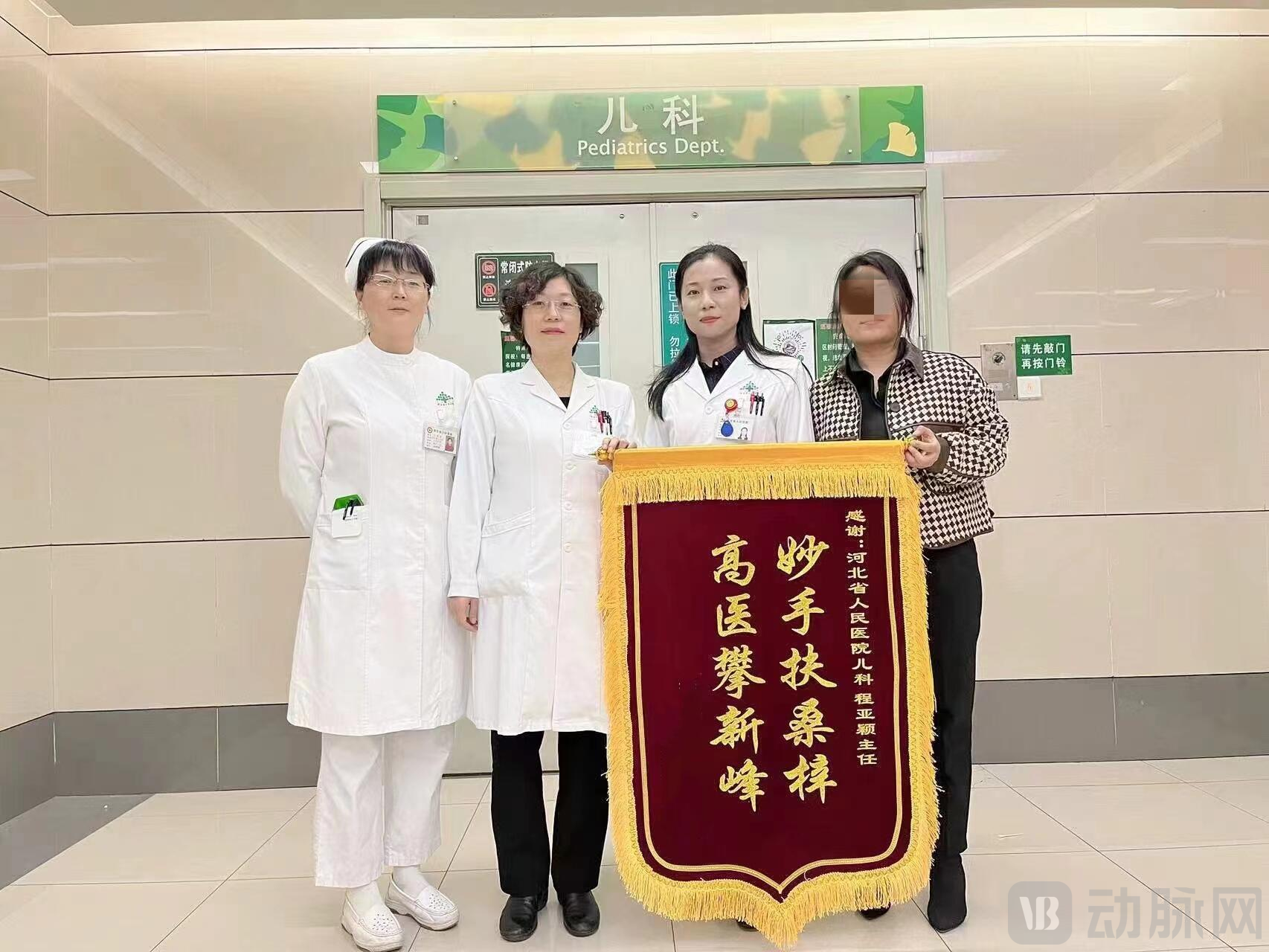
On the afternoon of October 20, Xiaoming’s mother presented a silk banner inscribed with “With skilled hands you nurture your homeland; as a distinguished physician, you scale new heights” to Dr. Cheng Yaying, Chief Physician in the Department of Pediatrics at Hebei General Hospital, to express her gratitude.
Recalling the entire diagnostic and treatment process, Cheng Yaying said, “If it hadn’t been for the timely launch of the ‘Central Special Lottery Public Welfare Fund-Supported Project to Enhance Diagnostic and Treatment Capabilities for Rare Diseases,’ which provides free genetic testing for patients with suspected rare diseases, Xiaoming’s family might have had to forgo further confirmatory diagnosis due to financial constraints, as many other families of rare disease patients do, thereby missing a crucial window for treatment.”
14-Year-Old Boy with Intermittent Bilateral Lower Limb Weakness and Other Symptoms for Three Consecutive Years
On September 7, 2022, Dr. Cheng Yaying consulted Xiaoming. He presented with weakness in both lower limbs, muscle spasms, and an inability to bend his knees normally after exercise. Over the past three years, similar episodes had occurred several times, always following physical exertion. Each time, Xiaoming returned to normal within a few days after the onset of symptoms.
For three years, he received medical care at local hospitals. Doctors found that Xiao Ming had low potassium levels in his blood tests, and the primary treatment was potassium supplementation. This most recent episode served as a wake-up call for Xiao Ming’s mother. She then took her child from Xingtai to the Hebei General Hospital in Shijiazhuang, where she consulted with Cheng Yaying.
“The child’s mental status and level of consciousness are normal. Based on comprehensive biochemical tests, including creatine kinase levels, we have preliminarily ruled out neuromuscular disorders such as myasthenia and are focusing on hypokalemia,” analyzed Cheng Yaying. “Hypokalemia can easily lead to cardiac arrest following profuse sweating after strenuous exercise. Therefore, it is essential to identify the underlying cause of the child’s low potassium levels to prevent future adverse events.”
Based on the 24-hour urinary ion test, a review of the literature, and ancillary findings of hypokalemia, hypocalcemia, hypomagnesemia, hypochloremia, and metabolic alkalosis, Cheng Yaying’s team strongly suspected that Xiaoming had Gitelman syndrome. This condition is one of the first batch of 121 rare diseases identified in China.
Gitelman Syndrome is an autosomal recessive disorder caused by dysfunction of the thiazide-sensitive sodium-chloride cotransporter (NCC) in the distal convoluted tubule of the kidney. It is a rare tubulopathy characterized by hypokalemic metabolic alkalosis accompanied by hypomagnesemia, with a prevalence of approximately 1–10 per 40,000 individuals, making it the most common hereditary renal tubular disease.Onset typically occurs during adolescence or adulthood, and the prognosis after treatment is favorable. In 2018, it was included in China’s first batch of the Catalogue of 121 Rare Diseases.
As an autosomal recessive disorder, definitive diagnosis relies on genetic testing. “We need to perform genetic testing on both the parents and the child to establish an accurate diagnosis. If the diagnosis is correct, the child’s condition can be well managed,” explained Cheng Yaying to Xiaoming’s mother in the ward. However, Xiaoming’s mother tearfully rejected the suggestion. “Doctor, we cannot afford genetic testing.”
It is understood that the genetic mutations associated with this rare disease are relatively complex, imposing high demands on laboratory gene sequencing capabilities and report interpretation, which in turn results in considerable testing costs.
Cheng Yaying was extremely anxious: “This is a critical juncture. If an accurate diagnosis is not made, our treatment plan will be ineffective, and the child may face unforeseen health risks in the future. Furthermore, if this is indeed a genetic disorder, Xiao Ming’s immediate family and extended pedigree will require further testing and genetic counseling to identify other affected children within the family lineage and initiate timely treatment.”
At a moment when she felt at her wit’s end, she suddenly recalled the recently launched “Project to Enhance Rare Disease Diagnosis and Treatment Capabilities, Supported by the Central Special Lottery Public Welfare Fund.” Guided by the National Health Commission, funded by the Central Special Lottery Public Welfare Fund under the Ministry of Finance, led by Peking Union Medical College Hospital, with participation from hospitals across the National Rare Disease Diagnosis and Treatment Collaborative Network, and implemented with the assistance of the Chinese Alliance for Rare Diseases, the project aims to further improve the clinical diagnosis and treatment of rare diseases in China and alleviate the financial burden on families of patients with rare diseases.
Fortunately, Xiao Ming fully met the eligibility criteria for program support.
The sooner the results are available, the more effectively accidents involving children can be prevented. Cheng Yaying’s team promptly completed and submitted the application information to the project office in Beijing before the Mid-Autumn Festival holiday, awaiting review by the project team.
To her surprise, upon returning after the holiday, she immediately received notification that the review had been approved. “The project review process was incredibly fast!” Cheng Yaying promptly contacted Xiao Ming’s mother, urging them to find time to return to the hospital as soon as possible for sample collection and genetic testing.
Meanwhile, as a project participant, staff members at KingMed Diagnostics’ Hebei laboratory also received formal notification from the project team: to schedule sample collection at the hospital and transport the samples to the laboratory for genetic testing.One month later, the test results came out. Xiao Ming was indeed diagnosed with Gitelman syndrome. Cheng Yaying told Xiao Ming’s mother, “As long as he undergoes regular follow-up examinations and replenishes electrolytes on time and in the correct dosage, the child can live a normal life.”
From September 7 to October 18, spanning the entire process from initial consultation and clinical assessment to suspected diagnosis, submission of genetic testing requests, laboratory analysis, report issuance, and formulation of a treatment plan, the health issue that had plagued Xiaoming for three years was finally resolved in less than two months. The support provided by the “Special Central Lottery Public Welfare Fund-Supported Project for Enhancing Diagnostic and Therapeutic Capabilities for Rare Diseases” has also substantially alleviated the financial burden on his family.
This also reflects the original intent behind the establishment of the Project to Enhance Diagnostic and Treatment Capabilities for Rare Diseases, supported by the Central Special Lottery Public Welfare Fund: to help alleviate the burden on patients.
Data show that there are more than 7,000 rare diseases worldwide, with an estimated 20 million patients in China. The pathogenesis of rare diseases is complex; over 80% of cases are caused by alterations in genetic material, while only 5% have symptomatic treatments or curative options available. Timely and accurate diagnosis is crucial for rare disease patients to receive targeted therapies and reproductive intervention guidance.
Currently, China faces three major challenges in the field of rare diseases: low diagnostic rates, inadequate treatment capabilities, and a shortage of therapeutic drugs.The establishment of this project aims to provide free genetic testing for rare disease patients in China, fund multidisciplinary team (MDT) diagnosis and treatment of rare disease cases at collaborative network hospitals, and support training programs to enhance the diagnostic and therapeutic capabilities of physicians specializing in rare diseases. Centered on patients, the project seeks to comprehensively improve the national level of rare disease diagnosis and treatment and implementation capacity, thereby addressing three major challenges.
“Our hospital diagnoses a significant number of rare diseases each year, yet knowledge gaps persist. In clinical practice, many patients with rare diseases often choose to forgo treatment or endure prolonged diagnostic journeys due to the high costs and complexities involved. This not only delays timely intervention but may also have implications for future generations,” said Cheng Yaying. “Without the support of this project, Xiao Ming’s diagnosis would likely not have been so smooth. Looking ahead, we hope to engage in more exchanges with peers through this initiative, further enhancing our hospital’s capacity for the diagnosis and treatment of rare diseases.”
As mentioned in the project introduction, if a family has many members, other relatives will be eligible for free testing after being evaluated by a physician based on their clinical condition. She stated, “Rare diseases are not necessarily incurable. The significance of identifying a case of genetic rare disease extends beyond the patient and their immediate family; more importantly, it helps clarify the carrier status within the family pedigree, thereby enabling others to receive timely treatment or to seek genetic counseling for better reproductive guidance, ultimately minimizing the risk of having children affected by rare diseases.”