

Dirk Görlich, the Playful German Scientist Backed by Sequoia, Files for IPO
Recently,Dirk GörlichIt went viral on WeChat Moments overnight. The reason is that he becameThe laureate of the inaugural World Laureates Association Prize in Life Science or Medicine.
It is reported that the World Laureates Association Prize (the “WLA Prize”), a scientific award initiated in 2021 by the World Laureates Association, organized by the Shanghai World Laureates Association Development Foundation, and exclusively donated by Sequoia China.
When the presenter announced Dirk Görlich’s name, the man dressed in a black suit was so excited that he danced with joy. He walked onto the stage and said, “My research was initially not recognized by the academic community, but it has finally gained affirmation. The developmental journey of this field in cell biology makes this award even more precious to me, serving as a significant acknowledgment of this long and arduous scientific research endeavor.”
Starting from Chemistry
Gerlich’s dream of becoming a scientist began at the age of six.
As a child, he loved running with his older brother to the nearby forest to collect crystals and minerals. Amidst the towering trees, his dream gradually became clear—to become a researcher like Darwin.
In Gerlich’s room lay a book with its page corners curled from use—a volume on minerals, which also served as his introductory text in chemistry. It was within those pages that the mysteries of chemistry and the elements were first revealed to Gerlich.
By the time he was eight or nine years old, the content in children’s books could no longer satisfy his thirst for knowledge about the unknowns of chemistry. Gerlich began searching for chemistry-related books on his parents’ bookshelves, taught himself chemistry, and even attempted to extract natural compounds from plants.
Gerlich conducted experiment after experiment in his own room, and to this day he often says, “My childhood bedroom was my first laboratory., where I discovered the joy of chemistry and resolved to dedicate my life to its advancement.”
Until he entered high school, Gerlich’s interest in chemistry never waned. At his teacher’s recommendation, he participated in the International Chemistry Olympiad and ultimately won a gold medal. It was on the basis of this competition that Martin Luther University Halle-Wittenberg took an immediate liking to this “chemical prodigy” and admitted him through a special recruitment process, thereby launching Gerlich’s research career.
While pursuing his master’s degree in biochemistry at Martin Luther University Halle-Wittenberg, Gerlich devoted himself to the study of the cell nucleus. He stated, “"We still know little about the mechanisms of the cell nucleus, and the unknown always drives me to keep moving forward."”
In 1993, Gerlich chose to join the University of Cambridge during his postdoctoral fellowship.Ron Laskey Laboratory—This is one of the top teams in his view for researching the cell nucleus.
Just two weeks after joining Ron Laskey’s laboratory, Görlich purified the first importin using nickel-column affinity chromatography. Importin is responsible for recognizing nuclear localization signals and transporting cytoplasmic protein molecules into the nucleus.
This conclusion also shocked Professor Ron Lasky, as textbooks clearly state that nickel columns do not bind to proteins. But Gerlich said: “This indeed contradicts what is taught in textbooks, but I place greater faith in experimentation. Moreover, I personally undertook the trial, and the final results demonstrated that this endeavor was worthwhile.”
To date, purification of His-tagged proteins using immobilized metal affinity chromatography (IMAC) has become the most commonly used method in prokaryotic protein expression and purification.
However, Gerlich’s journey in scientific research has not always been fortunate; he has often experienced anguish—after all, on the path to exploring the unknown, failure is the norm, and success is merely an occasional occurrence. Yet Gerlich has never lost heart, saying, “Science is always accompanied by setbacks, so it is important to learn to endure them. You may be at rock bottom right now, but as long as you do not give up, there will come a day when you rise again. The success that follows after enduring hardships will bring you immense satisfaction, which no award or fame can ever match.”
"Unrecognized" Scientific Research Achievements
There is a German proverb: “All work and no play makes Jack a dull boy.” In the original phrase, the common name “Jack” is used to refer to children. However, in Dirk Görlich’s view, “Jack” could well be replaced by his own name, Dirk. This is because the award-winning research on the “nuclear pore complex” was precisely the scientific achievement he derived from his “play.”
On January 1, 2022, formed by the merger of the existing Institute of Biophysical Chemistry and the Institute of Experimental Medicine,Max Planck Institute for Multidisciplinary SciencesUpon its official establishment, Gerlich was appointed as the director of the institute, recommended by numerous scholars.
This position seems tailor-made for Görlich—because he greatly enjoys experimenting with innovation and interdisciplinary collisions, and “new combinations” always excite him immensely. At the Max Planck Institute for Multidisciplinary Sciences, Görlich appears to be even closer to those whimsical and unconventional ideas.
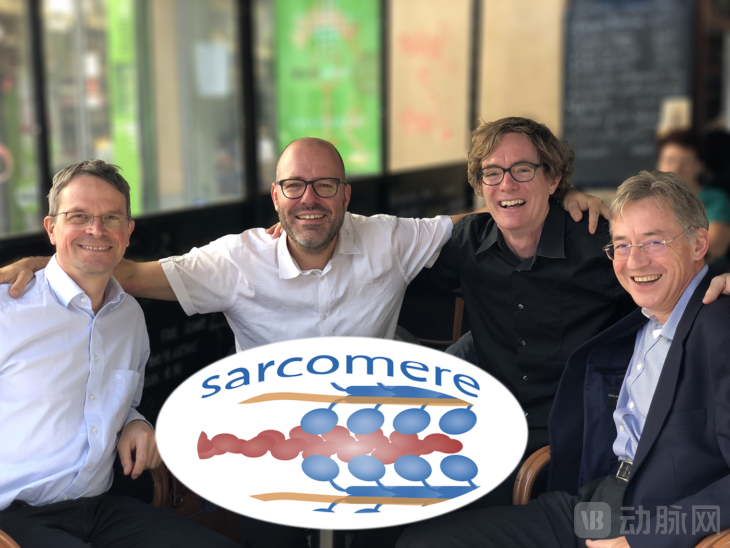 Dirk Görlich is the first from the left.
It is reported that the Max Planck Institute for Multidisciplinary Sciences brings together scientists from various fields, including physics, chemistry, and biology. Gerlich frequently engages in exchanges with them, stating, “Working with scientists from diverse disciplines and research cultures, such as physics, chemistry, and biology, and engaging in full exchange of ideas, it is only a matter of time before great scientific discoveries are made.”
Thus, Gerlich frequently contemplated and sought to bridge basic research in the natural sciences with medical research methodologies; the discovery of the nuclear pore complex stands as a testament to such multidisciplinary “collisions.”
It is important to note that research on nuclear transport requires a deeper understanding of cell biology, while Görlich’s research on nucleoporins integrates multidisciplinary elements from structural biology, nucleocytoplasmic transport, and receptor studies.
For a long time, scientists had limited understanding of how the cell nucleus regulates its “gateways.” Enclosed by a double-layered nuclear envelope, the nucleus communicates with the exterior through pores embedded in this membrane. Prior to Görlich’s work, numerous researchers had investigated these nuclear pore complexes, even delineating their intricate structures, yet none could truly elucidate their operational mechanisms.
The challenge of this study lies in the fact that the “gatekeepers” of the nuclear pore complex are gel-like molecular networks formed by intrinsically disordered regions of nucleoporins. Around 2006, Görlich first identified these structures and clearly elucidated the mechanism by which the nuclear pore complex regulates the transport of substances: this gel-like network “blocks” the nuclear pore, yet it is replete with various pores, allowing only molecules that meet specific criteria to pass through rapidly.
Over the next decade and a half, Görlich continuously refined his experimental approach to this discovery, ultimately arriving at the “key findings regarding the mechanism and selectivity of protein transport between the cytoplasm and the nucleus” (the citation for Görlich’s award)—the nuclear pore complex.
The nuclear pore complex is a highly efficient “large-scale transport machine,” capable of transporting 1,000 molecules per second. This seemingly extremely complex transport system was, in fact, initially conceived by Görlich through a thought experiment.
Gerlich explained, “We can imagine a channel with a specific diameter; by applying a concentration gradient, we can calculate how many molecules pass through the channel. According to Einstein’s diffusion law, this is a very straightforward physical calculation. The conclusion is:When the channel becomes empty, you will observe increased material exchange.”
Over the past few decades, scientists have studied nuclear transport by considering only “the movement of cargo from one side of the nucleus to the other,” but Gorlich argues that this is not the core issue; the real challenge lies in identifying the “barrier” capable of selectively permitting passage.
Therefore, Görlich decided to create such a “barrier.” However, during his research, he found that there were not many candidates for the “barrier”; only intrinsically disordered proteins within regions known as FG repeats offered room for experimental investigation.
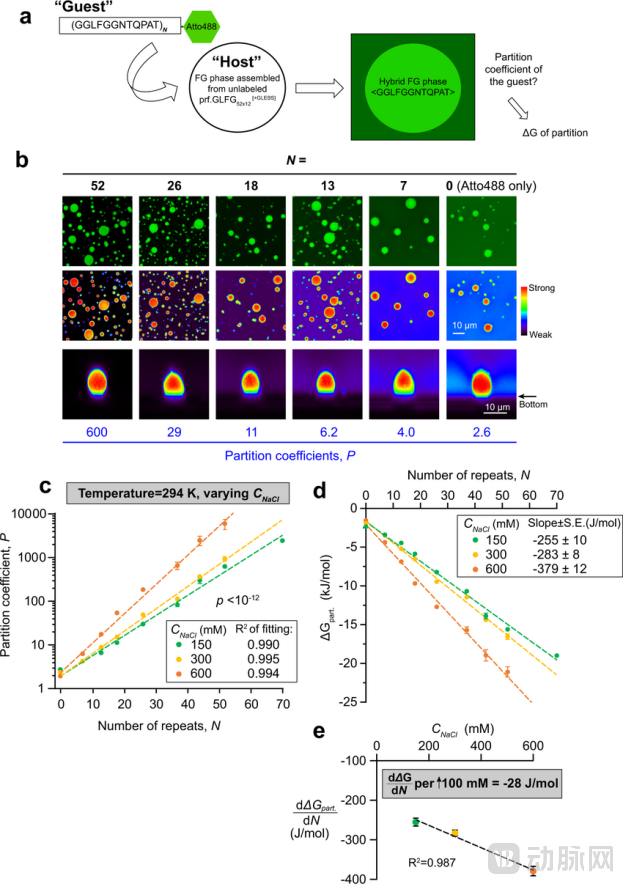
So-called intrinsic disorder refers to proteins that lack a defined folded structure and typically exhibit pronounced hydrophobicity. This means that hydrophobic residues strive to minimize contact with water, thereby predisposing them to interact with one another.
Gerlich boldly predicted that it is intrinsically disordered and can form a phase-separated selective barrier—much like the cell membrane—making it ideally suited for constructing such a “barrier.”
After continuous experimentation, Görlich finally developed the nuclear pore complex based on these intrinsically disordered proteins.
2013 Nobel Prize in Physiology or Medicine LaureateRandy SchekmanThe professor expressed great admiration for Görlich’s research achievements, stating, “It has long been recognized in the academic community that protein transport between the plasma membrane and the nucleus is selective; however, the underlying selection and translocation mechanisms remained unclear. Görlich was the first scientist to discover importins, which are responsible for recognizing nuclear protein signals and mediating their interactions. Since establishing his independent research career, he has continued to make numerous fundamental discoveries. He will fundamentally transform the research direction of this field.”
Following his award, Görlich emotionally stated that his once “unrecognized” achievements had finally been validated. Indeed, when Görlich first proposed the nuclear pore complex model, opposition far outweighed support, as it represented an entirely new system that challenged prevailing understanding of the cell nucleus.
But Gerlich “ignored” those objections, saying, “If others say it makes no sense or ‘I don’t believe it,’ do not back down; believe in yourself. WhenWhen you are convinced that this is the only possible solution, do not be discouraged by negative comments from others; simply proceed to validate the hypothesis.“This is the principle we have always upheld, and it has been our consistent practice.”
Seeking More “Gerlichs”
Regarding the award, Gerlich expressed surprise. He said, “When I received the email from Randy Schekman, chair of the award selection committee, I thought it was an invitation to join a committee or institution. I never expected it to be a notification that I had won the award!”
Görlich’s award was certainly no accident. Chair Randy Schekman believes that the discovery of the gel-like phase state of the nuclear pore complex truly highlights the originality of Görlich’s work—“It is this gel-like substance that enables the selective transport and passage of RNA molecules and small protein molecules into the cytoplasm (through the nuclear pores).”
At the same time, Gerlich’s research will also encourage more scientists to engage in multidisciplinary integrated research, as the expansion of contemporary science is achieved precisely through the integration of multiple disciplines and interdisciplinary approaches, thereby giving rise to new discoveries, technologies, and solutions.
This is precisely the original intent behind establishing the Top Scientists Association Award—to recognize and support the contributions of outstanding researchers and technological pioneers from around the world to science, with the aim of advancing global scientific and technological progress, better addressing the common challenges facing all humanity, and promoting the long-term advancement of human society.
In addition to the honor, Gerlich also received RMB 10 million in research funding exclusively donated by Sequoia, which will be used for his subsequent scientific research work.So, as an investment bank, why did Sequoia Capital make this investment?
On one hand, the Top Scientists Association Award serves as a conduit for Sequoia to engage with leading scientists worldwide.Scientists are both the driving force behind innovation and the cornerstone of scientific research development. In recent years, Sequoia has frequently participated in “face-to-face” events with scientists, such as the World Laureates Forum and the Future Science Prize, and has specifically established a “Seed Fund” focused on supporting early-stage startups. These developments clearly signal one message: Sequoia’s attention to scientists is steadily increasing.
It is worth noting that the Top Scientists Association Award is a global prestigious prize originating from Shanghai and based in China. Sequoia’s participation underscores its vision to engage in exchanges and collaboration with scientists worldwide, amplify its influence within the global scientific community, and elevate China’s voice. After all, science knows no borders, and innovation thrives on exchange.
On the other hand, the fields targeted by the WLA Prize are also the frontier areas where Sequoia China will focus its future investments.It is reported that the Top Scientists Association Award has established only two categories: the “Award for Intelligent Science or Mathematics” and the “Award for Life Sciences or Medicine.” These two awards represent the current hotspots in scientific research development—AI and healthcare. With technological advancements, public attention to health has been increasing, leading to growing expectations for medical care. As a highly flexible interdisciplinary field, AI can integrate with any domain, giving rise to new cross-disciplinary paradigms known as “AI+n.” Therefore, developments in both healthcare and AI will have a profound impact on our future lives.
Additionally, Sequoia places immense emphasis on the potential of interdisciplinary integration.At the Top Scientists Association Award Ceremony,Neil Shen, Founding and Managing Partner of Sequoia China, stated, “A prominent trend in today’s technology sector is that an increasing number of significant breakthroughs are emerging from interdisciplinary and cross-disciplinary fields. We should encourage disruptive achievements in these interdisciplinary areas, thereby mobilizing broader societal resources and scientists to share risks and explore new methodologies.”
Gerlich’s award serves as a case in point. Interdisciplinary intersections are often the breeding grounds for scientific innovation, heralding new scientific frontiers. Therefore, interdisciplinary research is most likely to yield major scientific breakthroughs, bringing about revolutionary changes in science. Much like smart healthcare built on the integration of “medicine + AI,” it is highly probable to become the direction of future medical development. For this reason, both China and the world at large need to prioritize the development of interdisciplinary fields, as this is not only a trend of the times but also a product of our era.
In the future, the WLA Prize will continue to encourage scientists to bravely explore the unknown and discover more “Gerlichs.”