

Boostong Secures Additional Investment from 58 Shenqi Capital to Strengthen R&D and Clinical Translation
VCBeat has learned that, following the September announcement of a RMB 100 million Series A+ round led by Qianji Capital, Boston Technology has secured an additional multi-million RMB investment from 58 Shenqi Capital. Boston Technology stated that, as a leading company in digital therapeutics for cognitive disorders, it will continue to strengthen its scientific research capabilities and clinical translation.
Bossteng Technology, with the vision of “Cognitive Technology, Safeguarding Human Health,” provides end-to-end digital solutions for cognitive impairment tailored to middle-aged and elderly populations. Currently, Bossteng has served over 16 million users through platforms such as Alipay, achieving broad coverage and high user engagement.
The sustained success of this consumer-facing digital therapeutic product requires not only an excellent user experience but also the delivery of tangible clinical benefits. To this end, Bositen’s brain science research team is dedicated not only to iterative product development but also actively engages in scientific projects and academic research in the field of digital therapeutics.
Currently, Bositeng Technology has established collaborations with multiple universities, hospitals, and experts in the field of dementia research in China. It is continuously strengthening its scientific research capabilities and clinical translation, striving to achieve “universal screening” and “scientific intervention,” and building a nationwide digital “dementia prevention and control” system.
In October 2022, Professor Chen Qin from West China Hospital of Sichuan University, serving as the lead expert in China, established the Chinese Familial Frontotemporal Lobar Degeneration Collaboration (CFFC) to align with international efforts in frontotemporal dementia cohort studies and database construction. For this cohort initiative, the Chinese collaboration invited Bositen Technology as the technical support partner, innovatively incorporating digital biomarker research into the cohort study. The aim is to leverage mobile technologies in the future to develop speech-based digital biomarkers tailored to the Chinese population, thereby assisting in clinical diagnosis, prognosis prediction, and treatment.
This work has received high recognition from an international panel of experts, including Dr. Rohrer, President of the International Alliance; Professor Adam Boxer, Head of the US ALLFTD Consortium; Professor Howie Rosen of the University of California, San Francisco (UCSF); and Professor Bradley Boeve of the Mayo Clinic. The experts have expressed their desire to collaborate with CFFC to jointly develop digital biomarkers adapted to diverse populations and languages.
In October 2022, the “Chinese Guidelines for Cognitive Training (2022 Edition)” was officially released. Cognitive training, particularly computer-assisted cognitive training, as a non-pharmacological intervention with no significant adverse effects, has become an important approach for the prevention and intervention of cognitive impairment. The guidelines provide direction and guidance for the adoption of digital therapeutic products for cognitive impairment in hospitals, and also demonstrate that digital therapies, including those from Boston Scientific, have gained recognition and recommendation from relevant domestic experts.
In November 2022, the National Clinical Research Center for Geriatric Diseases (West China Hospital, Sichuan University) and Bositeng Technology jointly established the Joint Laboratory for Digital Therapeutics in Geriatric Cognitive Disorders. As the first digital therapeutics joint laboratory in China, it aims to develop digital technologies for early screening and non-pharmacological intervention of various geriatric cognitive impairments, generate evidence-based data through clinical and real-world studies, and accelerate the translation of related scientific and technological achievements as well as their application both within and outside healthcare institutions.
On December 3, Bosten Technology will join hands with the National Clinical Research Center for Geriatric Diseases (West China Hospital of Sichuan University) and the Digital Therapeutics Committee of the China Medical Device Industry Association to co-host the CLE2022 Brain Science Summit in Chengdu. The summit will invite academic and technological leaders in the field of brain science from around the world to jointly discuss current opportunities and challenges.
In addition to strengthening research on dementia patient cohorts, advancing the diagnosis and treatment of cognitive impairment-related disorders is also an indispensable component in addressing this disease.
To enhance the screening, prevention, and treatment of cognitive disorders, reduce their incidence, and improve the standardization of diagnosis and management, the National Health Commission’s Capacity Building and Continuing Education Center officially launched the “National Specialized Capacity Building Project for Cognitive Disorders” in Beijing on September 18, 2021.
This project plans to collaborate with domestic enterprises specializing in the diagnosis and treatment of cognitive disorders through various models, including industry-academia-research-medical application-translation partnerships. It aims to establish over 2,000 cognitive centers at different levels within five years, thereby building a robust, multi-tiered system for the prevention and intervention of cognitive disorders that ensures effective coordination among hospitals, communities, families, and patients.
Bosthen Technology, leveraging digital therapeutics technology, provides diagnostic decision support for physicians while delivering full-process, personalized diagnosis and treatment services for patients. These services cover four key stages: out-of-hospital science popularization and health education; general screening both in- and out-of-hospital; in-hospital diagnosis and digital therapeutics prescription; and at-home use and follow-up care outside the hospital. The company is continuously promoting the development of “Cognitive Centers” and striving to establish a comprehensive digital system for dementia prevention and control. Specifically, in:
· In terms of science popularization, Besten has fully leveraged its established advantages in off-hospital traffic channels, partnering with major internet platforms such as Alipay, JD Health, Ping An Insurance, and Bank of China. Meanwhile, Besten has built a comprehensive media matrix covering multiple platforms, including WeChat Channels, Douyin (TikTok), and Xiaoe-Tech. By delivering long-term, professional health education content through articles, audio-visual materials, and live streaming, the company aims to enhance public awareness.
· In the realm of early screening, Bositeng’s cognitive function assessment software (G3 and SCS products) offers the advantages of accuracy, convenience, self-testing capability, and standardization. By leveraging the “golden three minutes” to conduct universal screening for the entire elderly population, and by exploring and applying digital biomarkers such as voice and behavioral trajectories to enrich screening dimensions, it provides a powerful digital tool for the implementation of dementia universal screening policies.
· In terms of digital therapeutics prescriptions, Bosteng’s cognitive function training software constitutes a multidimensional, comprehensive intervention system, rather than a simple gamified cognitive training program. In addition to cognitive training, this system encompasses multiple domains, including cognitive reserve, physical exercise, nutrition, sleep, and emotional well-being. It is jointly recommended by the globally authoritative FINGER Study, the guidelines for primary prevention of Alzheimer’s disease, and the guidelines for cognitive training.
· In terms of out-of-hospital use and follow-up, Bostan’s product is the world’s first WeChat-based medical device software in this field. Targeting home-use scenarios for the elderly population and integrated with a WeChat-based follow-up system, it has significantly improved medical adherence, achieving a daily group adherence rate of over 95%.
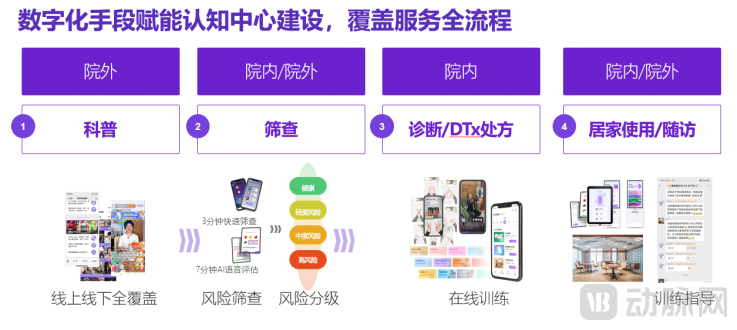 Digital Empowerment for Cognitive Center Development: Covering the Entire Service Process
Digital therapeutics hold unique clinical value and promise in the field of brain disorders, particularly for cognitive impairment. Through the team’s relentless efforts, Bositeng has achieved substantial breakthroughs in both clinical development and commercialization, earning widespread recognition from end-users, hospital experts, and government agencies. With the support of more partners, we believe Bositeng’s perseverance will help older adults worldwide no longer fear Alzheimer’s disease.
About 58 Shenqi Capital
58 Shenqi Capital was established in Beijing in 2018 as an RMB fund focused on investing in early-to-mid-stage startups. Since its inception, the firm has actively sought investment opportunities in sectors such as consumer services, enterprise services, human resources, and technological innovation, aiming to collaborate with top-tier entrepreneurial teams to build a better ecosystem for lifestyle services. Shenqi Capital has invested in numerous outstanding startups, including Sweetome, LeKeep Sports, UU Errand, Zhuomuniao, Yidianling, Nowcoder, Rainbow Planet, Lixiaoyun, UDI Technology, Meng Veterinary Clinic, Yunsheng Group, and AIParking.
About Qianji Capital
Qianji Capital was established in 2010 and is one of the earliest professional investment funds in China dedicated to the healthcare and life sciences sectors, committed to promoting the transformation, upgrading, and innovation of China’s medical industry. Qianji Capital currently manages seven healthcare-focused funds, with limited partners comprising renowned domestic and international institutional investors, including Asian sovereign wealth funds, government agencies, domestic and foreign insurance and financial institutions, and multinational corporations.

Scan the QR code to learn more about the “CLE2022 Brain Science Academic and Industry Summit” attendance details