

2022 Digital Medicine Technology and Application Innovation Competition: Deep Dialogue Between Technology and Healthcare, Co-Creating an Intelligent Future
The inaugural “Digital Medicine Technology and Application Innovation Competition,” co-hosted by the Shanghai Artificial Intelligence Laboratory and Ruijin Hospital, Shanghai Jiao Tong University School of Medicine, has officially launched. The competition aims to accelerate interdisciplinary research and collaborative innovation at the intersection of AI and healthcare, actively facilitating the digital transformation of medical services. It has invited academicians from the fields of medicine and medical engineering as advisory experts and is calling for outstanding projects in digital medicine technology and applications from around the world.
Shanghai Artificial Intelligence Laboratory is a new-type research institution in China’s artificial intelligence (AI) field. It conducts strategic, original, and forward-looking scientific research and technological breakthroughs, aiming to overcome fundamental theories and core key technologies in AI. The Laboratory is building an integrated, large-scale comprehensive research base that is “breakthrough-oriented, leading, and platform-based,” to support leapfrog development of China’s AI industry. Its goal is to become a world-class AI laboratory and a globally renowned source of original AI theories and technologies.
Ruijin Hospital, Shanghai Jiao Tong University School of Medicine, is a large comprehensive teaching hospital classified as Grade A Tertiary. It has received the highest rating of A++ in the "National Performance Appraisal for Tertiary Public Hospitals" for four consecutive years. With the goal of building a future-oriented "Asia-leading demonstration hospital," the hospital has actively engaged in practices of digital transformation in healthcare and vigorously promoted digital management of medical processes in recent years. In October 2021, the Shanghai Digital Medicine Innovation Center was established at Ruijin Hospital to continue providing support for the in-depth advancement of digital transformation in healthcare.
With their combined strength and rich heritage, the two host organizations, in conjunction with the Shanghai Digital Medicine Innovation Center, the Institute of Digital Medicine at Shanghai Jiao Tong University, the Global University AI Academic Alliance, and the Guangci-Sinano National Translational Medicine Innovation Industrial Park, are co-organizing this competition. Their aim is to create a dynamic platform for in-depth dialogue and close integration between technological innovation and healthcare. Under the theme “New Ecosystem of Medical Intelligence, Collaborating for a Shared Future,” the competition encourages innovative applications in digital medicine, stimulates future innovation momentum, and explores the diversified application and translation of technologies such as artificial intelligence, big data, and the internet in real-world clinical settings, thereby establishing a fast track from research concepts to clinical implementation. Participating projects will have the opportunity to receive incentive awards, research resource support, investment and financing matchmaking, and multi-channel exposure.
Centered on medical needs and guided by the vision of promoting innovative research, development, application, and translation, the competition encourages teams composed of personnel from clinical and research units within healthcare institutions, research teams at medical and information science institutes, and enterprise teams specializing in healthcare and health IT applications and solutions. An invitation to participate is hereby extended to teams that meet the following criteria:
1. The participating project shall propose solutions or concepts addressing specific problems and needs in medical scenarios, and clearly demonstrate its applicable scenarios, corresponding functions, and application value;
2. Entries should include, but are not limited to, applications of technologies such as artificial intelligence, big data, the Internet, the Internet of Things (IoT), and 5G, reflecting the competition’s theme: “A New Ecosystem of Medical Intelligence, Collaborating for a Shared Future”;
3. The participating projects must demonstrate innovation in their proposals and technological advancement;
4. The submitted project must be original, independently researched, designed, and developed by the team. The intellectual property rights of the project must be clearly defined and free from any disputes or infringement.
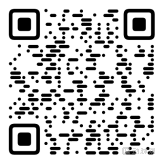
5. The applicant shall independently form a team consisting of no fewer than three core members, via the website (www.thegaiaa.org) or scan the QR code at the end of the article to access the competition registration page and submit your entry.
This competition features two challenge tracks, namely:
Topic 1: Multimodal Fusion Diagnostic Technology and Applications in Healthcare
Develop an AI-driven, evidence-based clinical decision support system for the diagnosis and treatment of chronic, common, and frequently occurring diseases, leveraging fused analysis of multimodal medical data. Achieve key technological breakthroughs and innovations in either the fused analysis of multimodal data (including but not limited to radiology, pathology, ultrasound, electrophysiology, and endoscopy) or the construction of diagnostic and therapeutic knowledge graphs (based on multimodal electronic health records, pre-consultation clinical assessments, follow-up data, and other relevant information).
Topic 2: Technologies and Applications for Proactive Health Management Across the Full Life Cycle
Develop key technologies or novel wearable and non-contact smart devices for proactive health management across the entire life cycle, enabling health monitoring and management in various scenarios such as home, workplace, and elderly care. These applications include, but are not limited to, early disease screening, disease warning, post-diagnosis follow-up and rehabilitation, physical fitness assessment, diagnosis and evaluation related to exercise and diseases, nutritional status assessment and intervention, as well as mental health assessment and intervention, thereby promoting proactive health management throughout the entire life cycle.
Each competition category is divided into two groups based on the project’s development stage: Group A “Early Innovation” and Group B “Application Implementation.”
Group A: Early Innovation Group
● The project is in the early stage of translational application.
● Possesses a foundation in preclinical research relevant to clinical applications
● Validation of technical feasibility has been completed
● Possesses commercialization value
Group B: Application Implementation Group
● The project is in the mid-to-late stage of translational application.
● On the verge of or already in the commercialization stage
● Established user base of considerable scale
● The application outcomes are scalable and replicable.
*Note: The Organizing Committee will communicate with participating teams regarding their projects and may adjust the competition categories accordingly.
For each competition track, 12 winning projects will be ultimately selected, with awards categorized into First Prize, Second Prize, and Third Prize.
Group A: Early Innovation Group | Group B: Application Implementation Team | |
Challenge 1: Multimodal Fusion Diagnostic Technology and Applications in Healthcare | First Prize (2 recipients), Second Prize (4 recipients), Third Prize (6 recipients) | |
Problem 2: Technologies and Applications for Proactive Health Management Across the Entire Life Cycle | First Prize (2 winners), Second Prize (4 winners), Third Prize (6 winners) | |
The competition also provides corresponding rewards and incentive programs for outstanding teams:
1. Bonus Rewards:First Prize: RMB 30,000; Second Prize: RMB 20,000; Third Prize: RMB 10,000;
2. Research Resources:Access to resources or financial support, including in-hospital scenario validation, expert guidance, and targeted research collaboration;
3. Technical Guidance:Gain access to the open-source ecosystem and training support from the Shanghai Artificial Intelligence Laboratory, with opportunities to apply for collaborative projects on laboratory demonstration applications;
4. Ecological Resources:Join the organizer’s digital medical ecosystem and gain referrals to engage in investment and financing exchanges with institutions such as the competition’s partner funds and industrial parks; award-winning teams may be recommended for consideration in the Guangci-Sinan Industry-Medicine Integration International Innovation Competition awards.
5. Multidimensional Display:Promotion and showcase through multi-dimensional channels, including the competition’s partner media outlets and professional associations.
The competition consists of three stages: preliminary round, semi-final, and final. The detailed schedule is as follows:
No. | Stage | Time | Form |
1 | Registration Period | October 18–November 16 | Online |
2 | Preliminary Round | November 17–20 | Online |
3 | Semifinals | November 21–December 5 | Online |
4 | Finals Period | December 13–December 14 | Offline/Online |
5 | Award Ceremony | December 15 (tentative) | Offline/Online |
*Note: Schedule adjustments may be made to comply with epidemic prevention and control requirements.
Registration for the competition is now officially open. Please visit the designated registration website:www.thegaiaa.org, or scan the QR code below to access the competition registration page and upload your entry application.
We welcome outstanding digital medicine projects from around the world to apply, leveraging advanced AI technologies to empower core healthcare scenarios and jointly usher in a new era of digital medicine!
Competition Organizing Committee Inquiry Email: puyicenter@pjlab.org.cn