

RSF Bio Files IPO Prospectus for Ataciguat, a Novel Small Molecule Targeting Calcific Aortic Valve Stenosis

Rancho Santa Fe Bio
Clinical-Stage Cardiovascular Therapeutics Developer
From aspirin to penicillin, from oseltamivir to apatinib. For over a century, small molecules have been driving new breakthroughs in the treatment of human diseases.
In recent years, with the emergence of numerous innovative biotechnologies such as antibodies, gene therapies, cell therapies, antibody-drug conjugates (ADCs), and oncolytic viruses, the number of small-molecule drugs in development has shown a further gradual decline. However, among commonly used medications, small-molecule drugs still account for 98% of the total volume.
Compared with large-molecule drugs, small molecules have significant advantages in terms of R&D costs and process complexity, and remain the primary focus of new drug development. According to statistics, 40 out of the 53 new drugs approved by the FDA in 2020 were chemical drugs.
Small-molecule drugs remain in a phase of vigorous growth. Despite challenges such as low R&D success rates, short half-lives, and limited specificity, many startups continue to enter this field, dedicating themselves to the development ofSlowingCalcific Aortic Valve Stenosis (CAVS) DiseaseRSF Bio is one such pharmaceutical company.
RSF Bio, fully named Rancho Santa Fe Bio, is a clinical-stage cardiovascular drug development company founded in 2019, headquartered in California. Currently, RSF Bio andSanofi, Mayo Clinic, and the National Center for Advancing Translational Sciences (NCATS) have reached an agreement to secure an exclusive license for the continued development of the innovative drug Ataciguat.
Laura Lewerentz-Juziuk is the founder of RSF Bio. With over 20 years of experience in clinical development and entrepreneurship, she excels at bridging scientific achievements with commercialization strategies to facilitate the smooth translation of clinical outcomes.
The Chief Scientific Officer of RSF Bio isLeonard Miller, meanwhileConducted research focused on calcium accumulation in calcific aortic valve stenosis (CAVS) at Mayo Clinic—completed preclinical, Phase I, and Phase II trials of Ataciguat. He has over 20 years of experience in the biotechnology industry, having served as a Senior Scientific Investigator at Gensia Pharma and Metabasis, and as Vice President of Research at Targazyme. Leonard has more than 17 years of experience in CAVS calcification research, has published 65 peer-reviewed articles, and has served as the editor-in-chief of three biotechnology books.
CAVS, or calcific aortic valve stenosis, is a type of aortic valve calcification. CAVS is the most common progressive valvular disease in developed countries, primarily affecting the elderly population,The prevalence rate is 2% among individuals aged 55 and older, reaching 3% in those aged 65 and above. Among the population aged 75 and older, the prevalence increases with age to 12% or higher.。
According to statistics, the number of patients is approximately 2 million in the United States and over 3 million in Europe, with high incidence and mortality rates. Patients may be asymptomatic during the compensated stage, while those with severe disease mostly present with symptoms such as fatigue, dyspnea, angina, and syncope. Gradual calcium accumulation on the aortic valve leads to aortic valve sclerosis.If left untreated, CAVS typically leads to death within a few years of symptom onset.
The pathophysiological mechanisms of calcific aortic valve stenosis (CAVS) remain unclear, and there are currently no pharmacological agents available to halt or slow disease progression. Surgical aortic valve replacement (SAVR) or transcatheter aortic valve replacement (TAVR) is reserved for patients with indications for valve replacement.
Rancho Santa Fe Bio is developingAtaciguat is a nitric oxide-independent soluble guanylate cyclase activator, and alsoRSF BioUnder DevelopmentSmall-Molecule Drugs with the Potential to Slow CAVS Progression。
Under normal physiological conditions, the body storesNitric oxide (NO) stimulates soluble guanylate cyclase (sGC) to produce cGMP (the NO-sGC-cGMP signaling pathway)., cGMP acts as a regulator of various protein kinases, controlling intracellular Ca++ distribution and attenuating downstream pro-osteogenic and pro-fibrotic signaling.
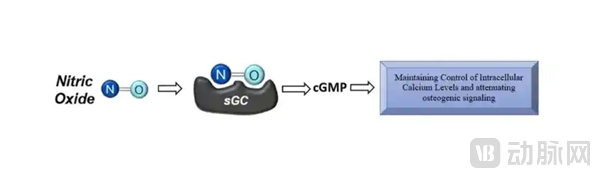 Normal NO-sGC-cGMP Signaling Pathway, Source:Rancho Santa Fe Bio Official Website
However, in the aortic valves of patients with calcific aortic valve stenosis (CAVS), superoxide (O3) and hydrogen peroxide (H2O2) and other reactive oxygen species (ROS) are significantly elevated in calcified regions, while antioxidant enzymes responsible for ROS metabolism (such as SOD and catalase) are reduced, leading to increased oxidative stress in the aortic valve.
Elevated oxidative stress in the aortic valve leads to the conversion of sGC into an NO-insensitive oxidized form, indirectly reducing cGMP levels; this impairment of the NO-sGC-cGMP pathway results in intracellular calcium accumulation and valvular calcification.
Ataciguat is a potent activator of the oxidized form of sGC, which canReactivation of Downstream NO Targets, repair the defective NO-sGC-cGMP signaling pathwayIn preclinical animal models of CAVS, ataciguat attenuates BMP2-induced transcriptional responses by activating the oxidized, NO-insensitive soluble guanylate cyclase (sGC), thereby slowing valvular calcium accumulation.
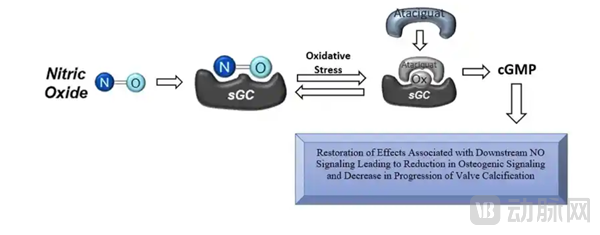 Mechanism of Action of AtaciguatSource: RSF Bio Official Website
Initially bySanofiA clinical drug trial was conducted, enrolling 1,000 patients with stable angina, peripheral artery disease, and neuropathic pain, to establish the development priorities for Atacigua.
ThereafterSanofiProvide Atacigua toNational Center for Advancing Translational Sciences (NCATS), National Institutes of HealthNew Therapeutic Use (NTU) Program—encouraging the use of this drug in other clinical trials.
Mayo ClinicMedical InternationalJordan Miller(Appointed asRSF Bio Chief Scientific Officer) Laboratory, after receiving funding from NCATS, successively conducted preclinical, Phase I, and Phase II studies of Ataciguat for CAVS.
In 2021, RSF Bio obtained the exclusive global license to continue the development of Ataciguat through agreements with Sanofi and Miaoyou Medical International.
RSF Bio aims to continue exploring the development of additional indications for Ataciguat (including rare indications), discovering biomarkers capable of identifying early signs of CAVS, and conducting research and development on other small-molecule drugs in cardiovascular and other therapeutic areas.
Currently, there are already targetedRepairing the Defective NO-sGC-cGMP Signaling PathwayVericiguat, a marketed drug with this mechanism of action, is primarily indicated for heart failure. Developed by pharmaceutical giants Merck & Co. and Bayer, Vericiguat received FDA approval in 2021. Marketing applications have been submitted in multiple countries, and it was approved in China in May 2022, becoming the first marketed drug in the country with this mechanism of action.