

Yunliang Geometry Files IPO Prospectus: Pioneering Digital Orthotics with Smart Infant Cranial Helmets
On November 13, Yunliang Geometry announced its core product—“Smart Island TalentLand” Smart Orthotic Helmet Officially Launched.This product is primarily indicated for the treatment of non-craniosynostotic plagiocephaly in infants aged 3 to 18 months, including deformational plagiocephaly, brachycephaly, and scaphocephaly; it may also be used as an adjunctive therapy for infants aged 3 to 18 months with craniosynostosis-related plagiocephaly who present with moderate-to-severe residual deformities following surgical correction.
“Congming Island TalentLand” Smart Orthotic Helmet is the first independently developed Class II medical device in China to receive approval from the National Medical Products Administration, and it is manufactured in the company’s self-built factory—the only facility in China with qualifications for producing orthotic helmets.With the mission of “Correcting the Present, Safeguarding the Future, and Ensuring Every Baby Has a Flawless Head Shape,” we are committed to pioneering a new ecosystem for infant cranial orthosis. This marks a breakthrough in China’s infant orthotic helmet market, ending overseas monopoly and serving as a milestone for domestically produced infant orthotic helmets. Yunliang Geometry has thus fired the first shot in standardizing the domestic infant orthotic helmet industry.
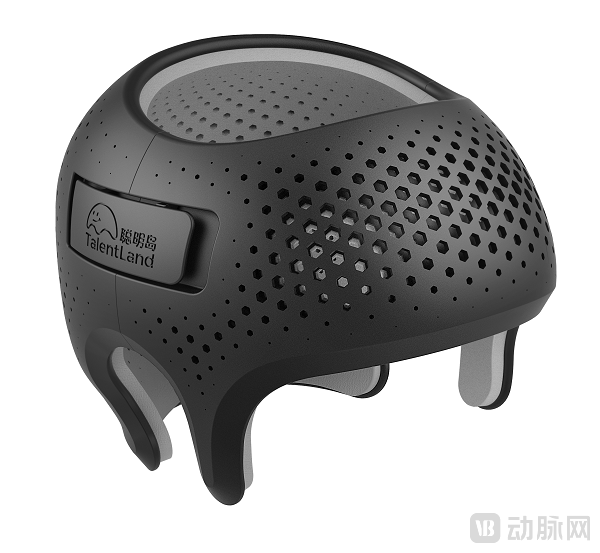
“Smart Island TalentLand” Smart Orthotic Helmet
At the time, Luo Fan, who was working at Google in the United States, tried on 20 to 30 ski helmets of different brands and models but could never find one that fit his head shape. Later, Luo realized that he had mild plagiocephaly, with an asymmetrical shape at the back of his head. By chance, he discovered that his American neighbor’s child wore a helmet every day. Through conversation with the neighbor, he learned that it was a cranial orthotic helmet for head shape correction.
Orthotic helmets represent a mature market in Europe and the United States, with over 20 years of established clinical application, having successfully helped millions of infants correct their head shapes. In the United States, there are more than 1,000 offline orthotic clinics, and coverage is included in insurance plans. According to relevant estimates, annual sales of orthotic helmets in Europe and the United States amount to at least $2 billion.
In the domestic market, the orthotic helmet industry is a niche sector., there are still no regulatory standards, and the industry is of uneven quality. Some infant cranial orthotic helmets on the market use plaster casting applied to the infant’s head for correction, while others rely heavily on the orthotist’s empirical judgment for trimming and shaping. Many orthotic clinics and online custom-made shops lack the necessary qualifications, leading to widespread irregularities.
“Parents of the new generation in China are generally concerned about infant cranial health, but the market lacks high-quality, high-tech novel solutions.”Based on these insights, Luo Fan reached out to his Carnegie Mellon University graduate school alumnus, Liu Xulu. “She is a serial entrepreneur in the field of smart hardware, with comprehensive experience in product R&D, regulatory registration, and commercialization. We often discuss entrepreneurship together.” After further discussions, the two quickly found common ground and decided to return to China to start a business.
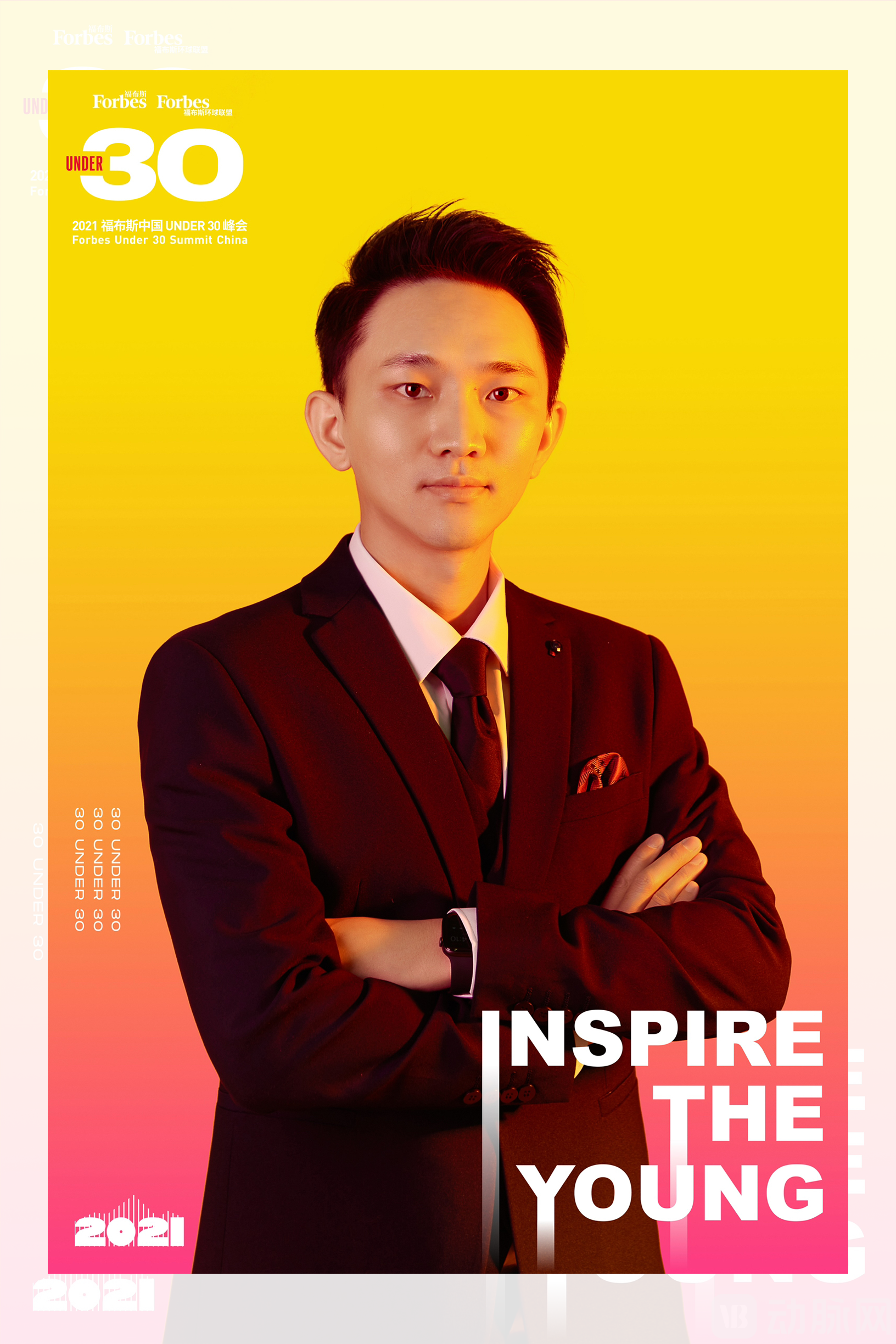
Luo Fan Named to the “2021 Forbes China 30 Under 30” List
In June 2021, Yunliang Geometry officially established its presence in Shanghai.Since its inception, Yunliang Geometry has clearly defined its mission to operate as a serious medical device company. Founder Luo Fan holds a Master’s degree in Software Engineering from Carnegie Mellon University and previously served as the Technical Lead for AI Cloud Services at Google in the United States. Co-founder Liu Xulu also graduated from Carnegie Mellon University and has serial entrepreneurial experience in the smart hardware sector. Furthermore, the team includes industry experts from renowned Chinese hospitals, specializing in pediatric plastic surgery and pediatric cranial development.Each team member brings unique strengths, collectively building Yunliang Geometry’s technological and brand barriers.
Some infants present with physiological abnormalities in head shape after birth. In medical practice, different cranial deformities are often classified based on their morphological characteristics,Common cranial shape abnormalities include plagiocephaly, brachycephaly, and dolichocephaly.For example, plagiocephaly, also known as flat head syndrome, commonly occurs in infants who sleep on their sides, resulting in visible left-right asymmetry of the head.
A 2019 study published in Pediatrics, a top-tier pediatric journal, showed that:Children who had moderate-to-severe cranial deformities during infancy demonstrate poorer academic performance and cognitive abilities (including language, logical reasoning, and spatial skills) at school age. Furthermore, cranial deformities may also lead to delayed neurological development, restricted motor development, strabismus, and impaired vestibular function.
The principle of orthotic helmets is to apply gentle pressure to the prominent areas of an infant’s skull while reserving growth space on the opposite side during the period of high cranial plasticity. This prevents further deformation due to uneven forces, allowing the infant’s head to achieve an ideal shape through natural growth.The U.S. FDA stipulates that the corrected age for correction is 3–18 months, with the optimal clinical correction window being 4–8 months.
This Offering's“Smart Island TalentLand” Smart Orthotic Helmet, designed specifically for Chinese babies aged 3–18 months, is a “one-on-one” customized product for cranial reshaping.
In terms of hardware, the product’s shell is 3D-printed from organic polymer materials. The helmet weighs as little as approximately 110 grams, features a thinner profile, and conforms more closely to the infant’s cranium. Each helmet is personalized based on the individual infant’s condition, with dimensional precision as high as 0.01 mm, thereby maximizing the safety and efficacy of cranial orthosis.
In terms of software, Yunliang Geometry has established a database of cranial development in Chinese neonates. During subsequent practical correction processes, it continuously records real-world data on infants’ head growth, thereby enabling its intelligent algorithms to better align with the cranial developmental trajectories of Chinese infants.
Furthermore,“Smart Island TalentLand” smart orthotic helmets also feature the “Three Precisions” and “Three Highs.”“Three Precisions” refers to precision, meaning that Yunliang Geometry continuously ensures the precise design of hardware, software, and underlying data throughout each baby’s wearing process; the entire R&D team upholds a spirit of striving for perfection, aiming to provide the safest and most effective correction solutions for babies and their parents; as well as streamlined and comfortable product design. “Three Highs” refers to higher efficiency, greater comfort, and superior aesthetics.
According to Luo Fan, Yunliang Geometry’s digital orthotic solution involves four steps: scanning, diagnosis, one-on-one customized correction plan, and 3D printing. Throughout this process, Yunliang Geometry has achieved digital upgrades at every stage, with all core technologies being independently developed.
As a digital disruptor of traditional orthopedic devices, the DNA of digitalization permeates every aspect of Yunliang Geometry.
First isDigitalization of the Front End: From Products to Services.Yunliang Geometry utilizes 3D panoramic handheld scanners to rapidly, accurately, and safely capture the baby’s three-dimensional head shape. Its proprietary digital orthotic customization software intelligently analyzes the infant’s two-dimensional and three-dimensional cranial development. Thirdly, its self-developed assessment software predicts the baby’s future head growth patterns. Fourth, a corrective plan is formulated, with Yunliang Geometry designing a digital model for 3D printing data. Finally, 3D printing technology is employed to fabricate the helmet with high precision at a 1:1 scale, transforming the abstract data-driven solution into a physical device.
Secondly, it is reflected inDigitalization of the Middle Platform.Years of experience at Google allowed Luo Fan to appreciate the advantages of digital workplace solutions. He subsequently applied Google’s digital management philosophy to Yunliang Technology’s internal operations, product design, brand management, and supply chain management.
Finally,Underlying Digital Logic. In the past, cranial orthosis relied on the orthotist’s experiential touch; Yunliang Geometry, by contrast, employs a digital approach,Transform abstract experience into assessment and prediction logic that is recordable, reusable, and standardized.. Meanwhile, this digital orthotic solution can also be extended and applied to the entire field of medical orthotic devices.Facilitating the digital upgrade of traditional orthopedic devices and expanding access to orthopedic care.
In terms of financing, Yunliang Geometry secured angel investment from Miracle Plus and Yisan Capital just two months after its establishment. Recently, it further raised tens of millions of RMB in Pre-A series funding from Oasis Capital. Propelled by capital infusion, Yunliang Geometry has entered a fast track of development.
Oasis Capital stated, “Yunliang Geometry (Smart Island TalentLand) addresses the significant supply-demand gap in infant cranial orthotic treatment in China through digital orthotic technology. By leveraging 3D cranial scanning for digital modeling, AI-assisted design, and 3D printing technologies, the company empowers physicians to deliver customized, one-stop orthotic solutions for each infant, thereby substantially improving treatment outcomes. Oasis believes that, building on its accumulated data and enablement capabilities in infant cranial orthotics, the company will provide better product and service solutions for Chinese infants, driving digital transformation across the industry.”
Yunliang Geometry has established collaborations with multiple public and private hospitals.We will continue to make rapid and in-depth advances in the field of digital orthopedics. Regarding the development strategy, Luo Fan revealed,Yunliang Geometry to Establish More Vertical Orthopedic Brands in the Future“We strive to perfect our products to truly benefit society. In the future, the company will also launch products such as scoliosis orthoses and flatfoot orthoses to safeguard the healthy growth of adolescents.”
At the end of the article, VCBeat has compiled the four most pressing questions parents have about this product, for your reference.
Q:“How long does it take to see results with the ‘Smart Island TalentLand’ smart orthotic helmet?”
Yunliang Geometry:Correction plans are determined based on each baby’s individual condition. In most cases, wearing the orthotic helmet for 23 hours a day over a period of 2 to 6 months helps restore a full, rounded head shape.
Q:Does the baby need to wear it while sleeping? Will it affect the baby's sleep?
Yunliang Geometry:“Smart Island TalentLand” smart orthotic helmets are lightweight and breathable, with most children requiring an adaptation period of about one week. As wearing the helmet may cause slight warming, parents should ensure their baby is not dressed too heavily during this time, appropriately reducing clothing layers to prevent sweating. Once adapted, babies can sleep soundly while wearing the helmet.
Q:Will long-term use affect the development of a baby's cervical spine?
Yunliang Geometry:“TalentLand” Smart Orthotic Helmet is suitable for infants aged 3 to 18 months. Infants under 3 months of age are not advised to wear any type of helmet due to incomplete cervical spine development. During check-ups after 3 months of age, physicians will assess the infant’s cervical spine development. If the cervical spine has developed sufficiently, the infant may wear the “TalentLand” Smart Orthotic Helmet. Furthermore, the lightweight design of the “TalentLand” Smart Orthotic Helmet ensures no pressure is exerted on the baby’s cervical spine.
Q:Babies grow rapidly; how can you ensure the helmet fits properly without exerting pressure on the baby’s skull?
Yunliang Geometry:“TalentLand” Smart Orthotic Helmet leverages intelligent algorithms and a vast underlying database to deliver a digital solution specifically designed for predicting infant cranial growth and development. The system provides precise, AI-driven predictions of head shape development over the next 1–2 months, tailored to each infant’s unique head shape, age in months, and sex. With a design precision as high as 0.01 millimeters, the “TalentLand” Smart Orthotic Helmet ensures adequate and appropriate clearance during fabrication, thereby preventing any harm to the infant. Parents need only return to the hospital for regular follow-up examinations as scheduled.