

Johnson & Johnson's $16.6 Billion Acquisition of Abiomed Reshapes the Artificial Heart Market Landscape

Abiomed
Cardiac System Medical Device Developer
November 1, 2022,Johnson & Johnson announced that it will acquire all shares of Abiomed. The transaction will be completed on an all-cash basis at a pre-paid price of $380 per share, with an upfront valuation (including company cash) of $16.6 billion.Abiomed’s shareholders will also be entitled to receive additional cash consideration of up to $35 per share upon the future achievement of specified commercial and clinical trial milestones.
This deal can be described as massive. Johnson & Johnson’s $3.4 billion acquisition of surgical robotics company Auris Health in 2019 already sent shockwaves through the industry. The current acquisition of Abiomed, priced at a staggering $16.6 billion, underscores Johnson & Johnson’s high regard for Abiomed.
Before Johnson & Johnson took notice, Abiomed was already a dominant force in the U.S. stock market, ranking among the 14 pharmaceutical stocks that delivered tenfold returns between 2009 and 2019.
Abiomed’s development journey can be described as legendary. Once on the brink of bankruptcy while developing artificial hearts, the company pivoted to percutaneous heart pumps, not only staging a remarkable turnaround but also achieving substantial growth against market trends.
Beyond dissecting Abiomed’s turnaround growth story, the greater focus following its blockbuster acquisition by Johnson & Johnson lies in identifying future growth drivers. What are the clinical trial milestones that prompted J&J to make such a substantial investment? How can Abiomed sustain its growth momentum? VCBeat (WeChat ID: vcbeat) interviewed industry insiders on these questions.
Abiomed was founded by aerospace engineers in 1981, with the initial aim of developing the world’s first total artificial heart.
An artificial heart is a complex implantable medical device used to replace the heart's pumping function and maintain blood circulation.
Artificial hearts can be classified by implantation method into surgically implanted and transcatheter (interventional) types. Functionally, they are categorized as Ventricular Assist Devices (VADs) and Total Artificial Hearts (TAHs). Among these, VADs are the most widely used artificial heart systems in current clinical practice. Based on the type of ventricular support provided, VADs are further divided into Left Ventricular Assist Devices (LVADs), Right Ventricular Assist Devices (RVADs), and Biventricular Assist Devices (BiVADs), with LVADs being the most extensively utilized in clinical settings.
Abiomed did not achieve success with its total artificial heart development pathway. Around 2004, the company’s stock price plummeted due to the failure of clinical trials for its total artificial heart, pushing Abiomed to the brink of bankruptcy.
Following a series of transformative measures, Abiomed successfully rebounded from its lows to become the fastest-growing medical device company in the U.S. stock market.
The key to Abiomed’s turnaround consisted of three steps: appointing a CEO with extensive business experience; acquiring Impella; and expanding the cardiology indications for the Impella product line.
Step one is to replace the CEO.In 2004, following the resignation of the previous CEO, Mike Minogue assumed leadership of Abiomed. Having spent many years at GE, he had accumulated extensive sales experience in the fields of oncology and cardiovascular imaging.
The second step is acquisition,In 2005, Mike Minogue acquired the German company Impella CardioSystems, shifting the company’s strategic focus from total artificial hearts (TAH) to percutaneous ventricular assist devices (pVAD).
Impella CardioSystems’ flagship product, Impella, is a percutaneous ventricular assist device. In simple terms, it works by drawing blood directly from the left ventricle into the aorta, thereby maintaining physiological flow. The impeller and micro-motor are delivered via the femoral artery to the ascending aorta, while the catheter is advanced into the left ventricle, with its inlet positioned in the left ventricular outflow tract and its outlet in the ascending aorta. When the micro-axial flow pump at the catheter tip operates, it draws blood from the left ventricle and delivers it to the ascending aorta, thereby enhancing perfusion and reducing myocardial oxygen consumption.
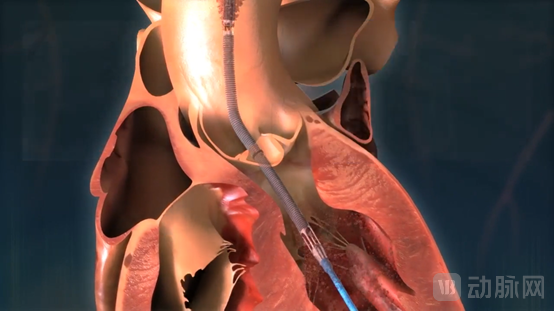
Impella Product Schematic
Step 3: Abiomed Expands Impella Indications, Turning It into a Unique BlockbusterPrior to its acquisition by Abiomed, Impella was primarily used in cardiac surgical procedures. Following the expansion of its indications, Impella gradually received approval for circulatory support in the treatment of cardiogenic shock and high-risk percutaneous coronary intervention (PCI), thereby entering the cardiology market with a procedural volume reaching millions. To date, Impella remains the only percutaneous heart pump technology approved by the U.S. Food and Drug Administration (FDA).
Yuan Ningning, Director of the Medical Marketing Department at XinQing Medical, told VCBeat: “2016 was a pivotal year for the approval of multiple indications for Impella. In that year, Impella received successive approvals for use in treating cardiogenic shock and for providing support during high-risk percutaneous coronary intervention (PCI). Following these approvals, sales of the Impella series experienced rapid growth. 2018 also marked a key milestone in its development, as the indication for high-risk PCI expanded from patients with abnormal ejection fraction (EF) to include those with normal EF values undergoing high-risk PCI protection. This further stimulated the growth of Impella within the cardiology sector.”
During the growth of Impella, high-risk PCI indications have constituted the largest market segment. The base volume of PCI procedures is substantial; according to Frost & Sullivan data, the number of PCI procedures performed in the United States increased from 592,700 in 2015 to 1 million in 2021.
The definition of high-risk percutaneous coronary intervention (HR-PCI) primarily depends on three specific characteristics: patient factors, lesion features, and clinical presentation. Patient factors include advanced age, diabetes mellitus, chronic kidney disease, prior myocardial infarction, severe peripheral artery disease, impaired left ventricular function (LVEF ≤30%–35%), severe pulmonary hypertension, severe chronic obstructive pulmonary disease, or chronic liver disease. Lesion features include unprotected left main disease, bifurcation or ostial lesions, saphenous vein graft lesions, severely calcified lesions, or chronic total occlusions. Clinical presentation affects prognosis; patients with cardiogenic shock or acute coronary syndrome undergoing PCI are at increased risk of adverse cardiovascular events.[1]
Yuan Ningning pointed out, “There is varying understanding among physicians regarding high-risk PCI; some consider 5% of PCI procedures to be high-risk, while others regard up to 30% as such.” Based on clinical trends in China, the number of high-risk PCI cases is increasing.
In high-risk PCI, Impella primarily provides mechanical circulatory support. Percutaneous mechanical circulatory support (PMCS) devices used in clinical practice include intra-aortic balloon pump (IABP), veno-arterial extracorporeal membrane oxygenation (VA-ECMO), Impella, and TandemHeart.
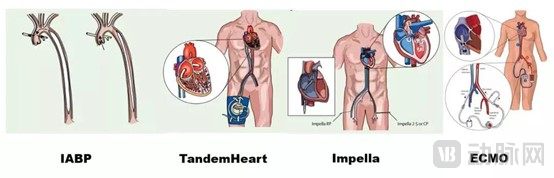
Compared with other PMCS devices, Impella has its own characteristics in terms of safety and efficacy.Compared with IABP, IABP can increase diastolic arterial pressure and coronary blood flow; however, it only increases cardiac output by approximately 0.5–1 L/min, whereas Impella CP can provide a flow rate of 3.5–4.2 L/min, demonstrating superior efficacy to IABP.
Compared with ECMO, although ECMO can provide greater flow, many high-risk PCI patients do not require such high-flow support. Furthermore, ECMO provides temporary mechanical circulatory support and extracorporeal gas exchange; however, many high-risk PCI patients have no pulmonary issues. Moreover, the use of ECMO carries a relatively higher risk of complications, including bleeding, limb ischemia, hemolysis, stroke, and infection.
Compared with TandemHeart, the TandemHeart system consists of an extracorporeal continuous-flow centrifugal pump that drains blood from the left atrium at flow rates up to 4 L/min. TandemHeart requires surgical intervention following transseptal puncture, resulting in a longer procedural time compared with Impella.
Leveraging its safety and efficacy profile, Abiomed expanded the indications for Impella to interventional cardiology, making it the most widely used device in high-risk PCI procedures.
Currently, Impella has evolved into a product portfolio comprising multiple devices, including the Impella CP, 2.5, and 5.0, as well as the Impella RP. The Impella CP, 2.5, and 5.0 pump blood directly from the left ventricle via retrograde crossing of the aortic valve, thereby reducing left ventricular size, pressure, and wall tension; the Impella RP is inserted via the inferior vena cava into the pulmonary artery to provide hemodynamic support for the right heart system.
In fiscal year 2022, Abiomed reported revenue of $1.03 billion, a 22% increase from the previous year. Of this, revenue from Impella amounted to $985 million, accounting for over 95% of Abiomed’s total revenue.
The success of the Impella heart pump has provided effective hemodynamic support for patients and clinicians, rescuing Abiomed from the brink of bankruptcy and transforming it into a high-growth star company. The product’s annual revenue of nearly $1 billion also attracted Johnson & Johnson, the global healthcare giant.
With a $16.6 billion price tag, Johnson & Johnson is paying not only for Abiomed’s past successes but also for two blockbuster products in its pipeline. What are the future growth drivers for Abiomed under Johnson & Johnson’s ownership?
On the one hand, following its acquisition of Abiomed, Johnson & Johnson is poised to promote the Impella product line in global markets.Abiomed’s stronghold is the U.S. market, from which it derives more than 80% of its revenue. In recent years, Abiomed has begun to expand aggressively into the European and Japanese markets. In 2022, Abiomed’s revenue was $837 million in the United States, $131 million in Europe, and $51 million in Japan. Markets such as China and Southeast Asia remain untapped; following Johnson & Johnson’s acquisition, there is strong potential to promote Impella in these emerging markets, particularly in China.
From the perspective of surgical complexity, while TAVR procedures are being carried out in major centers across China, interventional cardiac pumps involve lower procedural difficulty and a less steep learning curve for physicians, suggesting a relatively shorter timeframe for potential future adoption.
Another growth driver lies in Abiomed’s future revolutionary products.Abiomed’s future pipeline assets include two blockbuster products: Impella ECP and Impella BTR.
The most significant difference between the Impella ECP and previous models in the Impella series lies in its external motor and foldable impeller design. It is the world’s smallest heart pump, with a size of only 9 Fr (3 mm), delivering a flow rate greater than 3.5 L/min.The Impella ECP positions the impeller within the left ventricle, with the motor located externally to the femoral artery (extracorporeal), connected to the drive unit and impeller via a flexible driveshaft. During operation, the catheter aspirates blood from the left ventricle into the aorta, thereby increasing cardiac output.
ECP was developed to achieve a smaller size and greater flow rate.In the early stages, Abiomed conducted surveys among physicians and found that the Impella CP series was associated with a certain incidence of vascular complications. In 2014, Abiomed foresightedly acquired ECP to develop the latest generation of cardiac pumps—the foldable percutaneous pump. The potential clinical advantages of the Impella ECP include a smaller vascular access puncture size, the ability to expand to an appropriate dimension after deployment within the body, and reduced hemolysis.
Currently, the ECP series has received FDA Breakthrough Device designation and clinical trials are underway. It is poised to replace existing products in the future, offering greater market potential.
Abiomed’s insurance for future growth lies not only in the Impella ECP series, but also in the Impella BTR, which holds promise to disrupt heart failure treatment.Impella Bridge-to-Recovery (BTR) is an axial-flow heart pump implanted via the axillary artery and positioned in the left ventricle, capable of pumping more than six liters of blood per minute. It is used for cardiac recovery, cardiac remodeling, and adjunctive therapy in patients with Stage III/IV heart failure.
Compared with previous Impella devices, the Impella BTR enables long-term implantation. Previously, complications arising from the rotating impeller of micro-invasive pumps precluded their long-term use for circulatory support in clinical practice, limiting their application primarily to internal medicine and emergency settings. The Impella BTR is poised to overcome the limitations of percutaneous heart pumps, extending the application scenarios of percutaneous ventricular assist devices (pVADs) to long-term use.
Compared with LVAD products represented by Abbott’s HeartMate 3, the Impella BTR is smaller and less invasive than current LVADs, potentially allowing for earlier initiation of mechanical circulatory support in heart failure.
For heart failure, the breakthrough of Impella BTR lies in enabling early intervention, with the potential to reverse the condition. If Impella BTR can indeed reverse heart failure, it will become a revolutionary product in the field of heart failure treatment.
The Impella BTR has completed its first global implantation, which will also bring more growth highlights to Johnson & Johnson after its acquisition of Abiomed.
Impella has achieved significant success globally, but in the Chinese market, there is still a gap in the commercialization of percutaneous heart pumps.
In China, the annual volume of percutaneous coronary intervention (PCI) procedures has increased from 567,600 cases in 2015 to 1.2 million cases in 2021, resulting in a substantial population of high-risk PCI patients and those with cardiogenic shock. According to the Summary Report on Cardiovascular Health and Diseases in China 2020, it is conservatively estimated that nearly 9 million people in China were affected by heart failure in 2018. However, there are currently no domestically available products akin to Impella that can assist physicians in rapidly providing circulatory support.
# With Comparable PCI Volumes in China and the US, Who Is Poised to Replicate Impella’s Growth Trajectory in the Chinese Market? Beyond Johnson & Johnson’s Potential Introduction, Numerous Domestic Companies Have Entered This Space, with Many Securing Financing as pVADs Become a Hot Investment Sector.
Amidst market enthusiasm, the more pressing concern for interventional cardiac pumps is how to better address clinical needs.
Yuan Ningning stated, “In general, physicians have three major requirements for percutaneous mechanical circulatory support devices: first, longer clinical support duration (indicating better hemocompatibility and reduced hemolysis), with the goal of exceeding 30 days or even reaching one year or more; second, smaller device size, ideally comparable to or even smaller than an intra-aortic balloon pump (IABP) catheter (7.5–8 Fr); and third, superior hemodynamic performance, capable of delivering a blood flow rate exceeding 5 liters per minute.”
“However, these three factors often constrain each other; reducing the size makes it difficult to achieve higher flow rates. A product that can simultaneously satisfy all three criteria would undoubtedly be a groundbreaking innovation.”
Addressing the complications associated with interventional cardiac pumps has become a key focus for physicians and R&D enterprises worldwide. In China, companies are also continuously striving to target clinical challenges and develop superior products.
Taking XinQing Medical as an example, to address blood compatibility issues. Through clinical trial investigations, XinQing Medical discovered that blood compatibility issues are actually related to the placement position of the device. If the interventional pump is placed too deep or too shallow, it will affect the hemolysis effect. During product development, XinQing Medical set up easily identifiable markers and equipped them with automated recognition algorithms. Once mechanical displacement occurs, the algorithm can remind doctors to readjust the position. In terms of the device's design itself, through the design of flexible impellers, the best hemodynamic effects are achieved at the lowest rotational speed, thereby reducing the occurrence of hemolysis.
Numerous challenges remain in the development of artificial hearts. In clinical practice, these devices are used in patients with complex conditions, and both physicians and patients require more numerous and more effective products.
Currently, Abbott dominates the global artificial heart market, while Medtronic’s left ventricular assist device (LVAD) was withdrawn from the market last year. With Johnson & Johnson entering the market following its acquisition of Abiomed, the competitive landscape of the heart failure treatment sector is poised for another reshaping.
[1] 2021 Academic Highlights | Zhang Ran: Application of Mechanical Circulatory Support Devices in High-Risk PCI: Evidence-Based Medicine and Guideline Recommendations