

Tavotek BioTherapeutics Files IPO Prospectus: Pioneering Multispecific Antibody Innovator Led by Industry Veteran Dr. Mann Fung
After retiring as Global Vice President of Johnson & Johnson, Dr. Mann Fung (hereinafter referred to as “Dr. Feng”) made another career move in 2019 following a vigorous foray into the venture capital industry. He persuaded his long-time colleague and friend, Dr. Mark Chiu, to come out of retirement, and together they co-founded Tavotek Biotherapeutics Ltd., a company dedicated to innovative protein engineering technologies and multi-specific antibody therapies, with Dr. Fung serving as CEO.
In the field of pharmaceutical R&D, it is rare for individuals to launch startups after retiring with a lifelong pension. This makes Feng Bo stand out as particularly unique among entrepreneurs.
The equanimity derived from extensive experience in the pharmaceutical industry, coupled with a clear understanding of his personal life goals, precisely defines the unique character of Feng Bo as a seasoned entrepreneur.
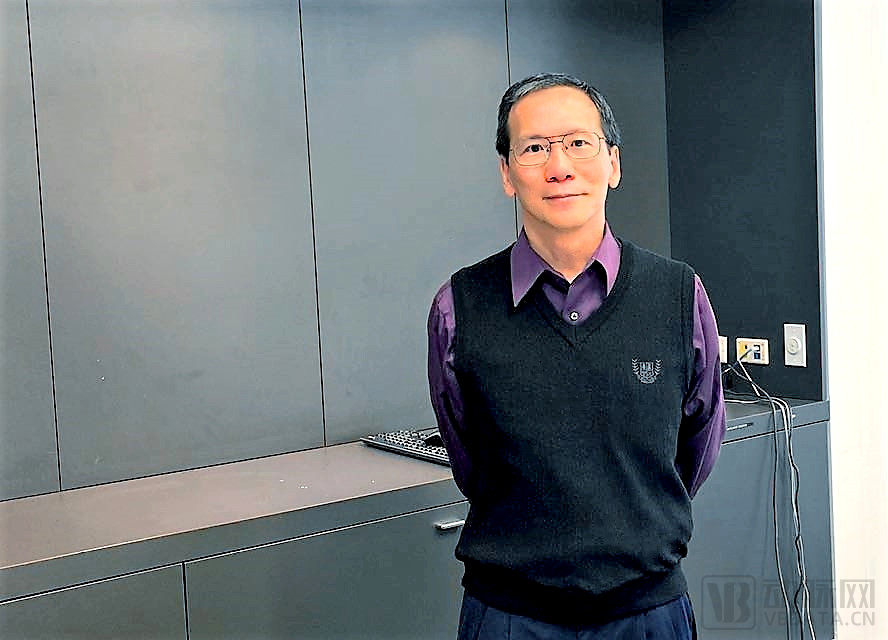
A Humble Pharmaceutical Professional’s Half-Life Journey onto the Path of Entrepreneurship
Recently, Tavotek Biotherapeutics’ IND application for TAVO412 was approved by the U.S. FDA, marking the third investigational new drug developed by Tavotek to enter clinical trials this year. Tavotek has remained dedicated to innovation in novel drugs and therapies, with its entire pipeline independently developed in-house.
In September 2022, Feng Bo boarded a flight from Shanghai back to the United States. The purpose of this trip was clear: TAVO412, the company’s key R&D project—a novel multi-specific antibody drug independently developed—was about to receive FDA approval to enter clinical trials.As the company’s CEO and Acting CMO, Mr. Feng Bo will personally lead the team in intensively advancing the R&D work for the Phase I clinical trial in the United States.He candidly stated that hiring a new Chief Medical Officer (CMO) at this stage would require not only considering labor costs but also accounting for the integration period with the team and other partners. Therefore, leveraging his decades of experience in medicine, pharmacy, and FDA regulatory affairs, Feng Bo has also assumed the company’sActing CMOrole. Upon returning to the United States, in addition to maintaining close communication with regulatory authorities to ensure the smooth conduct of clinical trials, it is also necessary to wrap up two other clinical projects, TAVO101 and TAVO103, which are nearing completion.
In the pharmaceutical industry, Feng Bo is a seasoned professional with a wealth of experience and stories. He earned his M.D. from the University of Utah School of Medicine, holds medical licenses in four U.S. states, and is a Fellow of the American College of Physicians. He began his career as a physician at Johns Hopkins University, later specialized in oncology at the University of Pennsylvania, and also served as a Medical Review Officer at the FDA.
What is even more noteworthy is his industry experience. Feng Bo held senior management positions at multinational pharmaceutical companies Eli Lilly and Johnson & Johnson. At Johnson & Johnson, he led the research, development, and launch of ibrutinib, the world’s first BTK inhibitor. He served as Vice President at J&J’s U.S. headquarters and later at the J&J Asia-Pacific Innovation Center, where he was responsible for incubating innovative projects and business development (BD). Subsequently, Feng Bo also served as a Venture Capital Partner at STO Capital.In addition to his extensive experience in corporate operations and project management, his tenure in venture capital has endowed him with greater foresight in evaluating and grasping the key success factors of biotech startups from an investment perspective.
After challenging himself across numerous industry sectors, he ultimately embarked on another journey, taking on the challenge of entrepreneurship.Some say the entrepreneurial journey is arduous, but Feng Bo sees it differently—each day brings new things to learn and fresh challenges to confront. Those who know him well are often amazed that he looks younger and has more energy than his peers.
Since founding his startup, Feng Bo has been constantly traveling between China and the United States. It is no exaggeration to say that half of his sixty years of life have been spent in the U.S., and the other half in China. As an entrepreneur with such a comprehensive background, he is always able to approach the arduous journey of entrepreneurship with a more composed mindset. However, having retired from his long-standing executive position at Johnson & Johnson with a lifetime pension—a stage where one could simply enjoy life—finding the deep-seated motivation to embark on a new venture must have involved an extraordinary psychological journey.
Feng Bo has long maintained a clear vision of his overarching goal of “self-actualization” in life, having already achieved the vast majority of it. The remaining few aspirations are what he hopes to fulfill through this entrepreneurial journey. After spending many years as an executive at multinational pharmaceutical companies, he deeply felt the constraints imposed by corporate bureaucracy and excessive departmental specialization. Identifying a setting that better suits him and allows him to fully leverage his expertise has become the ultimate existential question in his pursuit of self-actualization.
Feng Bo has clear life goals. Drawing on his prior experience as a venture capitalist at STOA Capital, he understands how entrepreneurs should be accountable to investors. Meanwhile,He aims to pass on his over three decades of industry experience at Tavotek Biotherapeutics, cultivating a cohort of pharmaceutical professionals with strong R&D and commercialization capabilities for the future, thereby driving the successful clinical development and market launch of independently developed drugs to benefit patients.“Taking a drug from early-stage target screening through R&D to successful market launch is akin to watching a seed sprout and gradually grow into a towering tree with lush foliage. The joy and satisfaction derived from this ‘sense of achievement’ are irreplaceable by anything else.”
What to Seek in This Life: Achieving Multiple Leaps in One’s Journey
Over a career spanning more than 30 years, Feng Bo, like many of his industry peers, has experienced numerous highs and lows, as well as periods of uncertainty about his future. Nevertheless, he has always maintained a strong sense of direction regarding his professional development, which has helped him achieve multiple significant milestones in his life.
Since his university days, Feng Bo has pursued studies in both medicine and pharmacy, demonstrating a clear understanding of how to pave the way for his future career.
After completing his medical training, he chose to practice as a physician in Texas, USA. While the profession offers substantial income and respectable social status, it is also highly demanding and physically taxing. With continuous patient consultations during the day, no genuine rest on weekends, and frequent late-night calls to the hospital for emergency admissions, achieving a work-life balance proved difficult. This eventually led him to consider exploring other career opportunities within the healthcare sector.
In 1993, he became one of the first medical review officers to join the U.S. FDA following the enactment of the Prescription Drug User Fee Act (PDUFA I). Compared with clinical practice, working at the FDA involved a lower workload and did not require being on high alert around the clock. His tenure at the FDA deepened Feng Bo’s understanding of pharmaceutical regulation, and he participated in the review of multiple Investigational New Drug (IND) applications and New Drug Applications (NDAs). Leveraging his FDA experience, Feng Bo received offers from several multinational pharmaceutical companies; he ultimately joined Eli Lilly and Company, where he served as Head of Pharmaceutical Research and Development for Greater China and Japan from 1999 to 2003.
However, Eli Lilly later fell into crisis due to the Prozac patent dispute, plunging the company into its lowest point in development. During his tenure at Eli Lilly, Feng Bo completed his MBA degree with corporate sponsorship, expecting to fully leverage his expertise thereafter. But a harsh reality check led him to question the prospects of the pharmaceutical industry. He even considered leaving the sector altogether, leveraging his background as a physician and his MBA credential to pursue roles in hospital administration or administrative positions at health insurance companies.
But in the end, he ended up at Johnson & Johnson by a twist of fate.
If Feng Bo’s career move from being a physician to joining Eli Lilly reflected an ordinary individual’s pursuit of room for growth and a sufficiently stable life, then his entry into Johnson & Johnson afforded him greater autonomy over his professional trajectory.
At Johnson & Johnson, Feng Bo undertook a variety of initiatives, overseeing clinical development and management for multiple novel drugs. He was even invited by several biotechnology companies to serve as CEO or CMO. By this point, he had gained end-to-end R&D experience across multiple therapeutic areas, including chemotherapy agents, large-molecule antibody drugs, small-molecule TKI drugs, and cell therapies.
Most notably, as Global Head of R&D, Feng Bo spearheaded the development and commercialization of the BTK inhibitor ibrutinib. He managed an annual R&D budget of up to $400 million, led the Johnson & Johnson ibrutinib team in securing the FDA’s first Breakthrough Therapy designation for an anticancer drug, and obtained marketing approvals for five different indications. Today, ibrutinib continues to demonstrate strong performance, with annual sales approaching $10 billion, ranking it among the top five best-selling drugs worldwide.
Looking back on Feng Bo’s career trajectory, one could say he has “attained what he sought, and this life is sufficient.”In his youth, like everyone else, he pursued higher professional status and a more stable life; yet this was only one facet of his ordinary self. On another level, he placed greater emphasis on expanding the “boundaries of life” and achieving “self-actualization.”
From his early days as a physician to joining Eli Lilly, he accumulated rich and diverse industry experience; moving from Eli Lilly to Johnson & Johnson, he found stability in life and realized part of his personal value. Yet behind the glamour and appeal of every job lie hidden boundaries that are difficult to cross.
Founding Tavotek Biotherapeutics enabled Feng Bo to achieve the final leap in his life, transforming him from a diligent “employee” into a true company leaderLeader。Entrepreneurship has granted him greater creative freedom, enabling him to develop a product pipeline that holds more meaningful value for patients based on clinical needs, and to establish a proprietary biopharmaceutical technology platform. The broader the boundaries of his life become, the wider the scope of freedom he can exercise.
Three Returns to China, Three Career Transitions
Certainly, if one places an individual within the broader historical context of the pharmaceutical industry’s development, Feng Bo’s career has coincided with—and actively contributed to—the rise of China’s innovative pharmaceutical sector.
In the late 1990s, Feng Bo returned to China to serve as the Medical Director for Eli Lilly’s Greater China region. This marked his first professional return to China after nearly two decades abroad.
At that time, China’s innovative pharmaceutical industry was akin to a barren wasteland; few hospitals were capable of conducting clinical trials, and regulatory review and approval standards remained relatively rudimentary. The country’s leading pharmaceutical companies primarily focused on the production of traditional Chinese medicine (TCM) preparations and high-fidelity generic Western drugs.
At that time, Eli Lilly’s primary business operations were also established in Japan, Taiwan, China, and Hong Kong, China. Among these, Japan generated annual total revenues of $500 million, while mainland China’s revenue was only a small fraction of the Japanese market’s.
“We were truly blazing a trail, starting from the very first step.” Feng Bo, during his tenure at Eli Lilly, helped the companyGreater ChinaThe team conducts GCP for the domestic industry andOther Pharmaceutical Training, enabling more physicians to understand the regulatory standards for clinical drug trials and fostering an initial awareness of alignment with international practices.
In Feng Bo’s view, China’s pharmaceutical industry only began to achieve scale around 2005. With the establishment of industrial parks such as Zhangjiang and Suzhou BioBAY, the country gradually developed one complete biopharmaceutical ecosystem after another. After 2010, venture capital firms investing in the pharmaceutical sector increased steadily, and the National Medical Products Administration also initiated systemic reforms.Aligning with International Standards, many overseas talents choose to return to China to start businesses.
As China’s biopharmaceutical industry experiences rapid growth, Johnson & Johnson, known for its acute business development (BD) acumen, is preparing to establish its fourth global innovation center in the Asia-Pacific region, ultimately selecting Shanghai as the site. This marks Feng Bo’s second return to China in a professional capacity, this time assuming the role of Head of Oncology at the Johnson & Johnson Asia-Pacific Innovation Center.
Over the past three years, he has traveled extensively across the Asia-Pacific region, reviewed thousands of business plans (BPs), sought to implement and incubate university-based projects, executed business development (BD) deals, and participated inJohnson & Johnson HeadquartersCollaboration with Nanjing Legend Biotech on BCMA CAR-T Therapy.
While working at the Johnson & Johnson Asia Pacific Innovation Center, Feng Bo traveled extensively across multiple countries, including China, Japan, South Korea, Singapore, Australia, and India. He witnessed the groundbreaking nature of numerous projects, engaged with fascinating histories and cultures, and was deeply impressed by the rapid development of China’s biopharmaceutical industry.
Thus, on his third return to China in 2019, he assumed the role of an entrepreneur and received substantial policy support from China’s pharmaceutical industry. However, as CEO, Feng Bo must be involved in every aspect of the company’s operations—from finance to clinical development, regulatory affairs, fundraising, and employee management—facing the broadest and greatest challenges of his life.
Over the past two decades, Feng Bo has returned to China three times, each return marking a transition in his professional role. Leveraging his extensive industry experience, he has become more deeply engaged in the development of China’s innovative pharmaceutical sector.
Ideals and beliefs, refined by the passage of time, are most precious. In the future, he hopes that Tavotek Biotherapeutics, which he founded,While providing returns to investors,It aims to help others achieve self-actualization and fulfill the industry’s mission of “passing on the torch,” by cultivating and delivering more talent, and developing more new and high-quality drugs to meet the needs of a vast patient population. This aligns with the company’s vision: “Innovative Therapy, Better Health; Innovative Therapies, Shining Future.”