

2022 Internet Hospital Report: Advancing Medical Quality Innovation to Propel the Industry into the Service Monetization Era
If 2021 marked the onset of high-quality development for the healthcare service system, then 2022 was the inaugural year of high-quality development for internet hospitals.
Currently, the number of online healthcare users has surpassed 300 million, with over 1,700 internet hospitals established. The volume of internet-based diagnosis and treatment services continues to grow, particularly during pandemic periods in certain provinces and cities. Against this backdrop, medical quality and safety are not only critical to the operations of individual platforms but also vital to the overall professional image and development prospects of the industry.
In 2022, the introduction of regulatory measures for internet-based medical consultations and online drug sales promptly curbed practices that undermined the industry’s professional image, while also leaving room for subsequent innovative practices. Admittedly, stricter quality requirements may affect the short-term interests of a few stakeholders; however, in the long run, industry innovation premised on medical quality and safety assurance will unlock broader market opportunities and sustain growth momentum, thereby empowering the industry to confidently charge for its services.
In this report, VCBeat and VBInsight jointly explore how to enhance the quality and safety of online healthcare through surveys of over 200 physicians and interviews with more than 10 key enterprises.
The rapid development of internet hospitals has led to deeper engagement from more B2C users, physicians, hospitals, and enterprises. As the industry’s influence expands, medical quality and safety have been elevated to a higher priority. In 2022, regulatory policies were introduced for the two key sectors of internet healthcare and pharmaceuticals, charting a clearer path for the industry’s healthy development and making the enhancement of medical quality and safety a central theme.
Internet Hospitals Have Demonstrated Multidimensional Impact, with Quality Standardization Being an Inevitable Path
In 2022, the number of internet hospitals in China exceeded 1,700, and the number of online medical users surpassed 300 million for the first time. Internet healthcare and pharmaceutical companies, with internet hospitals as their infrastructure, have gone public one after another or are in the final sprint toward listing. Nearly every industry undergoes a transition from wild, unregulated growth to standardized, professional development. Given the current characteristics of the sector, internet hospitals have reached a critical juncture for embarking on standardized development.
Driven by the pandemic in recent years, the number of internet hospitals and their user base have continued to grow, expanding coverage and deepening influence among C-end patients, physicians, and hospitals. The surge in consultation and treatment volumes has posed greater challenges to healthcare quality and safety.
According to statistical survey data on the development of China’s Internet, from June 2020 to June 2022, both the user base and usage rate initially declined before rising again, currently reaching 300 million. This marks the first time since the release of this data that the figure has surpassed 300 million.
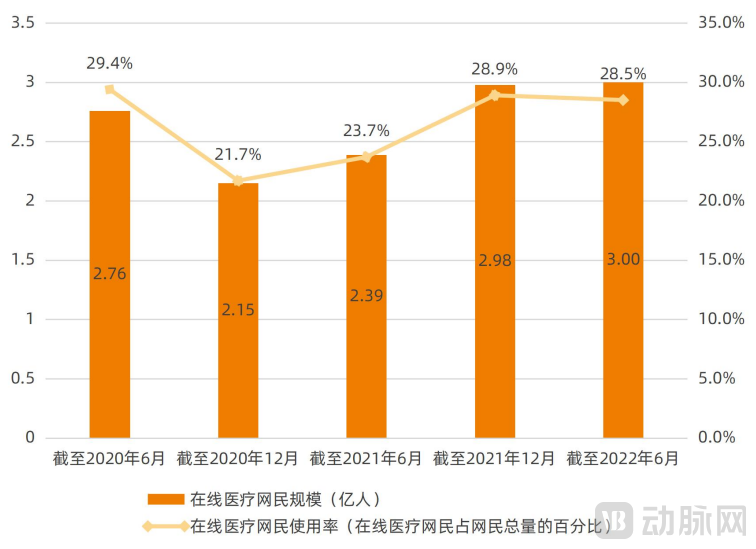
Trends in the Scale and Utilization Rate of Medical Users, Data Source: China Internet Network Information Center, Prepared by VCBeat
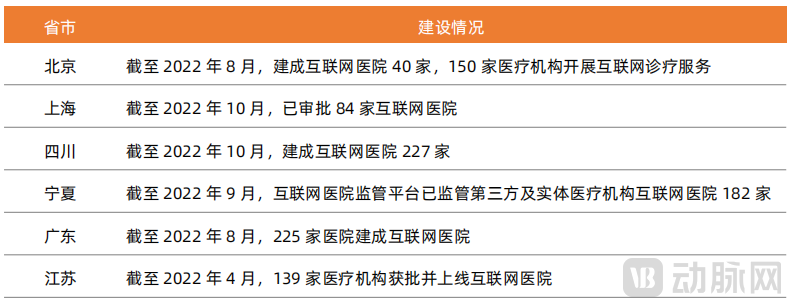
Status of Internet Hospital Construction in Selected Provinces and Cities. Source: Local Health Commissions; compiled by VCBeat.
For physicians, internet hospitals can enhance the efficiency of patient management, accumulate more medical records to facilitate professional development, generate greater economic returns, and help establish personal brands while expanding their influence.
From the hospital’s perspective, internet hospitals serve as a crucial vehicle for extending medical services beyond the hospital walls and improving service quality, while also helping hospitals expand their influence.
The ultimate goal of business operations is to realize economic value while delivering user value; internet hospitals serve as the infrastructure for providing online medical services and building business models.
The expansion of internet hospitals in terms of scale, including the number of institutions and service volume, has delivered evident value to all stakeholders. However, challenges have emerged alongside the industry’s rapid development.
In the past two years, the industry has witnessed phenomena such as AI-generated prescriptions, over-the-counter medication images passing prescription audits, and medications being dispensed before prescriptions were issued. Following the introduction and implementation of internet diagnosis and treatment regulatory policies in regions such as Yinchuan (Ningxia), Hainan, and Sichuan, these issues have shown improvement.
Currently, media reports indicate that misdiagnoses and perfunctory medication consultations during online medical consultations still occur from time to time. For example, some patients have sought treatment from multiple doctors on different platforms for the same condition, only to receive inconsistent diagnoses. Additionally, some patients have encountered platforms issuing prescriptions instantly when purchasing prescription drugs online; even when describing symptoms inconsistent with the medication, the platform still issued a prescription without providing any professional advice.
The emergence of the aforementioned issues may cause harm to patients, damage the professional image of physicians and internet hospitals, and thereby hinder the overall development of the industry.
Therefore, it is imperative to further strengthen process supervision of internet hospital services, thereby enhancing the quality of medical care.
Dual Regulation of Healthcare and Pharmaceuticals: Charting the Course for the Industry’s Healthy Evolution
Medical practice and pharmaceuticals are the core elements affecting quality and safety. In 2022, the Detailed Rules for the Supervision and Administration of Internet Diagnosis and Treatment (Trial) and the Measures for the Supervision and Administration of Online Drug Sales were issued, establishing management guidelines for internet hospital-related services from the two dimensions of medical practice and pharmaceuticals, respectively. These regulations ensure seamless integration between medical and pharmaceutical oversight, providing clearer direction for the healthy development of the industry.
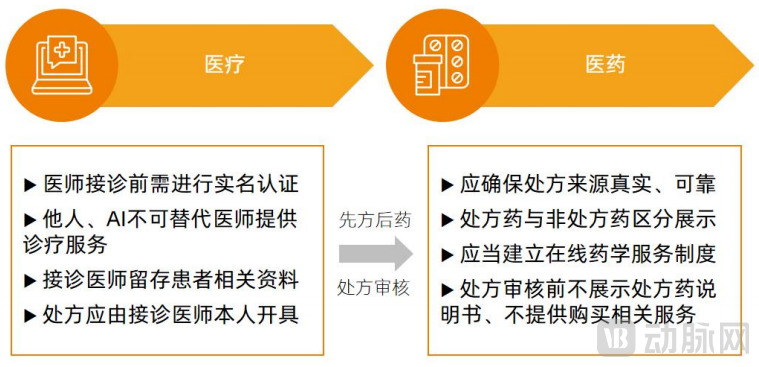
Key Points of Regulatory Policies on “Medical Services + Pharmaceuticals” in Internet Healthcare, Source: Official Websites of the National Health Commission and the National Medical Products Administration, Prepared by VCBeat
The two documents focus on regulating internet-based diagnosis and treatment, with an emphasis on oversight of medical institutions, healthcare professionals, clinical services, and quality and safety. They particularly stress that diagnosis, treatment, and prescription issuance must be conducted by licensed physicians themselves; impersonation or substitution by other individuals or AI is prohibited. Meanwhile, detailed management rules for online drug sales have been established from the perspectives of e-commerce platforms, retail enterprises, and the sale of prescription medications.
Meanwhile, both documents emphasize the strict protocol of prescribing before dispensing, thereby achieving effective integration in the management of the two key service components—medical consultation and pharmaceutical dispensing—within internet hospitals.
Physicians are the most direct providers of online healthcare services; they possess a keen awareness of medical quality, and their clinical practices directly impact it. Survey data from physicians indicate that for internet hospitals (primarily third-party platforms) to attract more high-quality physicians, they must first enhance the platform’s own quality. Offering competitive income and efficient, intelligent tools can encourage physicians to improve the quality of care. Meanwhile, platforms need to implement corresponding medical quality assurance measures throughout the entire process—pre-consultation, during consultation, and post-consultation—and establish a multi-dimensional quality assurance system encompassing compliance, continuity, and effectiveness.
The introduction of regulatory policies for “Internet + Healthcare and Pharmaceuticals” has further clarified the direction for the industry’s high-quality development; advancing industry practices to improve medical quality requires collaborative efforts from multiple stakeholders, with specific approaches warranting discussion from various perspectives.
This report, centered on the pivotal role of physicians in internet hospitals, investigates the construction of medical quality in internet hospitals by examining physician participation, perceptions, and recommendations.
The Quality of Internet Healthcare Platforms Has Become a Key Criterion for Physicians’ Selection
Surveys indicate that the majority of internet-based physicians originate from public medical institutions. Given their limited capacity, these physicians choose to practice on only a select few third-party platforms. When selecting platforms, key considerations include the size and quality of the user base, as well as the compliance of diagnostic and treatment processes and content.
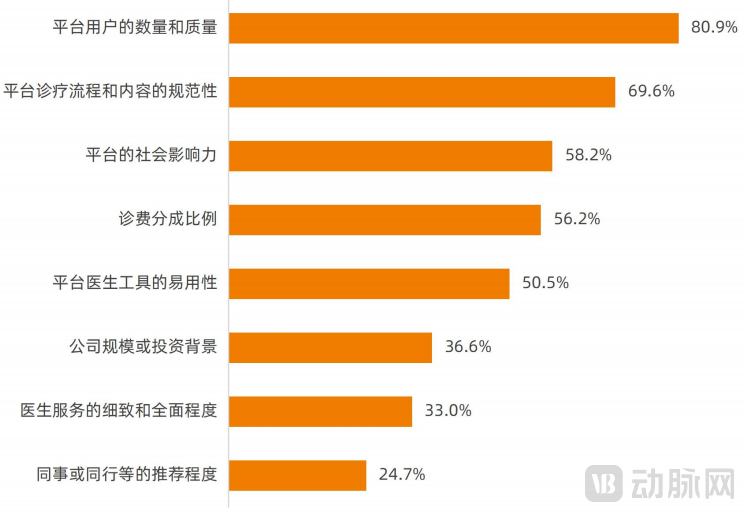
Key Factors Influencing Doctors’ Choice of Internet Healthcare Platforms, by VCBeat
Most internet healthcare platforms aim to attract more renowned specialists and leading physicians to join, thereby enhancing their professional service capabilities and gaining patient trust. Surveys indicate that senior-level physicians place greater emphasis on platform compliance.
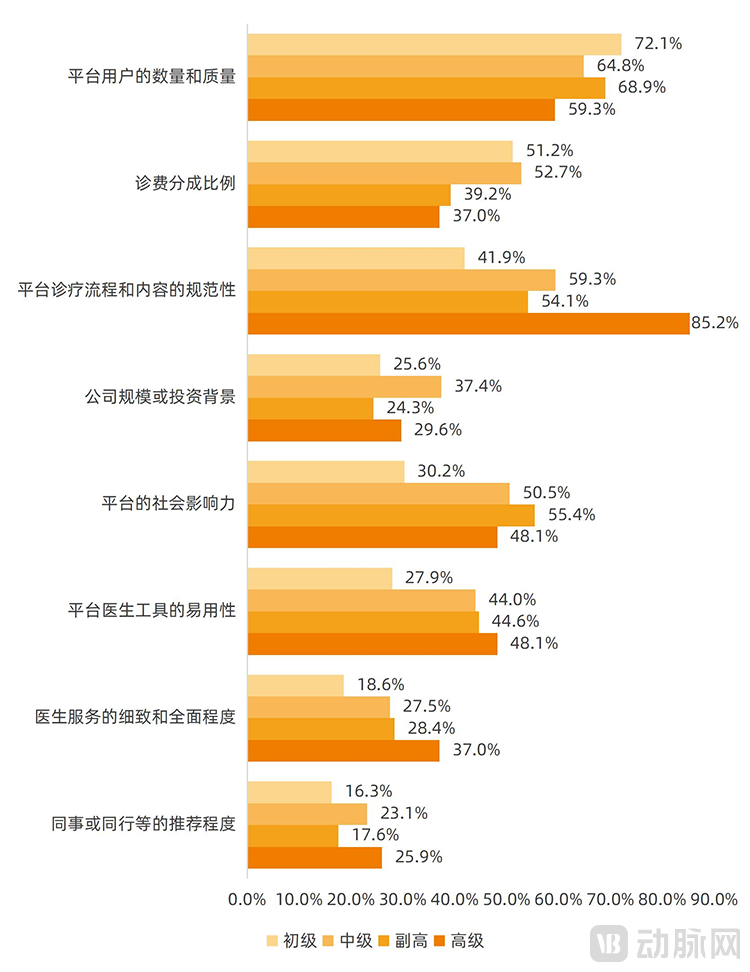
Differences in Factors Considered by Physicians at Different Levels When Choosing Internet Healthcare PlatformsVCBeat Institute
An analysis of the primary factors considered by physicians at different career stages when selecting third-party platforms reveals that the quantity and quality of platform users are common priorities. In addition, junior physicians, who have relatively shorter working experience, place greater emphasis on the consultation fee revenue-sharing ratio in pursuit of higher income. In contrast, senior physicians prioritize the standardization of clinical workflows and content, as well as social influence; notably, 85.2% of physicians with senior professional titles selected platform compliance as a key factor.
Therefore, to attract more senior physicians to join the platform, it is essential to strengthen regulatory compliance and prioritize medical quality management.
Substantial income, physician tools, and other incentives can promote improvements in healthcare quality among physicians
The subjective actions of physicians during clinical practice may lead to varying outcomes in healthcare quality. If supported by competitive compensation and efficient, intelligent physician tools, doctors will be motivated to deliver higher-quality medical services.
During the provision of services by physicians in internet hospitals, various subjective factors may affect the quality of medical care. Examples include insufficient acquisition of patient information and having others substitute for patient consultations.
Overall, these factors may stem from physicians’ intentional or unintentional actions, with root causes including excessive workloads, insufficient understanding of regulations governing online medical practice, and the pursuit of greater financial returns. Addressing these underlying issues requires not only self-discipline on the part of physicians but also enhanced self-regulation by platforms, which should provide support to physicians through institutional frameworks and technological tools to eliminate such problems at their source.
How to Provide Support for Physicians? Perspectives from Both Institutional and Application Levels. From an institutional standpoint, offering substantial compliant income and facilitating advancements in medical technical capabilities can motivate physicians to improve the quality of healthcare delivery.
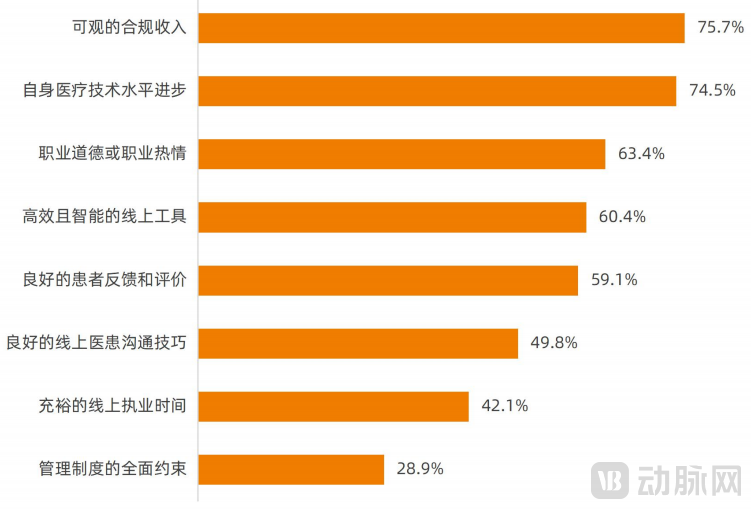
The Key Factors Driving Physicians to Improve Medical Quality,VCBeat Institute
In terms of practical application, physicians primarily seek assistance from tools such as patient follow-up systems, physician assistants, and patient data collection or analysis platforms.
Internet Hospitals Must Ensure Medical Quality Throughout the Entire Diagnosis and Treatment Process
Whether physicians practice within their “own” internet hospitals or on third-party platforms, the ultimate quality of care is influenced by the platform’s process design, service content planning, and rules and regulations. Therefore, platforms are also key stakeholders in improving healthcare quality. From the physician’s perspective, platforms must play an active role throughout the entire care continuum, including pre-consultation, during consultation, and post-consultation phases.
During the pre-consultation phase, internet hospital platforms primarily ensure quality by prompting and guiding patients to upload complete documentation. From physicians’ perspective, measures such as patient real-name authentication, platform-guided completion of patient information, and risk alerts are highly effective in enhancing medical care quality.
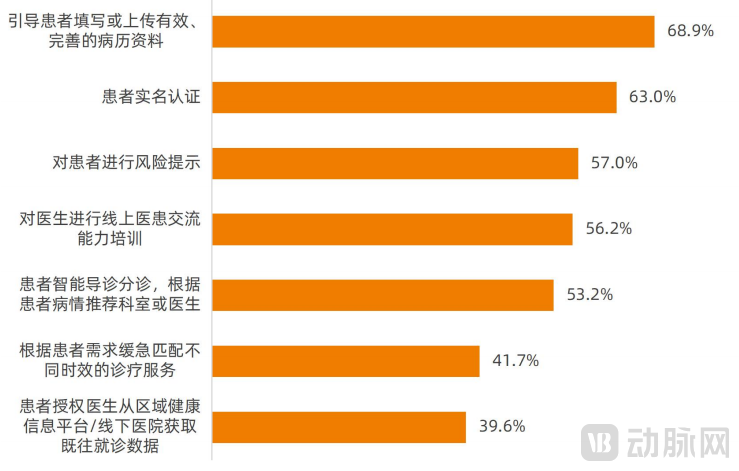
Quality Improvement Measures in the Pre-Consultation Phase of the Platform: A Physician’s Perspective,VCBeat.
Physicians also evaluated the effectiveness of these measures. Data show that, among pre-consultation initiatives, physicians rated patient real-name authentication, guiding patients to complete or upload comprehensive and valid information, and providing risk warnings to patients as the most effective in improving healthcare quality, with scores of 4.63, 4.60, and 4.51, respectively. These practices have already been implemented by many platforms in industry practice, and further strengthening is needed in the future.
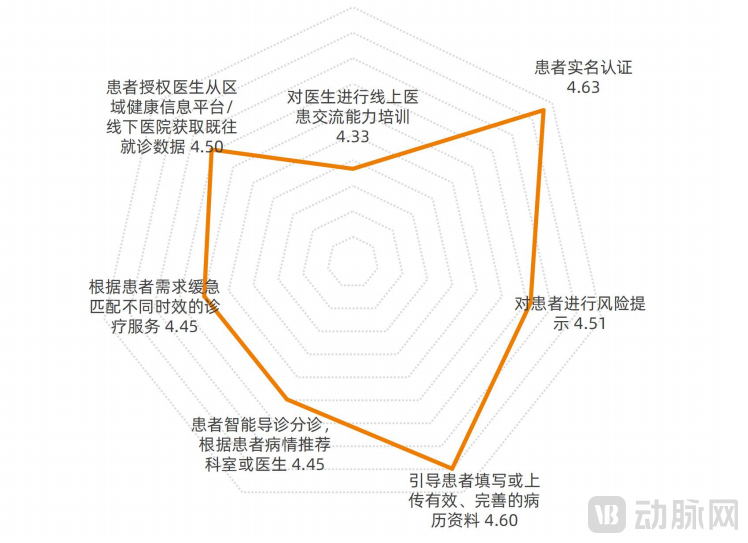
Evaluation of the Effectiveness of Pre-Consultation Measures from a Physician’s Perspective,VCBeat.
Furthermore, the effectiveness score for patients authorizing physicians to access their historical medical data is also high. Overall, these highly effective measures serve as safeguards for ensuring comprehensive mastery of patient information. As internet hospitals primarily cater to follow-up patients, there are heightened requirements for accessing medical records. In addition to documents uploaded by the patients themselves, information technology can be leveraged to automatically retrieve historical medical records from previous visits, thereby maximizing the comprehensiveness and objectivity of the obtained data and facilitating the determination of whether a patient qualifies for a follow-up consultation.
During the consultation phase, the platform ensures medical quality by providing combined communication methods, issuing risk alerts to physicians, and maintaining complete records of doctor-patient interactions. Physicians participating in the survey considered that among these measures, offering combined communication methods, intelligent medical record documentation, and comprehensive recording of doctor-patient interactions were the most effective in safeguarding medical quality.
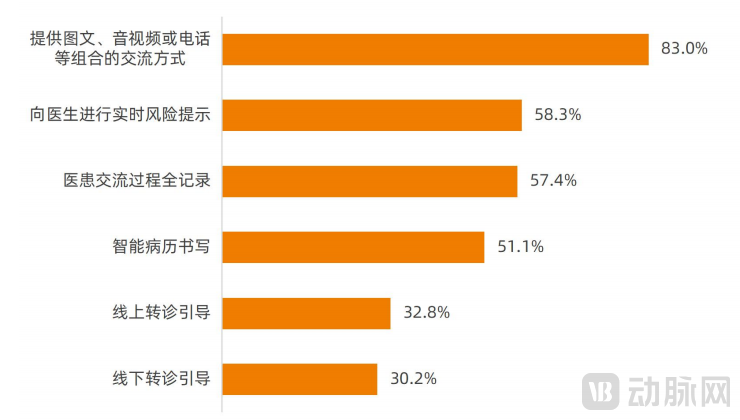
Quality Improvement Measures in the In-Consultation Phase of the Platform from a Physician’s Perspective,VCBeat Institute
Survey results indicate that, regarding quality assurance during the consultation phase, 83.0% of physicians perceived that the platform provided combined communication methods such as text-and-image, audio-video, or telephone interactions; 58.3% of physicians perceived that the platform offered real-time risk alerts; and 57.4% of physicians were aware that the platform maintained complete records of doctor-patient communications.
Furthermore, intelligent medical record documentation, online referral guidance, and offline referral guidance are also measures adopted by the platform from the perspective of healthcare quality.
In the post-consultation phase, the platform primarily promotes improvements in healthcare quality through measures such as displaying patient satisfaction ratings, sending medication adherence reminders, and issuing follow-up visit and re-examination alerts. From physicians’ perspectives, long-term patient follow-up, regular medication reminders, and follow-up visit and re-examination alerts are the most effective interventions.
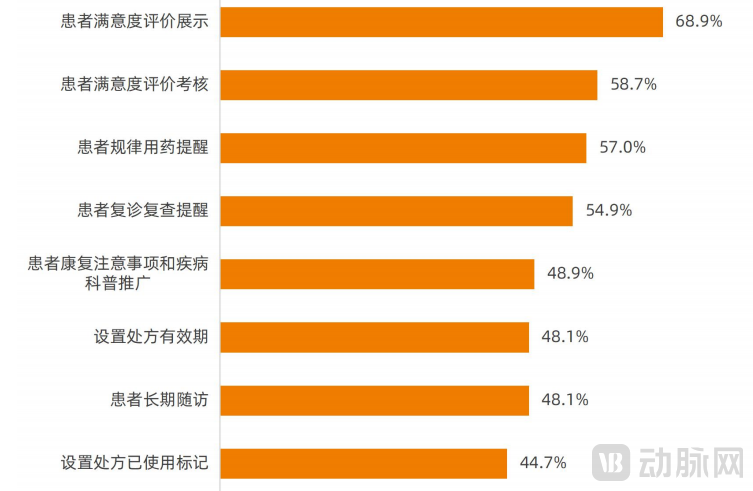
Quality Improvement Measures in the Post-Consultation Phase from a Physician’s Perspective,VCBeat.
Surveys indicate that, regarding quality assurance measures in the post-consultation phase, 68.9% and 58.7% of physicians, respectively, perceived that platforms display and assess patient satisfaction; meanwhile, 57.0% and 54.9% of physicians, respectively, perceived that platforms provide reminders for regular medication adherence and follow-up visits/re-examinations. These represent the most widely adopted measures by platforms.
Physicians participating in the survey also noted that displaying drug prices and logistics information on the platform can be regarded as a means of ensuring healthcare quality.
Establish a quality system across dimensions such as compliance, continuity, and effectiveness.
Quality construction and management of internet hospitals are related to multiple dimensions, including physician participation and platform initiatives. Comprehensively speaking, the compliance of service content and processes, the continuity of service links, and the effectiveness of diagnostic and treatment outcomes are the most critical factors in their development.
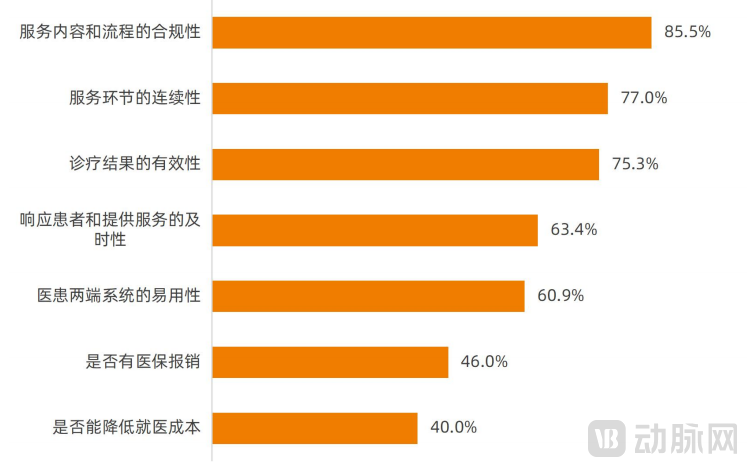
Dimensions of Building a Medical Quality System for Internet Hospitals from the Physician’s Perspective,VCBeat.
Among these dimensions, effectiveness embodies the essence of healthcare, while continuity leverages the characteristics of the internet to overcome the fragmentation of traditional healthcare scenarios, thereby ensuring seamless integration across the entire service process.
Furthermore, quality construction and management also encompass the timeliness of responses and services, the ease of use of systems, and even considerations such as medical insurance reimbursement and the reduction of healthcare costs.
Driven by market demand, policy guidance, and the awareness of key stakeholders, the industry has never been more clear that medical quality and safety are the cornerstone of its long-term development. Through interviews with various enterprises and institutions, VCBeat has found that the industry is currently implementing practices to ensure quality and safety across three major areas: standards implementation, service construction, and technological enablement.
Standard Implementation: Standardized Management Pathways, Implementation of Expert Consensus, and Optimization of Service Outcomes
In response to the uneven quality of online medical consultations, the tendency for some consultations to become mere formalities, and physicians’ limited understanding of online practice regulations and lack of experience in communication skills, the industry is enhancing the quality of online healthcare through standardized diagnosis and treatment or disease management protocols, as well as the development and implementation of expert consensus statements.
Generally, expert consensus on online disease management is developed through multidimensional analysis of clinical data based on research into internet-based patient management, providing guidance and reference for standardized disease management. In areas such as standards for internet-based diagnosis and treatment, quality management, and data privacy protection, expert consensus offers guiding recommendations for the standardization of internet-based medical services. It serves as a long-term actionable guide for conducting internet-based diagnosis and treatment, further improving and enhancing these services to better serve patients.
Overall, the systematic mapping of internet-based disease management pathways and the establishment of expert consensus on online diagnosis and treatment for relevant diseases have further promoted the positive development of telemedicine—
On the one hand, implementing internet-based disease management for patients, or even comprehensive disease management that spans online and offline settings as well as within and outside hospitals, helps to further alleviate the healthcare burden. From health education and early disease prevention to disease screening, treatment, regular follow-up visits, and medication guidance, it effectively promotes early detection, early diagnosis, and early treatment. Generally, earlier detection and treatment during the course of a disease can further reduce the disease burden and improve patients' quality of life.
On the other hand, the implementation of the Expert Consensus on Internet-based Diagnosis and Treatment has helped various internet hospitals gradually shift from lightweight consultations to the core of medical practice.
Previously, although internet-based diagnosis and treatment had the potential to break the temporal and spatial constraints of traditional medical services, increase service accessibility, improve service efficiency, facilitate timely physician intervention and whole-course disease management, enhance patient health outcomes, reduce consultation time, and meet diverse health needs, its effectiveness was often hindered. This was primarily due to insufficient understanding of internet-based diagnosis and treatment processes among both patients and physicians, skepticism regarding its efficacy and quality, and a lack of standardized guidelines for reference. However, the establishment of expert consensus has further enhanced awareness among patients and healthcare providers practicing internet medicine, while also driving an overall improvement in the quality of services offered by these platforms.
Service Architecture: Strengthening Specialty and Disease-Specific Capabilities to Meet Individual Needs Within Large Populations
As internet-based healthcare initiatives continue to deepen, medical institutions and platforms have increasingly recognized the diversity of patient needs. In response to varying patient demands, they are exploring and implementing different approaches in service design to deliver a diverse range of services.
Patients with different diseases require significantly different interventions and management, which fundamentally leads to variations in the operational logic of internet healthcare platforms and enables more precise matching of service content for users.
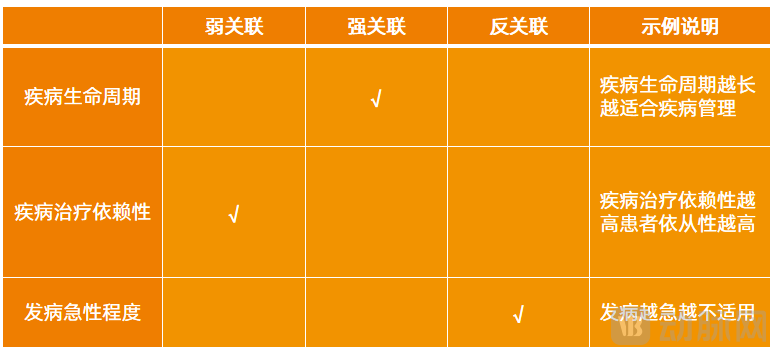
Types Suitable for Disease Management, by VCBeat
Some platforms have chosen cancer patients with higher compliance as their target users, while others have focused on providing management services for diabetic patients. These two diseases well represent the divisions in disease management: one is the disease lifecycle; diseases with too short a lifecycle, such as the common cold, often do not require extensive disease management, and what is suitable for disease management are usually long-term "chronic diseases"; the other is the urgency of treatment, where cancer patients and diabetic patients have completely different needs and perceptions regarding professional medical services. Of course, conditions that may involve acute episodes are not necessarily suitable for patient management.
In this process, to provide users with precise medical and health services and to consolidate patient service data, platforms often need to have an in-depth understanding of patients and identify suitable candidates for matching with relevant services.
Specialized disease-specific services can connect medical resources for specific patient groups and represent the primary form of offline healthcare delivery. Online healthcare is also deepening its specialized disease-specific offerings, thereby promoting improvements in care quality.
In terms of specialty services, VCBeat’s statistical analysis of hundreds of internet hospitals found that general hospitals and traditional Chinese medicine (TCM) hospitals dominated the landscape, while specialized hospitals were primarily focused on high-volume specialties such as cardiology and endocrinology, as well as those with strong consumer demand like dentistry and ophthalmology. Today, with thousands of internet hospitals in operation, the covered departments have long since expanded into more specialized sub-disciplines.
Meanwhile, the development of specialized disease service systems is also accelerating.
Disease-specific services primarily focus on the diagnostic, therapeutic, and rehabilitative needs of patients by integrating diverse medical resources. The medical team may comprise specialists from multiple disciplines, and the scope of services extends beyond diagnosis, treatment, and rehabilitation to include humanistic care. Given that clinical pathways for the same disease are similar, disease-specific services not only enable intensive and efficient utilization of medical resources but also facilitate the accumulation of precise disease data for scientific research, thereby even meeting the requirements of payment system reforms.
As internet platforms deepen their engagement in specialized medical services for specific conditions and ensure the supply of high-quality healthcare, they are also delivering these services through more diverse product formats. By offering personalized service packages that meet users’ one-stop needs, these platforms also facilitate commercialization.
Technological Empowerment: Integrating Technology Across Key Services to Enhance Outcome Management Through Process Management
The development of internet healthcare has gone hand in hand with digital technology, which plays a crucial role in the process of online diagnosis and treatment services. Digital technologies and tools can exert targeted effects during the pre-consultation, consultation, and post-consultation phases to ensure medical quality and safety. Of course, all this is based on a fundamental premise: AI is strictly prohibited from replacing physicians in prescribing medications or pharmacists in reviewing prescriptions.
In the pre-consultation phase of internet hospitals, technology is primarily applied to information matching, such as patient education and guided triage, helping patients match with the most suitable departments and physicians. This is a prerequisite for obtaining high-quality, symptom-specific treatment in subsequent stages.
Currently, major platforms not only allow patients to fill out corresponding patient profile templates themselves but also enable the collection of basic information through multi-turn Q&A interactions with AI, significantly reducing the burden on patients.
To better alleviate patient anxiety, some platforms are leveraging AI to develop appropriate disease self-assessment tools. The application of AI-driven digital products for self-screening and self-testing in certain departments, such as dermatology and psychology, has helped patients gain a better understanding of disease progression. Meanwhile, popularizing relevant disease knowledge has further reduced the burden on doctor-patient communication.
During the consultation phase, platforms often implement various technical measures to alleviate physicians’ workload, better present patient information and medical records, and leverage digital tools to enhance diagnostic support.
Within the hospital, physicians can access patients’ current diagnostic status, including ongoing examinations, through the Hospital Information System (HIS) and formulate corresponding diagnosis and treatment plans based on clinical practice guidelines. During online follow-up consultations, platforms need to provide comprehensive medical record presentation and decision-support tools to assist physicians in making more accurate clinical judgments.
In the post-consultation phase, internet hospitals primarily leverage technology for follow-up management, data monitoring, and automated reminders to strengthen patient engagement, enhance self-management and medication adherence, and ultimately achieve better therapeutic outcomes.
As regulations tighten, medical quality improves, and patient usage habits become established, internet hospitals are poised to fully enter an era of service-based fees, including charges for clinical services provided by physicians and fees for various ancillary services offered by the platforms.
The industry had long recognized that free medical consultations cannot serve as a sustainable strategy for user acquisition and retention. However, following the outbreak of the pandemic in 2020, to address healthcare access issues during lockdowns and to rapidly scale up online consultation services in the short term, both various types of internet healthcare platforms and public hospitals’ online diagnosis and treatment services widely introduced free consultations or high-frequency online charity clinics.
As epidemic prevention and control measures have become routine, and the operation of internet hospitals has entered a normalized phase, alongside the gradual improvement of service items and pricing for online medical services within the public healthcare system, most online consultations have adopted fee-based models. Within the public healthcare system, online services are also being offered through special-needs outpatient clinics, thereby resolving the previous issue where expert consultations could only be billed at the rate of general practitioners.
Meanwhile, the involvement of payers, particularly the gradual expansion of medical insurance coverage, will further promote the improvement of internet healthcare quality.
Since the onset of the pandemic in 2020, medical insurance coverage for internet hospitals has primarily encompassed fees for online follow-up consultations and medications for chronic diseases. As the new healthcare reform advances, payment models such as diagnosis-related group (DRG) payments and capitation are being implemented in physical hospitals. In 2022, these payment mechanisms were further integrated with services provided by internet hospitals. In June 2022, Tianjin fully rolled out a capitated global budget payment model for outpatient care of diabetes as a specified disease, with internet hospitals serving as one of the delivery channels for these services.
The same holds true for commercial insurance payments. Since 2022, commercial health insurance has accelerated its integration with internet healthcare services. However, such services currently serve mostly as “nice-to-have” add-ons within insurance products, and their potential to genuinely reduce health risks and lower medical expenditures has yet to be fully realized. Going forward, efforts must focus on improving quality and demonstrating tangible outcomes.
The above is an excerpt from the main content of the report. The complete framework of the report is as follows. Scan the QR code to add our assistant and obtain the full report; if you have already added the assistant, please initiate your request proactively.

Chapter 1 Industry Overview: New Round of Policy Implementation Accelerates Standardized Development
1.1 Internet Hospitals Have Demonstrated Multidimensional Impact, with Quality Standardization Being an Inevitable Path
1.2 Dual Regulation of Healthcare and Pharmaceuticals: Charting the Course for Healthy Industry Evolution
Chapter 2 Industry Research: Building a Multi-Dimensional Quality Construction System to Achieve Both Regulation and Innovation
2.1 Quality of Internet Healthcare Platforms Becomes a Key Selection Criterion for Physicians
2.2 Substantial Income and Physician Tools Can Promote Improvements in Healthcare Quality
2.3 Internet hospitals must ensure medical quality throughout the entire diagnosis and treatment process
2.4 Hospitals Need to Build a Quality System from Dimensions Such as Compliance, Continuity, and Effectiveness
Chapter 3 Industry Practice: Integrated Innovation in Standards, Products, and Technology
3.1 Standard Implementation: Standardized Management Pathways, Implementation of Expert Consensus, and Optimization of Service Outcomes
3.2 Service Construction: Strengthening Specialized Disease Management Capabilities to Meet Individual Needs Within Large Populations
3.3 Technological Enablement: Technology Application Across Key Services, Promoting Outcome Management Through Process Management
Chapter 4 Industry Trends: Payers Will Become the Driving Force for Quality
4.1 The Industry May Fully Enter the Era of Service Fees
4.2 Payers Will Further Promote the Improvement of Healthcare Service Quality