

Jingyi Hesheng's T2DM Herbal New Drug, Backed by Traditional Chinese Medicine Innovation, Expected to Launch in 2024 Following Recent IPO Filing
Supreme Life
Provider of Specialized Clinical Treatment Solutions in Traditional Chinese Medicine
Traditional Chinese Medicine, as a treasure of Chinese traditional culture, has received significant policy support.
Since the 18th National Congress of the Communist Party of China, the state has frequently issued policies to provide comprehensive support for the development of Traditional Chinese Medicine (TCM), elevating TCM development planning to the national level. These efforts aim to address many long-standing fundamental issues in the industry, such as low standardization, poor inheritance, and a shortage of talent. With far-sighted policy initiatives, the industry is currently experiencing an unprecedented policy window period.
On September 21, 2022, the National Office for the Promotion of Healthy China Action, the National Health Commission, and the National Administration of Traditional Chinese Medicine jointly issued the “Notice on Launching the Special Campaign for TCM Health Promotion under the Healthy China Action.” This notice further implements the opinions of the Central Committee of the Communist Party of China and the State Council on promoting the development of traditional Chinese medicine (TCM), and outlines initiatives such as increasing the rate of TCM-based health management, promoting the TCM system for prevention and treatment of chronic diseases, and enhancing the public’s cultural literacy in TCM.
This notice is fully aligned with the national core guidelines for the development of Traditional Chinese Medicine (TCM), further underscoring the state’s firm commitment to supporting TCM advancement. It introduces several sustainable, highly implementable “first-of-their-kind” policies, representing another significant boon to the TCM industry.
In terms of specific content, this notice aims to increase the participation rate of Traditional Chinese Medicine (TCM), covering a broad population (women, children, the elderly, and adolescents), promoting TCM-based prevention and control of chronic diseases, advancing the TCM concept of “preventive treatment of disease,” and disseminating appropriate TCM technologies. It also supports primary healthcare institutions in providing family doctor services, promotes the dissemination of TCM culture, and enhances the public’s cultural literacy in TCM. These measures emphasize leveraging TCM’s strengths in preventive care, integrating TCM throughout the entire diagnosis and treatment process, and reflecting a national shift in health objectives from passive treatment to proactive prevention.
In fact, after thousands of years of development and validation, Traditional Chinese Medicine (TCM) has formed a unique medical system, offering distinct advantages in disease prevention and chronic disease management.
Taking diabetes as an example. On September 7, 2022, China’s first guideline for the prevention and treatment of diabetes with traditional Chinese medicine (TCM) at the primary care level, the National Guideline for TCM Prevention and Treatment Management of Diabetes at the Primary Care Level, was released. The Guideline clarifies the efficacy of TCM in preventing and treating diabetes: First, TCM can synergistically help control blood glucose levels and alleviate symptoms; second, TCM can prevent and treat diabetic complications; third, combining acupuncture therapy with conventional treatment has certain effects on lowering blood glucose, improving lipid metabolism, and promoting weight loss.
The Guidelines have, for the first time, added a chapter on “Traditional Chinese Medicine (TCM) Prevention and Treatment of Diabetes,” actively encouraging and supporting the integration of TCM into the comprehensive prevention and control system for diabetes. This approach leverages the advantages of TCM’s holistic perspective and syndrome differentiation-based treatment, incorporates comprehensive constitution identification, and employs various methods—including both pharmacological and non-pharmacological interventions—to carry out integrated prevention and management. Beyond diabetes, TCM’s distinctive therapeutic philosophy, systematic theoretical foundation, complete framework of principles, methods, formulas, and herbs for prevention and treatment, as well as its diverse therapeutic modalities, all demonstrate the unique advantages of TCM in the prevention and management of chronic diseases.
From the payer perspective, medical insurance is also tilting towards traditional Chinese medicine (TCM), which benefits TCM innovation. In December 2021, the National Healthcare Security Administration and the National Administration of Traditional Chinese Medicine jointly issued the "Guiding Opinions on Medical Insurance Supporting the Inheritance, Innovation, and Development of Traditional Chinese Medicine," requiring the improvement of payment policies suited to the characteristics of TCM.
“The Opinion” states that appropriate preferential treatment should be granted in the global budget allocation to tightly integrated county-level medical consortia led by traditional Chinese medicine (TCM) healthcare institutions. It also calls for advancing reforms in TCM medical insurance payment methods. TCM healthcare institutions may be temporarily exempted from implementing Diagnosis-Related Group (DRG)-based payment. In regions where DRG and case-based point-value payment systems have already been implemented, the coefficients and point values for TCM healthcare institutions and TCM-specific diseases should be appropriately increased to fully reflect the unique characteristics and advantages of TCM services.
The document further emphasizes that the procurement and use of Chinese proprietary medicines included in the National Reimbursement Drug List through state-level negotiations will be subject to monitoring and evaluation. By fully leveraging the “dual-channel” drug management mechanism, access channels for insured patients will be expanded to designated retail pharmacies, thereby better safeguarding the medication needs of the insured population.
Fueled by supportive national medical insurance policies and the continuous optimization of traditional Chinese medicine (TCM) approval and evaluation regulations, enthusiasm for innovative R&D of new TCM drugs is being galvanized. It is against this backdrop that Supreme Life was established, dedicated to the standardization, scientific research, and commercial translation of specialized clinical treatment solutions in TCM.。
Of the 400 enrolled patients, 206 achieved glycated hemoglobin levels below 6.5%,
New Drug for Type 2 Diabetes Poised to Hit Market Three Years Early
Mr. Ren, a resident of Fengtai District in Beijing, has a 10-year history of diabetes. He has been on long-term oral treatment with metformin and acarbose, along with daily injections of 13 units of insulin. His postprandial blood glucose level reached as high as 24.29 mmol/L, while his glycated hemoglobin (HbA1c) level was 6.9%.
Mr. Ren was enrolled as one of the first volunteers for Supreme Life in November 2019. Supreme Life required Mr. Ren to discontinue his oral hypoglycemic agents and, according to protocol, gradually taper off insulin within 15 days, switching to treatment with a standardized traditional Chinese medicine (TCM) formula. After one month, Mr. Ren’s postprandial blood glucose decreased from 24.29 mmol/L to 7.84 mmol/L. Following six months of treatment, his postprandial blood glucose further dropped to 7.6 mmol/L, and his glycated hemoglobin (HbA1c) level reached just 5.6%, achieving diabetes remission. Twenty-two months after discontinuing both Western and Chinese medications, Mr. Ren underwent a scheduled follow-up examination at the hospital, where his HbA1c remained at only 6.0%, indicating clinical cure.
From November 2019 to October 2022, Supreme Life conducted treatment and clinical research on 400 categorized patients across 10 hospitals in Beijing. The study included four control groups: patients previously on insulin injections, those on oral hypoglycemic agents, those on both oral hypoglycemic agents and insulin injections, and untreated patients. The overall effective rate reached 92.75%. After discontinuation of both traditional Chinese and Western medicines, 206 patients (51.50%) achieved glycated hemoglobin (HbA1c) levels below 6.5%.
Supreme Life’s Traditional Chinese Medicine (TCM) treatment regimen for diabetes has received strong support from the Beijing Administration of Traditional Chinese Medicine, Beijing Hospital of Traditional Chinese Medicine, and other institutions.Professor Zheng Yang, Department of Scientific Research, Beijing Hospital of Traditional Chinese Medicine“He stated, ‘Unlike Western medicines that target single indicators, Supreme Life’s regimen not only demonstrates significant efficacy in blood glucose control for type 2 diabetes but also regulates the human endocrine system. Many patients have experienced varying degrees of reduction in pathological blood pressure, blood lipids, and uric acid levels. We are currently assisting the team in organizing data, with the underlying mechanisms serving as a key focus of our future research.’”
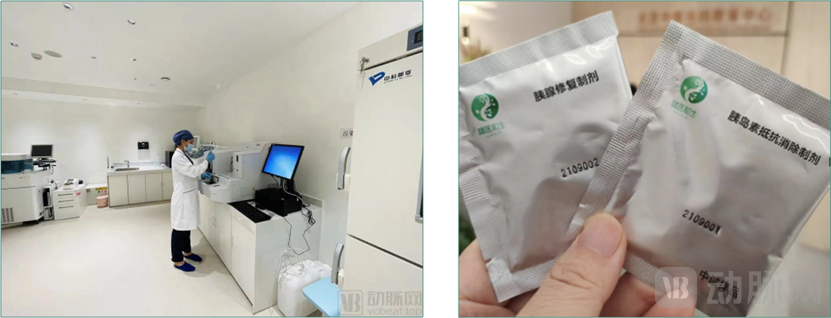
Since December 2017, Supreme Life has focused on Hu Tianbao’s “Specimen Contrary Compliance Method,” a Traditional Chinese Medicine (TCM) methodology for treating diabetes, in Qujing, Yunnan Province. Using this approach as a prototype, the company conducted multi-center, large-sample trials at various hospitals and community health centers in Beijing and other regions. Meanwhile, Supreme Life established a scientific big data platform to enable comprehensive scientific monitoring of each patient, thereby optimizing prescriptions and developing a standardized TCM treatment protocol centered on “eliminating insulin resistance and repairing pancreatic function.”
Favorable policies for traditional Chinese medicine trials and approvals are also accelerating Supreme Life’s product development process.
For a long period, the review and approval standards for traditional Chinese medicine (TCM) were based on those for chemical drugs, which did not align with the R&D patterns of TCM, the theoretical system of Traditional Chinese Medicine, or the historical record of human use experience. This mismatch has led to issues such as indistinct advantages and insufficient innovation among many approved TCM products, hindering the historical inheritance and modernization development of TCM.
Government departments have also gradually recognized this situation and responded with policy measures.
In 2021, the "Classification of Traditional Chinese Medicine Registration and Requirements for Submission Materials" was issued, which classifies traditional Chinese medicine registration according toInnovative Traditional Chinese Medicine (TCM) Drugs, Improved New TCM Drugs, and TCM Compound Preparations Based on Ancient Classic Prescriptions,Classification of drugs with the same name and formulation, etc.,Clarify that the first three categories belong to new traditional Chinese medicine drugs;In April 2022, the Center for Drug Evaluation (CDE) of the National Medical Products Administration (NMPA) issued the "Guiding Principles for Communication and Exchange under the 'Three-Combination' Registration Review Evidence System (Trial Implementation)," introducing a framework based on“TCM Theory–Human Use Experience–Clinical Trials” Tripartite Evidence SystemSpecialized Review and Approval Standards for Traditional Chinese Medicine.
“Development of Traditional Chinese Medicine (TCM) Compound Preparations Derived from Ancient Classic Formulas (Category 3.2)”: A systematic summary of human use experience with TCM and an assessment of the drug's clinical value can exempt the need for pharmacodynamic studies and clinical trials.Under the new review framework, if a drug has prior usage experience and has already “gained clinical recognition,” it can be exempted from many preclinical studies. Since then, the industry has paid greater attention to in-hospital preparations and classical formulas.
It is understood that,While applying for the Phase II clinical trial approval, Supreme Life also initiated the application process for a Class 3.2 new drug. If approved, the approval timeline for Supreme Life’s prescription drug for type 2 diabetes will be shortened by at least three years compared to that of traditional Chinese medicine new drugs, with a potential market launch as early as 2024.
In early 2022, the team led by Bian Baolin at the Institute of Chinese Materia Medica, China Academy of Chinese Medical Sciences—the first in China to successfully develop a Class 3.2 new drug—had already taken over the R&D of diabetes pharmaceuticals for Supreme Life.
Supreme Life shares the same lineage with Zhongyi Online, a highly influential online platform in China dedicated to the inheritance and education of Traditional Chinese Medicine (TCM). He Jian, the founder and CEO of Supreme Life, also serves as the Chairman of Zhongyi Online. Leveraging internet technology, Zhongyi Online has established a platform for clinical TCM inheritance education, boasting extensive expert resources, including National Medical Masters and renowned senior TCM practitioners.
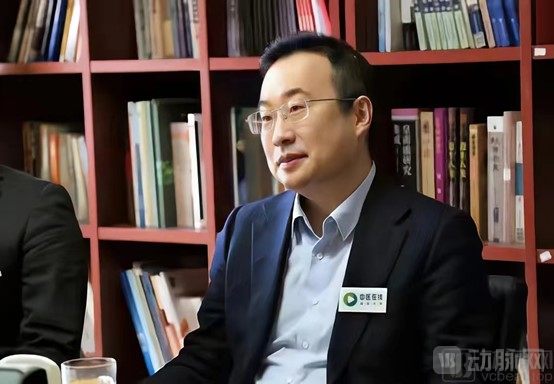
He Jian, Founder and CEO of Supreme Life, Chairman of TCM Online
Leveraging its online clinical education resources in Traditional Chinese Medicine (TCM), Supreme Life consolidates decades of specialized expertise accumulated by National TCM Masters, renowned veteran TCM practitioners, and clinical experts. It systematically organizes treatment solutions and clinical data for specific diseases. While inheriting and disseminating clinical TCM knowledge, Supreme Life also creates significant opportunities for further exploration in developing TCM clinical treatment protocols and advancing scientific research.
Supreme Life has successively obtained national invention patents for conditions such as gout and herpes zoster, and will continue to develop highly effective, standardized solutions and new varieties of proprietary Chinese medicines.Supreme Life is also committed to promoting and assisting pharmaceutical companies in the research and development of innovative drugs for related diseases.
“We aim to empower human health by harnessing ancestral wisdom and modern technology,” said He Jian. In March 2021, Supreme Life completed a RMB 35 million angel financing round, jointly invested by IDG Capital and Jiadao Capital, which is held by renowned investor Gong Hongjia.Currently, Supreme Life is conducting its Series A financing round to accelerate the market launch of new traditional Chinese medicine (TCM) drugs.