

Aptitude Medical Systems Files IPO Prospectus: Pioneering the Future of At-Home Molecular Diagnostics with OTC Molecular Test Platform
“Molecular OTC Test: A ubiquitous, rapid, simple, and intelligent closed-loop molecular diagnostic technology.”
Molecular diagnostics, as a highly sensitive in vitro diagnostic method, has a history spanning several decades. In the past, this technology was primarily implemented through expensive testing equipment in central laboratories and required operation by professionally trained personnel.
With continuous advancements in multiple technological fields, including isothermal nucleic acid amplification, molecular informatics, microfluidics, and remote communications, coupled with the gradual maturation of at-home self-testing policies and market conditions during the COVID-19 pandemic,Molecular OTC (Over-the-Counter) Tests Have Emerged, Enabling High-Performance Nucleic Acid Testing to Be Performed by Laypersons Outside Clinical Settings for the First Time。
Such products are OTC-certified, available through pharmacies, supermarkets, and e-commerce platforms, and are easy to carry. Ordinary consumers can independently perform sampling and testing after reading the instructions.Test results available within 30 minutes. The results will be automatically uploaded to the cloud and linked to the patient's electronic medical record and telehealth service providers, enabling remote consultations and e-prescribing via a mobile app.Complete the entire process from diagnosis to treatment without leaving home。
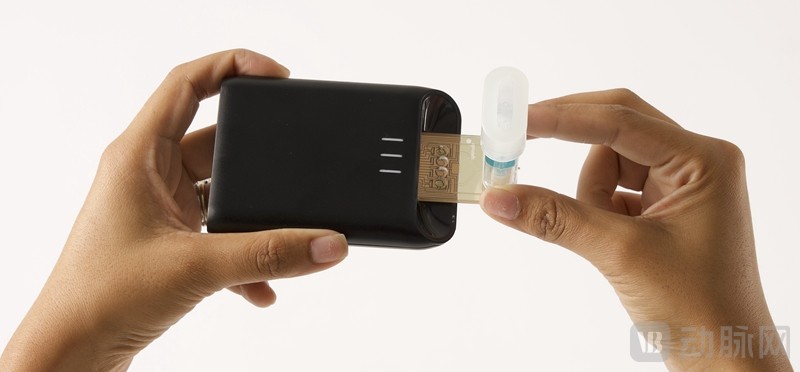
Molecular OTC testing is an emerging market segment. Currently, only four companies worldwide have received FDA approval for their related products, while there are no approved domestic products in China.
To gain a deeper understanding of the product features, application scenarios, and market potential of this technology, VCBeat recently interviewed aAptitude Medical Systems: Molecular OTC Test Platform(hereinafter referred to as: Aptitude)Dr. Qiang Gong, Founder and COO。
Aptitude, headquartered in California, USA, is a technology-driven company with one-third of its team members holding PhDs from top-tier universities such as Tsinghua University and Harvard University.。Dr. Qiang Gong received his bachelor’s degree from the Department of Biological Sciences at Tsinghua University., met the other two co-founders more than a decade ago while pursuing a Ph.D. in the United States. The three Ph.D. founders partnered to establish Aptitude in 2013,Accumulated over $30 million in funding, and has achieved breakthrough progress on multiple technical platforms and products. The molecular OTC Test platform is a significant culmination of Aptitude's long-term R&D accumulation, itsThe first product has recently received FDA approval., propelling this startup, which has been deeply focused on R&D, into the first tier of the molecular OTC test sector.
“To draw an analogy, smartphones are now an ‘Information Hub’ needed by everyone. We believe that molecular OTC test products can play the role of a ‘Healthcare Hub’ in users’ health management in the future,” he said in an interview.Dr. Qiang GongSpeaking of.Molecular OTC test products not only provide users with readily accessible, rapid, and accurate high-performance molecular diagnostic results, but also enable a complete closed-loop process from diagnosis to treatment by integrating with telemedicine.“This is the inevitable result of the people-centric, continuous evolution of in vitro diagnostic products.”
The application scenarios covered by molecular OTC test products, in addition to the well-known “Home Self-Testing” In addition, it can also be applied toGroup Testing、In-Hospital POCTsuch scenarios. For group testing, it enables on-site screening with rapid result turnaround, thereby ensuring the safety of group activities. In hospital-based POCT settings, it addresses the challenges associated with traditional POCT products, such as high instrument costs, complex operations, and substantial personnel training expenses. “OurThe instrument's selling price will be a fraction of that of POCT instruments.“It is easy to operate and space-efficient, making it highly suitable for medical institutions with low testing throughput,” said Dr. Gong Qiang.
Molecular POCT products and antigen testing products are two categories of competitors to molecular OTC tests.Molecular POCT lags behind molecular OTC tests in terms of funding requirements and ease of use, and it cannot be utilized in out-of-hospital settings. Meanwhile, low-cost antigen testing products suffer from inherent limitations in sensitivity and specificity due to the constraints of their underlying working principles. This results in limited regulatory recognition for antigen tests and an inability to achieve timely diagnosis during the early stages of infection, thereby failing to effectively interrupt transmission chains. Furthermore, due to low technical barriers and intense homogeneous competition, antigen test manufacturers have generally made little effort in digital health integration, leading to limited platform scalability.
Since the first product received FDA approval two years ago, molecular OTC tests have made a strong start, with the entire sector achieving approximately $800 million in sales last year.However, at present, all companies have only one product: COVID-19 testing kits. To unlock the true market potential of this sector, it is necessary to firstProduct Priceto a level acceptable to mainstream consumers, and secondly, toContinuously Launching New Productsto meet the testing needs for various diseases.
Dr. Gong Qiang summarized Aptitude’s competitive advantages in this sector into four points: high performance, low cost, ease of operation, and strong scalability.Aptitude’s products in FDA prospective studiesClinical sensitivity and clinical specificity both reached 98%., and achieved a limit of detection of670 copy/ml, far superior to other products in the same category.
Controllable costs are a key competitive advantage of Aptitude.A key factor currently limiting the market expansion of molecular OTC test products is their high price, which is approximately ten times that of antigen-based products, thereby excluding many potential users. Aptitude is confident that its proprietary real-time electrochemical detection technology will enable it to reduce production costs to one-tenth of those of competitors once mass production is achieved. By leveraging this new technology to lower costs while maintaining product performance, Aptitude will gain greater flexibility and control over pricing, facilitating rapid expansion of its market share.
Not only that, compared to other companies in the industry offering molecular OTC test products,Aptitude’s product is currently the only molecular OTC test approved by the FDA for compatibility with both saliva and swab samples.Saliva samples are the most suitable specimen type for self-testing, significantly improving test usability and compliance.
In terms of platform scalability, Aptitude continues to leverage the advantages of real-time electrochemical detection technology in stability and sample compatibility, while also developing testing capabilities for various samples such as blood and urine, making it suitable for a wide range of testing applications. This winter, Aptitude will beginMultiplex Diagnostic Product for COVID-19, Influenza A, and Influenza Bclinical trials, with U.S. approval and market launch expected in the second and third quarters of next year. The development pace of this product is significantly ahead of that of its competitors.
As of now, COVID-19 testing is undoubtedly one of the single diagnostic products with the largest market capacity. Aptitude’s LDT laboratory operating in California is the largest local provider of COVID-19 testing services in Santa Barbara County and has already felt this huge market demand. In the long term, considering that influenza, which has a lower infection rate and fewer sequelae, also has a $1 billion testing market, the market capacity for COVID-19 testing may remain at the scale of several billion dollars. ThereforeCOVID-19 Testing Products Will Be Aptitude's Flagship Product。
In addition to its COVID-19 products, Aptitude is also actively expanding its product pipeline.Following the launch of its multiplex diagnostic product for COVID-19 and influenza next year, Aptitude also plans to release multiplex diagnostic products for sexually transmitted infections and acute respiratory tract infections in the subsequent year. In addition to infectious diseases, Aptitude has initiated research and development projects in areas such as chronic disease management, andPlan to complete the technical development of the vast majority of OTC products within the next three to five years, achieving integration of multi-disease detection capabilities on a single device.。

Unlike ordinary testing companies, Aptitude also offers medical insurance reimbursement services.Although the U.S. health insurance reimbursement system offers consumers the possibility of “zero-cost testing,” its complexity has caused significant confusion among consumers. Aptitude recognized this issue early in the COVID-19 pandemic and, through its self-operated LDT laboratory, has built the capability to help consumers process insurance reimbursements in bulk over the past two years, with plans to further expand in the futureBundle this medical insurance reimbursement service into the molecular OTC Test product at no additional cost.。
FromApplication Scenarios、Product Performance、Value-Added ServicesBy simultaneously breaking through in multiple dimensions, Aptitude is expected to become a leader in the molecular OTC test market within two to three years.
China’s large-scale industrial production capacity is evident to all, and the future in vitro diagnostics market holds considerable potential. Regarding the market prospects of molecular OTC tests in China,Dr. Gong Qiangstated that the Ministry of Science and Technology recently released the “Guidelines for Emergency Project Applications on the R&D of Rapid COVID-19 Diagnostic Reagents,” demonstrating the attention paid by relevant authorities to such high-tech products. Once the supporting approval regulations are clarified,Aptitude will initiate the domestic registration process at the earliest opportunity.. As one of the first companies to receive FDA approval for molecular over-the-counter (OTC) tests, Aptitude is poised to rapidly establish a new strategic approach in the Chinese market.
Regarding the global market, Dr. Gong Qiang believes that molecular OTC tests can fill various gaps in the healthcare market. InHigh-Income Countries, Home-based healthcare is a long-term development trend, which has entered a period of rapid growth in the past two years. Amazon’s $3.9 billion acquisition of One Medical and CVS’s $8 billion acquisition of Signify Health are two major M&A cases this year. Molecular OTC tests are an essential component of home healthcare.
On the other hand, inLow- and Middle-Income Developing Countries, given the limited availability of brick-and-mortar medical institutions, people may instead be quicker to embrace OTC diagnostics and digital telemedicine. Low-cost, high-performance molecular OTC tests and intelligent digital diagnosis and treatment could help low- and middle-income countries bypass the traditional healthcare model—which requires substantial capital investment and poses high technical barriers—thereby rapidly achieving universal access to medical services. In this regard, Dr. Qiang Gong stated that Aptitude has established close ties with several globally renowned NGO foundations and is poised to secure significant funding to develop molecular OTC test products tailored for developing countries. More specifically, Aptitude’s vision is to ensure that anyone in need of testing has access to high-performance molecular OTC tests.
Molecular OTC testing, as a new sector, is still in its early stages of development.Continuously launching diagnostic products tailored to different diseases to cover a broader range of application scenarios, and persistently iterating on performance metrics such as testing speed and limit of detection for key assay items, are the two “hard nuts” that this technology must crack in the future.
This is a challenge, but even more so an opportunity for technology-driven companies like Aptitude.