

The Era of Longevity: Navigating Challenges, Breakthroughs, and New Horizons in the Trillion-Dollar Silver Economy
A Major Global News Story Officially Released.
On November 15, 2022, the United Nations announced that the global population had reached 8 billion, with projections indicating it will surpass 10 billion by the 2080s. Behind these staggering figures lies an issue that demands the attention of nations worldwide:As life expectancy increases and fertility rates decline, global population aging is intensifying.
Amid this overarching trend, China is no exception. According to data from the Seventh National Population Census in 2020, the number of people aged 60 and above in China exceeded 260 million by the end of 2020, accounting for more than 18% of the total population. Under internationally accepted standards, a region is considered to have entered an aging society when the proportion of its population aged 60 and above reaches 10%. By this measure, China has already entered an aging society.
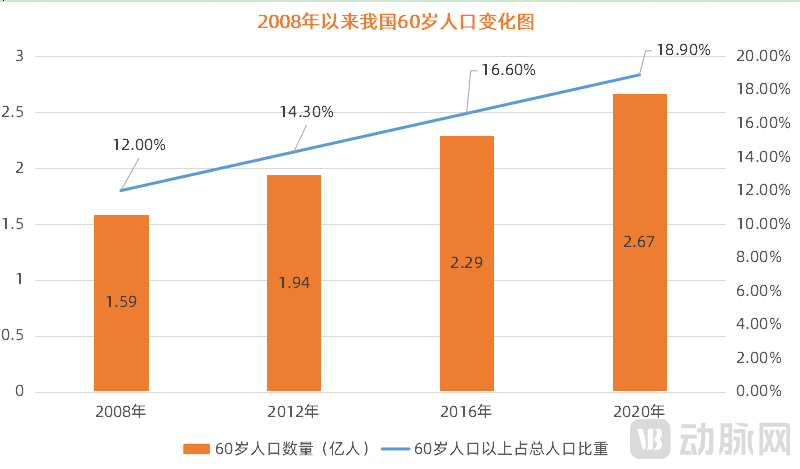 (Graphic by VCBeat; Data source: Census data)
Moreover, starting this year, the cohort born during the 14-year baby boom from 1962 to 1975 is also entering old age. This means that China will experience a peak in population aging over the next decade or so, with an additional increase of more than 200 million elderly individuals.
The vast elderly population has spurred a massive silver-haired market.The “14th Five-Year Plan” for National Development of Aging Undertakings and the Elderly Care Service System indicates that China’s silver economy was valued at approximately RMB 10 trillion in 2021 and continues to grow steadily. The compound annual growth rate (CAGR) of per capita annual consumption among the elderly in China is around 9.4%, surpassing the growth rates of most other industries. Based on these projections, per capita consumption by the elderly in China is expected to reach RMB 25,000 in 2025 and increase to RMB 39,000 by 2030.
Policies are also supporting and accelerating this trend. For instance, the Fifth Plenary Session of the 19th Central Committee of the Communist Party of China elevated the implementation of a proactive response to population aging to a national strategy for the first time, and the report to the 20th National Congress of the Communist Party of China further emphasized the need to “implement a national strategy for actively responding to population aging.”
Against this backdrop, a blueprint for the development of the health industry tailored to the elderly is gradually unfolding.
Facing an elderly population exceeding 260 million and growing rapidly,The challenges posed by population aging are becoming increasingly severe.
First, from a societal perspective, the burden of family-based elderly care continues to intensify, and the pressure on children to support their aging parents is also steadily increasing. According to the China Statistical Yearbook, the old-age dependency ratio in China was 17.8% in 2020, whereas this figure was less than 9% in the 1990s.
This data indicates that whereas each elderly person was previously supported by an average of 11 individuals, the current ratio has dropped to approximately 6 supporters per elderly person, thereby intensifying the burden of elder care.
Second, from the government perspective, the fiscal burden is increasing. The government has long been a major contributor to the basic old-age insurance for urban and rural residents, providing basic pensions to the elderly population and subsidizing resident contributions.
However, according to data projections in the “Actuarial Report on China’s Pensions 2019–2050” released by the Chinese Academy of Social Sciences in April 2019, China’s basic pension fund is expected to record its first deficit in 2028, with the deficit continuing to widen, ultimately leading to the complete exhaustion of the fund’s accumulated reserves by 2035.
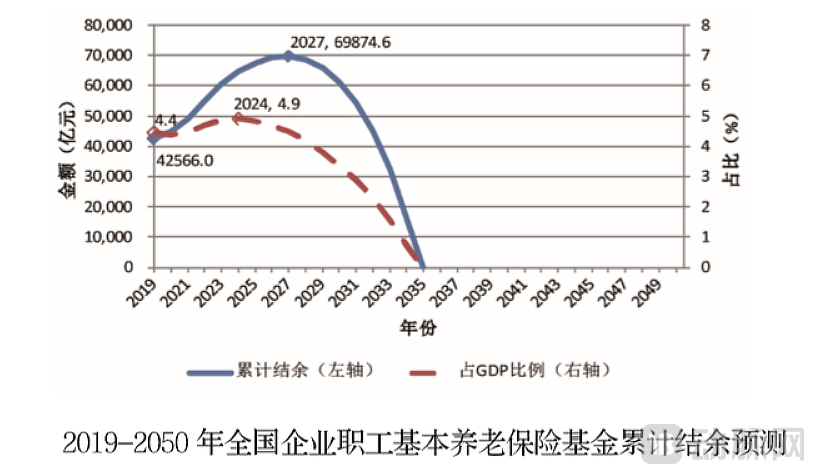 (Source: China Pension Actuarial Report 2019–2050)
On the other hand, the system dependency ratio (i.e., the ratio of pension recipients within the system to contributors paying into the pension insurance scheme) is also concerning. The aforementioned actuarial report indicates that in 2019, nearly two contributors supported each retiree, whereas by 2050, this figure is projected to drop to almost one contributor per retiree.
Third, on the supply side of elderly care, the industry is rife with irregularities, and high-quality services and products are scarce. Taking elderly care institutions as an example, China has witnessed rapid development in this sector amid the overarching trend of population aging. Data from the Ministry of Civil Affairs shows that there are currently 42,300 various types of elderly care institutions across China, offering 4.291 million beds and accommodating 2.146 million elderly residents.
Yet behind the market’s fervor, disputes over services provided by elderly care institutions have been on the rise. In recent years, incidents of elderly care providers abruptly shutting down and fleeing have occurred in cities such as Beijing, Changsha, and Nanchang, with some seniors losing hundreds of thousands of yuan earmarked for their care, sparking widespread public debate.
Thus,Policymakers have frequently issued documents to guide the industry toward healthy development.For example, in September 2021, at a press conference held by the State Council Information Office on the “Opinions of the Central Committee of the Communist Party of China and the State Council on Strengthening Elderly Care Work in the New Era,” Hao Fuqing, head of the Department of Social Development under the National Development and Reform Commission, stated thatTo cultivate service brands and establish a cohort of “Premium Elderly Care Service Brands” with strong innovation capabilities, high quality, and standardized practices that exert nationwide influence, thereby guiding the clustered development of the aging industry.
It is evident that the market urgently needs new solutions.
Facing the trillion-yuan market opportunity in elderly care, numerous companies are rushing to enter the sector.
This landscape encompasses not only real estate developers and insurance companies but also tech giants and innovative enterprises. Taking real estate firms as an example, more than 30 companies, including Vanke, Poly Developments, Sino-Ocean Land, and Greentown China, have established a presence in this sector. Among them, Vanke has experimented with various elderly care business models, such as launching residential projects primarily designed to meet nursing care needs and creating one-stop senior living communities that provide “independent living, assisted living, and skilled nursing care.”
In addition, tech giants and innovative enterprises such as Tencent, Alibaba, Midea, Shanzhen, Huaijing Medical, and Tianyu Elderly Care have each presented their own solutions from perspectives including financial payments, smart elderly care, intelligent hardware, and elderly care institutions.
It is evident that competition in the elderly care market has become increasingly intense. However, this also indirectly indicates that the market is sufficiently large, and coupled with its high growth rate, the industry’s ceiling will continue to rise.
Amid this development, one trend deserves attention: although accelerating population aging poses significant challenges, today’s elderly have accumulated substantial savings and possess considerable purchasing power. Moreover, thanks to advances in medical care and improved living standards, life expectancy has increased, affording older adults greater opportunities in both their personal lives and professional careers.
In response to this phenomenon, Chen Dongsheng, Founder, Chairman, and CEO of Taikang Insurance Group, offers unique insights and judgments. In a recent appearance on “Yang Lan One-on-One: The Wind Chasers,” he stated, “In the past, we viewed aging through the lens of the industrial age, harboring somewhat negative perceptions. In reality, the transition of human society into an aged state is an inevitable trend of human development. Therefore, I believe that ‘the era of longevity’ is a more neutral and positive term than ‘aging.’ I have also proposed the concept of the ‘longevity economy,’ as older adults can continue to create value.”
 (Chen Dongsheng was invited to participate in "Yang Lan Interview - Wind Chaser")
How should this be understood? In Chen Dongsheng’s view, increased longevity has altered people’s assessment of the lifespan, leading to a shift in perceptions. Specifically, while 40 was once considered middle age and 60 old age, the prospect of “everyone living to 100” has redefined 60 as middle age and 80 as old age.From this perspective, the elongation of the life cycle makes the “longevity economy” in old age possible.
Following this line of thought, the senior living communities built by Taikang represent a novel approach to elderly care models.
Specifically, as a leading insurance giant in China, Taikang has integrated life insurance with senior living communities, achieving a closed-loop healthcare ecosystem through its “insurance + medical and elderly care” model.
How was it done?On one hand, Taikang is making comprehensive efforts on the insurance payment side to expand its customer base and business scale; on the other hand, it is advancing the development of physical service infrastructure by building world-class medical and elderly care communities to provide customers with superior solutions.
Meanwhile, TaiKang has built competitive barriers by enhancing overall efficiency and service levels through the synergy between payers and providers within its closed-loop ecosystem.
Let’s first look at the payment side.In this domain, Taikang has innovatively launched the “Happiness Promise” insurance plan. After a decade of iterative upgrades, the plan centers on three closed loops—longevity, health, and wealth—and has introduced four major product systems: “Longevity Promise,” “Health Promise,” “Wealth Promise,” and “Graceful Aging Promise.” It delivers comprehensive life-cycle solutions spanning individuals, families, and clans, with cumulative sales surpassing 160,000 policies.
The underlying reason for the product’s immense popularity is that “Xingfu Youyue” is an annuity insurance product bundled with additional services, constituting a “retirement funding model” that ensures individuals have sufficient financial resources to “enjoy their old age.” After all, supporting a longer lifespan primarily requires adequate financial backing, which current pension benefits are often insufficient to provide. “Xingfu Youyue” effectively addresses this key consumer pain point.
By leveraging its exclusive insurance product, “Happiness Promise,” coupled with guaranteed admission letters to its retirement communities, Taikang has successfully linked insurance clients with elderly care services. Furthermore, Taikang continuously enhances the service experience by integrating a range of high-quality medical and health resources, providing comprehensive health management solutions to better serve more high-net-worth and ultra-high-net-worth clients and their families.
In addition, in 2018, Taikang innovatively launched the HWP (Health and Wealth Planner) program, which is a professional and specialized sales team dedicated to serving the full life-cycle needs of China’s high-net-worth individuals and families.
As a pioneering profession, Taikang’s Health and Wealth Planner (HWP) has shifted from a sales-driven to a client-centric approach, expanded from selling only insurance policies to offering an integrated “four-in-one” product portfolio, and evolved from traditional agents into versatile professional managers. Spanning the three major domains of medical and elderly care, health management, and wealth management, the HWP role effectively integrates life insurance, financial services, and tangible care services.
Now, let's look at the server side.In this sector, Taikang has established Taikang Community, a professional brand dedicated to the physical construction and operation of elderly care, nursing, and rehabilitation facilities, as well as innovative services.
Taikang Community has built a high-quality chain of integrated medical and elderly care institutions by introducing the U.S. CCRC (Continuing Care Retirement Community) model and aligning it with China’s characteristic model of integrating medical and elderly care. Its core positioning is to deeply cultivate the senior life chain industry, providing high-quality elderly rehabilitation, nursing care, and medical health services.
Certainly, beyond the model, the underlying core and philosophy are even more important, as Chen Dongsheng mentioned in his book *The Age of Longevity*:Developing senior living communities is, in essence, a form of care for human nature.A long-lived society is inevitably an age-friendly society. "Age-friendliness" refers to creating living environments suitable for older adults that meet their needs for life development.
To this end, every Taikang Community is committed to providing residents with a “Five-in-One” lifestyle—comprising a warm home, an open university, an elegant vitality center, a high-quality healthcare center, and a spiritual sanctuary for seniors—while advocating the elderly care philosophy of “vital aging, cultural aging, healthy aging, and smart aging.”
Take Professor Qian Liqun of Peking University and his wife, Cui Kexin, as an example; they have resided at Taikang Community • Yan Garden for six years. Professor Qian stated that the pinnacle of his life’s creative output occurred during his time at Yan Garden. “By ‘secluding’ myself in this retirement community, I can distance myself from social obligations and settle my mind to focus on writing.”
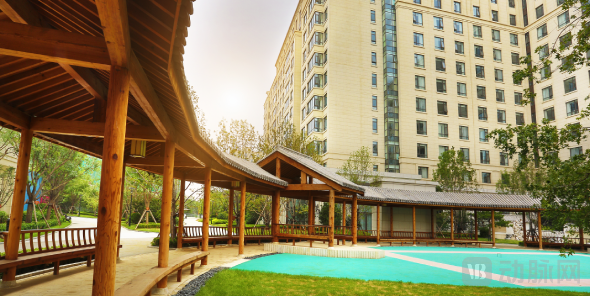
(A Scene of Taikang Community • Yan Garden)
Similarly, the community offers full support for the self-development of older adults. At Yanyuan, a dance class equipped with professional facilities has attracted many senior participants. This provides those who were previously unable to pursue ballet and other dance forms due to environmental constraints with a renewed opportunity to realize their “ballet dreams.”
Chen Dongsheng cited his own mother as an example. Initially, she was reluctant to move into Yanyuan for two reasons: first, she worried that the community was predominantly inhabited by intellectuals and that her limited education would embarrass her children; second, constrained by traditional Chinese values, she feared that placing an elder in a nursing home would be perceived by others as unfilial behavior on the part of her children. However, after moving into Yanyuan, the high-quality medical care and lifestyle available there led Chen Dongsheng’s mother to gradually enjoy her life in the community.
Driven by innovative concepts and high-quality services, Taikang Community has achieved steady growth. To date, Taikang has established Taikang Community senior living communities in 26 core cities across China, with a total planned above-ground floor area of approximately 3.95 million square meters, capable of accommodating around 71,000 seniors. Among these, 13 communities in 12 locations—including Beijing Yanyuan, Shanghai Shenyuan, Shanghai Jinxiu Mansion, Guangzhou Yueyuan, Wuhan Chuyuan, Suzhou Wuyuan, Chengdu Shuyuan, Hangzhou Daqinggu, Nanchang Ganyuan, Shenyang Shenyuan, Changsha Xiangyuan, Xiamen Luyuan, and Nanning Guiyuan—are already operational, serving more than 7,000 residents.
Furthermore, TaiKang has continued to strengthen the development of its comprehensive health ecosystem, such as by establishing five major medical centers and building three specialized disciplines—rehabilitation, dentistry, and neurology. These initiatives have progressively refined TaiKang’s health ecosystem and achieved a comprehensive layout integrating medical care, elderly care, rehabilitation, and wellness.
It is evident that Taikang holds both the payment and service ends, achieving an organic integration of the two (by combining its payment system with its healthcare service system) to provide customers with comprehensive health management and high-quality, value-based medical services.
In addition to deeply integrating internal resources, Taikang is also making continuous efforts to connect with the external ecosystem. For instance, its subsidiary, Taikang Online, has established a comprehensive service network encompassing healthcare providers, pharmacies, and physicians, thereby extending insurance payment coverage to tangible services. As of May this year, the network had covered 2,694 hospitals, 711 health examination institutions, and 1,639 dental clinics across 330 cities. The pharmacy network includes 470 Direct-to-Patient (DTP) pharmacies and 5,541 offline O2O drug delivery pharmacies, offering more than 17,000 types of over-the-counter (OTC) and prescription medications.
As can be seen, Taikang has taken the lead in leveraging insurance to drive the entire health ecosystem through its innovative “insurance + medical and elderly care” model, thereby facilitating the more effective implementation of elderly care services.
Furthermore, TaiKang has achieved breakthroughs in “transforming Chinese people’s perceptions of elderly care,” not only encouraging older adults in China to change their attitudes toward life but also empowering them to more proactively and actively address the challenges posed by aging.
As population aging accelerates, the advent of the longevity economy is opening up greater market potential for industry participants. However,It is essential to recognize that the industry remains in its nascent stage of development.
In the “Outline of the 14th Five-Year Plan,” a dedicated chapter on “Improving the Elderly Care Service System” emphasizes promoting the coordinated development of elderly care undertakings and the elderly care industry, strengthening the basic elderly care service system, vigorously developing inclusive elderly care services, supporting families in assuming elderly care responsibilities, and building an elderly care service system that coordinates home-based, community-based, and institutional care while integrating medical and health services with wellness and rehabilitation.
As can be seen, the challenges in elderly care and health are numerous and complex. However,Challenges Are Opportunities: Solving Each Pain Point Unlocks a Vast Market Opportunity.
In VCBeat's observation,The development trends of the future elderly care and health industry can be summarized in two aspects: first, the age-friendly upgrading of existing supply; second, the innovative services provided by new incremental supply.
In terms of existing supply, age-friendly upgrades lead to an improvement in the quality of elderly care. For instance, such upgrades help prevent personal injuries among the elderly, enhance the safety and convenience of home living, and alleviate difficulties in daily life caused by age-related physiological changes. In this sector, companies involved in medical device R&D, healthcare informatization, and architectural design will see significant opportunities.
In terms of incremental supply, innovative services can generate new market growth by optimizing the matching of elderly care and health resources. For instance, some innovative enterprises have restructured the entire transaction model for elderly care and health by decoupling the payer from the service recipient—enabling children to purchase health insurance for their parents—which has also significantly improved user adherence to health management.
In this process, it is particularly important to uphold innovation and long-termism.This is because the current elderly care and health market still faces numerous challenges and difficulties that need to be addressed. Only through innovation can we more efficiently match the supply and demand within the entire health ecosystem.
The essence of long-termism lies in recognizing that elderly care and health are critical to life, safety, and quality of life. It requires market participants to understand and gain deep insights into the genuine needs of the elderly population, and to devote sufficient patience and effort to providing appropriate services, thereby delivering better experiences and outcomes while generating greater social benefits.
Certainly,"Realizing long-termism is not an overnight achievement; it depends even more on the effectiveness of its implementation."From the perspective of the elderly population, whether companies entering this sector can enable them to enjoy their later years in better health and with greater dignity serves as a key benchmark for evaluating their value proposition.
Because aging is not merely a business; it should also be a social responsibility and a matter of care.