

Johnson & Johnson Launches CARTOSOUND SONATA: AI-Powered ICE Module Revolutionizes 3D Cardiac Modeling in CARTO 3 System

Johnson & Johnson
Medical Device R&D and Manufacturer

From April 23 to 26, 2026, Biosense Webster, a subsidiary of Johnson & Johnson, officially released at the Annual Meeting of the Heart Rhythm Society in Chicago.CARTOSOUND SONATA Module——The First with CARTO 3 SystemDeeply Integrated AI Intracardiac Echocardiography Modeling Module. This module uses AI algorithms to automatically convert ICE images into high-precision 3D anatomical models and can automatically identify and label cardiac structures, marking a significant advancement in intracardiac echocardiography modeling from"Manual Drawing" Steps into "AI Automatic Generation"A new phase.
I. How AI "Understands" the Heart
The core breakthrough of CARTOSOUND SONATA lies in embedding AI algorithms into the ICE modeling process, achieving intelligent upgrades at three levels.
AI Automatic Modeling。This module utilizes AI in conjunction with the CARTO system to automatically convert ICE images into detailed 3D cardiac maps. The AI model analyzes tissue boundaries, echo characteristics, and spatial positional relationships in the ultrasound images to automatically delineate the cardiac chamber contours and generate3D Mesh Model, without the need for manual operation by doctors. This transformation directly addresses the long-standing pain point of "manual puzzle-solving" in clinical practice.
Automatic Identification and Labeling。The module supports the recognition and automatic labeling of cardiac structures, directly annotating anatomical names on the generated 3D model, providing surgeons with an "out-of-the-box" anatomical navigation map. Doctors no longer need to mentally construct anatomical structures but can work directly from it.AI-Generated ModelObtain complete anatomical information.
Dual Catheter Compatibility。CARTOSOUND SONATA seamlessly integrates with Biosense Webster's two main ICE catheters. SOUNDSTAR CRYSTAL is the latest generation 2D intracardiac echocardiography (ICE) catheter launched in the U.S. in May 2025, incorporating AI-based 3D reconstruction technology; NUVISION NAV is a 4D ICE catheter integrated with navigation chips, natively compatible with the CARTO system, providing real-time 3D ultrasound imaging.The compatibility of the two catheters allows operators to flexibly choose the optimal imaging mode based on clinical needs.
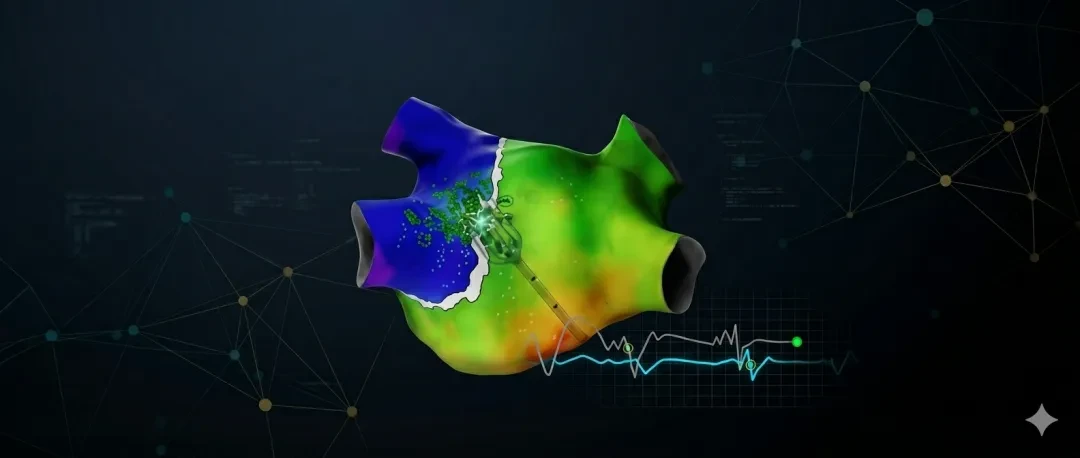
Figure 1. Carto 3 Version 8 Heart Mapping Software Platform.
II. The "Automation Revolution" of ICE Workflow: From Manual Jigsaw to AI Panorama
In the traditional ICE workflow, the operator needs to manually sweep the ICE catheter across multiple sections, mentally piecing together the 2D sectors into a 3D structure, and then proceed with mapping and ablation planning in the CARTO system. This "manual puzzle" approach has three core bottlenecks.
High Operation Threshold。The operator needs to have extremely strong spatial imagination ability to establish an overall understanding of the anatomical structure during the scanning process.
Time-consuming and inaccurate。Manual scanning and reconstruction processes significantly prolong operation time, and the reconstruction accuracy is highly dependent on the operator's experience. The press release explicitly states that CARTOSOUND SONATA "does not require doctors to manually delineate the cardiac chamber contours" and automatically generates precise multi-chamber heart models from ICE images using AI.
Lack of anatomical validation。"Blind zones" may occur during the scanning process, leading to possible omission or misjudgment of certain key anatomical structures, which can affect the precise positioning of ablation targets. The automatic recognition and marking functions of CARTOSOUND SONATA precisely address this shortcoming.
CARTOSOUND SONATA is not a technology that started from scratch. Several years ago, Biosense Webster had already launched the CARTOSOUND module, which integrates ICE images with the CARTO system to achieve three-dimensional anatomical reconstruction. However, previous versions relied on operators manually outlining the cardiac chamber contours (contouring), with limited AI involvement. The core breakthrough of CARTOSOUND SONATA lies inAI Algorithm Embedded in Modeling Process, Module Automatically Processes ICE Images, precise 3D models of multiple heart chambers can be generated without the need for manual delineation by doctors, and cardiac structures are automatically identified and labeled.
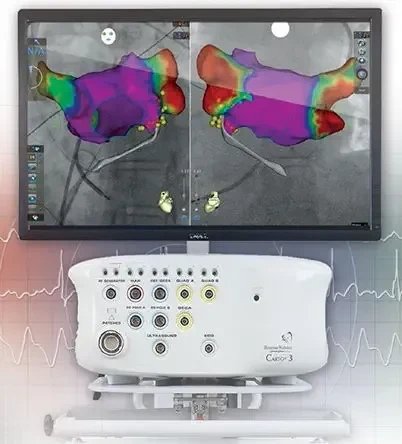
Figure 2.Biosense WebsterCARTO™ 3 Cardiac Mapping System
3. Clinical Value: From Cognitive Burden to Intelligent Decision-Making
Significantly shorten modeling time。Through AI automatic modeling, the surgeon no longer needs to repeatedly scan and manually outline the cardiac chamber contours during the operation.
Reduce the Learning Curve of ICE Technology。The threshold for ICE operations has always been a major factor hindering the widespread adoption of this technology in more centers. The AI-powered automatic modeling function enables beginners to quickly obtain high-quality 3D anatomical models, reducing reliance on the operator's spatial imagination, and is expected to promote the application of ICE technology in more electrophysiology centers.
Improve surgical precision and reduce complications。Accurate anatomical modeling is the foundation for the success of catheter ablation procedures. CARTOSOUND SONATA helps operators more precisely locate ablation targets and avoid risky structures such as the esophagus and phrenic nerve by providing more accurate and complete cardiac anatomical models, theoretically reducing the incidence of complications. The module also supports seamless switching between 2D and 4D ICE catheters during the same procedure, allowing operators to flexibly choose the optimal imaging mode based on clinical needs, and efficiently complete multi-chamber modeling even in complex accompanying surgeries.
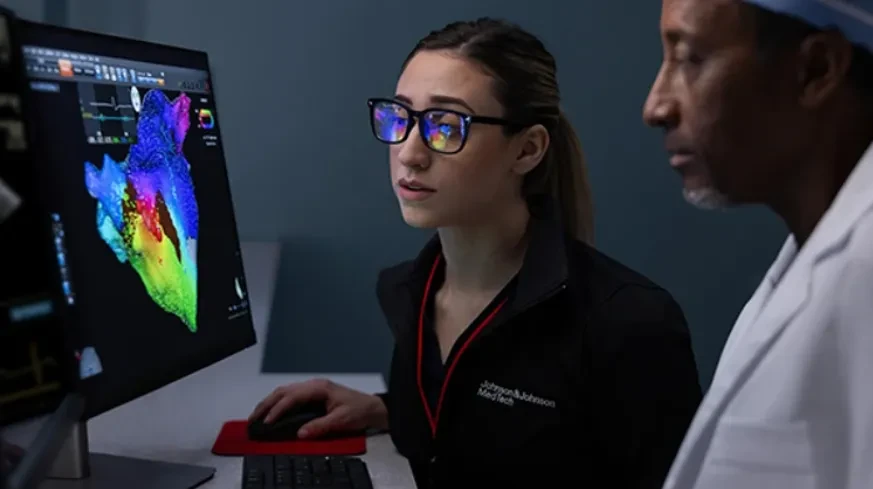
Figure 3. The doctor is usingCarto 3 Version 8 Heart Mapping Software Platform
4. CARTO 30 Years of Evolution: From Mapping Revolution to AI Empowerment
2026 will mark the 30th anniversary of the CARTO system's market launch. In 1996, Biosense introduced the world's first 3D electroanatomical mapping system, revolutionizing the diagnosis and treatment of arrhythmias. Since then, CARTO has undergone several major iterations: from magnetic localization to magnetic and electrical dual localization, from contact mapping to non-contact mapping, and from manual modeling to AI-based automatic modeling.
This 30-year evolution trajectory clearly shows:The CARTO platform is being upgraded from a "mapping tool" to an "anatomical cognition hub" with truly embedded AI capabilities.The AI automatic modeling of CARTOSOUND SONATA represents the forefront of this trend — it is not only a mapping system but also an anatomical cognition platform embedded with AI capabilities.
5. The Ecological Positioning of CARTOSOUND SONATA: A Key Link in the Mapping-Ablation Closed Loop
CARTOSOUND SONATA is a strategic component of the Johnson & Johnson electrophysiology ecosystem. Together with the CARTO 3 navigation system and the VARIPULSE PFA ablation platform, it forms a complete closed-loop solution from mapping to ablation.
At HRS 2026, Johnson & Johnson will also present new clinical and real-world data on the VARIPULSE platform for atrial fibrillation treatment. According to the 12-month interim results of the VARIPURE study previously announced at EHRA 2026, real-world data from 1,023 patients across 22 European centers showed a 12-month recurrence-free rate of atrial arrhythmia at 84.2%, with 90.5% in paroxysmal atrial fibrillation patients and 75.3% in persistent atrial fibrillation patients. The major adverse event rate was 0.8%, with no reports of stroke, coronary artery spasm, or other PFA-related complications.
PFA ablation requires extremely high precision in anatomical modeling — the delivery of pulse energy needs to be precisely targeted at key areas such as the pulmonary vein antrum and the posterior wall of the left atrium. The AI-enhanced anatomical model provided by CARTOSOUND SONATA is expected to further improve the accuracy and repeatability of PFA procedures, forming a complete closed-loop of "mapping + ablation" with the VARIPULSE platform.
Conclusion
As CARTOSOUND SONATA officially debuts at HRS 2026, AI is redefining the "first step" of electrophysiological procedures—cardiac chamber modeling. For electrophysiologists, this means less manual operation, shorter modeling time, and clearer anatomical visualization; for patients, it means more precise ablation, shorter hospital stays, and lower recurrence risk.The era of AI-assisted mapping has arrived.
? Click to view more exciting content
Pudu Robotics Completes Nearly 1 Billion Yuan in Financing, Valuation Exceeds 10 Billion Yuan
Robotic Surgery Dedicated Micro Sutures Launch! Global Robotic Ecosystem Chain Closure
China Manufacturing Breakthrough in Europe: Reach Surgical Powered Stapler Receives CE Certification
Copyright and Disclaimer: MedTF aims to build an academic communication and media platform. The copyright of the information in the article belongs to the holder, and we only provide the service of transmitting information. If there is any infringement, please contact us for deletion.