

Trinomab Advances Novel Dengue Therapy with Broad-Spectrum, ADE-Free Human Monoclonal Antibody

Trinomab
Developer of Natural Fully Human Monoclonal Antibody New Drugs
What is Dengue Fever?
Dengue Virus(Dengue virus, DENV) is a single-stranded positive-sense RNA virus of the family Flaviviridae, appearing as spherical particles with a diameter of 45–55 nm. There are four serotypes of DENV, namely DENV-1, DENV-2, DENV-3, and DENV-4.
Dengue fever, transmitted by female Aedes aegypti mosquitoes, is classified into two major categories: dengue (with/without warning signs) and severe dengue.Recovery from infection with one serotype confers lifelong immunity to that specific serotype, while providing only partial and temporary cross-immunity against the other three serotypes., due to antibody-dependent enhancement (ADE),Subsequent infection with other serotypes (secondary infection) increases the risk of developing severe dengue.。
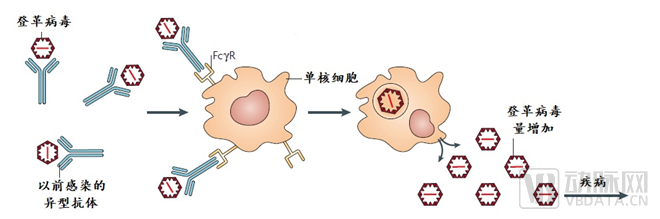
Figure 1: Mechanism of ADE induced by DENV (Image from Reference 5)
In recent years, dengue fever has spread rapidly worldwide.Dengue fever is currently endemic in more than 100 countries across the African, American, Eastern Mediterranean, South-East Asian, and Western Pacific regions, with Asia accounting for approximately 70% of the global disease burden. The global incidence of dengue has risen sharply, with the number of cases reported to the World Health Organization increasing more than sevenfold over the past two decades. An estimated 100 to 400 million DENV infections occur annually, and approximately half of the world’s population is at risk.
The transmission of the dengue virus has become a serious public health issue and a major disease burden in tropical and subtropical regions. Current statistical studies indicate that the elderly, infants and young children, pregnant women, individuals with underlying conditions such as diabetes, hypertension, coronary heart disease, peptic ulcer, asthma, chronic kidney disease, and chronic liver disease, as well as those with immunodeficiency, are at high risk for severe dengue fever.2In 2019, the World Health Organization identified dengue fever as one of the top ten global health threats.
Sanofi Pasteur(Sanofi Pasteur)Dengvaxia®(CYD-TDV) was first approved in December 2015 in Mexico, the Philippines, and Brazil for use in individuals aged 9 to 45 years living in dengue-endemic areas, providing protection against disease caused by all four serotypes of the dengue virus. As the world’s first approved dengue vaccine, it has since been authorized by regulatory authorities in 19 countries.
This vaccine is a live-attenuated vaccine that uses recombinant technology to combine the non-structural genes of the yellow fever virus with the structural genes of four dengue virus serotypes. The full vaccination course consists of three doses, administered at 6-month intervals, over a period of one year.
In November 2017, Sanofi Pasteur announced Dengvaxia®New follow-up data from clinical trials indicate that trial participants who were seronegative at the time of their first vaccination had a higher risk of developing severe dengue and being hospitalized due to dengue infection compared with unvaccinated participants. Given the substantially increased risk of severe dengue among seronegative individuals following vaccination,Dengvaxia®Currently indicated only for individuals with a documented history of at least one prior dengue virus infection.. Clinical trial follow-up for this vaccine is currently ongoing.
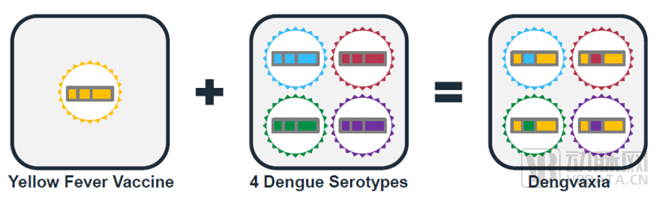
Figure 2: Dengue Vaccine Dengvaxia®(Image from Reference 6)
Takeda Pharmaceutical Company Limited(Takada)Qdenga under development®(TAK-003) was approved and launched in Indonesia in August 2022 for use in individuals aged 6–45 years to prevent dengue infection caused by any serotype. This vaccine is a live attenuated vaccine that employs recombinant technology to combine the non-structural genes of serotype 2 with the structural genes of serotypes 1, 3, and 4. The viral strain DENV-2, used as the backbone, was originally derived from DENV-2 (16681) PDK53 developed by Mahidol University. The vaccine requires two doses administered three months apart, without the need for pre-vaccination testing.
Qdenga®The approval is based on the ongoing Phase 3 TIDES trial, which evaluates outcomes three years post-vaccination. Data analysis shows that Qdenga®It can provide sustained protection for vaccinees against dengue-related illness and hospitalization for up to three years post-vaccination. However, it is worth noting that in seronegative populations,Qdenga®The negative protection rates against DENV-3 and DENV-4 indicate that Qdenga®It may also be associated with Dengvaxia.®Also faces the challenge of ADE. Therefore, longer-term clinical follow-up data are needed to support limited use in certain populations.
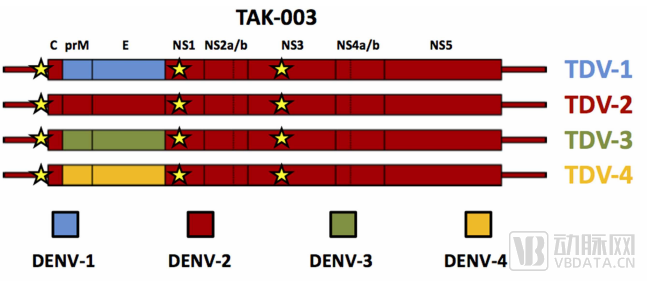
Figure 3: Dengue vaccine TKA-003 (Image from Reference 7)
In 2018, the state promulgated"Guidelines for the Clinical Diagnosis and Treatment of Dengue Fever in China", which clearly states, “Clinical Translation of Human-Derived Monoclonal Neutralizing Antibodies” is one of the issues that remain to be resolved.
Human-derived monoclonal neutralizing antibodies can theoretically avoid many of the current issues in vaccine development.It not only effectively and broadly neutralizes all four serotypes of DENV, but also avoids the occurrence of ADE.
More importantly,, human-derived monoclonal neutralizing antibody drugs can provide preventive and therapeutic measures for populations not protected by vaccines.
Therefore,"Natural Fully Human Monoclonal Anti-Dengue Virus Drug with Both Prophylactic and Therapeutic Properties"Holds significant medical value.
In response to such clinical needs and industry challenges,A Globally Oriented Innovative Biopharmaceutical Company: Zhuhai Trinomab Biotechnology Co., Ltd.(Trinomab, hereinafter referred to as “Trinomab Bio”) has decided to tackle this “hard nut to crack.”
withFocuses on the R&D of original, fully human monoclonal antibody drugs derived from natural sources as its core business.of Trinomab, behind whichThe core technology is the “HitmAb” integrated platform for the development of fully human monoclonal antibodies derived from natural sources.®”. This platform enables the efficient isolation of natural, fully human monoclonal antibodies and has developed multiple highly differentiated, high-efficacy products with independent intellectual property rights.Novel Natural Fully Human Monoclonal Antibody Drug。
Trinomab plans to fully leverage the advantages of its technology platform to develop fully human anti-dengue virus neutralizing antibody drugs that are “highly efficacious, safe, and accessible,” thereby formally entering the field of dengue monoclonal antibodies. Currently, Trinomab has entered into a strategic cooperation agreement with Guangzhou Eighth People’s Hospital, the Affiliated Hospital of Guangzhou Medical University,Officially Launching the Development of Fully Human Anti-Dengue Neutralizing Antibody-Related Products。
Dr. Liao Huaxin, Chairman and CTO of Trinomabstated: “To date, the prevention and treatment of dengue fever remains an unmet clinical need. Trinomab leverages HitmAb®“The novel natural fully human monoclonal antibody drug developed by the platform holds promise for addressing clinical challenges in dengue fever management and avoiding the antibody-dependent enhancement (ADE) effect. We look forward to leveraging broad-spectrum, highly specific, and high-affinity natural fully human monoclonal antibodies against dengue virus to benefit patients and address public health concerns.”
References:
1. World health organization. Dengue and severe dengue. 2022.
2. Sri Rezeki Hadinegoro, … CYD-TDV Dengue Vaccine Working Group. Efficacy and Long-Term Safety of a Dengue Vaccine in Regions of Endemic Disease. NEJM, 2015.
3. Luis Rivera, … Three-year Efficacy and Safety of Takeda's Dengue Vaccine Candidate (TAK-003). Clin Infect Dis, 2022.
4. Zhang Fuchun, He Jianfeng, et al. Guidelines for the Clinical Diagnosis and Treatment of Dengue Fever in China. Chinese Journal of Internal Medicine, 2018, 57(9):642-648.
5. Whitehead SS, etal. Prospects for a dengue virus vaccine. Nat Rev Microbiol. 2007 Jul;5(7):518-28.
6. Sanofi Pasteur. Meeting Non-FDA Briefing Document- Dengvaxia- Tetravalent, Live-Attenuated Viral Vaccine against Dengue Serotypes 1, 2, 3 and 4. Vaccines and Related Biological Products Advisory Committee, March 6 - 7, 2019.
7. Adam T Waickman, etal. Assessing the Diversity and Stability of Cellular Immunity Generated in Response to the Candidate Live-Attenuated Dengue Virus Vaccine TAK-003. Front Immunol. 2019 Jul 31;10:1778.