

Yuanxin Technology Innovates Digital Pharma Marketing with Integrated 'Medicine-Patient-Payment' Ecosystem, Serving Over 200 Pharmaceutical Companies

Yuanxin Technology
Internet Medical Service Provider
Currently, digital marketing has become a mandatory course for pharmaceutical companies.
Amid the advancement of China’s new healthcare reform, a series of measures—including centralized drug procurement, national reimbursement drug list (NRDL) negotiations, and the “Two-Invoice System”—have been sequentially implemented and normalized. With pharmaceutical companies’ profit margins squeezed, there is an urgent need to seek marketing approaches that are more cost-effective and efficient.
Meanwhile, digitalization is accelerating its penetration in the healthcare sector, particularly with the expanding user base of pharmaceutical e-commerce and internet-based medical services, which are gradually becoming a vital component of public livelihood services. Technologies such as AI and big data are also being progressively applied across all segments of healthcare, pharmaceuticals, and insurance.
In this context, the digital marketing transformation of pharmaceutical companies has become a natural progression. However, the internal and external environments facing these companies are composed of multiple interrelated factors; therefore, digital marketing strategies should systematically address the needs of pharmaceutical enterprises.
On November 16, Yuanxin Technology unveiled an innovative doctor-patient solution at the 2022 Digital Ecosystem Partners Conference. The solution integrates Yuanxin Technology’s years of accumulated expertise in healthcare, pharmaceuticals, and insurance to deliver corresponding services to pharmaceutical companies. VCBeat conducted extensive interviews to analyze the innovation and systematic nature of this solution.
Currently, technology companies, internet healthcare enterprises, pharmaceutical e-commerce platforms, and online physician platforms are all actively establishing a presence in digital marketing services for pharmaceutical companies, while traditional marketing firms are also undergoing digital transformation. In terms of specific product functionalities and service offerings, customer relationship management (CRM) systems, virtual representatives, online academic conferences, post-diagnosis follow-up platforms, and patient education all fall within the scope of digital marketing for pharmaceutical companies.
During the rapid development process, digital marketing service providers have offered pharmaceutical companies more efficient tools to reach physicians, facilitating academic promotion and enabling physicians to prescribe medications to appropriate patients; they have also provided patients with more convenient access to medicines, particularly prescription drugs.
However, after the industry reached a certain stage of development, some issues remained unresolved, or new challenges emerged.
First, out-of-hospital patient management has not yet been widely implemented.
Patients’ medication adherence and self-management outside the hospital directly influence disease control and ultimate treatment outcomes. In the traditional healthcare service system, due to limited staff capacity and constrained follow-up management tools within hospitals, post-discharge interventions for patients are largely absent.
The emergence of internet-based medical services has made more efficient out-of-hospital management possible. Nevertheless, such management has not yet been widely implemented.
VCBeat Eggshell Research Institute’s “2022 Internet Hospital Report” shows that, based on a survey of online physicians, internet hospitals implement corresponding measures across all stages of clinical services to improve healthcare quality. In the post-consultation phase, common practices include patient satisfaction evaluations and assessments, reminders for regular medication adherence, and alerts for follow-up visits and re-examinations.
Among various measures, long-term patient follow-up is the most effective in improving medical quality, followed by regular medication reminders and outpatient revisit and re-examination reminders, all of which fall under the scope of out-of-hospital patient management.
Let us examine the implementation status of these measures: features that can be achieved solely through technical means, such as reminders for regular medication adherence and follow-up visits, have shown acceptable implementation rates, with 58.7% and 57.0% of physicians, respectively, aware of their existence. However, long-term patient follow-up, which requires a combination of technology and manual effort and is more cumbersome, has not been implemented ideally, with only 48.1% of physicians aware of it.
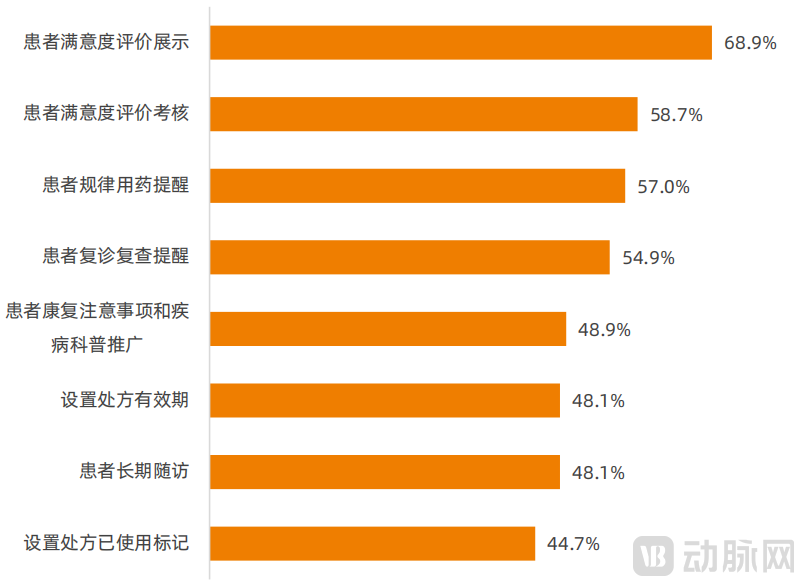
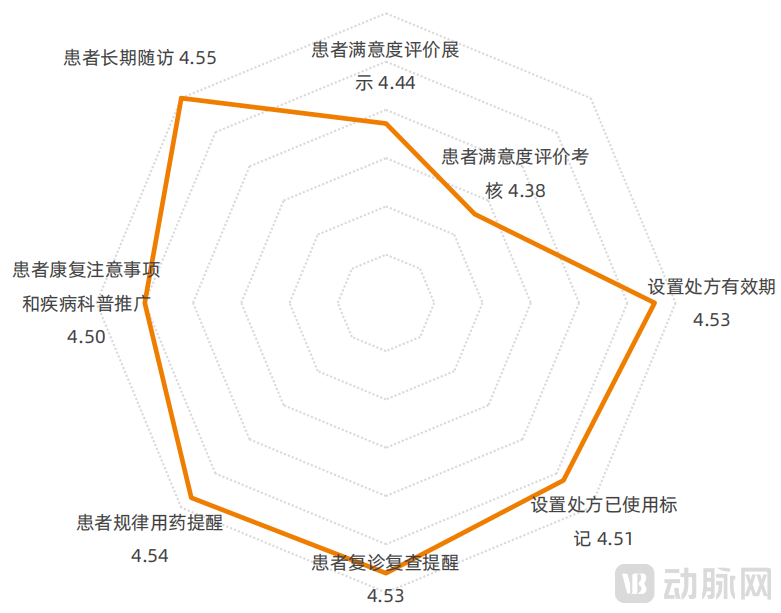
From the Physician’s Perspective: Service Types (Top Chart) and Effectiveness Scores (Bottom Chart) for Ensuring Medical Quality in the Post-Consultation Phase of Internet Hospitals. Source: VCBeat Research Institute
“Continuous patient management by physicians is the most urgent need for pharmaceutical companies’ digital marketing at present,” Zhang Guangyu, General Manager of the Marketing Center at Yuanxin Technology Group, told VCBeat. He noted that only through this process can pharmaceutical companies gain insights into patients’ post-discharge medication duration, reasons for treatment discontinuation, and even causes for drug substitution, thereby providing valuable references for both marketing and R&D efforts.
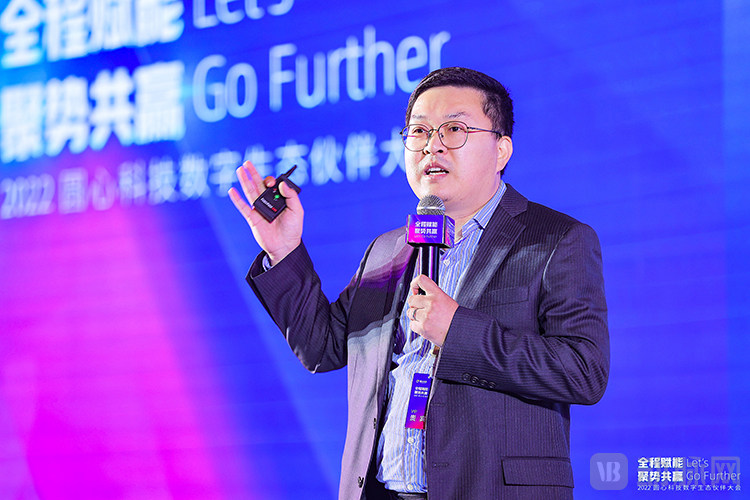
Zhang Guangyu, General Manager of the Marketing Center at Yuanxin Technology Group
Patient management is a complex endeavor that requires the allocation of different resources for patients with different diseases, necessitating collaborative participation from physicians, hospitals, platform companies, and pharmaceutical enterprises.
Second, data interoperability has become a new challenge.
The data accumulated by pharmaceutical companies in the process of digital marketing also holds significant value. However, similar to the point-to-surface development of hospital informatization that has led to data silos, digital marketing in the pharmaceutical industry also faces barriers to data interoperability and connectivity.
In the digital marketing transformation of pharmaceutical companies, a single pharma company may engage multiple service providers for activities such as virtual detailing, academic promotion, patient management, and patient education. As a result, data becomes fragmented across various platforms, making it difficult to integrate and conduct comprehensive analysis to generate deeper data insights.
Third, there is a lack of diversified payers.
The launch of innovative drugs in China is accelerating. In recent years, newly launched innovative drugs have primarily addressed unmet clinical needs, focusing on disease areas with the highest burden and fastest growth rates in China, including oncology, gastroenterology and metabolism, respiratory diseases, and cardiovascular and cerebrovascular chronic conditions.
After the launch of innovative drugs, in addition to timely academic promotion to fully inform physicians of the drugs’ clinical value, whether patients can afford the medication costs for a sufficient treatment course is also a key concern for pharmaceutical companies.
Driven by policies such as national medical insurance negotiations, the timeline for incorporating innovative drugs into the National Reimbursement Drug List (NRDL) is shortening. Previously, it took 4–5 years for new drugs to be reviewed and included in the NRDL in accordance with regulations; now, drugs can be incorporated into the NRDL through standard procedures approximately 14 months after approval.
However, inclusion in the National Reimbursement Drug List (NRDL) does not guarantee complete peace of mind. First, NRDL inclusion is predicated on price reductions, although the magnitude of these cuts varies across different drugs. Second, even innovative drugs that have been included in the NRDL may still face challenges in gaining hospital access. Therefore, innovative drugs require not only the identification of appropriate marketing channels but also the support of diversified payment mechanisms to ensure patients’ sustained medication adherence.
Overall, in light of the multifaceted challenges faced in the new phase, pharmaceutical companies have an urgent need for systematic digital marketing solutions.
Deconstructing Yuanxin Technology’s Innovative Doctor-Patient Solutions: Can They Meet Pharmaceutical Companies’ Systematic Needs?
It is understood that Yuanxin’s innovative doctor-patient solutions encompass three major segments: medical consultation, medication, and payment.
In terms of medical care access, platforms such as the Miaoshou Doctor Internet Hospital, internet hospitals affiliated with public hospitals, the Yuanxin Medical Mutual Assistance Platform, and full-course disease management platforms connect physicians, departments, and hospitals to provide patients with health consultations, prescription services for follow-up visits, medical science popularization, and comprehensive disease management services.
Previously, Yuanxin Technology accumulated comprehensive patient service capabilities through the operation of Miaoshou Doctor Internet Hospital and the joint establishment and operation of internet hospitals with public hospitals.
According to Zhang Guangyu, in order to connect different types of medical resources, enrich the service offerings of internet hospitals, and deepen patient management capabilities, Yuanxin Technology launched the Yuanxin Medical Interconnection Platform in 2022. This platform enables individual doctors and departments to establish online studios for comprehensive disease course management of patients. Yuanxin Technology provides services including system setup, operational support, and follow-up management.
On the Yuanxin Yihu platform, medical teams can achieve full-scenario collaboration both within and across teams; the platform also facilitates coordination among healthcare institutions, medical professionals, patients, and the medical industry supply chain.
The whole-course disease management system established by the Yuanxin Medical Mutual Platform extends medical services from in-hospital to out-of-hospital settings, transforming care from single, low-frequency encounters into multiple, high-frequency interactions. After discharge, to prevent issues such as self-discontinuation of medication, non-adherence to dosing schedules, missed follow-up appointments, and ineffective communication, the platform employs various physician-patient interaction mechanisms—including medication adherence tracking, health metric reporting, abnormality alerts, and follow-up reminders—to improve patients’ medication adherence and self-management compliance.
In the aforementioned model, patients achieve better therapeutic outcomes and quality of life through improved adherence. With technical and operational support from Yuanxin Technology, physicians, departments, or hospitals implement effective patient interventions through streamlined workflows.
For pharmaceutical companies, continuous patient management can reduce patient dropout rates and achieve more ideal medication Days on Therapy (DOT).
In terms of medication, Yuanxin Pharmacy and Yuanxin E-commerce provide patients with convenient pharmaceutical products and pharmacy services.
As of now, Yuanxin Technology operates 314 pharmacies. Among them, 205 are located within 300 meters of hospitals, and 267 are within 1 kilometer of hospitals. Yuanxin Grand Pharmacy primarily consists of hospital-adjacent stores and DTP (Direct-to-Patient) pharmacies, with a high proportion of prescription drugs and new specialized medications, making professional pharmaceutical services extremely important.
Previously, Yuanxin Technology assigned an average of approximately two professional pharmacists to each store located near hospitals. In 2022, the company upgraded its patient services at pharmacies by launching the “18-Step Service Protocol,” which establishes service standards covering eighteen aspects, including medication consultation, usage guidance, home delivery, and home-based management.
In fact, the integration of pharmaceuticals and services has become a prevailing trend in the pharmaceutical retail industry in recent years. For pharmaceutical companies, this model enhances patient reach, ensures medication safety, and enables monitoring of disease progression during treatment, thereby generating structured records that provide data for real-world studies.
In terms of payment, Yuanxin Technology expands its service population and alleviates patients' financial burden through products such as Huimin Bao (inclusive supplemental medical insurance), exclusive insurance for individuals with pre-existing conditions covering specific diseases, and enterprise-customized insurance plans.
Currently, Yuanxin Technology has participated in over 100 city-specific inclusive supplementary medical insurance (Huiminbao) projects across China. In these local initiatives, Yuanxin Technology primarily provides end-to-end services, including actuarial pricing, omnichannel marketing, specialty drug claims processing, and health management. Regarding pharmaceuticals, Yuanxin Technology offers support such as specialty drug formulary selection, prescription review, direct and expedited settlement for specialty drugs, charitable patient assistance programs, and value-added services.
For high-value drugs, the pressure to be included in the national medical insurance will continue. With the improvement of China's multi-level medical security system, these drugs will become an important path for commercialization by leveraging commercial insurance and establishing diversified payment methods.
Yuanxin Technology also participates in the operation of the Lecheng Special Drug Insurance in Hainan, facilitating market access for overseas specialty drugs. The Lecheng Special Drug Insurance covers 49 foreign specialty drugs and 21 domestic specialty drugs not covered by social health insurance, among which the 49 foreign drugs have not yet been launched in China.
Furthermore, Yuanxin Technology has jointly developed multiple disease-specific insurance products tailored for individuals with pre-existing conditions. For instance, in collaboration with Taikang Online and Asia Pacific International, it has launched recurrence insurance and nodule insurance, thereby expanding insurance coverage from standard risks to non-standard risks and alleviating the financial burden on patients.
Overall, Yuanxin Technology’s business layout in the payment segment helps pharmaceutical companies secure formulary access for their drugs across various commercial insurance products, while also alleviating patients’ financial burden and preventing medication discontinuation due to economic constraints, thereby addressing medication adherence issues from a payment perspective.
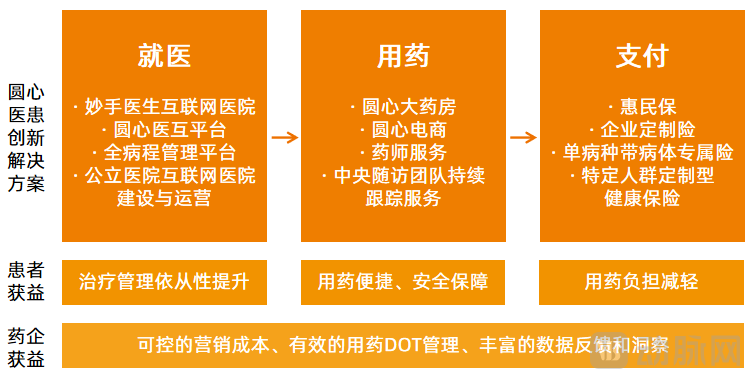
Yuanxin’s Innovative Doctor-Patient Solution Value System, Chart by VCBeat
When integrating capabilities across the three major sectors of medical consultation, medication use, and payment, the fundamental goal of all services provided by Yuanxin Technology is to achieve better treatment and recovery outcomes for patients, lower medical costs, and reduce their financial burden. On this basis, the company meets pharmaceutical enterprises’ needs in various areas, including innovative payment access, physician and patient education, patient Days on Therapy (DOT) management, and pharmaceutical care services, thereby aligning with the key tasks of pharmaceutical companies at different stages post-drug launch.
Therefore, Yuanxin Technology has established a systematic digital marketing solution for pharmaceutical companies, with no data silos among the various functions within the solution.
The service offerings within Yuanxin’s innovative doctor-patient solutions have previously been applied in pharmaceutical companies’ digital marketing practices, achieving notable results: while benefiting patients, they have also demonstrated tangible marketing outcomes for pharmaceutical enterprises.
Since 2021, Yuanxin Technology and Boehringer Ingelheim have collaborated on the use of Ofev, an innovative targeted anti-pulmonary fibrosis drug, for patients with chronic fibrosing interstitial lung diseases. Through this partnership, Yuanxin Technology has integrated its comprehensive service resources spanning healthcare, pharmaceuticals, and insurance.
Regarding medications, patients can purchase them at nearby pharmacy outlets within Yuanxin Technology’s hospital-adjacent pharmacy network upon presentation of a physician’s prescription, or opt for online purchase and home delivery via the Yuanxin Health mini-program. The pharmacist team will monitor medication adherence and provide guidance on proper use. Since March 2021, Yuanxin Technology has delivered more than 4,500 boxes of medications to patients.
Regarding payment, in June 2022, Yuanxin Technology launched the “Wei Ni You Xiang” welfare program. This program primarily targets patients who have already received a prescription for Vigabatrin, providing enrolled patients with reimbursement for designated medications and other benefits.
Furthermore, Vargatef has been included in the special drug formularies of multiple local Huiminbao (inclusive commercial health insurance) programs, including Tianjin’s “Jinhuibao,” Hebei’s “Jihuibao,” and Huzhou’s “Nan Taihu Health Insurance.” Under “Jihuibao,” reimbursement rates are 20% for patients with pre-existing conditions and 80% for those without; under “Jinhuibao,” the reimbursement rate is 70% for patients without pre-existing conditions; and under “Nan Taihu Health Insurance,” the reimbursement rate is 50% for patients without pre-existing conditions.
Meanwhile, as Yuanxin Technology’s multi-channel patient service platform, the Miaoshou Care Center has established a “Wei Ni You Xiang” (Exclusive Benefits for You) service zone, where patients can complete one-click enrollment and drug expense reimbursement online. The center also provides patients with disease education, popular science videos on diseases, and online lectures by experts.
Since November 2021, Yuanxin Technology has collaborated with multiple chief physicians from Grade A tertiary hospitals to launch the “Wei Ni Te Xiang” pulmonary fibrosis disease education program for patients across China, helping them build confidence in their treatment.
Overall, through comprehensive resource integration in the aforementioned collaborations, Yuanxin Technology has met pharmaceutical companies’ multifaceted needs in areas such as reaching physicians and patients both inside and outside hospitals, patient referral, adherence management, and alleviating payment burdens.
Compared with other diseases, the medication landscape for patients with rare diseases is more unique, facing numerous challenges ranging from diagnosis and treatment to drug availability and payment. Some rare diseases have no available treatments; even when drugs are successfully developed, significant financial burdens persist due to high R&D costs and the small patient population.
In March 2022, with the support of Yuanxin Technology, the first prescription for Maralixibat oral solution, under Canaan Pharmaceuticals, was issued in China, and clinical administration was completed.
Maralixibat was approved for marketing in the United States in September 2021 for the treatment of cholestatic pruritus in patients with Alagille syndrome aged one year and older. In February 2022, Maralixibat oral solution was approved for use in the Boao Lecheng International Medical Tourism Pilot Zone in Hainan as a clinically urgent drug.
To alleviate the medication cost burden on patients, Canaan Healthcare and Yuanxin Technology have jointly launched the “Blessed New Beginnings” Maralixibat Patient Assistance Program. Similarly, the Miaoshou Care Center has established a dedicated “Blessed New Beginnings” service zone to provide multi-channel patient support services.
Prior to Maralixibat, Canaan Healthcare and Yuanxin Technology also collaborated on another rare disease drug, Haireisi.
Haireisi is an innovative drug for the treatment of mucopolysaccharidosis type II (MPS II, also known as Hunter syndrome) and has been included in the national specialty drug lists of multiple cities’ Huiminbao insurance schemes. Under the “Ji Hui Bao” and “Yi Hui Xi Cheng” plans, which are operated with the participation of Yuanxin Technology, patients with pre-existing conditions and those without such history can be reimbursed 20% and 50%, respectively.
As an injectable, Hairuisi has stringent requirements for storage and distribution. Patients can access the medication at nearby pharmacies through Yuanxin Technology’s extensive network, while pharmacy pharmacist teams will monitor medication usage.
Lu Yijun, General Manager of CanFite BioPharma China, stated in an interview with VCBeat that as of October 2022, ten patients with Alagille syndrome had received treatment with maralixibat, and more than 60 patients with mucopolysaccharidosis type II (MPS II) had been treated with Healsay. “Both of these highly effective orphan drugs for rare diseases have reduced the financial burden on patients and improved drug accessibility through innovative payment models.”
Maralixibat is on the verge of receiving national approval for market launch in China. Coupled with Canaan Healthcare’s multiple rare disease and rare oncology drugs currently under development, Lu Yijun stated that the company hopes to continue exploring digital-based collaborations with Yuanxin Technology. The goal is to provide patients with comprehensive solutions spanning screening, diagnosis, treatment, and follow-up management, while incorporating a wider range of innovative payment options.
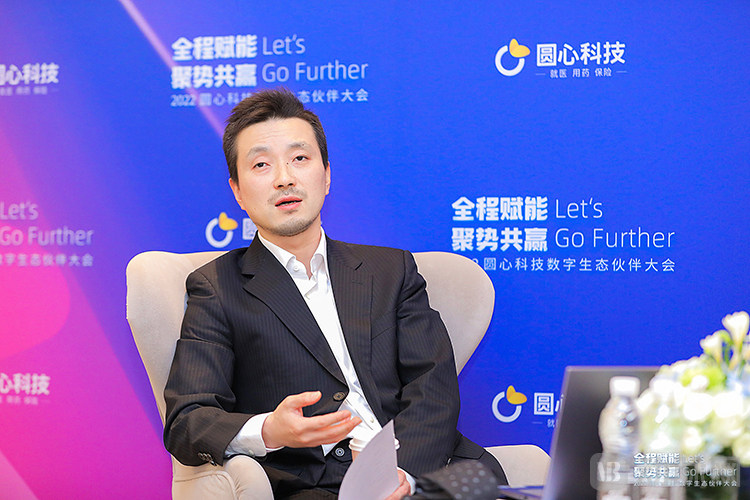
Lu Yijun, General Manager of Canbridge Pharmaceuticals China
According to the prospectus, as of August 2022, Yuanxin Technology had provided marketing services to 217 pharmaceutical companies, including 13 of the top 20 global pharmaceutical firms. The preference for Yuanxin Technology among pharmaceutical companies is precisely due to its systematic digital marketing solutions.
The penetration of digitalization in the pharmaceutical marketing sector will continue.
Zhang Guangyu believes that, in terms of drug categories, digital marketing will increasingly penetrate into areas such as oncology drugs and biologics; from the perspective of service stages, it will extend further into disease screening.
In fact, this projection is underpinned by fundamental logic: the acceleration of innovative drug development in China has shortened the post-launch marketing window; meanwhile, the healthcare service system is extending from treatment toward prevention, screening, and rehabilitation, thereby improving public health. These trends will all influence the marketing strategies of pharmaceutical companies.
Meanwhile, the market and policy environments may change, but the fundamental patient-centric goal of the healthcare sector will remain unchanged.
“Throughout Yuanxin Technology’s development, patient service has remained our original mission. Guided by this mission, we will continue to increase investment in infrastructure and product optimization across healthcare access, medication management, and insurance. Leveraging high-value pharmaceutical products, we aim to enable patients to access better medications at lower costs within a shorter timeframe, while ensuring clinicians have access to cutting-edge medical information,” said Luo Dongtao, Co-President of Yuanxin Technology. He stated that the company will strengthen the construction and upgrading of internet hospitals affiliated with public hospitals, continuously optimize and iterate its whole-course disease management services, expand its offline pharmacy presence in key cities with concentrated medical resources, and incorporate chronic disease insurance and additional health management services into Huiminbao (city-specific supplementary medical insurance) products, thereby empowering partners across the healthcare, pharmaceutical, and insurance sectors.
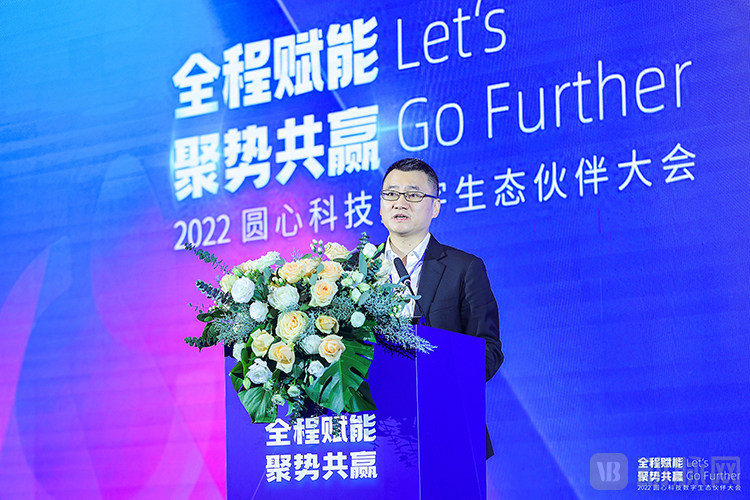
Yuanxin Technology Co-President Luo Dongtao
According to the latest updated prospectus data from Yuanxin Technology, digital marketing for pharmaceutical companies has brought diversified monetization channels to Yuanxin Technology. The performance of its healthcare industry empowerment services segment, which includes digital marketing, continues to grow steadily: both revenue and its proportion of total revenue are increasing, while maintaining a high gross profit margin, thereby enhancing profitability.
In the future, for pharmaceutical companies’ digital marketing services, only models that truly start with patient value and build a multi-party value network system involving physicians, pharmaceuticals, and insurance will be able to move faster and go further.