

Vivalink Medical Completes Hundreds of Millions RMB Pre-B Financing to Accelerate China's First Integrated Cardiac Rhythm Management Platform Against Sudden Cardiac Death
Suzhou Weiweisi Medical Technology Co., Ltd. (hereinafter referred to as “Weiweisi”) has recently completed a Pre-B financing round amounting to hundreds of millions of yuan. The round was led by SDIC Chuanghe, with Dingxin Capital and Anji Liangshan participating as co-investors. China Renaissance served as the exclusive financial advisor to Weiweisi in this transaction.
This round of financing will accelerate the clinical trials of Weiweisi’s Wearable Cardioverter Defibrillator (WCD) product, while key pipeline candidates will officially enter the prototype phase. Meanwhile, the company will expand production capacity for its Automated External Defibrillator (AED) products, accelerate R&D across multiple categories, and strengthen its overseas sales layout.
Founded in 2019, Weiweisi is dedicated to building China’s first cardiac rhythm management platform that combines “active Class III medical devices + data services” to combat sudden cardiac death.In just over two years, the company’s independently developed semi-automatic external defibrillator (AED) has successively obtained CE certification and NMPA registration, while its wearable cardioverter defibrillator (WCD) is poised to enter human clinical trials.
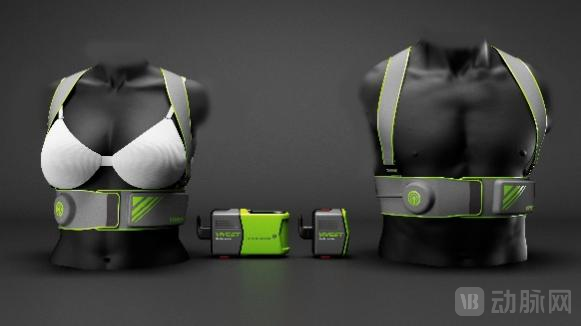 Wearable Cardioverter Defibrillator (WCD)
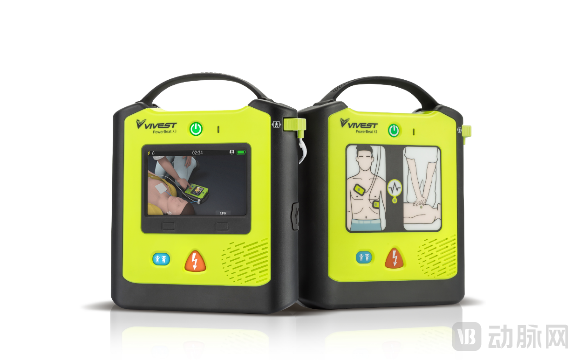
Weiweisi Semi-Automatic Automated External Defibrillator (AED)
In China, approximately 545,000 people die from sudden cardiac death (SCD) each year. Defibrillators are considered "life-saving devices" in combating SCD. Automated External Defibrillators (AEDs) are the most widely recognized and commonly used defibrillation products, predominantly deployed in public spaces and emergency response locations. Public data indicates that developed countries such as the United States and Japan have achieved AED deployment levels of 700 and 793 units per 100,000 people, respectively, whereas China’s current average deployment rate remains below 0.2 units per 100,000 people.
In June 2019, the State Council’s “Opinions on Implementing the Healthy China Action” explicitly stipulated the deployment of automated external defibrillators (AEDs) in densely populated public areas. The Red Cross Society of China and the Emergency Medicine Branch of the Chinese Medical Association have reached an expert consensus recommending that all provinces and municipalities achieve AED coverage in public spaces based on a configuration ratio of 100–200 units per 100,000 people. Consequently, the annual market size for AEDs in China is projected to reach RMB 5 billion.
Weiweisi’s second-generation AED breaks through core technological barriers, achieving a weight of less than 700g and a front footprint approximately the size of a smartphone, thereby successfully enabling mobile AED scenarios. It can be carried on the person by trained traffic police, firefighting teams, outdoor first responders, and other personnel, significantly reducing the precious time spent on judgment, location, and retrieval during emergencies, thus greatly enhancing the efficiency and coverage effectiveness of AED usage.
Benefiting from optimizations in product weight and volume, Weiweisi has integrated its second-generation AED with customized lightweight drones to launch the Drone AED. Thanks to its unique lightweight structural design, the drone complies with urban flight permit requirements and can operate in designated airspace without prior flight approval. The Drone AED’s intelligent dispatch system is interconnected with emergency centers, enabling agile coverage of outdoor scenarios such as urban areas, mountains, forests, and scenic spots. This allows emergency centers to coordinate responses online for rapid rescue operations.
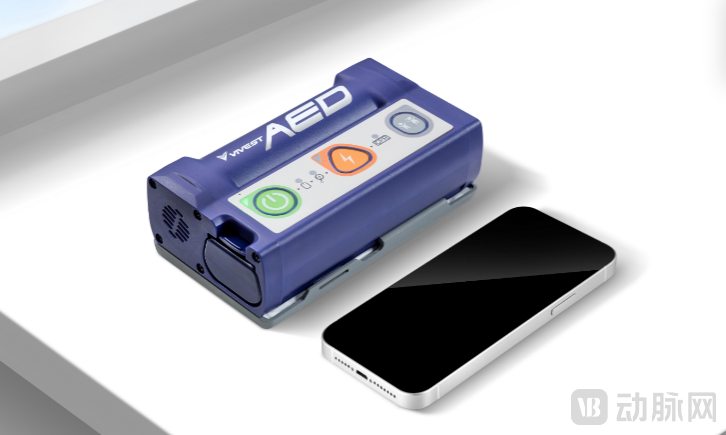 Weiweisi's Second-Generation AED Product
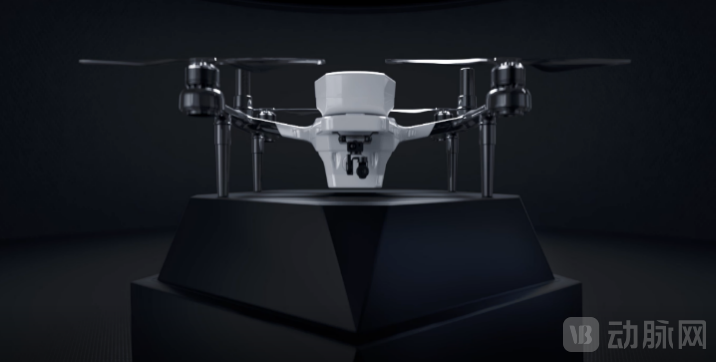 Drone AED (AirAED)
By integrating fixed AEDs, mobile AEDs, and drone-delivered AEDs into a coordinated network, Weiweisi has pioneered an “air-ground integrated” three-dimensional AED rescue solution, which will significantly enhance emergency response efficiency and the coverage effectiveness of AEDs in China.
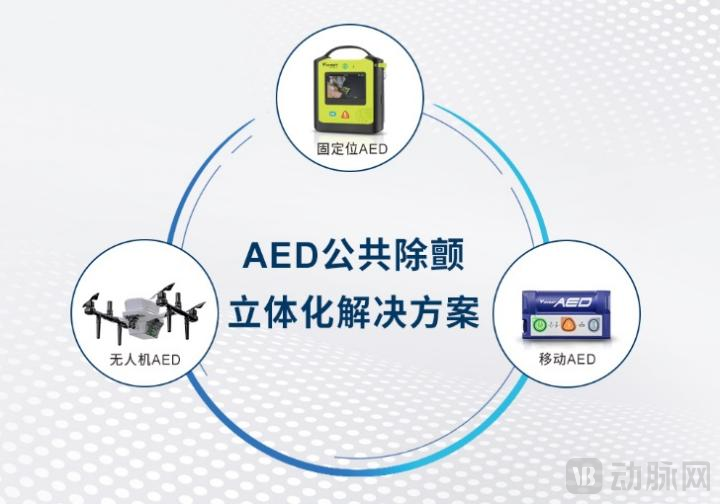 AED Public Defibrillation Multi-Dimensional Solution
The company’s other core product, the Wearable Cardioverter Defibrillator (WCD), primarily provides continuous protection during the wearing period for patients at high short-term risk of sudden cardiac death, delivering automatic defibrillation in the event of cardiac arrest caused by ventricular arrhythmias. Weiweisi’s WCD product entered the green channel for innovative medical device review in January 2021 and began preparations for clinical enrollment in 2022. Upon approval, Weiweisi will become the first Chinese and third global company to obtain certification for a WCD. In August 2022, Weiweisi was successfully selected as a leading entity undertaking AI medical device innovation tasks, with its “Wearable Cardioverter Defibrillator (WCD) and Artificial Intelligence-Based Sudden Death Risk Assessment System,” thereby becoming a key player in tackling these innovative challenges.
Since its inception, Weiweisi has been committed to deeply integrating the research and development of active medical devices with data services. Building on its core product, the wearable automated external defibrillator (AED), and leveraging the long-term big data capabilities of wearable devices alongside China’s rapidly advancing 5G data transmission infrastructure, the company has focused on applying artificial intelligence to sudden cardiac death risk assessment. It has established a ventricular arrhythmia data service management platform and launched the world’s first system for assessing the risk of sudden cardiac death, thereby transforming passive defibrillation-based emergency response into proactive, prevention-oriented health management, safeguarding patients’ lives and well-being.
Meanwhile, Weiweisi has partnered with multiple strategic partners, including Blue Sail Medical and Fosun Medical, to accelerate the nationwide deployment of its AED products. In early 2022, Weiweisi, in collaboration with its partner Blue Sail Medical, successfully provided AED emergency rescue support for the urban volunteer service stations in Chaoyang District during the Beijing Winter Olympics.
Regarding this round of financing,Zheng Jie, founder of Weiweisi, stated:The next two years are a critical period for Weiweisi to accelerate the market launch of its innovative products, as we face significant pressure from the high difficulty of technological breakthroughs and substantial investments in clinical research. At this pivotal juncture, we are delighted to welcome investment led by SDIC Chuanghe, a national-level investment guidance fund. This demonstrates that our persistence in undertaking difficult yet correct endeavors has gained widespread recognition, and our founding mission—to “ensure every heart beats healthily”—has received strong support. Through this round of financing, we will expedite the market approval process for our innovative medical devices and comprehensively promote the international expansion of our already launched products. In alignment with the national strategic plan of Healthy China 2030, we will deeply integrate our products with medical data, serving China and expanding globally.
About SDIC Capital
SDIC Chuanghe is a professional fund-of-funds and industrial fund management institution under the State Development & Investment Corp. (SDIC) Group. It currently manages two national-level funds, two special projects funded by the central government, four regional industrial funds, and three market-oriented funds, with directly managed assets exceeding RMB 40 billion. Focusing on equity investment, venture capital, and fund investments in strategic emerging industries, SDIC Chuanghe has over 150 direct investment projects and holds stakes in 200 funds. It has cumulatively supported more than 3,000 innovative technology enterprises, becoming the leading fund-of-funds management institution in China that supports the largest number of venture capital teams and covers the widest range of industries. Under the advocacy of the National Development and Reform Commission (NDRC), SDIC Chuanghe spearheaded the establishment of the China Venture Capital Service Alliance for Innovative Biopharmaceuticals, Artificial Intelligence, New Materials, and Cybersecurity. As a council member of the Asset Management Association of China (AMAC), it continuously improves its investment ecosystem, pools the collective strength of mass entrepreneurship and innovation, and promotes the development of emerging industries.
About Dingxin Capital
Dingxin Capital was established in 2014. Its core team members possess extensive composite backgrounds in both finance and industry. Guided by the corporate mission of driving social progress through investment, Dingxin Capital focuses on early-stage, specialized investments in healthcare and hard technology. The firm has ranked prominently in key industry lists, including “China’s Best Early-Stage Venture Capital Firms,” “Best Healthcare Investment Firms,” and “China’s Best Early-Stage Investment Firms in Semiconductors and Integrated Circuits.” Currently, Dingxin Capital’s total assets under management exceed RMB 10 billion. Its limited partners include institutional investors such as government guidance funds, insurance companies, listed companies and their shareholders, large enterprise groups, and market-oriented funds of funds. In 2021, Dingxin Capital was included in the highest-rated Class A list of equity fund managers eligible for insurance capital investment.
About Anji’s Two Mountains
Anji Two Mountains is a venture capital sub-fund self-managed by the Anji County Government Industrial Fund, primarily investing in early- to mid-stage projects such as those led by high-level talents and involving high-tech innovations. The Anji County Government Industrial Fund has established 17 industry-specific sub-funds, with a total committed capital of RMB 5.6 billion.
About China Renaissance Capital
China Renaissance is a leading investment bank in China’s new economy, focusing on three major sectors globally: TMT, consumer, and healthcare. In addition to its investment banking services, China Renaissance manages one RMB-denominated fund and one US dollar-denominated fund. The firm has offices in Beijing, Shanghai, Los Angeles, and San Francisco, and holds a license to operate in the U.S. securities market.
Healthcare is a key focus area where Capital A has built deep expertise, having ranked for five consecutive years as the new-economy investment bank with the highest number of healthcare deals in China. Meanwhile, Capital A boasts the largest, most professional, and most comprehensively integrated healthcare investment banking team in the country.