

How Medical Consumable Manufacturers Break Through Under Intense Volume-Based Procurement Pressure and Expand Overseas

Lepu Medical
Developer and Manufacturer of Cardiac Interventional Medical Devices and Pharmaceuticals

Bluesail Medical
Producers of Medium-Low Value Consumables and High-Value Medical Devices
On November 9, the Joint Procurement Office for National Centralized Procurement of High-Value Medical Consumables issued an announcement stating that the agreement period for the national centralized volume-based procurement of coronary stents will expire in January 2023. Accordingly, follow-up procurement activities are now being launched upon the expiration of the agreement period for the national centralized volume-based procurement of coronary stents.
An announcement seems to drag us back to the storm of centralized procurement, where prices plummeted by 90%. Nearly two years have passed since the implementation of centralized procurement for coronary stents, which has significantly impacted related enterprises. Upon reviewing their annual reports, we found that the proportion of overseas revenue for medical consumable manufacturers has been increasing in recent years. For instance, Bluesail Medical’s overseas income accounts for over 90%, while Lepu Medical’s share has risen from single digits to nearly 40%. Even Sino Medical, which was excluded from the procurement bids, saw its overseas revenue increase from 1% to 8% in the first half of this year.
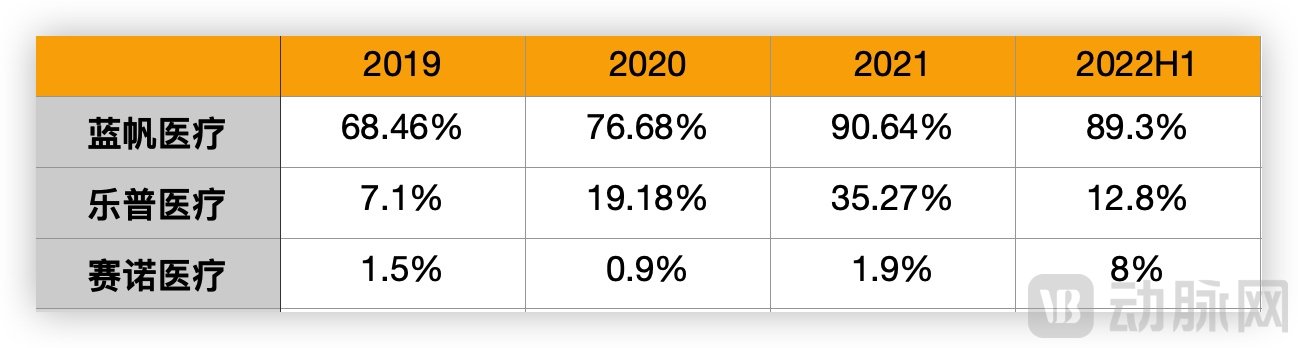
Changes in the Proportion of Overseas Revenue for Several High-Value Consumables Companies in Recent Years, Data Sourced from Company Announcements
Going Global Has Become a Common Choice for Enterprises. How Have Medical Consumables Manufacturers Affected by Centralized Procurement Built Their International Platforms in Recent Years?
From the perspective of corporate pressure, the centralized procurement of high-value medical consumables was launched in 2019. Since then, the categories covered have expanded rapidly. By June 2022, 64 rounds of centralized procurement had been conducted, showing a trend of continuous increase in included products, ongoing refinement of procurement rules, and expanding geographic coverage. As the pioneer product in national centralized procurement, coronary stents have placed significant pressure on related enterprises, increasing profit uncertainty. Consequently, overseas business is regarded as a stabilizer for their performance.
From a capability perspective, with China’s continuous investment in research and development in recent years, the innovation capacity of the medical device sector has been steadily enhanced. In particular, since the release of the “Special Approval Procedures for Innovative Medical Devices (Trial)” in 2014, the number of innovative medical devices approved annually has shown an overall upward trend, the technological sophistication of product innovations has gradually improved, and breakthroughs have been achieved in multiple high-end technical fields.
In terms of development drivers, global expansion is not only a necessity for enterprises to grow larger and stronger, but also encouraged by national policies. According to the “2022 Top 100 Global Medical Device Companies” list published by the medical device industry website Medical Design & Outsourcing, the combined total revenue of the top three international medical device companies exceeded the sum of business revenues of all Chinese medical equipment enterprises above designated size in 2020, as reported by the Ministry of Industry and Information Technology. Moreover, a common characteristic of international giants is that they rely on a high proportion of global revenue to support their performance. In other words, it is impossible to cultivate a global medical device giant solely on the foundation of the domestic market.
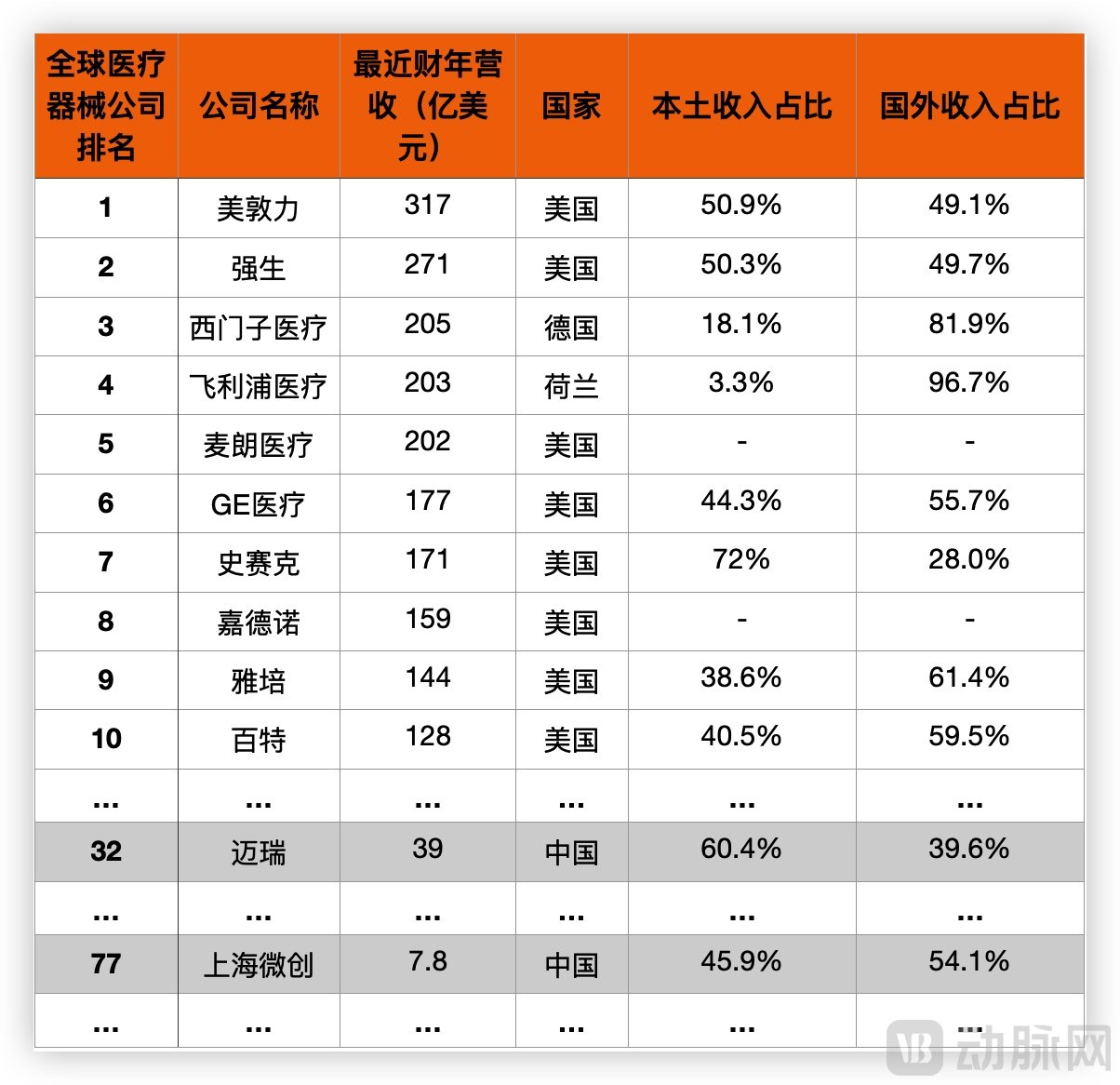
Revenue Split of Medical Device Giants: Domestic vs. International, Based on Publicly Available Data
Amid performance pressures on enterprises, and with the Ministry of Industry and Information Technology’s 14th Five-Year Plan for the Development of the Medical Equipment Industry emphasizing the policy goal of having six to eight Chinese companies rank among the top 50 globally in the medical device industry by 2025, expanding overseas has become an imperative path for companies with strong R&D capabilities and high technological content.
Different types of enterprises adopt varying strategies for global expansion. Generally, these include establishing subsidiaries, acquiring well-known overseas brands, or collaborating with local overseas agents and distribution channels to facilitate product sales.
Taking Bluesail Medical’s global expansion as an example, the company started with low-value consumables such as health protection gloves, gaining early familiarity with overseas markets and recognizing their importance. However, further expansion was constrained by the nature of its business. In 2018, Bluesail Medical completed the acquisition of Biosensors International, the world’s fourth-largest enterprise engaged in the research and development, manufacturing, and sales of coronary stents. This move marked Bluesail Medical’s formal entry into the overseas high-end medical device market.
The rationale for selecting Biosensors International lies in the fact that its medical device products are sold to more than 100 countries and regions worldwide, with cumulative global stent sales exceeding 8 million units—over 3 million in the Chinese market and over 5 million in overseas markets. Such a global brand and worldwide sales network hold unique appeal for Bluesail Medical, which is urgently seeking to transition from low-value consumables to high-value consumables and is committed to internationalization.
Following the acquisition, Bluesail Medical established a cardiovascular and cerebrovascular business unit centered on Biosensors International. At this stage, the unit is dedicated to deepening its presence in the field of cardiovascular and cerebrovascular interventions. Leveraging its mature coronary stent technology, it is expanding the development of innovative medical devices, including ordinary balloons, drug-coated balloons, functional balloons, and heart valves. In the future, it aims to extend into peripheral intervention and neurointervention. This acquisition has not only enabled Bluesail Medical to genuinely enter the high-end medical device industry but also provided it with an international platform possessing strong expansion capabilities.
In addition to mergers and acquisitions, another path is to establish subsidiaries in-house.
Taking Lepu Medical as an example, prior to 2019, the company had dozens of subsidiaries, each with its own foreign trade team responsible for overseas markets. These so-called foreign trade teams essentially consisted of only a few sales personnel who simply set annual sales targets and focused solely on meeting them, lacking a unified strategic approach.
By 2019, Lepu Medical began to prioritize its internationalization strategy. At the end of that year, it reorganized and established an International Business Division, categorized and allocated most of its products to different channels, integrated and replaced sales personnel, and fostered a new corporate culture within the team.
Next came the outbreak in early 2020, which disrupted Lepu Medical’s established rhythm. Its traditional business was constrained, and sales personnel were unable to travel for business. Fortunately, demand for anti-epidemic products emerged, and these products sustained the company’s revenue for that year. In 2021, global market demand shifted from general anti-epidemic supplies to COVID-19 antibody test kits. Leveraging its International Business Division, Lepu Medical swiftly obtained CE certification, enabling the sale of its products in Europe. By 2022, traditional business operations began to recover, and Lepu Medical started to lay out its global distribution channels. The strategic deployments previously made in its internationalization strategy are poised to play an even greater role under the new circumstances.
As can be seen, whether through Bluesail Medical’s mergers and acquisitions or Lepu Medical’s in-house development, the objective is to ensure sufficient operational efficiency and execution capability when expanding into overseas markets. This hinges on two prerequisites.
First, top-level design is crucial. Internationalization strategy is a top-priority initiative led by the CEO. Without strategic drive at the corporate level, the understanding of global expansion among lower-level teams would be limited to merely engaging in some export trade. Only by positioning global expansion as a corporate strategy and providing corresponding support can the development of overseas business be effectively promoted.
Next is team integration. After Bluesail Medical acquired Biosensors International, it restructured its core management team. Following the reelection completed in September 2018, five of the eight senior executives came from Biosensors International. It was this open and inclusive attitude, along with reasonable mechanisms, that accelerated the integration process between the two parties. For instance, Lepu Medical has a broad product portfolio, making it impossible for sales personnel to be proficient in all products. Therefore, well-planned and integrated training programs are essential to build professional teams that provide adequate support. For companies expanding overseas, in addition to a complete marketing team, robust middle- and back-office functions are equally indispensable, including regulatory affairs, legal, finance, and human resources.
Partnering with local distributors is also a prudent strategy for companies unfamiliar with overseas markets.
According to Sino Medical’s prospectus, the company sought to expand overseas as early as 2016 by establishing an International Business Division. Its adopted model involved identifying one or more distributors in a given country or region, granting them product distribution rights, assisting with marketing promotions, and undertaking distributor management responsibilities. The company sets sales targets and corresponding evaluation periods for its overseas distributors; if a distributor fails to meet its sales targets during the evaluation period, the company reserves the right to replace the distributor.
Whether through acquiring overseas brands, establishing wholly-owned subsidiaries, or appointing local distributors, these measures represent only the initial step; the true challenges lie ahead.
In the past, Chinese companies expanding overseas typically targeted relatively less developed regions such as Latin America or Southeast Asia. However, to achieve true internationalization, penetrating the European and American markets is an essential yet challenging objective.
Prejudice against Chinese enterprises is widespread in overseas markets, particularly for three categories of high-risk medical devices, where local policies and regulations pose significant challenges. A case in point is real-world clinical performance after product launch abroad. While it is an industry practice to use simple cases during registration trials to facilitate approval, it is the real-world clinical data post-launch that truly demonstrates a product’s efficacy and safety.
In the past, some multinational corporations have also suffered setbacks in this area. For instance, Boston Scientific’s Lotus valve was withdrawn globally in 2021 after unfavorable post-market clinical outcomes emerged, and Abbott’s bioresorbable scaffold was discontinued following the release of its post-market clinical results.
Only by overcoming this hurdle can a product be truly commercialized.
The post-market real-world clinical outcomes of Bluesail Medical’s NVT valve, based on 255 cases, were published in a prestigious journal in August 2021 and demonstrated favorable performance, laying a solid foundation for subsequent sales. Indeed, Biosensors International, with nearly 30 years of establishment, has played a significant role in this achievement. Backed by such a mature international brand, Bluesail Medical has encountered far fewer obstacles in its global expansion.
For companies without foreign brands, it is more important to effectively tell China’s story, bridge the gap, and achieve mutual recognition in order to dispel external biases against “Made in China.”
When Lepu Medical sells Class III implantable products in some developed countries, foreign medical professionals still hold certain biases against Chinese products. In addition to conducting overseas clinical trials in accordance with regulations, Lepu Medical has adopted a “data + on-site visits” approach, inviting relevant stakeholders to observe the actual conditions in China. For instance, in the domestic market, approximately one-third of patients use Lepu’s coronary stents. In Chinese hospitals, patients can access specific medical services, and physicians can engage in related academic exchanges.
For enterprises aspiring to compete in the global market, mastering the art of narrating and disseminating their brand stories is essential. Only by deepening mutual understanding can barriers and prejudices be dissolved. Chinese narratives must be grounded in real-world clinical evidence to ensure greater stability and credibility.
“If a company merely registers through an agent and sells its products abroad, it has only taken a tentative step overseas and cannot be considered truly globalized. Only by achieving comprehensive globalization across all aspects—including R&D, manufacturing, marketing, clinical trials, and talent—can a company genuinely build an international platform,” stated the head of Bluesail Medical in an interview with VCBeat.
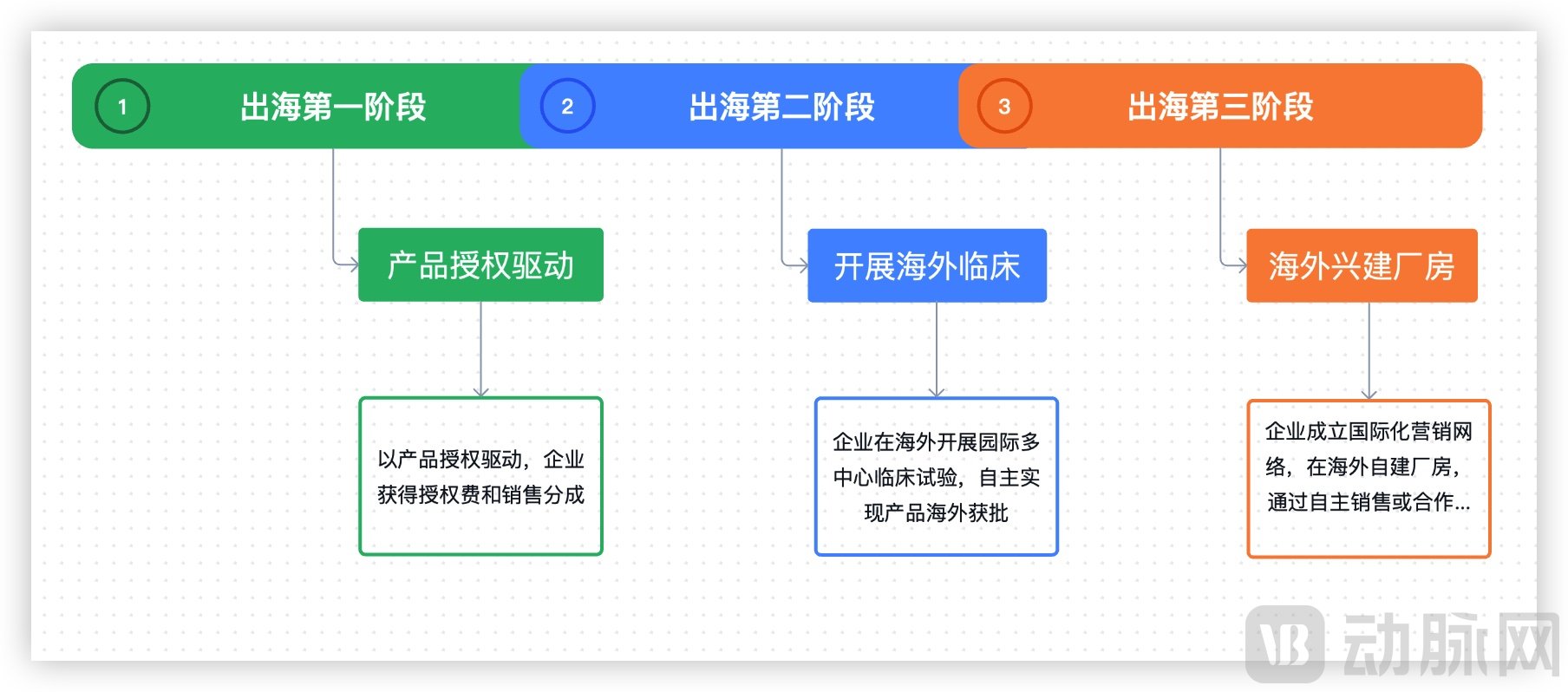
Three Stages of Global Expansion for Medical Device Companies
After acquiring Biosensors International in 2018, Bluesail Medical rapidly integrated its global R&D resources. In 2019, Bluesail Medical expanded and upgraded its original U.S. R&D center into a Global Innovation Center and an incubator for innovative products, established multiple R&D teams focusing on mitral valve and neurointerventional technologies, and set up a new Shanghai R&D center. In 2020, the company acquired NVT, a leading European valve R&D enterprise, reorganized and expanded NVT along with the original European sales and clinical teams, further strengthened the Shanghai R&D center, and initiated technology transfer for valve products while launching R&D of new products across four major therapeutic areas: coronary, valve, neurovascular, and peripheral vascular interventions.
In the initial stage of global expansion, enterprises are often unfamiliar with international markets and lack overseas development experience. Therefore, they typically choose to sell overseas by licensing their products to foreign distributors, a strategy that meets their initial global expansion needs while mitigating risks. However, as enterprises deepen their internationalization efforts, in certain mature and sufficiently large markets, they may opt to establish overseas manufacturing facilities to reduce production costs and increase the proportion of overseas sales, taking into account factors such as product costs and brand influence.
Currently, Bluesail Medical has established 8 R&D centers and 9 manufacturing bases in China, Germany, Singapore, the United States, Vietnam, and other countries; set up more than 70 subsidiaries across over 20 countries and regions worldwide; built a marketing network covering more than 130 countries and regions globally; and employed over 1,000 overseas staff.
It is worth noting that to retain high-level overseas talent, Bluesail Medical has designed a “multi-tiered business partnership mechanism,” creating a new organizational model that is innovative, empowering, and shared, thereby facilitating the integration of global talent. “When acquiring foreign companies, in addition to valuing brand influence, it is essential to further expand and strengthen the existing high-quality talent team; only then can the integration be considered truly effective,” a representative from Bluesail Medical told VCBeat.
Thanks to its investments in international R&D, manufacturing, and talent teams, Bluesail Medical has secured over 600 patented technologies worldwide, with the majority held overseas. Taking the critical exclusive patented drug BA9 from Biosensors International as an example: BA9-related patents comprise multiple patent families and have been filed in more than 30 countries and regions globally, safeguarding distinct technological aspects. These include technologies directly related to the BA9 drug as well as extended technologies built upon the BA9 platform.
Patents serve as the “passport” for Chinese enterprises in overseas markets. Only with a comprehensive international patent portfolio can companies promptly protect their R&D achievements, continuously accumulate patent advantages, and thereby achieve the goal of controlling and mitigating patent risks.
A similar story has unfolded at Lepu Medical. For many years, the company has consistently allocated more than 10% of its annual revenue to research and development (R&D), successfully pioneering China’s first coronary stent, first cardiac pacemaker, first bioresorbable stent, and first cutting balloon, among other innovations. With a portfolio comprising over 600 products, the key challenge now lies in maximizing their value in the broader overseas market.
Lepu Medical’s International Business Division currently employs over 200 staff, with its customer base spanning more than 120 countries and regions. The company has filed a total of 1,541 patents, obtained 34 U.S. FDA approvals, and secured 234 EU CE certifications. Even its newly launched ultrasonic scalpel product line has seen multiple products receive CE certification and market access in Europe, positioning it as a promising driver of revenue growth.
On September 21, 2022, Lepu Medical’s Global Depositary Receipts (GDRs) were successfully listed and traded on the SIX Swiss Exchange, marking the first GDR issuance by a Chinese medical industry company on this exchange. The total funds raised amounted to approximately USD 224 million. According to Lepu Medical’s announcement, as the company’s R&D pipeline continues to expand, there is a need for sustained investment in overseas capital and other resources, given the high costs, cumbersome procedures, and lengthy cycles associated with overseas clinical trials and product registrations.
In other words, Lepu Medical’s listing in Switzerland will not only meet its overseas development funding needs through GDR issuance but also further enhance its international brand recognition. By strengthening its R&D, production, and sales systems for innovative products, the company aims to expand its overseas market and move beyond the traditional path of Chinese enterprises going global that relied solely on cost advantages.
Chinese healthcare companies’ perceptions of global expansion are also evolving.
In the past, overseas markets were not a mandatory option for Chinese enterprises; often, they served merely as a stopgap to offset shortfalls in domestic performance. However, with intensifying competition in the domestic market, the implementation of centralized procurement, and the gradual leveling of product prices, companies have found that profit margins abroad appear more attractive. Particularly in the field of high-value consumables, internationalization has become an inevitable choice for enterprises.
From a corporate perspective, the process of going global is one of enhancing international capabilities and undergoing transformation. Corresponding to the three stages of global expansion mentioned earlier, companies face distinct capability requirements at each stage.
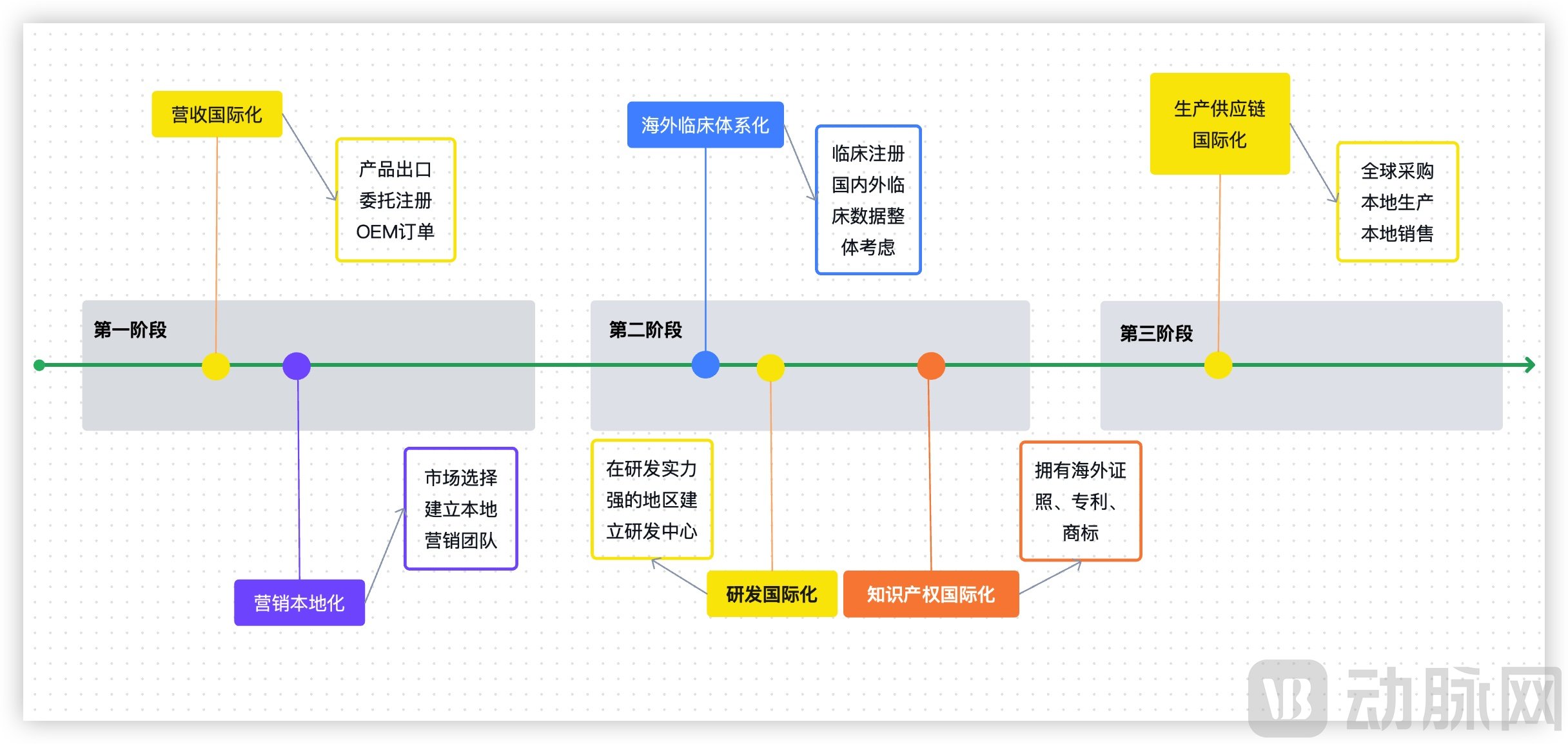
Capability Requirements for Enterprises at Different Stages of Global Expansion
Phase I:Revenue Internationalization、Marketing Localization。
This phase primarily addresses how to sell the product. Key activities include entrusting overseas product registration, securing orders, selecting appropriate markets, establishing localized marketing teams, and entering local markets through exhibitions and client visits. After successfully taking this initial step, the company can pursue scaled expansion by replicating this model across multiple markets.
Phase II:Systematic Overseas Clinical Development、R&D Internationalization, andIntellectual Property Internationalization。
At this stage, it is no longer merely about exporting products; rather, the company’s entire R&D framework must be built upon global market demands. Comprehensive strategic planning is required to determine target regions for product commercialization, necessary clinical data generation, and regulatory certification requirements. Furthermore, to safeguard corporate interests, professional legal teams are essential for managing overseas patents, licenses, and trademarks.
Phase III:Globalization of the Production Supply Chain。
At this stage, companies need to adopt a model of global procurement, local production, and local sales, tailored to the differences in regional markets. With cost as a primary consideration, they should implement globalized production by comprehensively evaluating factors such as regional policies, logistics, and tariffs. Achieving this requires substantial financial support; following Lepu Medical’s example, listing on overseas stock exchanges for fundraising may also be a viable option for future enterprises expanding globally.
Despite the many practical difficulties still faced in global expansion, such as localization challenges, cultural differences, business shortcomings, and legal and policy issues, there is no fear of the storms encountered on this overseas journey as long as internal capabilities are sufficiently built.
In overseas markets, leveraging low-cost advantages is merely a short-term strategy. Just as Walmart’s low-price model offers limited competitive leverage, transforming into a “Sam’s Club”-style entity not only builds brand strength but also benefits the entire industry. The key challenge for Chinese companies going global in the coming years will be to craft compelling brand narratives and tell China’s story effectively through superior products and technology, thereby earning recognition for Chinese brands in international markets.