

HKU Biotech Innovation Roadshow Draws Over 1,000 Online Viewers and Strong Investor Interest
Scientists bring more possibilities to industry, but for scientific achievements to grow and thrive from the laboratory to high-tech enterprises, they must be integrated with the broader market, which requires multi-party participation.
The Technology Transfer Office of the University of Hong Kong serves as the central hub for all HKU scientific research achievements and the birthplace for the commercialization of technological innovations. It is continuously creating more opportunities for scientists to engage in mutually beneficial collaborations with investment institutions and industry partners.
Based on this,Afternoon of November 18, 2022, the TechHUB of The University of Hong Kong Beijing Centre, the Technology Transfer Office of The University of Hong Kong, and VCBeat Chengguo Bureau jointly hosted a roadshow event for the commercialization of research achievements from The University of Hong Kong—HKU Sci-Tech Innovation Intelligence Bureau | Biopharmaceuticals Special Session, and invited ten leading capital institutions, including Matrix Partners China, Legend Capital, CAS Star, Baidu Ventures, Bohe Angel Fund, FreeS Fund, and Sinovation Ventures, to embark on a journey linking HKU’s scientific research achievements with mainland China’s capital and industries. Cao Leying, Head of the TechHUB at the University of Hong Kong Beijing Center, hosted the roadshow event and delivered the opening remarks.
Work on the Commercialization of Research Achievements at The University of Hong Kong
Prior to the commencement of the roadshow,Ms. Wang Jianrui, Director of the University of Hong Kong Beijing Centre; Dr. Zhao Xiaohong, Deputy Director of the Technology Transfer Office (TTO) of the University of Hong Kong; and Dr. Gan Huiyan, Senior Business Development Manager of the TTO of the University of Hong Kong, provided a detailed introduction to the University of Hong Kong and its work on the translation of scientific and technological achievements.。
Master Plan for the University of Hong Kong Beijing Centre
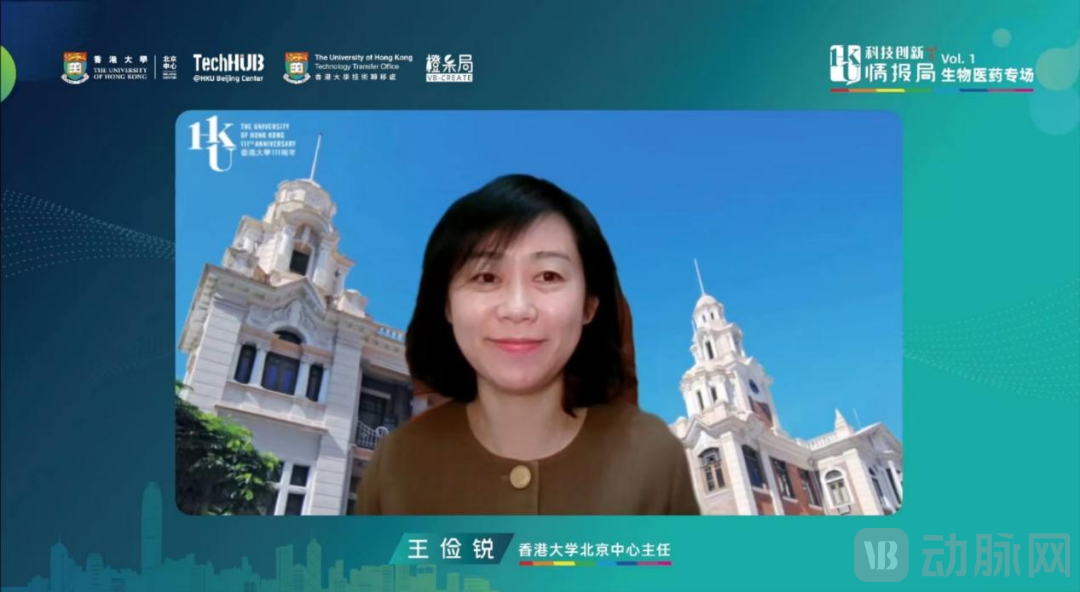
The University of Hong Kong Beijing Centre was established in spring 2021, asHong Kong Links Beijing’s Collaboration and Innovation Ecosystema bridgehead. The University of Hong Kong Beijing Centre has always adhered to its mission of being based in Beijing, connecting with Hong Kong, and embracing the world, so as to promote the coordinated development of innovation between Hong Kong and the mainland.
Since June 2022, the HKU Beijing Centre has been established to create an integrated innovation and entrepreneurship platform that synergizes scientific research, capital, industry, and policy.The University of Hong Kong Beijing Centre TechHUB, and in the future, it will focus on serving professors and scholars of the University of Hong Kong, working closely with laboratories and the Technology Transfer Office to engage venture capital firms and industrial incubators, deeply integrate industrial investment and government resources, and promote the integrated development of scientific and technological innovation between mainland China and Hong Kong.
Office of Technology Transfer, The University of Hong Kong
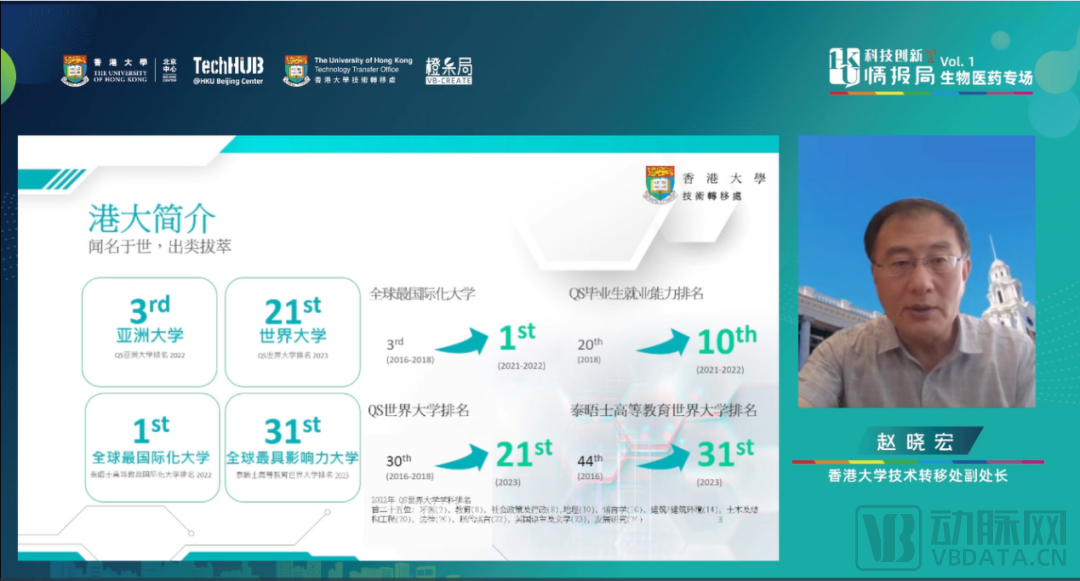
The University of Hong Kong, established in 1911, is the oldest university in Hong Kong and a prestigious institution ranked 3rd in Asia and 21st globally. Financial data for 2020–2021 shows that the total number of collaborative projects undertaken by the University of Hong Kong, including collaborative research, contract research, and consultancy services, reached2,132 items, with cumulative total revenue reachingNearly HK$700 million, with the number of valid patents and pending patent applications reaching 2,405.
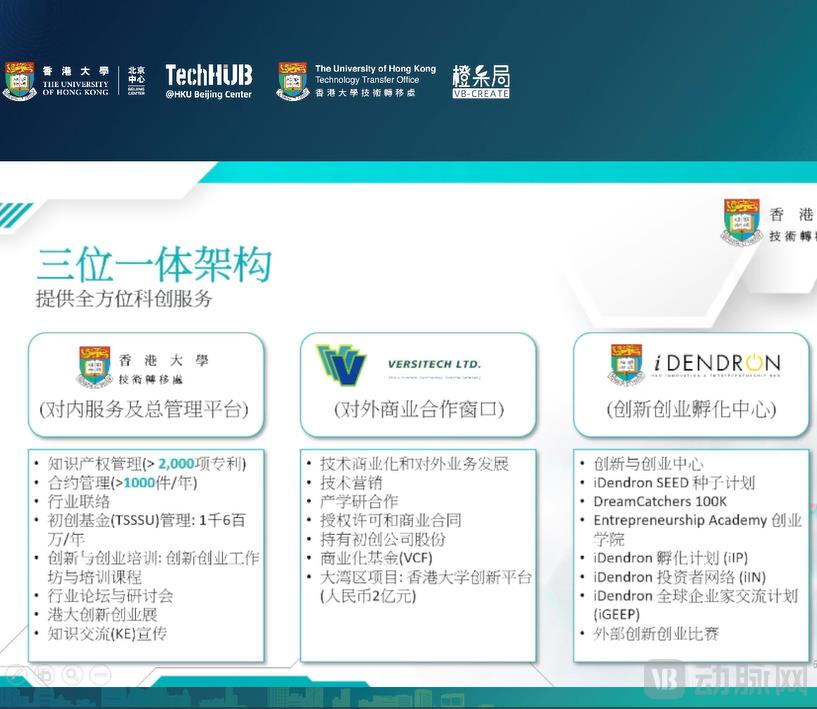
In the work of transforming scientific research achievements, The University of Hong Kong has establishedTrinity Architecture, providing researchers with comprehensive scientific and technological innovation services, among which the first window is responsible for internal services and the overall management platform.The University of Hong Kong Technology Transfer Office, As of now, the Hong Kong Technology Transfer Office has managed over 2,000 intellectual property rights and more than 1,000 contracts annually, while actively advancing industry liaison, startup fund management, and knowledge exchange and promotion.
The second window serves as the interface for external commercial partnerships.VERSITECH LTD., the University of Hong Kong has established a wholly-owned subsidiary to engage in technology commercialization and external business development, assisting researchers with technology marketing, industry-academia-research collaboration, licensing, and commercialization.
The third window is the Innovation and Entrepreneurship Incubation CenteriDENDRON, primarily focusing on initiatives such as the iDendron SEED Program, DreamCatchers 100K, and the iDendron Incubation Program to incubate HKU start-ups.
The University of Hong Kong, Technology Innovation and Research & Development
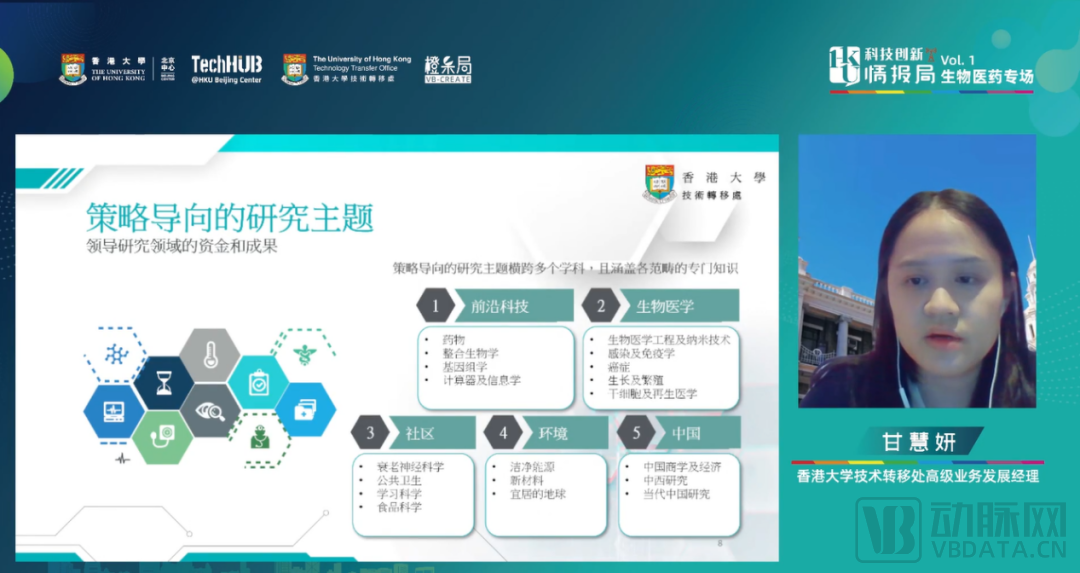
First,Biomedicine is a key research focus at the University of Hong Kong, covering multiple disciplines such as biomedical engineering, infection and immunology, cancer, reproductive stem cells and regenerative medicine, neuroscience, and public health. In addition, The University of Hong Kong hosts five State Key Laboratories, focusing on frontier areas including brain and cognitive sciences, emerging infectious diseases, and liver diseases.
Secondly,The University of Hong Kong attaches great importance to technological innovation and technology transfer, Currently, the University of Hong Kong is actively establishing strong partnerships with industry and has set up a framework for industry-academia-research collaboration, primarily through three models:
The first type isResearch Services and Technical Consulting, external enterprises commission universities to conduct testing, validation, simulation technology, technical consulting, etc.
The second type isSponsored Research and Collaborative Research, primarily focusing on exploratory research into cutting-edge technologies. Both parties will discuss the scope of collaborative research, project timelines, intellectual property allocation, and commercialization arrangements, and will execute relevant cooperation agreements prior to initiating the partnership.
The third type isTechnology Licensing and Company Formation, based on patent commercialization, the University of Hong Kong employs two primary pathways: technology licensing and spin-off company formation. Regarding technology licensing, this primarily involves the university directly licensing patents to established enterprises for commercialization. Notable successful examples include the adoption and market deployment of its wastewater-based SARS-CoV-2 detection technology by the government, and the licensing of its flow-through hybridization genotyping technology to Hybribio.
Next, let’s discuss company establishment, which is primarily driven byProfessors or research teams at The University of Hong Kong lead the establishment of startups for commercialization.In terms of policy, the University of Hong Kong permits and encourages faculty and staff to establish start-ups to commercialize technological inventions. In terms of concrete support, the Technology Transfer Office of the University of Hong Kong provides a range of services, including patent application and maintenance, flexible and reasonable licensing arrangements for patented technologies, entrepreneurship training, incubation support, and access to funding and investment networks.
It is worth noting that the University of Hong Kong will not interfere in the decision-making and operations of startups, granting researchers the greatest degree of autonomy.
As of June 2020, the number of startups founded by faculty members and students of The University of Hong Kong reached200 companies, primarily incubated through initiatives such as the Technology Transfer Office’s University Technology Start-up Funding Scheme, the iDendron Seed Program, and the incubation programs of Hong Kong Science Park or Cyberport. Among these, 70 companies funded by the Technology Transfer Office’s University Technology Start-up Funding Scheme cover two major sectors: biotechnology and engineering.
Linking Capital, Four Major Achievements Unveiled
This roadshow focuses on the "biomedicine" sector, showcasing the cutting-edge achievements of The University of Hong Kong's research teams in overcoming critical challenges in healthcare, with a key announcement ofFour achievements: Professor Liu Pengtao’s “R&D and Application of Biopharmaceuticals Based on Novel EPSC Technology”; Professor Tu Wenwei’s “Tumor Immunotherapy Based on γδ-T Cells and Their Exosomes” and “Preparation Technology for Antigen-Specific Tregs”; Professor Li Xiang’s “Chemical Proteomics Platform Empowering New Drug Development” and “Development and Application of First-in-Class Chemical Inhibitors Targeting the YEATS Domain”; and Director Lian Qizhou’s “Technology and Application of Stem Cell Gene-Targeted Therapy for Genetic Diseases and Tumors.”
The research leads of each project team provided detailed introductions to the project status, technological innovations and advantages, development plans, collaboration needs, and core teams.
· Roadshow Projects:
Research and Application of Biopharmaceuticals Based on Novel EPSC Technology
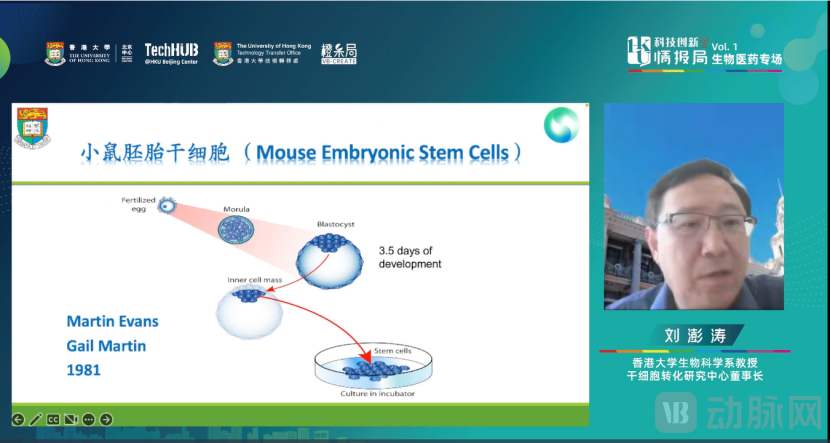
The photo shows Professor Liu Pengtao of the Department of Biological Sciences at the University of Hong Kong.
·Roadshow Projects:
Tumor Immunotherapy Based on γδ T Cells and Their Exosomes
Preparation Technology of Antigen-Specific Tregs
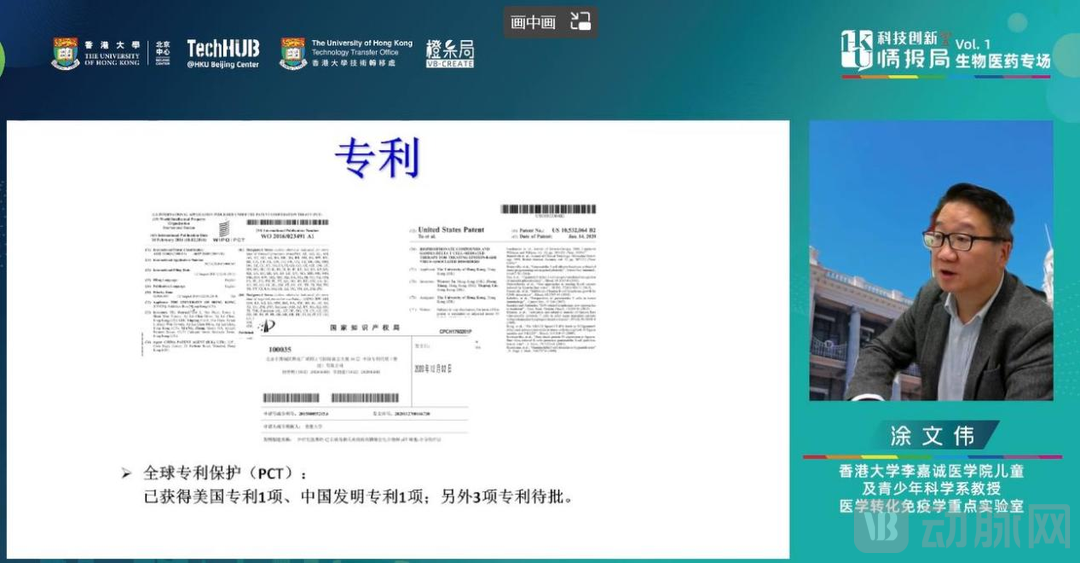
The photo shows Professor Tu Wenwei, Department of Paediatrics and Adolescent Medicine, Li Ka Shing Faculty of Medicine, The University of Hong Kong
· Roadshow Projects:
Chemical Proteomics Platform Empowers New Drug Development
Pioneering Development and Application of Chemical Inhibitors Targeting the YEATS Domain
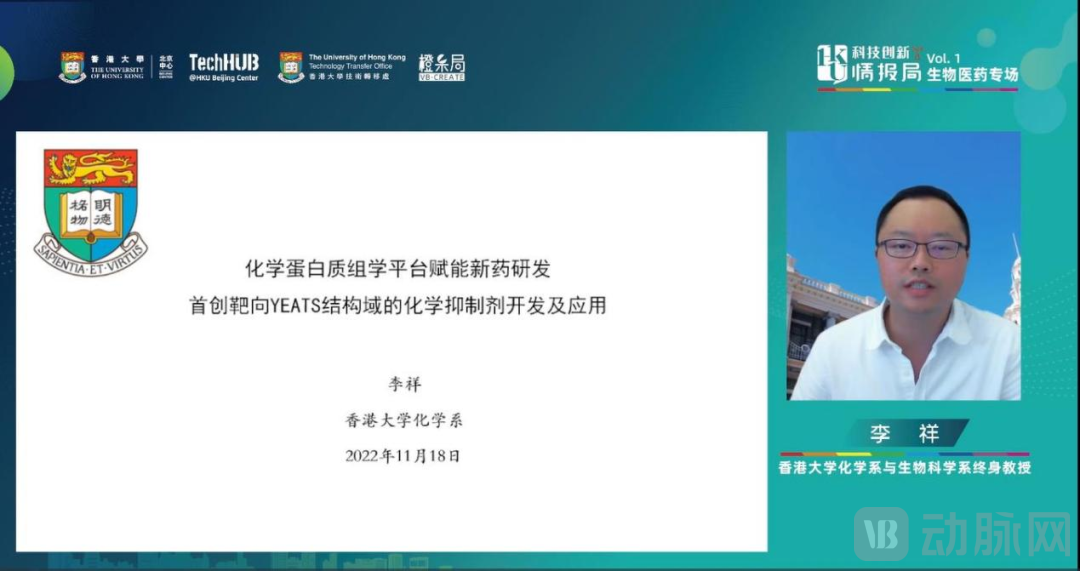
Pictured is Professor Li Xiang, Tenured Professor in the Department of Chemistry and the Department of Biological Sciences at The University of Hong Kong
· Roadshow Projects:
Technologies and Applications of Stem Cell Gene-Targeted Therapy for Genetic Diseases and Tumors
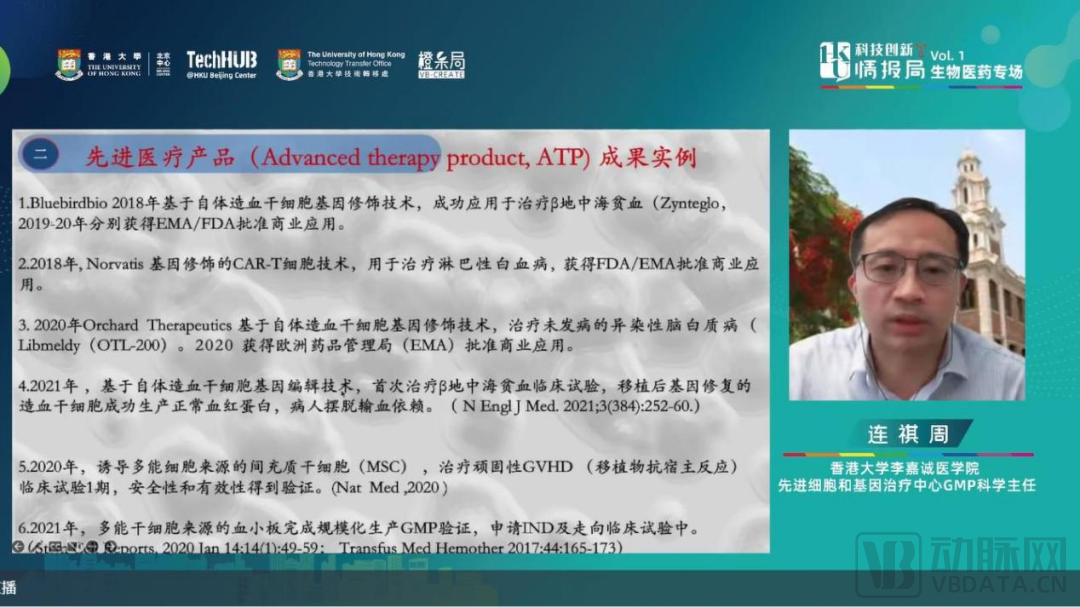
Pictured is Dr. Lian Qizhou, GMP Scientific Director of the Centre for Advanced Cell and Gene Therapy at the Li Ka Shing Faculty of Medicine, The University of Hong Kong
Following the project roadshow, a closed-door meeting was held concurrently, attended by industry partners including Matrix Partners China, Legend Capital, CAS Star, Baidu Ventures, Bohe Angel Fund, FreeS Fund, and Sinovation Ventures. Relevant experts engaged in in-depth discussions with scientists on topics such as technology, core team building, and future development strategies.
Helping More Projects Find Their “Talent Scouts”
This event is part of the HKU Science and Technology Innovation Intelligence Bureau series, and also marks the debut live broadcast of a research achievement transformation roadshow hosted by the University of Hong Kong Beijing Center.
Currently, there is unprecedented enthusiasm for early-stage, small-scale, and scientist-led investments in the field of medical innovation and translation; however, the process of commercializing scientific research outcomes remains arduous and protracted.
Therefore, while continuously strengthening their professional capabilities to provide a robust platform for scientific research and development, the University of Hong Kong Beijing Centre and the University of Hong Kong Technology Transfer Office will also create more opportunities to connect scientists’ innovative projects with market-oriented resources. This will facilitate mutual engagement between scientists and industry stakeholders, including entrepreneurs and investors, thereby jointly accelerating the commercialization of cutting-edge achievements in the medical field.