

Two Decades of Innovation: RWD Life Science Instruments' Rise and IPO Prospectus
For a long time, overseas companies have easily monopolized the global life science instrument market by leveraging their century-long accumulation. According to the Blue Book on Technological Research Achievements in the Field of Life Sciences released by the Consortium of Life Science Societies under the China Association for Science and Technology, China’s life science instruments and equipment are highly dependent on imports, with annual expenditures exceeding RMB 100 billion.
Issues such as high prices, unstable supply, and poor service quality resulting from monopolies have long constrained the development of life sciences in China.
“The life sciences industry holds immense promise; with dedication, no challenge is insurmountable.” Driven by a commitment to bolster confidence in national brands, and after comprehensive consideration of technical value, market potential, and industry prospects, RWD Life Science was officially established in 2002, embarking on the path of independent research and development of life science instruments and equipment.
From “a decade of honing a single sword” to the launch of hundreds of independently developed products
In 1998, Mr. Xiu Xianshuai, General Manager of RWD Life Science, who was then engaged in research and development at Huawei, witnessed Huawei’s transformation from small to large and from weak to strong within just four years, which sparked his desire to start his own business.
By chance, Xiu Xianshuai met Professor Xu Lin of the Kunming Institute of Zoology, Chinese Academy of Sciences, and learned that the stereotaxic instrument is an essential piece of basic equipment in fundamental life sciences research; however, most life sciences research institutions in China still rely on imported products.
In fact, at that time, not only was the market for stereotaxic instruments dominated by foreign brands, but the entire life sciences sector was largely controlled by them. On one hand, domestic brands could not compete with their foreign counterparts in terms of either quality or reputation; “Made in China” was even considered a derogatory term back then. Long-term reliance on imported scientific research instruments and equipment made scientific work vulnerable to external constraints, which was detrimental to the long-term development of China’s scientific research endeavors. On the other hand, foreign brands were dominant and high-priced, while the market strongly demanded affordable yet high-quality products. Although many domestic companies were developing stereotaxic instruments at the time, none achieved significant success.
"From 0 to 1 has never been easy."
As a critical instrument in animal experiments, the stereotaxic apparatus is required toBalancing Precision and Flexibility. Research clients prioritize instrument quality above all else; however, truly delivering high-quality products presents significant challenges in terms of talent teams, R&D costs, and time investment.
In the early stages of R&D, the primary challenge faced by RWD was building a team of specialized professionals. To address issues with instrument precision, RWD invited the chief engineer of a renowned watchmaking company to join and lead the development of precision manufacturing processes. Meanwhile, to ensure product quality, RWD has consistently delved into customer needs and pursued long-term planning for product R&D over the past decade.Continuously collect user feedback to drive ongoing product iteration and upgrades.
Since the launch of its first standard stereotaxic instrument in 2004, the product has undergone dozens of updates and iterations, with precision improving from 100 μm to 1 μm. Multiple models have been introduced to accommodate diverse experimental scenarios involving various laboratory animals, including pigs, monkeys, and pigeons.
“Every product upgrade and iteration challenges not only our technical capabilities but also our supply chain and production lines,” said Xiu Xianshuai. The development of stereotaxic instruments has been difficult, with no strong domestic brands emerging to date. This is partly because the market for stereotaxic instruments is relatively small, leading Chinese manufacturers to hesitate in making strategic investments, which in turn has resulted in an incomplete industrial chain. Additionally, the high precision required for stereotaxic instruments imposes stringent demands on manufacturing processes.
To ensure product quality and a stable supply, RWD invested 2 million yuan in imported precision manufacturing equipment. For the newly established RWD, this was a significant expense; consequently, Xiu Xianshuai sold his property in Shenzhen and committed his years of work savings to the venture.
The product has been developed, and the supply chain for its components is now mature; however, challenges have arisen in market promotion. For a long time, the domestic market has been monopolized by imported brands, preventing Chinese brands from establishing sufficient market confidence. This has created a significant barrier to the market entry of RWD Life Science’s stereotaxic instruments.
“"At that time, few domestic life sciences companies were expanding overseas, but we had the confidence to validate our products in international markets."“Facts have also proven that our products are recognized by overseas customers. Since then, our domestic and overseas businesses have mutually reinforced each other, achieving common development,” said Xiu Xianshuai.
Starting a business is not easy, and persisting in independent research and development is even harder. In the first ten years since its establishment, RWD Life Science focused on just one thing: deeply cultivating a single product, repeatedly refining and continuously optimizing it based on customer needs, ultimately achieving the breakthrough development of China’s first stereotaxic instrument from scratch. To date,RWD Stereotaxic Instruments have assisted researchers in over 100 countries and regions in publishing more than 3,000 SCI-indexed papers.
It was with the independent development of China’s first stereotaxic instrument that RWD Life Science gradually established and refined its R&D, supply chain, and quality management systems, accelerating the pace of its independent innovation.
In 2009, RWD launched China’s first micro-injection system, breaking the foreign monopoly on this technology. In 2011, it introduced animal anesthesia machines and ventilators, achieving commercial application. By 2015, the company had reached its market goal of selling products to 100 countries and regions worldwide. In 2020, a range of additional products—including cell counters, CO₂ incubators, benchtop high-speed refrigerated centrifuges, fully automated stereotaxic instruments, and cryostats—were successively launched.
Over the past 20 years since its establishment, RWD Life Science has continuously innovated, forming a portfolio centered onOptical Imaging, Precise Temperature Control, Precision Transmission, and Weak Signal Detectionfour core technology platforms, and gradually launchHundreds of Self-Developed Products, has established seven industry solutions: animal surgical modeling, animal neural signal research, animal behavior studies, microcirculation monitoring and in vivo imaging, tissue and molecular pathology, cellular and molecular biology research, and animal diagnosis and treatment. These efforts contribute to meeting the needs of universities and laboratories engaged in life sciences research, achieving domestic substitution, and enhancing the quality of Chinese-made products.
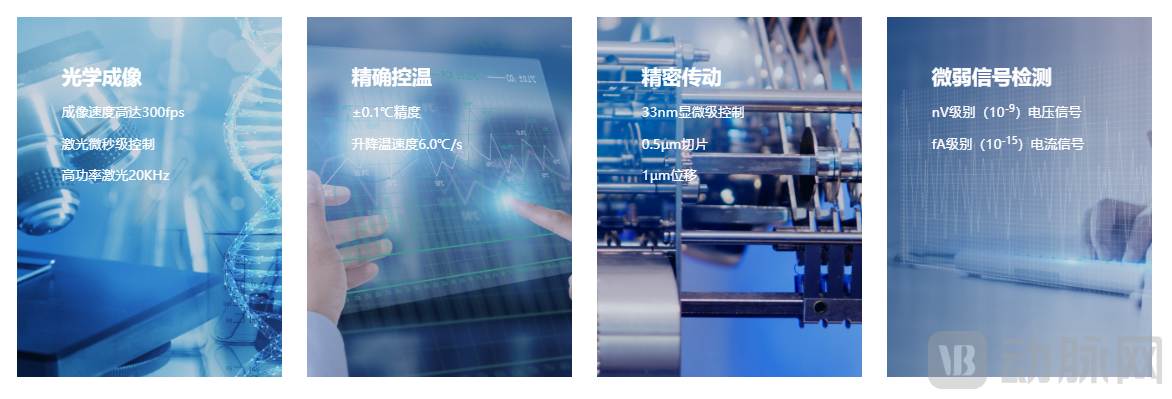
RWD's Four Core Technologies
Currently,RWD’s products and services have reached more than 100 countries and regions worldwide, empowering over 20,000 customers—including 700+ hospitals, 1,000+ research institutes, 6,000+ higher education institutions, and 11,000+ veterinary medical facilities—to achieve success, and contributing to the publication of more than 14,500 SCI-indexed articles.
Deeper Research, Broader Industrial Chain Layout
While maintaining steady growth in its existing products and business scale, identifying new growth curves has become RWD Life Science’s next strategic focus. In particular, over the past five years, RWD Life Science has entered a phase of rapid growth akin to a second startup journey.
In terms of business layout,On one hand, RWD Life Science has delved deeper into the field of life science research.
Building on its dedicated R&D of instruments and equipment required for animal experimentation and the accumulation of professional expertise in the field of neuroscience, RWD Life Science began in 2018 toStrategic Layout of the Cellular and Molecular Product Line, it has independently developed and launched products such as single-cell suspension preparation systems, cell counters, centrifuges, CO2 incubators, cell sorting products, and cell culture reagents and consumables. Its cell and molecular biology research solutions not only provide basic services for routine cell and molecular experiments but are also widely applied in the field of biological products. Today, its products and services serve a diverse client base, including universities, research institutes, hospitals, pharmaceutical companies, and biotechnology enterprises.
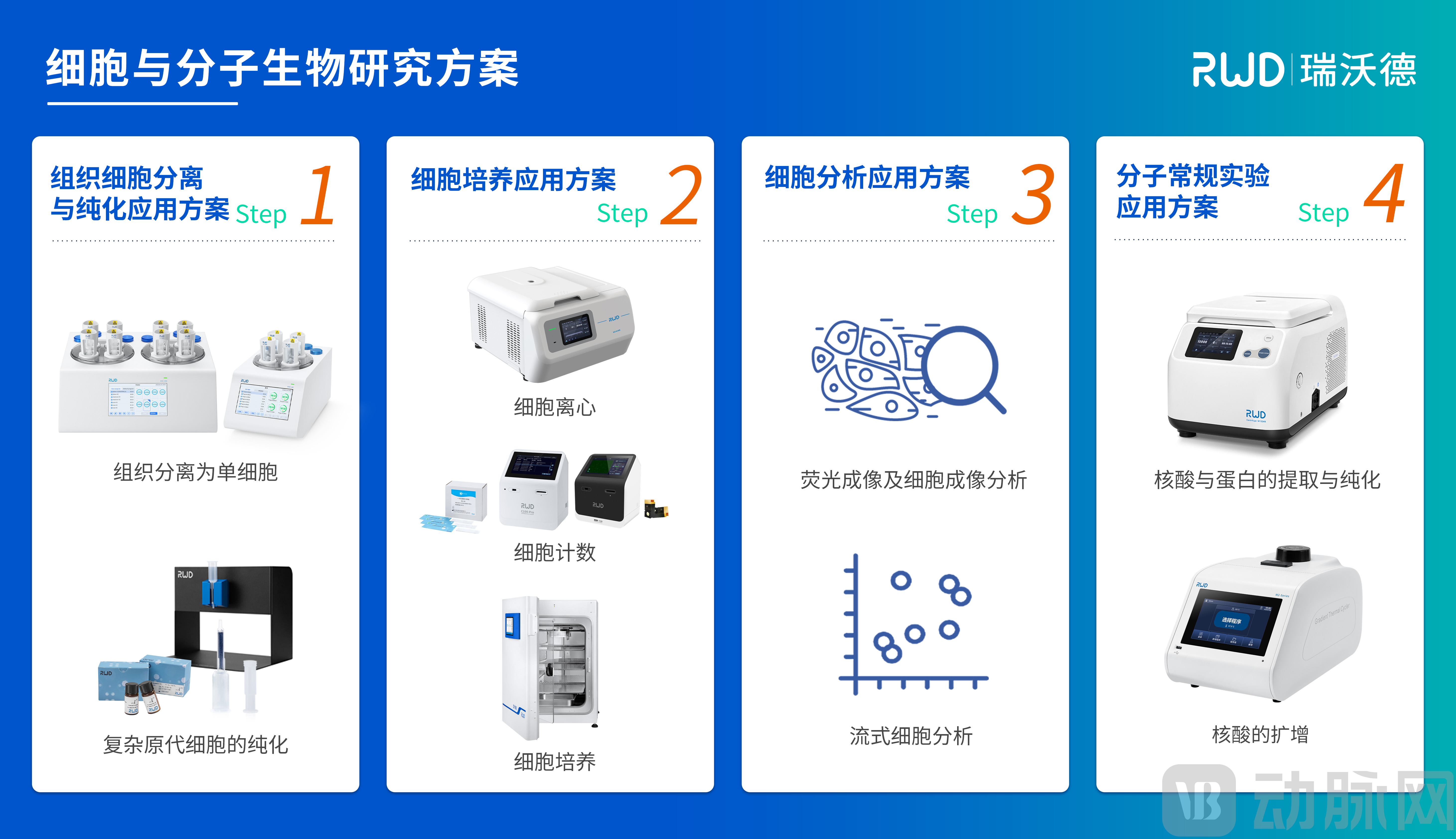
RWD Cell and Molecular Biology Research Solutions
On the other hand,Expanding further along the industrial chain, extending downstream into clinical healthcare and animal health.
In the field of clinical medicine, independently developed cryostats and rotary microtomes serve clinical pathological diagnosis. However, RWD Life Science’s ambitions extend beyond pathology; they plan toBuildMulti-Department Clinical Product Solutions, a number of research-grade instruments and devices are currently undergoing clinical translation, and will serve departments including endocrinology, orthopedics, dentistry, dermatology, internal medicine, and rehabilitation.
In the field of animal health, building on its independently developed research-grade animal anesthesia machines and ventilators, RWD launched its animal clinical care solutions in 2014, formally entering the animal health sector. It has since progressively introduced a range of specialized solutions, including: animal surgical solutions centered on anesthesia, ventilation, and monitoring; animal rehabilitation solutions featuring laser therapy and smart ICU monitoring chambers; and comprehensive animal dental care solutions anchored by dental workstations and dental imaging systems. Its clientele spans over 11,000 pet healthcare institutions worldwide, with annual global sales growth exceeding 50%.
In fact, RWD’s in-depth expansion into cellular and molecular research, as well as its foray into clinical diagnostics and treatment and animal health, all stem fromReflections on Customer Needs and Market Value.
According to Xiu Xianshuai, the domestic life sciences industry in China remains dominated by foreign brands. Taking single-cell suspension preparation systems as an example, Chinese manufacturers hold only a 1% share of the global market. Similarly, centrifuges are predominantly supplied by foreign brands, resulting in higher prices.
RWD’s 20 years of deep engagement in the field of basic life sciences research have strengthened itsTechnical barriers in mechanical design and machining, temperature control, and low-voltage electrical testing.On this basis, RWD Life Science Co., Ltd. has continuously optimized its process management, improved efficiency, and reduced costs, achievingPrice advantage over products of equivalent quality.
“Building a cellular and molecular product line is expected to break the monopoly of foreign markets, allowing Chinese enterprises to be seen and recognized on the global stage,” said Xiu Xianshuai.
In the clinical market and animal health sectors, RWD Life Science is also committed to overcoming industry challenges and addressing customer needs. For instance, during the development of its rotary microtomes, RWD tackled the industry-wide challenge of section skipping in hard tissue slicing by optimizing the rigidity, toughness, and structural layout of key components, earning widespread customer recognition. Additionally, in the development of cryostats, the company’s independently developed intelligent temperature control technology enables high-quality sectioning of adipose tissues, which have stringent freezing requirements.
Mobilize resources across all sectors to promote close collaboration among industry, academia, and research.
“By developing stereotaxic instruments, we have come to fully recognize that Chinese professionals can excel beyond their foreign counterparts in the field of life sciences. However, relying solely on individual corporate efforts is insufficient to achieve comprehensive overtaking of foreign enterprises. We need to leverage resources from all sectors to promote close industry-academia-research collaboration and upgrade and adjust the industrial landscape,” stated Xiu Xianshuai.
Based on this, RWD Life Science Co., Ltd. aims to establish a platform that engages industry experts, partners, universities, and institutions to drive innovation in products and technologies, enhance the supply chain system, cultivate professional talent, and facilitate academic exchange. Together, we will build an “industry-academia-research-application” enabling platform that spans the entire life sciences value chain—from basic research and applied research to industrialization and clinical diagnosis and treatment—thereby empowering the development of the life sciences industry.
In promoting industry-wide exchange, RWD Life Science has launched multiple knowledge-sharing initiatives, including “Wo” at the Frontier, Dacheng Academy, and “Wo”’s Lab, while also publishing industry white papers. Committed to building an open, collaborative, and shared synergy platform for the life sciences sector, RWD has brought together more than 40 expert professors, hosted over 50 live-streamed events, and released 18 academic publications, reaching a total audience of more than 50,000 professionals.
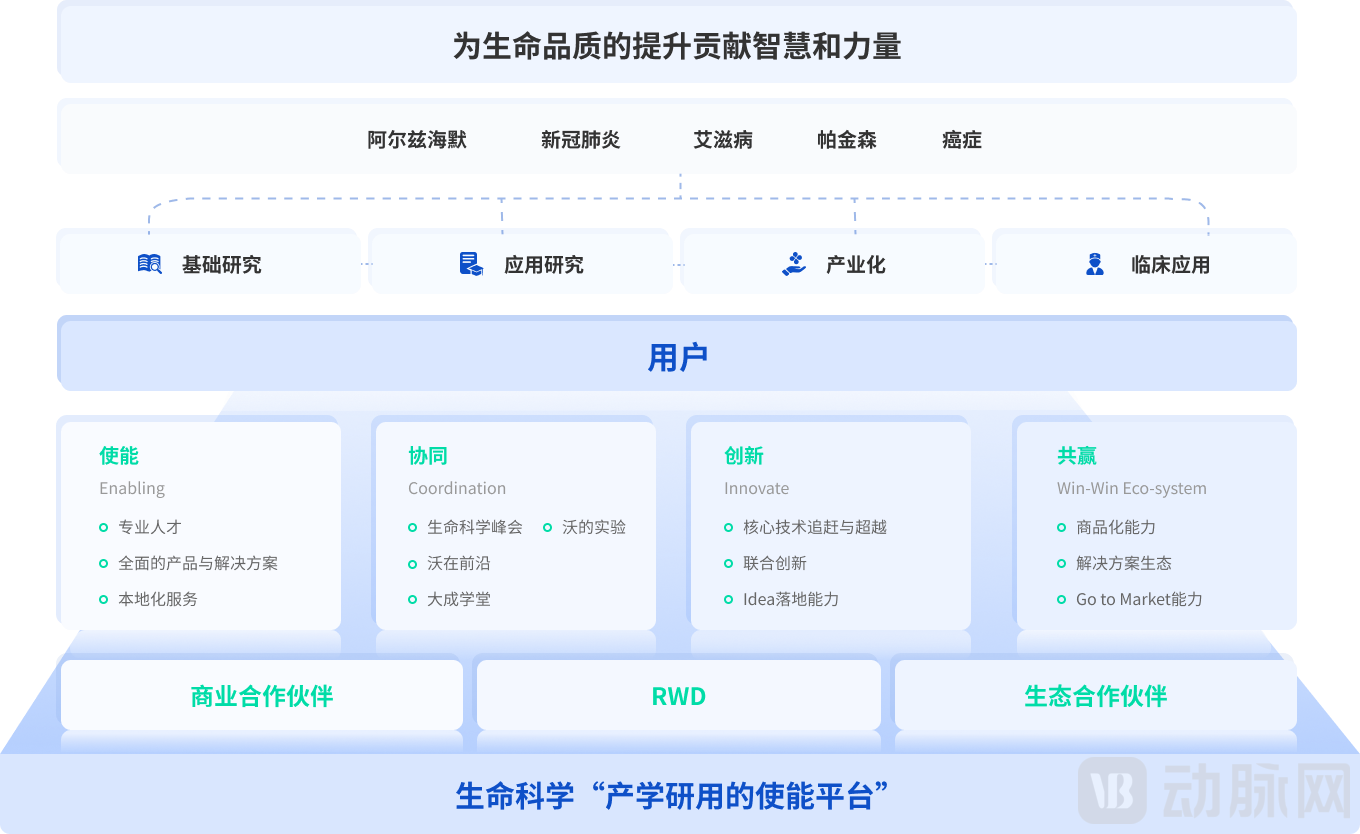
RWD is committed to building an enabling platform for “industry-academia-research-application” in the life sciences.
In terms of professional talent development, RWD Life Science established the “Mingde Scholarship” in 2016 to support the cultivation of medical research talents in China and promote the construction and development of basic medicine in the country. Currently, the scholarship has covered 40 renowned domestic institutions, including Tsinghua University, Peking University, Zhejiang University, Fudan University, China Agricultural University, Kunming Institute of Zoology, Chinese Academy of Sciences, Xiamen University, and Xi’an Jiaotong University.
In Xiu Xianshuai’s view,The life sciences industry is entering a period of significant growth.From an external perspective, the intricate and complex international environment, coupled with strong domestic policy support, has made the substitution of imported products with domestically produced ones an inevitable trend. As people’s living standards continue to rise, their understanding and demand for health are gradually shifting from disease treatment to life extension and improvement in quality of life, pointing to a very promising future for life sciences.
Leveraging two decades of technological accumulation and continuous insight into customer needs, many of RWD Life Science’s products are now competitive with international brands. As the company expands into increasingly specialized service sectors, it will provide more comprehensive and integrated solutions to drive the development of China’s life sciences industry.
In the vast galaxy of life sciences, RWD has always adhered to its vision of “becoming a world-class leading enterprise and contributing wisdom and strength to the improvement of quality of life,” persisting in doing what is difficult yet right.
Looking to the future, RWD will continue to deepen its presence in the life sciences sector.Strengthen the development of products in the biopharmaceutical industry, accelerate the clinical translation of products, and advance the research and development of large-scale scientific equipment, becoming a well-deserved leading provider of domestically produced life science instruments and equipment.
“The last leg of a journey marks half the distance; adhering to quality first and customer-centricity is the foundation that will enable RWD Life Science to achieve more stable and sustainable growth in the future,” said Xiu Xianshuai.