

From Banking Veteran to HWP: Zhou Qing's Pivot to Taikang's Health & Wealth Planner Amid Failed Health-Tech Startup
In the broader health and wellness sector, are there careers with promising growth prospects? While tracking industry evolution, VCBeat has also noted the emergence of a new profession: the Health and Wealth Planner (HWP). This role offers annual compensation that can reach RMB 1 million or even higher. What lies behind the strong potential of this enviable career path? We interviewed several Taikang HWP professionals to seek answers. This article is the first in our interview series.
Had the pandemic not disrupted the rhythm of life, Zhou Qing might have appeared before us as a co-founder of a health management company, rather than as a Taikang HWP (Health and Wealth Planner).
However, contrary to the common bias that “employees are worse off than bosses,” Zhou Qing is very satisfied with her new identity. She candidly stated, “I feel this profession was tailor-made for me.”
For her, with 14 years of experience in foreign-funded banks, embarking on the path of becoming an HWP (Health and Wealth Planner) was perhaps no “accident.”
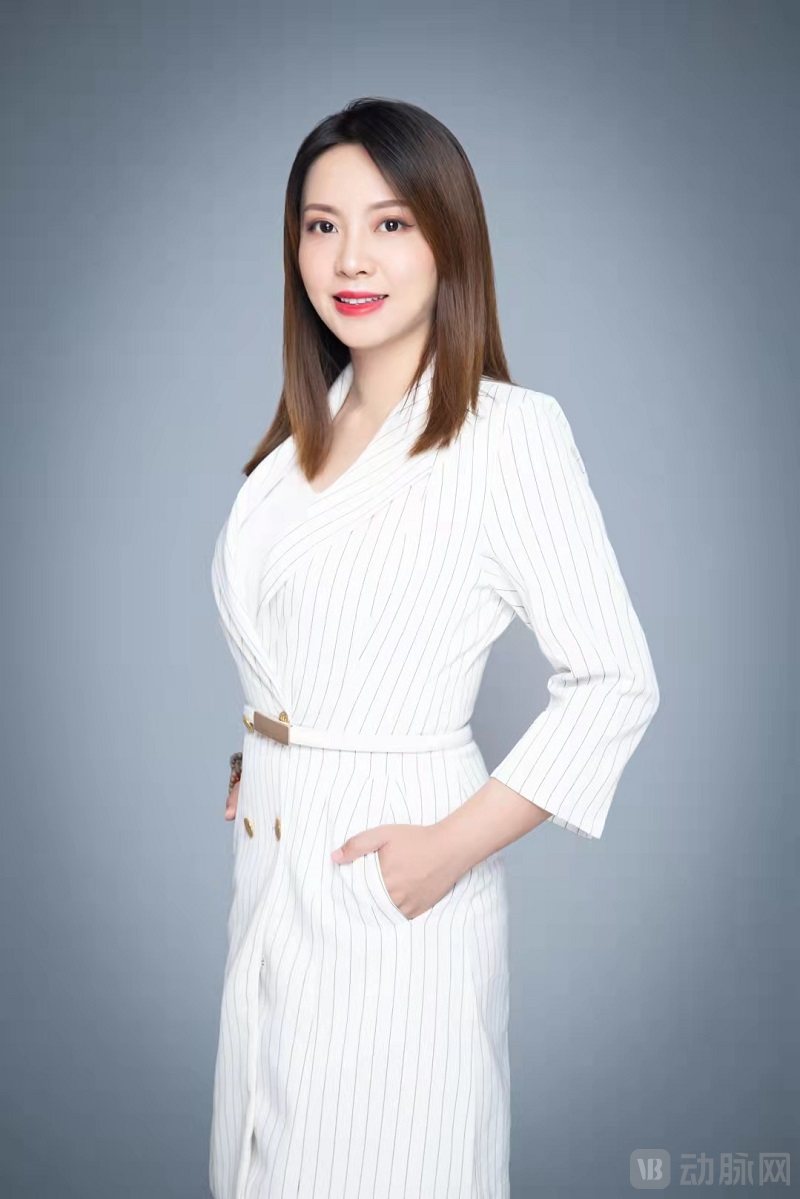
If life can be divided into distinct stages, 2019 would stand out as a pivotal milestone for Zhou Qing. At the end of that year, she resigned from her position at a foreign-owned bank, where she had worked for 14 years. By then, she was already an operations manager—a role widely envied by the public. The branch under her leadership once achieved the highest performance nationwide among all branches of that foreign bank. Moreover, she was entrusted with overseeing the launch of several new outlets for the bank.
Yet she still chose to resign at the end of that year. And her resignation was not without reason—
On the one hand, the era when foreign banks aggressively expanded and flaunted their lavish presence, as they did in previous years, is no more.In 2006, when Zhou Qing graduated from Chongqing Technology and Business University with a degree in International Economics and Trade, foreign banks were at the height of their prestige. Optimistic about the prospects of the banking sector, Zhou decisively joined the industry, starting as a bank teller and steadily advancing to the role of Operations Manager. However, as foreign banks struggled to compete domestically and underperformed in the market, their profits experienced a significant decline. One of her most immediate observations was that conducting business became increasingly difficult.
On the other hand, entrepreneurship and investment in the broader health market are gaining significant momentum.In 2018, Zhou Qing, optimistic about the growth prospects of the broader health market, began to engage with and learn about the health industry. In 2019, leveraging her personal network and leadership appeal, she gradually assembled a team comprising hospital physicians, senior property management executives, and other professionals. They began to systematically explore and strategize how to “strike gold” in the health industry. At that time, they recognized that with the accelerating pace of population aging, significant development opportunities would emerge in the future health and elderly care sectors.
After systematically studying elderly care communities, including the U.S. CCRC model, Japan’s home-based elderly care and community-integrated medical-care models, as well as healthcare management models such as the Kaiser Permanente model, they integrated local characteristics to develop full-lifecycle health management services centered on establishing family health records. Having formulated their business plan and even secured a large base of prospective clients, they have substantially advanced the project to the stages of site selection, renovation, and staff recruitment.
It was also around the end of 2019 when Zhou Qing chose to submit his resignation from the foreign-funded bank where he had worked for 14 years, preparing to make significant strides in the broader health sector. However, unexpectedly, the COVID-19 pandemic broke out in early 2020.
At that time, they remained somewhat optimistic about the future, believing that the COVID-19 pandemic, like SARS before it, would soon fade from people’s lives. However, adopting a relatively cautious approach, they closely monitored this uncertainty and advanced the project at a measured pace. As the pandemic resurged and epidemic prevention and control became normalized, Zhou Qing and his team recognized the challenges of conducting offline business operations and the risk of being unable to fulfill service commitments to clients. The originally projected financial return analysis no longer aligned with evolving realities. Ultimately, they decided to abandon the project.
At that time, Zhou Qing, who harbored entrepreneurial dreams in the big health sector, not only lost her relatively stable job at a foreign bank but also missed the opportunity to make her mark in the industry, with her venture ending before it had even begun. Compounding matters, due to the pandemic, her young daughter could not attend kindergarten and required her companionship; furthermore, her grandmother suffered a sudden cerebral infarction in late 2020, needing constant care. Temporarily stepping back to regroup and await new opportunities became an unavoidable choice for Zhou Qing. In the blink of an eye, it was March 2021.
“Looking back, I feel that those experiences were perhaps destined. Had those events not delayed me for a while, I might not have had the opportunity to come into contact with Taikang and subsequently become a Health and Wealth Planner,” Zhou Qing said to us with considerable emotion as she reflected on her past.
In retrospect, her ability to become a Health and Wealth Planner (HWP) and build her practice around this role was closely tied to her lack of resistance toward, and even endorsement of, the “insurance” function of insurance products. As early as 2018, when Zhou Qing began engaging with the health industry, she had close exposure to insurance. Contrary to the common perception that insurance sales often rely on deceptive tactics, her experience differed significantly: a friend recommended Taikang’s critical illness insurance and million-yuan medical insurance, patiently explaining the coverage benefits and associated costs. With an inherent awareness of risk protection, Zhou quickly secured critical illness and medical insurance coverage for her family. She even involuntarily assumed the role of an insurance broker, not only accepting the value of insurance products in her own mindset but also recommending related products to friends and relatives.
Becoming a Taikang HWP was the result of a fortuitous opportunity. In March 2021, Zhou Qing was introduced to an informational seminar for Chongqing-based HWP (Health and Wealth Planners) by a friend. At this seminar, Zhou Qing seemed to see her former entrepreneurial dream become a reality—Taikang is leveraging its strengths in finance and comprehensive healthcare to implement its “Insurance + Medical, Elderly Care, Rehabilitation, and Wellness” strategy, thereby turning her vision of a “health management center” into tangible practice. She stated candidly, “Many real estate companies involved in senior living communities are actually looking to offload their property holdings as quickly as possible. But Taikang is clearly different.” This seminar transformed her understanding of the health industry. Moreover, this profession appeared before her as if it had been tailor-made.
Actually,Health and Wealth Planner (HWP) is a newly established profession designed to better support Taikang’s “Insurance + Medical, Elderly Care, Rehabilitation, and Wellness” strategy and serve high-net-worth individuals. Its primary objective is to provide clients with comprehensive planning and advice for their health and wealth. By integrating Taikang’s virtual insurance payment tools with its physical retirement communities, Taikang delivers products and services that cover the entire lifespan and wealth cycle, from birth to death.For Zhou Qing, the task is no longer to design products for different demographics, as she did during her startup phase; instead, she simply needs to match Taikang’s suitable products with the appropriate target audiences.
She joined Taikang’s training camp the following week with hardly any hesitation. In reality, Zhou Qing was well aware of the hardships involved in between. Since the role involves providing health and wealth services to high-net-worth individuals, service professionals must possess exceptional expertise. To build a qualified team, Taikang mobilized nearly all its resources to train reserve Health and Wealth Planners (HWPs). Zhou Qing alone underwent pre-employment orientation, an intensive training bootcamp, and other entry-level programs such as BAC. Moreover, the curriculum extended beyond insurance and finance to include specialized training offered by institutions like the GPA Academy of General Practitioners. “After the training, I felt I had essentially become the general practitioner for my family,” Zhou Qing said with a smile.
For Zhou Qing, this profession also offers greater freedom—you don’t need to go to an office, but simply arrange your planned tasks on your own—which also makes the job more challenging.
Zhou Qing candidly admitted that she struggled to adapt when she first became a Health and Wealth Planner (HWP). Accustomed to working in an office setting at foreign banks, she initially welcomed the flexibility of her new role, as it allowed her to pick up and drop off her child from school. This change spared her the regret of having been unable to do so even once before her child graduated from kindergarten, enabling her to spend more quality time with her child.
“However, obtaining HWP certification, achieving strong performance results, and building one’s own team all require substantial investments of time and energy.” In the past, leaving work meant truly clocking out; for her now, there is hardly any distinction between working hours and personal time. To take responsibility for her own development and achieve greater growth, she must continually learn and absorb new knowledge in the fields of finance, health, and elderly care. All of this demands a higher degree of self-discipline.
For Zhou Qing, becoming an HWP means just the beginning.
From a societal perspective, the advent of the longevity era has brought about the social challenge of “getting old before getting rich.” On one hand, rapidly accelerating population aging has spurred demand for healthcare; ensuring quality of life, better maintaining health, and embracing a fulfilling existence are people’s most fundamental aspirations. On the other hand, disease and the pursuit of longer, healthier lives will undoubtedly consume wealth to a greater extent, making wealth accumulation through investment a topic of widespread concern.
Against this backdrop, the traditional insurance industry has been unable to provide comprehensive coverage for people’s health and wealth needs. The proposal of Taikang’s “Longevity Era, China Model, Taikang Solution,” along with the implementation of its “Insurance + Medical, Elderly Care, Rehabilitation, and End-of-Life Care” strategy, offers an optional solution for individuals with such needs.
Statistics show that there are currently 31 million households in China with an annual income exceeding $100,000. Over the next five to ten years, the demand for professional health managers is projected to exceed two million. As one of the first Health and Wealth Planners (HWPs), Zhou Qing not only serves this demographic but is also exploring broader initiatives. She has established her own team, which now comprises six members. Through this collaborative approach, she leads fellow HWPs in delivering enhanced services to individuals seeking integrated health and wealth management solutions.
“We are only just beginning. As the era of longevity arrives, demand will become more pronounced, and there is still much for us to do in the future,” said Zhou Qing.