

Tencent Health Unveils Comprehensive Digital Capability Blueprint for Smart Pharma, Offering an AI-Driven 'Digital Formula' for Industry Innovation

Tencent Healthcare
Developer of Digital Healthcare Products
In recent years, the intelligent transformation in the pharmaceutical sector has consistently lagged half a step behind other fields in the development of digital healthcare. After all, the high barriers of specialized knowledge inherent to the pharmaceutical industry have made it difficult for the IT sector to easily integrate into drug-related digital transformation.
However, with the recent advancements in AI, big data, and other technologies, the application of intelligent technologies to new drug development has become an inevitable trend. Internet companies in this new landscape have gradually realized that they possess ample capabilities to provide novel and cutting-edge digital tools for drug research and development.
Tencent is one of the earliest internet companies to engage in AI-driven drug discovery (AIDD). In July 2020, Tencent unveiled its first AI-powered drug discovery platform, “iDrug,” at the World Internet Conference. The platform encompasses five major modules covering the entire preclinical new drug development process.
Meanwhile, Tencent is also exploring the “art of tools” in the digital marketing of pharmaceuticals. During an unprecedented period of transformation in academic marketing, Tencent, with its solid technological foundation and deep industry expertise, has extended its capabilities into pharmaceutical digital marketing, helping to drive comprehensive innovation in this field.
Years of achievements were unveiled together at this year’s “T-Inspire and 2022 Tencent Healthcare Smart Medicine Open Day.” With major tech giants entering the fray, what can they truly deliver in AI-driven drug discovery (AIDD) and digital marketing?
“Yunshen Zhiyao” is Tencent’s first AI-driven drug discovery platform. Its name is derived from the poetic line “Only in this mountain, yet lost in the deep clouds,” symbolizing the quest to explore vast, uncharted chemical spaces. In practice, “Yunshen Zhiyao” is backed by a platform that leverages Tencent’s strengths in cutting-edge algorithms, database optimization, and computational resources across multiple teams. It aims to deeply integrate these existing capabilities with the needs of drug R&D, thereby propelling a leap forward in the innovative drug development industry.
“Many enterprises in China are engaged in AIDD. As we enter this field, we will naturally develop unique solutions,” said Liu Wei, Head of AIDD Technology at Tencent Healthcare, at the conference. “Tencent’s advantages lie first in its long-term accumulation and algorithmic innovations in deep graph learning; second, in its massive computational power and big data capabilities; and finally, in its interdisciplinary integration. By combining these strengths, we can empower every step of preclinical drug research with AI, delivering an integrated, end-to-end AIDD service.”
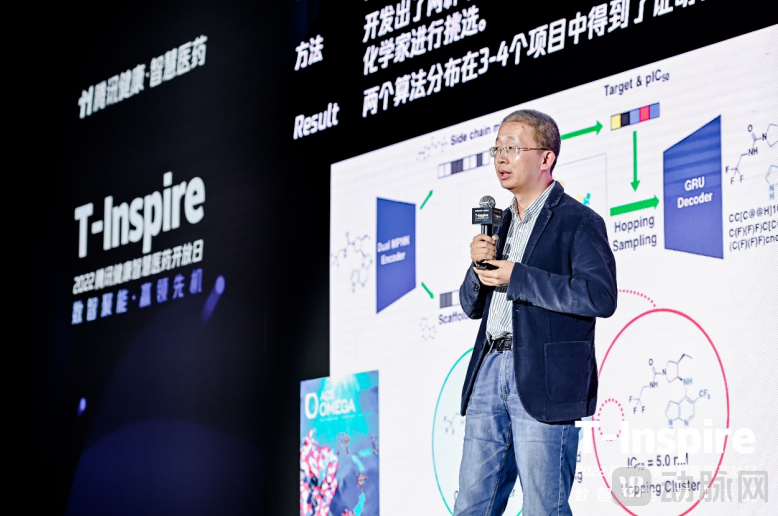
Liu Wei, Head of AIDD Technology at Tencent Healthcare
Specifically, Tencent AIDD’s capabilities can be divided into four parts. The first capability stems from its integration of “AI + quantum chemistry” applications. Pharmaceutical companies have historically relied on computational chemistry methods for drug development, but this approach struggles to balance the trade-off between system size and computational cost. As a result, calculations are either limited to very small systems or achieve high precision only at the expense of scalability, making it difficult to maintain accuracy when dealing with larger systems.
The existence of this contradiction renders traditional methods inapplicable to solving complex problems involving solutions and proteins. To achieve high accuracy in large-scale computations, “YunShen ZhiYao” has adopted an AI-enhanced quantum mechanics approach, significantly reducing the computational burden of quantum chemistry while delivering results more accurate than those obtained from low-cost computational chemistry methods. Leveraging Tencent’s computational power advantages, YunShen ZhiYao has essentially performed high-precision quantum chemical calculations for all drug-like molecules.
Deep graph learning is the second core capability of Tencent AIDD. Tencent has applied this capability to molecular structure prediction. The novel algorithm framework tFold, developed by the “Yun Shen” platform, has demonstrated its innovative value and effectiveness on CAMEO, an internationally recognized authoritative benchmark platform, maintaining the weekly champion position for several consecutive months. In graph learning-based molecular generation, nM-level lead compounds have been discovered using a scaffold hopping molecular generation algorithm. With the scaffold remaining unchanged, users can specify structural moieties to be retained while iteratively optimizing the variable regions, ultimately achieving breakthroughs around existing molecular patent protections or modifying the ADMET properties of molecules, while preserving the activity of the original drug molecules or lead compounds.
The ADMET prediction model of “Yunshen Zhiyao” also demonstrates the significance of the advantages offered by deep graph learning. Liu Wei stated at the conference, “In our collaborations with pharmaceutical companies on ADMET prediction, integrating Yunshen Zhiyao’s predictive capabilities with internal data optimization has achieved performance improvements exceeding 30%, establishing a positive cycle of testing, feedback, and model iteration. Currently, the ADMET prediction model has been effectively applied in research on optimizing the druggability of small-molecule drugs, with prediction results for most properties achieving over 90% correlation.”
Finally, there is the validation of model generalizability in the era of big data. Many companies frequently encounter this challenge in AI-driven drug discovery (AIDD) applications: an AI algorithm developed for Target A may accurately predict molecules associated with Target A, but when applied to Target B, the results show significant discrepancies or are entirely invalid.
To address this issue, “Yunshen Zhiyao” developed an out-of-distribution research framework called DrugOOD. Within this framework, existing databases were systematically categorized into numerous real-world scenarios, and an AI scoring system was employed to evaluate the reliability of AI-generated results across different targets. This approach enables the early detection of mismatches between models and targets in subsequent studies, thereby optimizing R&D efficiency.
Currently, the “Yunshen Zhiyao” platform has established collaborations with multiple pharmaceutical companies, and its model prediction accuracy has been validated through wet-lab experiments in various real-world R&D scenarios. Leveraging the high-performance computing power of its drug screening cloud service, the platform has achieved order-of-magnitude improvements in both screening speed and the chemical structural space explored. Looking ahead, by providing advanced AI-driven drug discovery algorithms, robust cloud computing capabilities, and top-tier algorithmic expertise, the platform will further deepen industry collaborations. It aims to work alongside pharmaceutical enterprises through an integrated dry- and wet-lab approach to jointly accelerate the drug development process.
As mobile internet penetration deepens in the pharmaceutical sector, compounded by the impact of the pandemic and compliance regulations, academic promotion targeting physicians is undergoing a significant transformation. For pharmaceutical and medical device companies, establishing partnerships with trusted digital platforms to shift portions of their academic promotion online has become critical to achieving operational excellence.
“Previously, engagement with physicians was achieved either through visits by pharmaceutical representatives or by establishing connections via online and offline conferences. Regardless of the approach, pharmaceutical companies and physicians ultimately maintain contact through WeChat. Therefore, can we leverage the WeChat ecosystem to integrate these various scenarios and further strengthen the connection between pharmaceutical companies and physicians?”
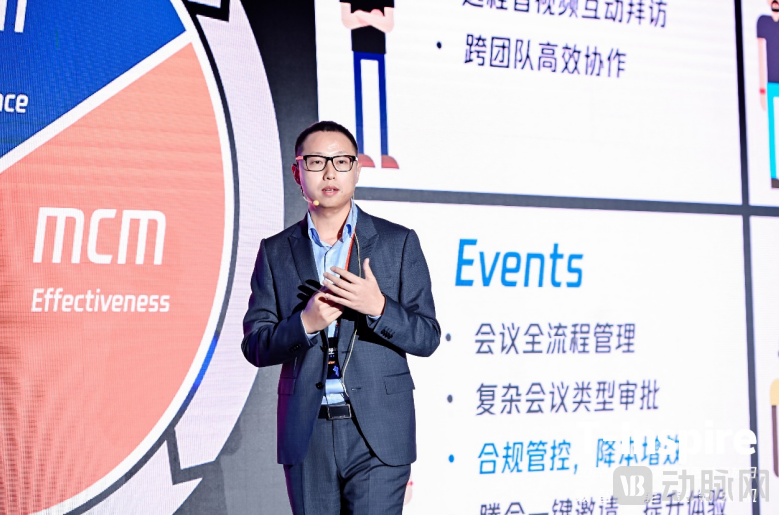 Zhang Yingnan, General Manager of Smart Pharmaceutical Products at Tencent Healthcare
According to Zhang Yingnan, General Manager of Smart Pharmaceutical Products at Tencent Healthcare, Tencent has developed a solution called NGES (Next Generation Engagement Suite) to more scientifically connect the aforementioned scenarios. This is a SaaS solution for the pharmaceutical industry, built on WeChat Mini Programs, that integrates physician engagement tools such as customer visit management, meeting management, and marketing management. By leveraging this tool, pharmaceutical companies can provide physicians with an integrated, efficient, and convenient experience during promotional activities. NGES offers more than just reach and analytics capabilities; it serves as a digital workspace for long-term, in-depth communication between pharmaceutical companies and physicians, facilitating mutual benefit under conditions of information symmetry.
The current NGES already features comprehensive physician interaction management capabilities. In the customer management module, it leverages mini-programs to enable remote audio-video interactive visits, thereby enhancing visit effectiveness. In the meeting management module, it offers functionalities such as automatic recognition of registered physicians upon entry and insights into meeting effectiveness, helping pharmaceutical and medical device companies optimize meeting processes and precisely deliver academic information. In the content marketing module, compared to the native backend of Official Accounts, it supports segmented mass messaging and evaluation of push notification effectiveness, enabling more personalized and precise communication.
Furthermore, given the unique characteristics of the industry, ensuring security and compliance is the primary consideration for pharmaceutical and medical device companies in their “cloud transformation” across various operations.
As the sole provider in its vertical sector offering end-to-end solutions spanning IaaS, PaaS, and SaaS, the NGES platform is built on Tencent Cloud’s fully self-developed technological infrastructure. It not only better meets security and compliance requirements but also rapidly responds to dynamic scaling needs and enables flexible configuration of business filtering rules. By providing pharmaceutical and medical device companies with future-ready academic promotion tools, it ultimately reshapes the modes of connection and dialogue between pharmaceutical enterprises and physicians.
Tencent’s AI-driven drug discovery (AIDD) and digital marketing solutions correspond to the two most critical functions of pharmaceutical companies—R&D and sales. However, these services operate at different stages of the pharmaceutical industry chain. By embedding capabilities such as Tencent Cloud, Tencent Qidian Marketing, and medical science popularization into the gap between production and patient services, a comprehensive digital capability system emerges, covering the entire workflow from R&D, manufacturing, and marketing to promotion and patient services.
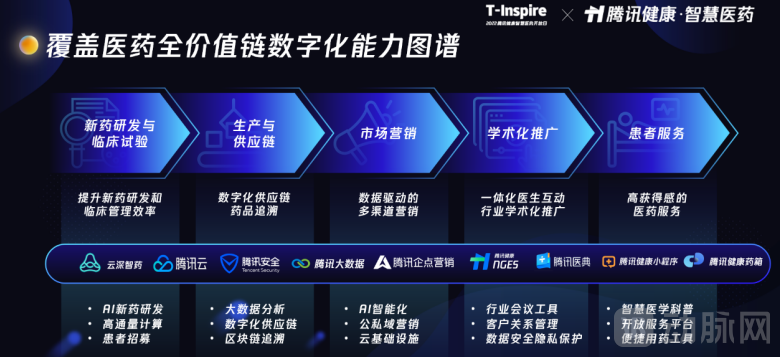 Digital Capability Map Covering the Entire Pharmaceutical Value Chain
At the outset of the conference, Wu Wenda, Vice President of Tencent Healthcare, presented a vision in his opening address: to leverage a secure, efficient, and elastic cloud infrastructure, supported by a digital capability map covering all processes across the pharmaceutical enterprise value chain, thereby driving improvements in the efficiency of all production factors and innovation in pharmaceutical services, and facilitating the industry’s digital and intelligent transformation.
To accelerate the realization of this vision, close collaboration between Tencent and pharmaceutical and medical device companies is essential to translate this large-scale industry digital transformation experiment from basic research into real-world application scenarios.