

China Launches First-Ever Provincial Alliance Procurement for Traditional Chinese Medicine Decoction Pieces with an Estimated 2 Billion RMB Market Scale
Inter-Provincial Centralized Procurement of TCM Decoction Pieces Is Here! A “Major Reshuffle” in the Trillion-Yuan Market Presents Companies with an Opportunity for Breakthrough and Revitalization. Following the official release of the documents for China’s first inter-provincial centralized procurement of traditional Chinese medicine (TCM) decoction pieces on November 18, an online training conference was held on the afternoon of the 20th. The session provided a comprehensive interpretation of the procurement strategy and plan centered on “ensuring quality, upgrading standards, and stabilizing supply.” By innovating measures for quality, pricing, and supply chain management through centralized procurement, the initiative aims to consolidate high-quality production capacity across the entire industry chain and promote high-quality sector development. The conference attracted more than 10,000 representatives from decoction piece manufacturers, planting bases, professional cooperatives, and other industry stakeholders.
To help relevant stakeholders accurately understand the joint procurement policy and guide enterprises in efficiently completing their joint procurement applications, the “Training Session for Enterprises on Joint Procurement of Traditional Chinese Medicine (TCM) Decoction Pieces” was held online. The event was hosted by the Procurement Office of the Sanming Procurement Alliance Inter-Provincial TCM (Materials) Procurement Alliance (hereinafter referred to as the “Joint Procurement Office”) and co-organized by the Shandong Internet TCM (Materials) Trading Center. The session provided detailed explanations on the key rules of the “Sanming Procurement Alliance Inter-Provincial TCM (Materials) Procurement Alliance Joint Procurement Document for TCM Decoction Pieces” (hereinafter referred to as the “Joint Procurement Document”), enterprise application workflows and key considerations, as well as the quality standard system, quality traceability system, and quality assurance system related to joint procurement.
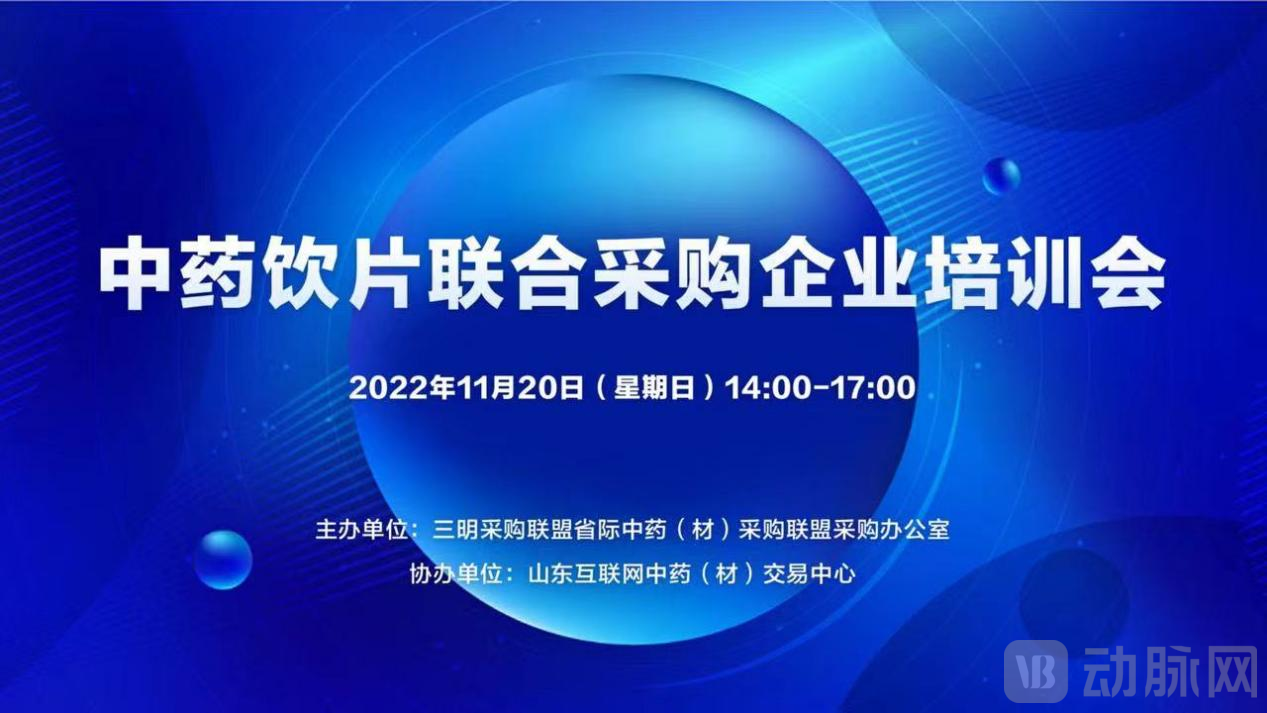 Online Training Session Held for Enterprises Participating in the Centralized Procurement of Traditional Chinese Medicine Decoction Pieces
In addition, the Joint Procurement Office will hold online thematic training sessions on November 25, 28, and 30, covering topics such as enterprise registration, interpretation of the joint procurement plan, and introduction to platform services, thereby continuing to provide support to manufacturers of traditional Chinese medicine (TCM) decoction pieces and growers of TCM medicinal materials. Relevant training information and updates on the progress of joint procurement activities will be released through the Alliance Trading Platform—Shandong Internet Traditional Chinese Medicine (Medicinal Materials) Trading Center (www.bqex.com) published.
Based on a comprehensive review of the “Joint Procurement Documents” and the content of this training session organized by the Joint Procurement Office, it has been definitively established that the first-ever national joint procurement of traditional Chinese medicine (TCM) decoction pieces will prioritize the development of standards and quality assurance systems, building upon the framework of volume-based procurement. Consequently, how TCM decoction piece enterprises effectively respond to this joint procurement trend and leverage it as an opportunity to enhance their systems for ensuring consistent quality and supply will be critical to the inclusion of their product varieties and subsequent market expansion.
“This joint procurement of traditional Chinese medicine (TCM) decoction pieces addresses current issues in the sector, leverages the proactive role of healthcare security authorities, and does not prioritize price reduction as its primary objective. Instead, it strives to ensure quality assurance, grade enhancement, and stable supply, thereby supporting the inheritance, innovation, and development of TCM. The procurement prices are determined by the market, adopting a market-led price formation mechanism.”
At the training session organized by the Joint Procurement Office, Liu Zhi, Director of the Price and Procurement Division of the Shandong Provincial Healthcare Security Administration, stated that 15 regions—including Shandong, Shanxi, Inner Mongolia, Jilin, Heilongjiang, Anhui, Fujian, Jiangxi, Hunan, Yunnan, Tibet, Qinghai, Ningxia, Xinjiang, and the Xinjiang Production and Construction Corps—participated in the first joint procurement of traditional Chinese medicine (TCM) decoction pieces. These regions, participating at the provincial level or with selected cities as units, represented more than 6,000 medical institutions. The pre-procurement volume for the initial batch of 21 varieties exceeded 5.2 million kilograms (kg).
According to the "Joint Procurement Document," this joint procurement of traditional Chinese medicine (TCM) decoction pieces initially selected 21 varieties characterized by high clinical usage and stable market supply, including Astragali Radix, Codonopsis Radix slices, Lonicerae Japonicae Flos, Angelicae Sinensis Radix, bran-fried Atractylodis Macrocephalae Rhizoma, Carthami Flos, processed Hirudo, Gastrodiae Rhizoma, Ophiopogonis Radix, Coptidis Rhizoma slices, Pseudostellariae Radix, Paeoniae Radix Alba, Glycyrrhizae Radix et Rhizoma slices, Pheretima, Chuanxiong Rhizoma, Salviae Miltiorrhizae Radix et Rhizoma, Scutellariae Radix slices, Dioscoreae Rhizoma, Taraxaci Herba, Moutan Cortex, and Platycodonis Radix. The procurement cycle is原则上 one year, with a possible extension of no more than one year depending on circumstances.
Previously, member units of the Sanming Procurement Alliance’s Inter-Provincial Traditional Chinese Medicine (Material) Procurement Alliance have successively carried out the submission of procurement quantities for relevant varieties. The Joint Procurement Document indicates that the agreed procurement volume for the first year in the alliance regions is 80% of the reported pre-procurement demand; among them, the agreed procurement volume for the first year in the alliance regions and the agreed procurement volume for each procurement variety in the first year have been released as attachments together with the Joint Procurement Document.
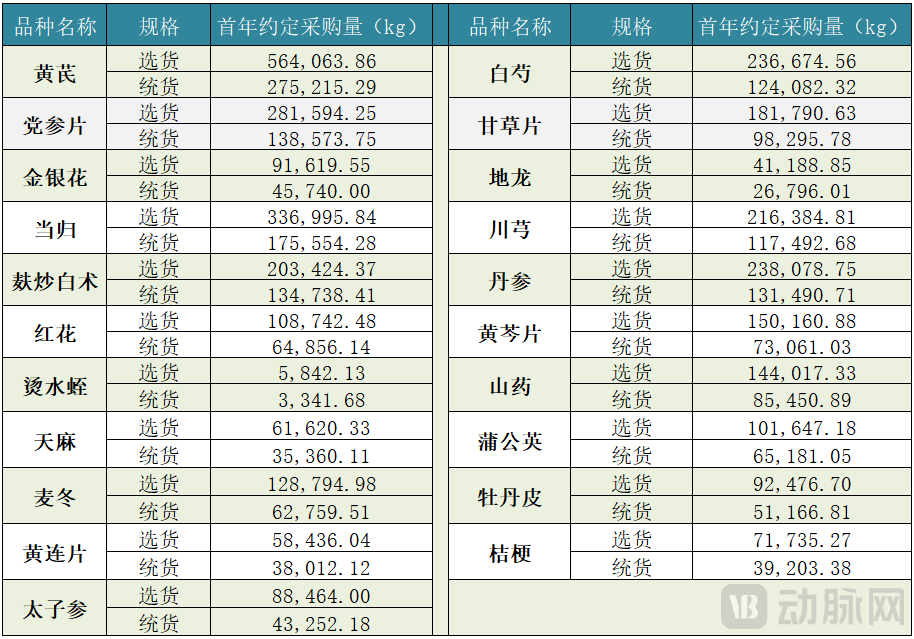 Agreed Procurement Volume for the First Year of the Initial Centralized Procurement of Traditional Chinese Medicine Decoction Pieces
“The agreed procurement volume announced in the current Joint Procurement Document refers to the volumes declared by participating provinces or regions, either on a provincial basis or for selected cities,” said Zhao Shihai, a technical expert at the Joint Procurement Office. He noted that during the implementation phase following the selection of winning bidders, actual market share will far exceed the currently reported volumes, driven by demand beyond the agreed quantities and follow-up procurement by other regions or private healthcare institutions.
Therefore, considering factors such as the release of actual procurement volumes and the adoption of purchases by medical institutions in other regions following the announcement of selected bidders, the market share covered by the first batch of 21 jointly procured varieties is projected to reach RMB 2 billion. In the face of the inevitably expanding scale of joint procurement for traditional Chinese medicine (TCM) decoction pieces, how to rapidly integrate into the supply-and-demand system of the joint procurement market has become a focal point of concern for relevant enterprises.
At the training session organized by the Joint Procurement Office, Yu Yanmei, Section Chief of the Price and Procurement Division of the Jinan Municipal Healthcare Security Administration and a business expert at the Joint Procurement Office, provided a detailed introduction to the key points and rules outlined in the joint procurement documents. Compared with the previously released draft for public comment, the final version of the “Joint Procurement Document” has supplemented and optimized provisions regarding the allocation principles for agreed procurement volumes, compliance verification of Chinese herbal decoction pieces included in the joint procurement, as well as acceptance procedures, packaging specifications, and backup supply measures. These revisions fully reflect the distinctive characteristics of decoction pieces compared with other pharmaceutical products, place greater emphasis on achieving a diversified balance across the industrial chain, and encourage participation from more high-quality enterprises.
Particularly within the “Comprehensive Evaluation Criteria,” which are of greatest concern to relevant enterprises, the importance of ensuring both the quality and quantity of supply is exceptionally prominent. This includes indicators such as product supply capacity, planting (or breeding) bases, traceability systems, alliance procurement demands, coverage of alliance medical institutions, production management capabilities, quality control capabilities, supply guarantee commitments, geo-authentic medicinal materials, and Good Agricultural Practice (GAP) bases.
Comprehensive analysis reveals that, within the 120-point comprehensive evaluation framework, volume assurance accounts for 60 points, quality assurance for 45 points, and price for only 15 points. Therefore, the ability to ensure both quality and quantity in fulfilling centralized procurement supplies will become a key determinant for the inclusion of relevant companies’ products.
“Joint procurement of TCM decoction pieces is challenging, primarily because these products are non-standardized, making quality control and supply chain management difficult. Therefore, the objective of joint procurement is to consolidate high-quality production capacity to truly achieve high-quality development. To realize the core values of joint procurement—ensuring quality, upgrading standards, and stabilizing supply—the establishment of a traceability system is a critical lever. Our digital platform will gradually build a comprehensive traceability system, ensuring that the future of TCM decoction pieces is fully traceable.”
At the training session organized by the Joint Procurement Office, Wei Shengli, Deputy Dean of the School of Chinese Materia Medica at Beijing University of Chinese Medicine and an expert on the Expert Committee of the Joint Procurement Office, provided a detailed explanation of the application materials related to quality standards, traceability systems, Good Agricultural Practices (GAP), and geo-authentic herbs for the inaugural joint procurement of Chinese herbal decoction pieces. Wei Shengli introduced that the Shandong Internet Traditional Chinese Medicine (Herbal Materials) Trading Center, designated as the technical and service support platform for this joint procurement, is building upon its earlier “7S Traceability System for Chinese Herbal Materials” to comprehensively develop a “3P One-Code” system integrating GAP, Good Manufacturing Practice (GMP), and Good Supply Practice (GSP). This initiative aims to establish a full-chain traceability system covering everything from the cultivation of Chinese herbal materials to the processing, production, and sales of decoction pieces. Being carried out in parallel with the current joint procurement efforts, the system is scheduled to be completed before the announcement of the review results.
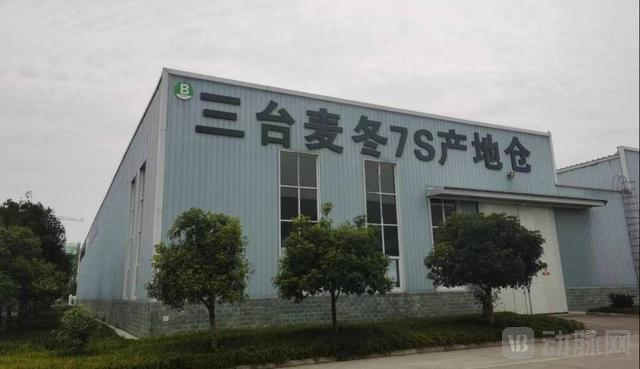
“Ophiopogon japonicus 7S Origin Warehouse” in Santai County, Mianyang City
Meanwhile, the “Specifications for Quality Assurance Services of Traditional Chinese Medicine (TCM) Decoction Pieces at the Shandong Internet TCM (Herbal Materials) Trading Center,” included in the Joint Procurement Documents, clarifies the development path for a centralized, standardized, and digitalized trading system for TCM decoction pieces, emerging as a major highlight drawing industry attention.
According to Sun Jingmeng, head of the Shandong Internet Traditional Chinese Medicine (TCM) Materials Trading Center, the “Quality Assurance Service Specifications” were established by the center under the guidance of the Procurement Office of the Sanming Procurement Alliance’s Inter-Provincial TCM Materials Procurement Alliance. The specifications comprise three systems—quality standards, quality traceability, and quality-assured warehousing—as well as three supporting measures: quality insurance, inspection and testing, and integrity evaluation.
The quality standard system is established based on the inter-provincial alliance procurement policy for traditional Chinese medicine (TCM) decoction pieces and in compliance with relevant national regulatory requirements. It serves as a guideline for the online listing and trading of TCM decoction pieces under the alliance procurement framework, and also forms the foundation for standardized quality assurance services.
The quality traceability system has become a crucial measure to ensure the quality of traditional Chinese medicine (TCM) decoction pieces procured through alliance-based purchasing. It requires TCM decoction piece manufacturers to establish and effectively operate an information-based traceability system on the foundation of sound Good Manufacturing Practice (GMP) for production and quality management. This system should extend upstream to raw material suppliers and herbal cultivation bases, and downstream to distribution enterprises and medical institutions, thereby achieving full-process traceability.
Furthermore, in light of the current supply status of traditional Chinese medicine (TCM) decoction pieces, the Shandong Internet TCM (Herbal Materials) Trading Center, as a comprehensive service platform for large-scale and digital transactions of TCM herbal materials and decoction pieces, will guide the establishment of a quality-assured warehousing and logistics service system within the alliance region based on market-oriented principles. The Center will select qualified partner institutions for quality-assured warehouses, commission them to provide services such as quality testing and distribution, and supervise their operational conduct, thereby ensuring the quality safety and stable supply of TCM decoction pieces procured by the alliance.
“The trading center’s innovative localized quality-assurance warehousing and storage service system enables full-process traceability from the cultivation source, ensuring product quality. Currently, more than 2,000 high-quality processed herbal slice manufacturers have joined the platform. Through capacity agglomeration and resource integration, the platform will further enhance its authentic traceability service system,” introduced Sun Jingmeng.
Thus, this joint procurement underscores the determination to build a supply-and-demand system that ensures quality and quantity while offering high quality at competitive prices, thereby advancing the establishment of a market mechanism for Chinese herbal decoction pieces based on survival of the fittest and fostering a unified national distribution landscape.
On the one hand, by leveraging the internet-based trading center platform model and building upon quality standards, traceability systems, and quality assurance frameworks, high-quality production capacities in traditional Chinese medicine (TCM) material cultivation, processing and warehousing, inspection and testing, and TCM decoction piece manufacturing will be effectively integrated to create a new ecosystem that ensures premium quality at fair prices for TCM materials. On the other hand, TCM materials and decoction pieces with verified traceability and quality assurance, procured through joint and transparent purchasing via the internet-based trading center platform, not only safeguard the quality, efficacy, and safety of medications for patients but also facilitate the establishment and promotion of brands for authentic regional TCM materials.
Chinese herbal decoction pieces are one of the three pillars of China’s traditional Chinese medicine (TCM) industry and occupy a core position in the entire TCM industrial chain. Currently, national centralized procurement of proprietary Chinese medicines is advancing steadily, and joint procurement of Chinese herbal decoction pieces has become an established trend. In the long run, joint procurement of Chinese herbal decoction pieces will play a significant role in breaking the industry’s fragmented, scattered, and disordered status quo, thereby enhancing industry concentration and overall standards.
Previously, due to the unique characteristics of the circulation sector for traditional Chinese medicinal (TCM) materials and TCM decoction pieces, the market for TCM decoction pieces has long been plagued by significant quality disparities, high price volatility, unstable supply, and irregular production and distribution practices. Furthermore, the distinctive pricing mechanism for TCM decoction pieces has fostered “local protectionist” trade barriers during the development of traditional Chinese medicine. Consequently, there have been persistent calls within the industry for joint procurement of TCM decoction pieces to prioritize the establishment of a healthy market supply-and-demand system.
Based on the "Joint Procurement Documents" and the content of the training sessions organized by the Joint Procurement Office, this joint procurement initiative consistently emphasizes higher quality standards for traditional Chinese medicine (TCM) decoction pieces, as well as a more robust supply and demand system. It highlights the overarching strategy of "ensuring quality, upgrading standards, and stabilizing supply" for both suppliers and purchasers. As the joint procurement of TCM decoction pieces advances, the competitive landscape of the industry is poised for further optimization, barriers to circulation are expected to be broken down, and a nationwide "large-scale circulation" market for decoction pieces is already in the making.
This development not only facilitates the consolidation and growth of leading enterprises in the traditional Chinese medicine (TCM) decoction pieces sector, but also creates opportunities for most small and medium-sized enterprises to break through and revitalize. It is reported that the application process for enterprises participating in this centralized procurement will close on December 2. Actively embracing change, participating in the centralized procurement of TCM decoction pieces, and leveraging the intensive, standardized, and digital measures associated with such procurement to enhance product quality, production and sales capabilities, and market scale have become urgent priorities for relevant enterprises.
At a deeper level, the advancement of normalized centralized procurement of traditional Chinese medicine (TCM) decoction pieces holds positive significance for promoting the smoother flow of commodity and factor resources within the TCM sector on a broader scale, accelerating the establishment of a unified national market in China that is efficient, well-regulated, fairly competitive, and fully open. This will create favorable opportunities and provide pathways to break through bottlenecks, thereby fostering high-quality development in the TCM decoction pieces industry.