

SciVision Medical Showcases Breakthrough Endoscopy Solutions at CMEF Amid Low Domestic Penetration and Intense Global Competition
As the “technology barometer” of the global medical device industry, each edition of the China International Medical Equipment Fair (hereinafter referred to as “CMEF”) attracts a large number of academic experts from both domestic and international arenas, as well as numerous leading medical device companies from China and abroad.
The 86th CMEF this year was no exception. The conference, originally scheduled for November 23–26, was held at the Shenzhen World Exhibition & Convention Center (Bao'an District).
As a leading innovative medical endoscope manufacturer in China, Scivita Medical showcased its reusable endoscope solutions spanning multiple clinical departments, single-use flexible endoscope solutions, and dual-endoscopy combined solutions at CMEF.Although the conference concluded after just one day due to the pandemic, Scivita Medical’s booth still attracted significant attention from numerous industry experts and professional attendees.
The products exhibited by Scivita Medical are:
Scivita Medical’s reusable endoscope solutions include: 4K medical endoscopic camera systems, 4K endoscopic fluorescence imaging systems, 3D image processing units, 4K 3D ultra-high-definition endoscopic camera systems, rigid optical endoscopes, and insufflators;
Scivita Medical’s single-use flexible endoscope solutions include: single-use electronic ureterorenoscopes, single-use electronic cystorenoscopes, single-use electronic choledochoscopes, single-use electronic bronchoscopes, and single-use electronic hysteroscopes;
Scivita Medical’s Dual-Endoscopy Integrated Solution Includes: Medical Endoscopic Imaging System (4K Medical Endoscopic Camera System) + Single-Use Electronic Endoscope and Endoscopic Image Processing Device.
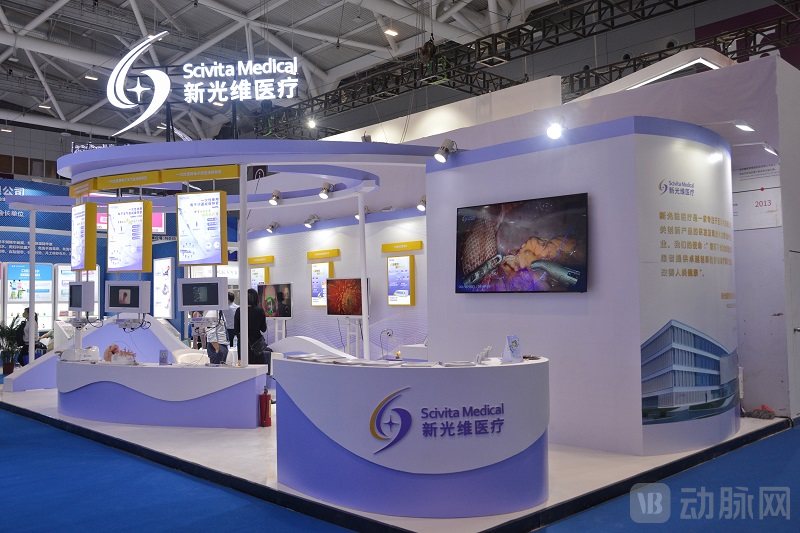
Scivita Medical CMEF Booth
Perhaps, in the future, people will recall that at the only CMEF conference that failed to conclude successfully, we were privileged to further witness the rise of domestic brands—
At the CMEF exhibition, Scivita Medical Technology Co., Ltd. made a high-profile debut with its flagship new products. As one of the representative domestic endoscopy companies in China, it is demonstrating how Chinese brands can break through the encirclement of industry giants and carve out their own path of development.
The Advancement of Minimally Invasive Surgery Is Leading a New Revolution in the Medical Field.
Compared with traditional open surgery, minimally invasive procedures performed under endoscopy allow for the insertion of various instruments—such as biopsy forceps, guidewires, and argon gas tubes—through endoscopic biopsy channels. These procedures can be completed rapidly, and their advantages, including minimal trauma and faster recovery, better meet the needs of both clinicians and patients.
In fact,Endoscopy is undergoing new transformations after 200 years of development. In the early days, physicians relied on traditional rigid tubes to observe patients’ internal tissues and organs, but their applications were limited. Subsequently, various types of endoscopes were developed to meet diverse clinical needs. Nevertheless, these devices still suffered from issues such as poor image clarity, inadequate depth perception, and infection risks. Today, the endoscopy industry has entered a phase of innovative optimization aimed at addressing growing medical demands and higher therapeutic standards. This implies that those who achieve breakthroughs first are poised to gain dominance in the endoscopy sector.
Technological breakthroughs are inherently driven by the need to address clinical demands—
On one hand, in endoscopic surgery, the quality of medical image visualization significantly impacts surgical outcomes; superior imaging facilitates more accurate lesion assessment and enables targeted treatment.For instance, the advent of 4K ultra-high-definition medical imaging, 3D medical imaging, and special-light (fluorescence) medical imaging technologies is precisely aimed at better addressing the aforementioned issues. Taking 4K ultra-high-definition medical imaging as an example, its image resolution is four times higher than that of standard Full HD, enabling physicians to better detect subtle lesions in patients. This capability helps avoid injury to blood vessels, nerves, and other structures during surgical procedures, thereby significantly reducing misdiagnoses and procedural errors such as excessive patient bleeding.
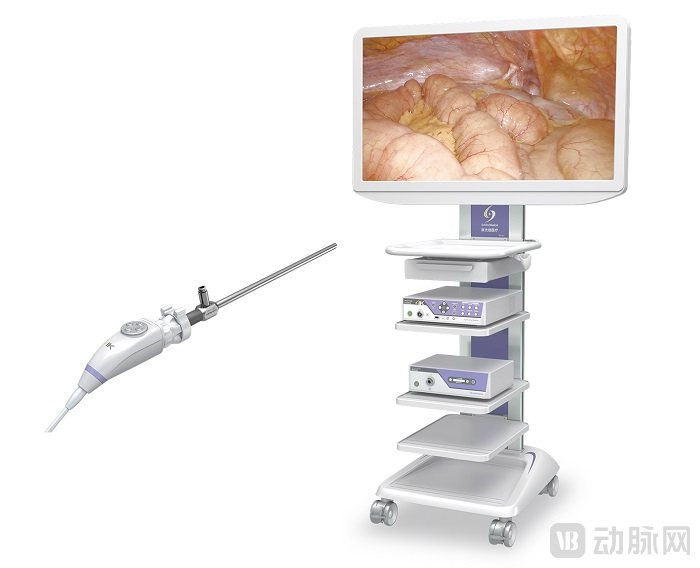
Scivita Medical 4K Ultra-High-Definition Endoscopic Camera System
Scivita Medical has not only mastered the aforementioned technologies but has also developed a range of system products based on these technology platforms to enhance imaging quality.such as 4K medical endoscopic camera systems, 4K endoscopic fluorescence camera systems, and 4K 3D endoscopic camera systems.It is reported that Scivita Medical is also the only company in China to have obtained FDA approval for its 4K endoscope and 4K endoscopic camera system.
On the other hand, a major challenge in clinical practice is how to reduce cross-infection associated with medical devices.The outbreak of the COVID-19 pandemic has led hospitals to place greater emphasis on healthcare-associated infection control.Endoscopic equipment, due to its narrow and elongated open-channel structure, provides an environment conducive to cross-infection by microorganisms, secretions, and residual blood.Inadequate structural design and insufficient sterilization significantly increase the risk of cross-infection. The invention of single-use endoscope technology aims to address these issues.Compared to reusable endoscopes, single-use endoscopes are more widely employed in clinical departments with a high risk of cross-infection, such as gastroenterology, urology, gynecology, and pulmonology. In many scenarios, they also offer greater cost-effectiveness than their reusable counterparts. Driven by the trend toward treating endoscopic devices as consumables and the impact of the COVID-19 pandemic, the development of single-use endoscope products is accelerating.
In addition to its ultra-high-definition endoscopic camera systems, Scivita Medical is also focusing on the research and development of single-use endoscopes. Its single-use endoscope products currently approved in certain regions include single-use electronic bronchoscopes, single-use electronic ureterorenoscopes, single-use electronic cholangioscopes (percutaneous), and single-use electronic cystorenoscopes. Notably,In the field of hepatobiliary surgery, Scivita Medical’s single-use electronic choledochoscope (percutaneous) is the first disposable electronic choledochoscope approved for commercialization in China.
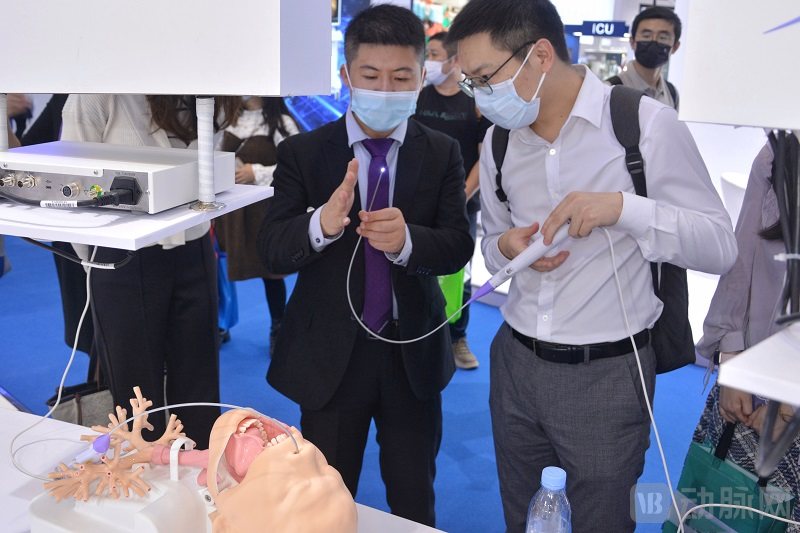
Scivita Medical staff introducing the single-use electronic ureteroscope to the audience
Dr. Chen Dong, Co-founder, General Manager, and Chief Technology Officer of Scivita Medical, has stated that the company has long focused on better meeting clinicians’ needs for endoscopic procedures. As one of the few domestic endoscopy companies to have established a comprehensive portfolio of marketed and pipeline products covering all types of endoscopic surgeries across various clinical departments in hospitals, Scivita Medical is well-positioned to break through market barriers. This confidence stems from its forward-looking strategy built upon a proprietary technology platform encompassing five core endoscopic technologies—ultra-high-definition medical imaging, special-light medical imaging, ultra-thin endoscope medical imaging, single-use endoscope technology, and 3D medical imaging—and the synergistic effects among these core technologies.
According to Frost & Sullivan data, the Chinese medical endoscope market is growing at a higher rate compared to the global medical endoscope market and is expected to maintain this high growth trajectory. In 2020, the value of the Chinese medical endoscope market was RMB 23.1 billion, and it is projected to reach RMB 62.4 billion by 2030, representing a compound annual growth rate (CAGR) of 10.5%.
However, this market faces a competitive landscape dominated by multinational giants. Based on product sales revenue, the three major market participants—Olympus, Karl Storz, and Stryker—held market shares of 21.3%, 11.7%, and 5.7%, respectively, in 2020.Amid the high concentration of China’s domestic medical endoscope market and the dominance of international medical device giants, the penetration rate of domestic brands stood at only 5.6% in 2020.
Fortunately, with the accumulation of talent in domestic enterprises, improvements in production technology and capabilities, as well as policy support such as the tiered diagnosis and treatment system and the substitution of imported products with domestically produced ones, end-user markets such as hospitals are increasingly considering the adoption of domestically manufactured endoscopic equipment. This undoubtedly presents an opportunity for innovative products. It is projected that by 2030, the penetration rate of domestic brands in China’s medical endoscope market will reach 27.7%.But ultimately, the realization of domestic substitution depends more on the strength of the enterprises themselves—
One is whether domestic products possess innovation capabilities.In recent years, various types of companies have emerged in the endoscopy field, continuously innovating in both flexible and rigid endoscopy. By launching innovative products, these companies are competing on the same stage as their overseas counterparts. For instance, Scivita Medical Technology Co., Ltd. has made new progress in 4K and fluorescence endoscopic equipment. Behind this achievement lies the innovative strength of the corporate team.
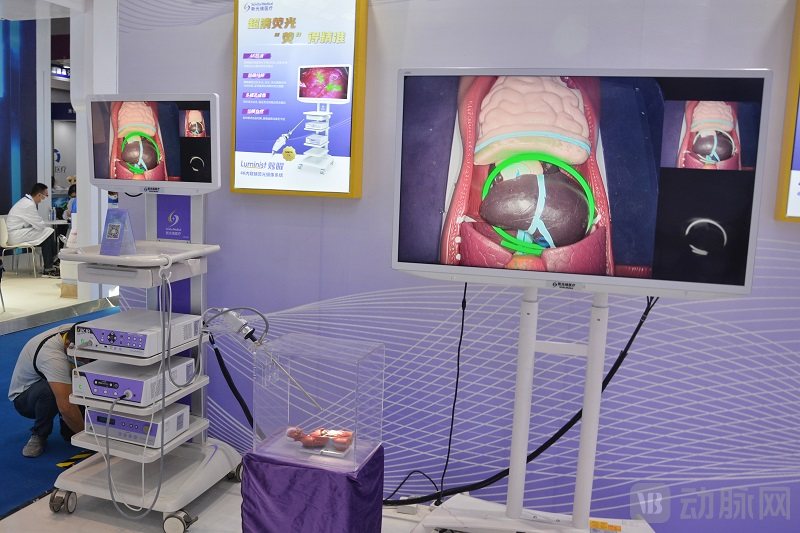
Scivita Medical 4K Endoscopic Fluorescence Imaging System
In fact, the medical endoscopy industry has extremely high technical barriers, involving the integration of multiple disciplines such as optical imaging, precision mechanics, electronics, materials science, and image processing. The development and manufacturing of medical endoscopes with advanced image acquisition and processing capabilities require talents with diverse backgrounds and in-depth expertise in these fields.Scivita Medical is led by Dr. Chen Dong, Co-founder, General Manager, and Chief Technology Officer, who brings nearly two decades of experience in the endoscopy field. The majority of its team members possess extensive professional backgrounds with world-renowned endoscope manufacturers.
Second, a robust product pipeline is more likely to break through in a competitive landscape.Established endoscopy companies have outperformed their competitors in the market, partly because they have continuously developed new products and refined and expanded their product portfolios based on their accumulated experience. Scivita Medical Technology Co., Ltd. has been meeting potential user needs through continuous technological innovation and currently offers endoscopic products covering nearly all clinical departments.
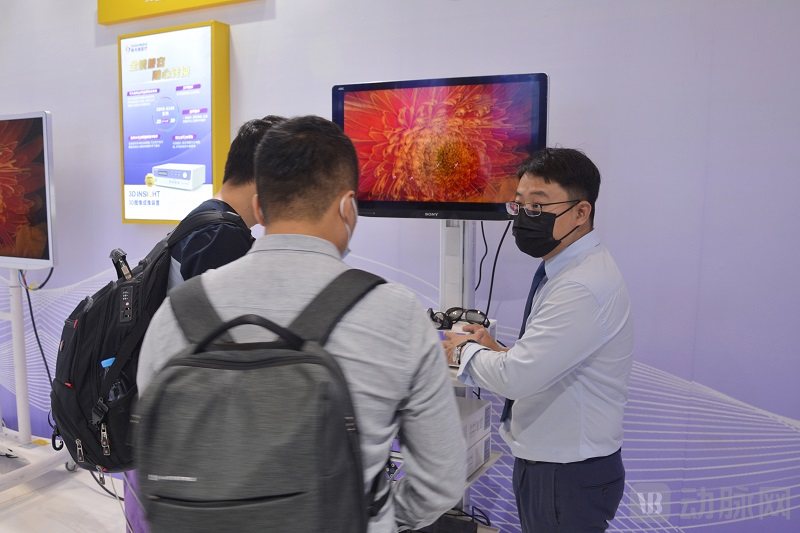
Attendees Experience 3D Imaging Devices at the Scivita Medical Booth
Its unique competitiveness is derived from its portfolio of reusable endoscopes, single-use flexible endoscopes, and dual-endoscopy combined solutions, including 4K ultra-high-definition medical endoscopy systems. Taking Scivita Medical’s ultra-high-definition system as an example, the product has obtained multiple certifications, including approval from the National Medical Products Administration (NMPA), and was included in the Eighth Batch of the Catalogue of Excellent Domestically Produced Medical Equipment in 2022. Furthermore,, selected in 2022National Typical Application Cases of Ultra-High-Definition VideoAmong the over 100 companies selected, only 10 were in the healthcare sector, with Scivita Medical being one of them. This may also reflect, from a certain perspective, the competitiveness of its team and products.
Third, the ability to interact more effectively with clinical practice and better achieve the integration of medicine and engineering determines whether innovation can be practically implemented to meet clinical needs.rather than building castles in the air.Scivita Medical Technology has integrated the industry-academia-research chain by incorporating universities and their affiliated hospitals, thereby gaining deeper insights into the latest academic trends. For instance, it has partnered with Ruijin Hospital, Shanghai Jiao Tong University School of Medicine, to develop a 4K ultra-high-definition intelligent medical endoscopic navigation system; established an Intelligent Endoscope Innovation R&D Center with West China Hospital of Sichuan University; and collaborated with Beijing Friendship Hospital, Capital Medical University, to develop a multi-dimensional intelligent cholangiopancreatoscope system based on shape-memory materials. This project was even approved by the National Natural Science Foundation of China as a special project for the development of major scientific research instruments.
And recently,Scivita Medical has entered into a strategic partnership with Shanghai First Maternity and Infant Hospital, and the two parties will jointly establish the Joint Innovation Center for Gynecological Endoscopic Diagnosis and Treatment.By focusing on the incubation of gynecological endoscopic diagnostic and therapeutic products and innovative technologies, clinical application research, clinical demonstration, and training and education, and through close collaboration under the “integration of medicine, research, and industry” model, Scivita Medical Technology Co., Ltd. aims to build a world-class innovation center for research, technology translation, and application demonstration that integrates gynecological endoscopic diagnosis and treatment with intelligent medical manufacturing technologies. Undoubtedly, Scivita Medical will continue to launch more blockbuster products in the future.
Given their in-house innovation capabilities, a robust product pipeline, and continuous R&D driven by the integration of medicine and engineering to meet market demands, domestic endoscopy companies are well-positioned to break the current dominance of foreign enterprises in China’s endoscopy market.
In the medical device sector, a large number of forward-looking companies have set their sights on overseas markets. Scivita Medical is no exception; while establishing a firm foothold in the domestic market, it is also making significant strides in the international arena.This is not without reason—the domestic market boasts the fastest growth rate and significant development potential, while the overseas endoscopy market offers a substantially larger capacity.
Looking at the global market, the medical endoscope sector is one of the fastest-growing segments within the overall medical device industry. In 2020, the global market for medical endoscopes was valued at $20.3 billion and is projected to reach $39.6 billion by 2030, indicating substantial growth potential in global market expansion.
However, expanding into overseas markets is not as easy as one might imagine. Going global means facing more diverse competition abroad; regulatory and policy compliance poses a significant challenge for Chinese companies; expanding overseas also requires strong channel capabilities; furthermore, companies may need to address how to effectively engage with clinicians while promoting their products in local markets.
Scivita Medical’s approach may provide us with a reference.
First, it has established innovation and R&D centers both domestically and internationally to strengthen its own innovation and R&D capabilities.For example, Scivita Medical Technology Co., Ltd. acquired ARS in May 2020, which helped the company establish a robust R&D center overseas and attract a large pool of high-quality local R&D talent. In fact, Phase I of Scivita’s global headquarters and R&D production base, currently under construction in the Suzhou Industrial Park, is scheduled to be completed in early next year. This facility integrates R&D, manufacturing, marketing, physician training, animal experimentation, and product display and experience.

Phase I of Scivita Medical’s Global Headquarters and R&D & Manufacturing Base
Second, obtain the corresponding qualifications and certifications on a broader scale in overseas markets to meet local market access standards.The number of overseas FDA approvals and CE certifications is itself a symbol of a company’s comprehensive strength.Scivita Medical has obtained certifications for multiple products in numerous countries and regions, including overseas approvals for its 4K HD endoscopes and single-use endoscopes, thereby facilitating its global expansion.
Finally, and perhaps most importantly, it is to establish one’s own sales network overseas.
Some industry players have established partnerships by forming joint ventures with large corporations, leveraging their extensive sales networks to enhance brand strength; others have chosen to collaborate with leading endoscope manufacturers to develop endoscopic products, indirectly expanding into overseas markets by supplying core components.Scivita Medical has established an international sales team by strategically expanding its presence both domestically and overseas, recruiting professional marketing talent, and leveraging team members with extensive experience in overseas market channels—including hospitals and distributors—as well as marketing expertise. The company has prioritized its layout in developed markets such as Europe, the United States, and Japan, as well as emerging markets in the Asia-Pacific region.
Furthermore, to achieve broader commercial reach, Scivita Medical Technology is actively participating in international medical device conferences and exhibitions, such as MEDICA, AUA, EAU, ATS, ESGE, and APSR, thereby further enhancing the visibility of its products in overseas markets.
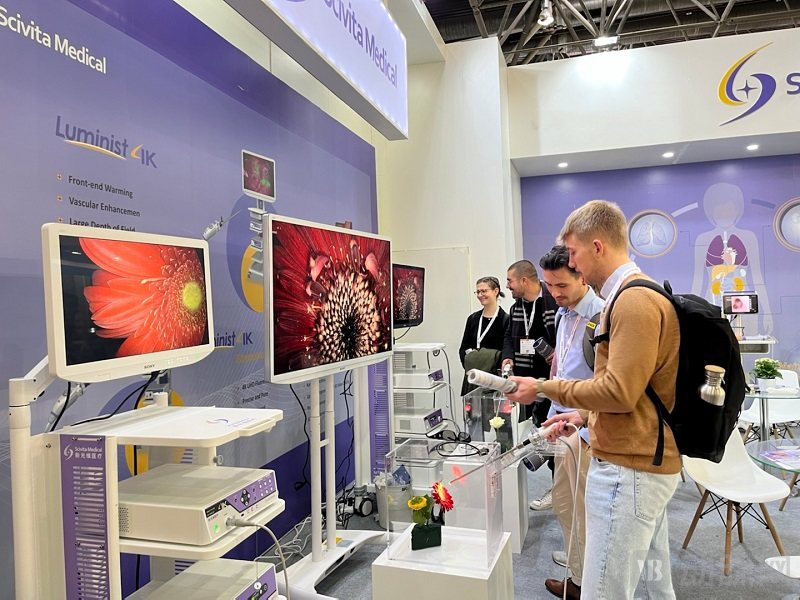
At MEDICA, International Attendees Experience Scivita Medical’s Endoscopy Equipment
To better achieve market expansion, cooperation with companies possessing a global background is also part of Scivita Medical’s strategic plan. This November, Scivita Medical and Fujifilm Europe B.V., headquartered in the Netherlands, jointly announced that the two companies had reached a strategic partnership. As the world’s second-largest manufacturer of flexible endoscopes, Fujifilm’s decision to partner with Scivita Medical further demonstrates that the high quality of Scivita’s medical devices has gained recognition.. Under the agreement, “Fujifilm” will serve as the exclusive distributor, responsible for sales and business development of Scivita Medical’s single-use electronic bronchoscopes in key European countries.Previously, Scivita Medical’s innovative single-use endoscope products, including disposable electronic bronchoscopes, along with its endoscopic image processing devices, were honored with the “2022 Best Innovative Product Case for Chinese Medical Device Export” award at the China Medical Device Export Conference, following two months of intense competition. Selecting more competitive products will undoubtedly further boost its product sales in overseas markets.
The successful entry into both domestic and international markets is itself a testament to the high recognition of its technological prowess by these markets. The expansion of talent reserves, in both R&D and sales, is also facilitating the implementation of Scivita Medical’s global strategic layout.
With the establishment of overseas innovation R&D centers, product approvals in multiple countries, and the gradual build-out of international sales networks, Scivita Medical is rapidly expanding in both domestic and global markets. It has the potential to emerge as a formidable player in the industry, joining other Chinese brands in “disrupting” the current competitive landscape of the endoscopy market at home and abroad.