

High-Profile Investors Back Three Endoscopy Device Firms Heading for IPO: Assessing the Growth Potential of the Digestive Endoscopy Consumables Market
Innovex
Provider of Integrated Solutions for Non-Vascular Interventional Surgery
The Understated Digestive Endoscopy Consumables Sector Has Become a Lucrative Market with Vast Potential.
Recently, two companies planning initial public offerings (IPOs) have emerged from this sector: Hangzhou Angies Medical Technology Co., Ltd. (“Angies”), which is seeking listing on the STAR Market, and Shanghai Innovex Medical Co., Ltd. (“Innovex”), which is aiming for a listing on the Hong Kong Stock Exchange. Both companies are making their second attempt to go public; currently, Angies has already passed the initial review by the listing committee.
In addition to the two companies planning to go public, Nanwei Medical, a listed company on the STAR Market, also derives its main revenue from digestive endoscopy diagnostic and therapeutic consumables. In the first three quarters of this year, Nanwei Medical’s sales revenue from digestive endoscopy consumables reached 1.2 billion yuan.
To use an analogy, the endoscope is akin to a smartphone’s operating system, while the accompanying diagnostic and therapeutic instruments are comparable to apps. The digestive endoscope provides the operator with visualization and an instrument channel, whereas the accompanying instruments equip physicians with tools for hemostasis, resection, sampling, and other procedures.
Although the product categories of consumables for digestive endoscopy diagnosis and treatment are fragmented, the market landscape is relatively concentrated. The global market is dominated by Boston Scientific, Olympus, and Cook Medical, with these three companies collectively holding over 70% of the market share.
How Does the Digestive Endoscopy Consumables Market Support Three Listed Companies? How Have Nanwei Medical, Angiotech, and Innovex Secured a Foothold in the Field of Digestive Endoscopy Consumables? Will These Companies Be Poised to Enter the Higher-End Endoscopy Market in the Future? VCBeat (WeChat ID: vcbeat) Analyzed the Prospectuses of Two of These Companies.
In the market for consumables used in digestive endoscopy, besides Nanwei Medical, whose revenue exceeded RMB 1 billion, the other two companies planning to go public also reported substantial revenues. Angjie Si generated RMB 263 million in revenue and over RMB 97 million in net profit during the first three quarters of this year, representing a year-on-year increase of 55.82%. In 2021, its revenue was RMB 305 million, with a net profit of RMB 105 million. Innovex recorded H1 revenue of RMB 98 million and a net loss of RMB 204 million.
How Does the Market for Digestive Endoscopy Consumables Support Three Publicly Listed Companies?
Endoscopic diagnosis and treatment are primarily used for managing precancerous conditions and tumors of the gastrointestinal tract, including diseases of the biliary and pancreatic ducts, gastrointestinal cancers, and gastrointestinal bleeding.
The primary approach to endoscopic gastrointestinal therapy involves physicians obtaining real-time dynamic internal images via an endoscope, either in conjunction with appropriate instruments for tissue sampling and ex vivo diagnosis or with specialized minimally invasive surgical devices for performing specific therapeutic procedures.
Endoscopic diagnosis and treatment are often the most closely watched aspects of gastrointestinal endoscopy, but in reality, endoscopic management of gastrointestinal diseases relies heavily on the support of related devices.
From the perspective of diagnostic and therapeutic modalities, the primary interventions performed via digestive endoscopy include gastroscopic diagnosis and treatment, colonoscopic diagnosis and treatment, Endoscopic Retrograde Cholangiopancreatography (ERCP), endoscopic biopsy, and endoscopic foreign body removal (including Endoscopic Mucosal Resection (EMR) and Endoscopic Submucosal Dissection (ESD)).
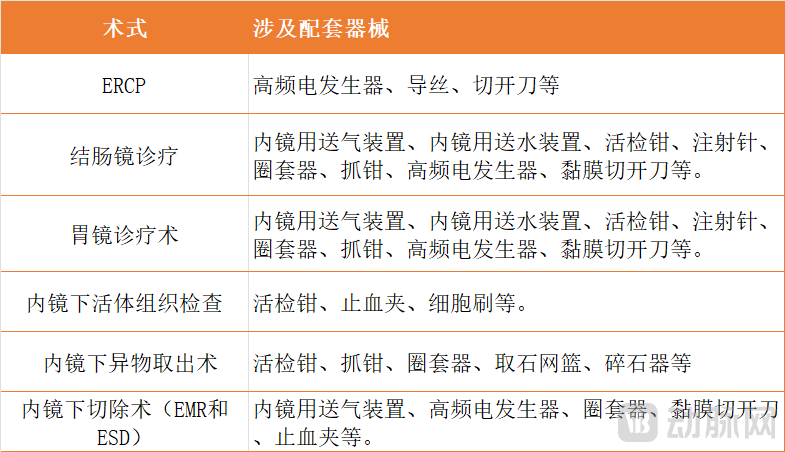
Instruments for Different Surgical Procedures
Although a wide range of procedures are involved, endoscopic mucosal resection (EMR)/endoscopic submucosal dissection (ESD) and endoscopic retrograde cholangiopancreatography (ERCP) together account for as high as 90% of non-vascular interventional procedures in gastroenterology.
Digestive endoscopy consumables can be classified by therapeutic application into hemostasis and closure devices, EMR/ESD devices, biopsy devices, and ERCP devices.
Hemostatic closure devices are designed for use with endoscopes, indicated for hemostasis of upper and lower gastrointestinal bleeding from various causes under endoscopic visualization, as well as for wound closure following endoscopic procedures.
EMR and ESD are used to remove the most common gastrointestinal tumors and polyps.
Endoscopic Mucosal Resection (EMR) is a technique that separates flat elevated lesions and broad-based sessile polyps from the lamina propria during endoscopy, creating a pseudo-pedunculated morphology, followed by resection using a snare or an incision knife. EMR is relatively straightforward to perform; however, it is generally suitable for lesions smaller than 2 cm. Lesions exceeding 2 cm require piecemeal resection, which may result in incomplete assessment of the resection margins.
Endoscopic Submucosal Dissection (ESD) is a technique that has evolved from Endoscopic Mucosal Resection (EMR). It involves the gradual dissection of tissues between the mucosal layer and the muscularis propria under direct endoscopic visualization, followed by complete resection of the diseased mucosa using an electrosurgical knife. ESD demands high technical proficiency from the operator and enables the en bloc resection of lesions larger than 2 centimeters. Currently, it has become an effective approach for treating early gastrointestinal cancers and precancerous lesions.
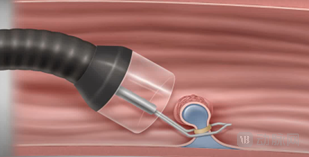
Schematic of EMR Procedure
In addition to endoscopes, these two procedures require the coordination of numerous instruments. In EMR procedures, a snare is used to resect polyps; in ESD procedures, a mucosal incision knife is used to resect lesion tissue.
From 2021 to 2030, the number of EMR and ESD procedures performed in China is projected to increase from approximately 3.9 million to 14 million. Among these, the number of EMR procedures performed in China rose from 2.5 million cases in 2016 to 3.7 million cases in 2021, and is expected to reach approximately 13.3 million cases by 2030, representing a projected compound annual growth rate (CAGR) of 15.2% from 2021 onwards.
ERCP is primarily used for the treatment of pancreatic, gallbladder, and biliary tract cancers.
Endoscopic Retrograde Cholangiopancreatography (ERCP) refers to a collective term for techniques in which an endoscope is inserted orally into the duodenum, and specialized instruments are introduced through the duodenal papilla into the bile or pancreatic ducts. Under fluoroscopy or radiography, contrast agents are injected for imaging, and endoscopic or ultrasound probes are used for observation to diagnose biliary and pancreatic diseases, followed by corresponding interventional treatments based on the diagnostic findings.
ERCP is the “gold standard” for treating biliary and pancreatic diseases of the digestive tract. In addition to a duodenoscope, ERCP procedures require instruments such as high-frequency sphincterotomes and balloon stone extraction catheters.
In 2021, the incidence of pancreatic, gallbladder, and biliary tract cancers in China was 224,000 cases, and the incidence of gallstones was 17.5 million cases. In 2018, the volume of ERCP procedures in China reached 260,600. The penetration rate of ERCP in China remains relatively low; in 2021, the penetration rate among patients with pancreatic cancer, gallbladder cancer, biliary tract cancer, and gallstones was 8.0%.
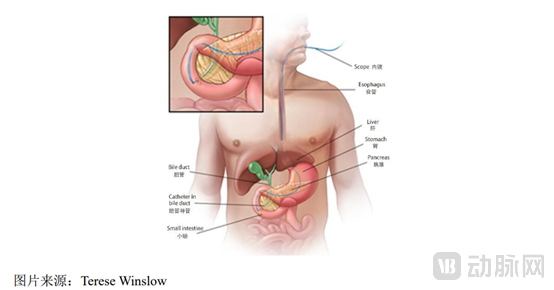
ERCP Procedure Illustration
ERCP is a technically demanding procedure; due to the common opening of the human bile and pancreatic ducts, selective cannulation of the hepatic bile duct with a guidewire is required.; furthermore, the bile duct bifurcates within the liver into the left and right hepatic ducts, requiring careful directional guidance during guidewire insertion. During clinical procedures, physicians cannot directly visualize the instruments through the endoscopic visual system and must instead rely on tentative angular adjustments to navigate the guidewire into the correct lumen. Such maneuvers demand a high level of technical proficiency from physicians, thereby limiting, to some extent, the widespread adoption of ERCP.
In terms of volume, China performs over 4 million digestive interventional procedures annually. In 2021, the domestic consumption of hemostatic clips approached 10 million units, with 7.05 million snares and 28.51 million biopsy forceps used. The substantial demand for gastrointestinal endoscopic diagnosis and treatment has created a considerable market size.
According to the report presented by Boston Scientific at its Investor Day (September 22, 2021), the global market size for endoscopic minimally invasive diagnostic and therapeutic devices was estimated at $5 billion in 2021, with devices used for the treatment of biliary and pancreatic diseases, gastrointestinal cancers, and gastrointestinal bleeding accounting for $1.6 billion, $1.4 billion, and $700 million, respectively. From 2021 to 2024, the overall growth rate of the global market for endoscopic minimally invasive diagnostic and therapeutic devices is projected to be approximately 6%, with the market segments for devices used in the treatment of biliary and pancreatic diseases, gastrointestinal cancers, and gastrointestinal bleeding expected to grow at rates of 7%, 3%, and 8%, respectively.
In the domestic market, according to Anji Medical's prospectus, the market size of digestive endoscopy diagnosis and treatment devices in China was estimated at RMB 4.18 billion in 2021.
In terms of penetration rate, there is still significant room for improvement in the penetration of digestive endoscopy diagnosis and treatment in China. Among 185 countries and regions worldwide, China’s incidence and mortality rates for malignant tumors are at a moderately high level. The incidence and mortality of certain gastrointestinal cancers, such as esophageal cancer and gastric cancer, account for approximately half of the global total. The five-year survival rate for early-stage gastrointestinal tumors can reach 85% to 90%, whereas the five-year survival rate for patients with intermediate- to advanced-stage disease is less than 20%.
Compared with developed countries such as the United States and Japan, there is still a 5- to 10-fold room for improvement in per capita digestive endoscopy procedures and the coverage of gastroenterologists in China. The demand for digestive endoscopy alone remains far from being met. With the growing awareness of early screening and early diagnosis in Jiangsu and Zhejiang provinces, the market for digestive endoscopy consumables is expected to continue growing in the future.
Prior to 2014, the domestic market for endoscopic minimally invasive diagnostic and therapeutic devices was largely monopolized by international brands. Multinational giants such as Boston Scientific, Olympus, and Cook Medical accounted for nearly 70%–80% of the market, indicating a highly concentrated landscape. Domestic products were scarce, with relatively low levels of technology and quality, resulting in a low localization rate. Products from domestic brands were primarily concentrated in the mid-to-low-end segments.
As domestic companies increase their technological investments and seek market approval for related products, Chinese brands are continuously narrowing the technological gap with multinational giants. The launch of domestically produced endoscopic minimally invasive diagnostic and therapeutic devices in the Chinese market has yielded positive results in substituting imported brands, allowing local enterprises to capture a certain share of markets such as that for hemostatic clips.
In the digestive endoscopy market, which is surrounded by industry giants, what are the characteristics of Anji Medical, Innovex, and Nanwei Medical?
AnjiSi’s predecessor was AnjiSi Gene, established in December 2010. Daan Gene is a founding shareholder of AnjiSi. Initially, AnjiSi Gene focused on the development of molecular diagnostic instruments, but later shifted its focus to the development of consumables for digestive endoscopy.
Currently, the actual controller of Angies is Zhang Cheng, who has many years of experience in the endoscopy industry. From 2005 to 2011, Zhang Cheng served as General Manager of Anrui Medical Devices (Hangzhou) Co., Ltd. Anrui Medical’s core business was also the research and development, production, and sales of minimally invasive digestive surgical instruments. Anrui Medical was acquired and restructured by Qiao Capital in 2017.
At the time of Angies’ establishment, Da An Gene held a 60% equity stake; by the time of its IPO filing, Da An Gene’s shareholding had decreased to 13.82%. Prior to its listing, Angies’ shareholders included Da An Gene, Yuansheng Venture Capital, and Paradise Silicon Valley, among others.
In the market for consumables used in digestive endoscopy, Anji's core products are hemostatic closure devices., in 2021, Angies generated RMB 170 million in revenue from hemostasis products, accounting for more than 50% of its main business revenue, making it the product category with the largest share of the company’s sales revenue. Angies holds a more prominent market share in China, with a 15% share of the domestic hemostatic clip market.
Another company, Innovex, was founded in 2006.Innovex offers a broader product portfolio, focusing on high-value consumables and endoscopes for minimally invasive interventional procedures. Its products span multiple medical specialties, including urology, gastroenterology, hepatobiliary surgery, respiratory medicine, thoracic surgery, otolaryngology, gynecology, and general surgery. Innovex’s core markets are urology and digestive endoscopy.
Innovex’s product portfolio is categorized into three main segments: endoscopes, passive consumables, and active surgical instruments. In 2021, revenue from endoscopes amounted to RMB 109 million, accounting for 43.1% of total revenue; revenue from passive consumables reached RMB 142 million, representing 55.8%; and revenue from active surgical instruments totaled RMB 2.82 million. Geographically, 71% of Innovex’s revenue was derived from the domestic market in China, while the remaining 29% came from other countries and regions.
In the endoscopy sector, Innovex has been developing single-use endoscopes since 2014. Currently, its single-use flexible ureteroscopes, single-use choledochoscopes, and single-use bronchoscopes have all been commercialized. In the future, single-use endoscope products will become Innovex’s primary growth driver.
Yan Hang, Chairman of Innovex, joined the company in 2012 after previously serving as a senior executive at several international trading firms. Innovex has secured investments from institutions including Nano Venture Capital, Temasek, Boyuan Capital, Hillhouse, Chunyuan Capital, Taikang Life Insurance, Weihao Chuangxin, Xianjun Investment, Xingzheng Capital, Zhangjiang High-Tech, and Trivest. Prior to its IPO, Nano Venture Capital held a 10.0% stake in Innovex through Ningbo Yonglian, making it the largest institutional investor; Temasek, Boyuan Capital, and Hillhouse held stakes of 4.2%, 4.2%, and 3.6%, respectively.
Micro-Tech (Nanjing) Co., Ltd., another company listed on the STAR Market, specializes in hemostasis and closure devices as its core competitive segment. In 2020, 43.9% of Micro-Tech’s revenue came from hemostasis and closure products, while 13.4% was derived from biopsy-related products. Micro-Tech holds a 19.75% global market share in the hemostatic clip market and a 2.88% global market share in EMR/ESD devices.。
Endoscopes and consumables constitute a multi-billion yuan market within the medical device sector, characterized by a low domestic production rate, significant first-mover advantages for incumbent enterprises, and substantial future growth potential.
We are delighted to witness breakthroughs by Chinese manufacturers in the field of supporting consumables, enabling the development and production of integrated diagnostic and therapeutic solutions. These companies are also actively venturing into the more challenging segment of flexible endoscopy. In terms of commercialization capabilities, domestic gastrointestinal endoscopy consumable enterprises have acquired the competence to expand into overseas markets. The severe incidence of gastrointestinal cancers, coupled with a large patient population and high demand for endoscopic treatments, underscores the substantial potential of the endoscopic diagnosis and treatment market, which remains a blue ocean. With a high-growth trajectory and promising enterprises, the future outlook is highly encouraging.
As a country with a high incidence of gastrointestinal cancers, China has a substantial demand for digestive endoscopic treatments. We look forward to more domestic innovative enterprises bringing forth novel designs for endoscopic diagnosis and therapy in China and globally.
Reference Article:
“R&D + Distribution” Propels Micro-Tech to Global Leadership in Endoscopy—An In-Depth Report by Zheshang Securities
Anjie Si Prospectus
Innovex Prospectus