

Integrating Digital Therapeutics into APAC Healthcare to Overcome Systemic Challenges
On the second day of the Digital Therapeutics Asia Summit (DTx Asia), experts from the Asia-Pacific region convened at the Novotel Ambassador Hotel in Seoul to explore various approaches to integrating digital therapeutics into healthcare and their respective opportunity costs.
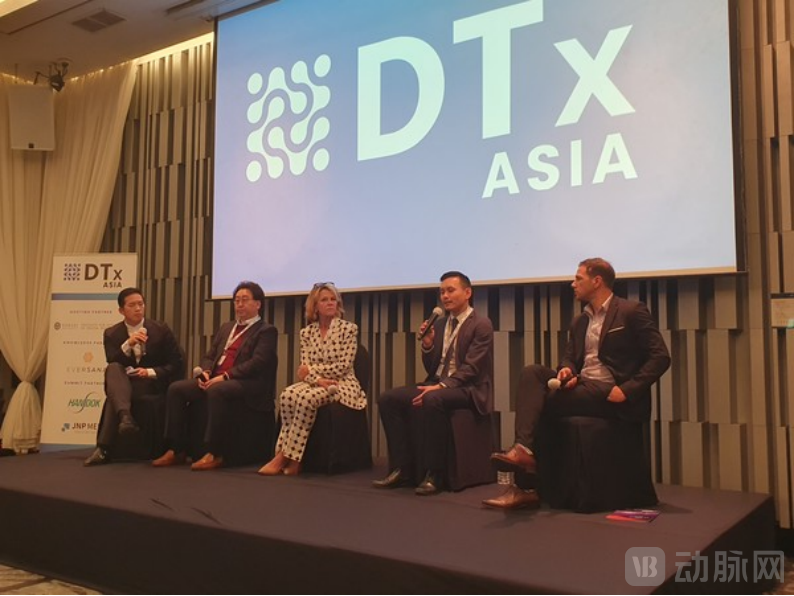 From left: EverEx Founder and CEO Chan Yoon, KT Vice President and Head of Digital & Bio Health Lee Hai-sung, TALi CEO Mary-Beth Brinson, Monash Health Director of Medical Services Jason Goh, and Mobio CEO and Chief Scientist Bechara Saab spoke at the Asia Summit on Digital Therapeutics in Seoul on November 9.
The panelists included Chan Yoon, Founder and CEO of EverEx (Moderator); Bechara Saab, CEO and Chief Scientist of Mobio Interactive; Jason Goh, Director of Medical Services at Monash Health; Lee Hai-sung, Vice President of Digital & Bio-Health at KT; and Mary-Beth Brinson, CEO of TALi.
Lee from KT stated that digital therapeutics solutions can help meet the growing patient demand in South Korea, where doctors are notorious for their rapid three-minute consultations. “Digital therapeutics solutions can fill this gap by providing patients with more attention and offering physicians detailed data,” he said.
From an Australian perspective, Brinson of TALi stated that digital therapeutics are particularly valuable for managing chronic diseases with an increasingly heavy treatment burden. She explained that digital therapeutics enable people to access healthcare services more directly, thereby avoiding long waiting times for doctor appointments. Although Australia’s national health insurance system is commendable, she believes that more can be done to alleviate the overall out-of-pocket financial burden.
On the other hand, Goh from Monash stated that although there is a demand for digital therapeutics, the value of digital therapeutics is often overshadowed by the adoption of digital health solutions such as electronic medical records (EMR) and clinical imaging systems.
However, he pointed out that the COVID-19 pandemic has helped highlight the demand for telemedicine and digital therapeutics. He stated that it is necessary to adopt the German system, under which general practitioners and physicians in primary care institutions receive certain compensation incentives after responding to patients’ inquiries about digital therapeutics, instructing them on proper usage, and facilitating the integration of digital therapeutics into care.
Mobio’s Saab shared his perspective on the matter. “Due to the rising per capita healthcare budgets in Asia and the low doctor-to-patient ratio, the current healthcare system is insufficient in supplying medical services,” he said.
Saab stated that to address this issue, the digital therapeutics industry needs to increase investment to ensure the effective deployment of digital therapeutic solutions, much like the pharmaceutical industry invested in building cold-chain infrastructure post-pandemic to facilitate production and distribution.
Goh recommends that startups consider the health economic benefits for insurers and patients during the development of digital therapeutics to promote the adoption of these solutions.
He added that a digital therapeutics system, similar to the traditional medical assistance system, should be established to identify and screen for the time required to prescribe digital therapeutics products to patients.
Lee also pointed out that digital therapeutics companies need to forge closer collaborations with the pharmaceutical industry to improve disease self-management and adherence to existing medications.
Source: Korea Biomedical Review
Original Author: Marianne Chang
Original Title: Integrating DTx into APAC Healthcare to Overcome Systemic Obstacles
Original Text: http://www.koreabiomed.com/news/articleView.html?idxno=15002