

Welt, DTA, and Click Therapeutics Discuss Digital Therapeutics Industry Trends at DTx Asia
Following the inaugural Digital Therapeutics Asia Summit (DTx Asia), held in Seoul on November 8–9, the Korean Biomedical Review (Korea Biomedical Review) invited three experts in the field of digital therapeutics to discuss the growing interest in digital therapeutic technologies and their prospects in the Asia-Pacific region.
Danny Kim, U.S. Head of Welt; Sarah Jackson, Director of Business Development and Alliance Management at Click Therapeutics; and Megan Coder of the Digital Therapeutics Alliance (DTA) all shared their unique insights into the emerging field of digital therapeutics.

From left: Danny Kim, U.S. Head of Welt; Sarah Jackson, Director of Business Development and Alliance Management at Click Therapeutics; and Megan Coder from the Digital Therapeutics Alliance (DTA), were interviewed by Korea Biomedical Review on trends in the digital therapeutics industry at DTx Asia on Wednesday, November 9, 2022.
A Digital Therapeutics Perspective from an Industry Standpoint
Kim stated that Welt, a Samsung spinoff with offices in the United States and South Korea, initially extracted digital biomarker data from wearable devices to promote healthier lifestyles. However, with the emergence of digital therapeutics, the company began incorporating lifestyle recommendations into its smart belt to help improve users’ gait, walking speed, and other health-related issues.
“We are now focused on integrating digital biomarkers collected through smartphone wearable sensing technology to create a more personalized second wave of digital therapeutics,” he said.
Jackson also introduced Click Therapeutics, a company focused on prescription digital therapeutics, with its initial product being a smoking cessation program.
However, Jackson stated that the company’s flagship programs are digital therapeutics for depression and schizophrenia, and it also maintains a diversified product pipeline targeting indications such as oncology, multiple sclerosis, chronic pain, fibromyalgia, rheumatoid arthritis, diabetic neuropathy, and irritable bowel syndrome.
She added that Click Therapeutics has driven behavioral change through its digital therapeutic program for smoking cessation and will advance this pipeline into the more strictly regulated prescription (Rx) tier.
“As a company, we aim to transform traditional psychotherapy into engaging digital formats while maintaining therapeutic efficacy, and to explore novel mechanisms of action (MOA) that are unattainable in conventional face-to-face clinical practice,” she said.
The Digital Therapeutics Alliance (DTA)’s Coder also offered insights from the perspective of a nonprofit organization. Established five years ago, the DTA aims to identify and evaluate the value of digital therapeutics to optimize their application.
“To better help digital therapeutics find their development direction and solutions within this ecosystem, we are also committed to building a collaborative platform for digital therapeutics companies, regulatory agencies, payers, decision-making bodies, and patient communities,” said Coder.
She likened the DTA to the World Health Organization (WHO) in the field of digital therapeutics, elaborating on their similarities: “Digital therapeutics is a nascent field. Much like the WHO, we guide industry discourse through various digital therapeutics publications, covering topics such as regulatory and reimbursement pathways, health technology assessment, and more. We strongly hope that these efforts will translate into meaningful practices across low-, middle-, and high-income country markets.”
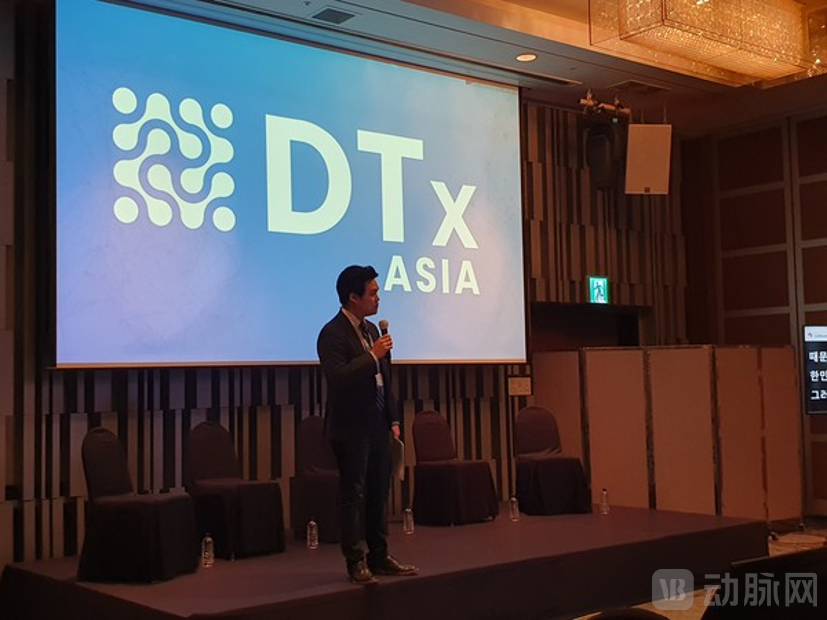
Danny Kim, Head of Welt USA
Spoke at the inaugural Digital Therapeutics Asia, held in Seoul on Tuesday (November 8, 2022).
Current Status of Digital Therapeutics in the Asia-Pacific Region
Kim from Welt commented on the progress of digital therapeutics in the Asia-Pacific region, stating that hosting the inaugural Digital Therapeutics Asia Summit in Seoul marks a significant step forward for the digital therapeutics industry in the Asian market.
He further pointed out that the accelerated development and adoption of digital therapeutics have received support from the South Korean government, as evidenced by the regulatory guidelines proposed by the Ministry of Food and Drug Safety (MFDS) on Wednesday, November 9, 2022, and the reimbursement guidelines for digital therapeutics scheduled for release by the end of the year.
“This Digital Therapeutics Asia Summit has given us a true understanding of the progress made both within and outside South Korea. Everyone gathered here will take this opportunity to inspire one another,” said the U.S. head of Welt.
“Most of our pipeline has received support from South Korean government entities, such as the Ministry of Science and ICT, the Ministry of Trade, Industry and Energy, and the Seoul Metropolitan Government. This demonstrates the government’s active attention to this field.”
Kim also mentioned that Japan and China are beginning to develop reimbursement and regulatory guidelines for DTx. In Southeast Asia, Setiaji Setaji, Chief Digital Transformation Officer of the Indonesian Ministry of Health, acknowledged that they need digital therapeutics to better leverage limited resources in serving the public.
Overall, Jackson pointed out that pharmaceutical companies’ interest in digital therapeutics has been growing over the past 12 to 18 months, but he also acknowledged that it may take some time to move from discussions to tangible action.
Challenges Facing the Digital Therapeutics Industry and Response Strategies
When asked about the biggest challenge facing the digital therapeutics industry, Coder said, “Currently, there is significant interest in integrating digital therapeutics into patient care settings. However, each entity across different states and countries has its own standards, making it difficult for digital therapeutics companies to scale their businesses as they must meet these varying requirements.”
In this regard, she believes that the only way to address this issue is for the digital therapeutics industry to work closely with policymakers to establish agreed-upon standards, thereby giving companies greater confidence when introducing their products into this field.
She explained that the field of digital therapeutics is highly unique.
“As a pharmacist, I never have to worry about language barriers when dispensing medications. But digital therapeutics are different; you need to take into account factors such as culture and engagement to tailor them for populations, such as Spanish speakers. Most importantly, we still need to demonstrate safety and efficacy through clinical trials,” she said.
In response to comments made earlier in the meeting about “free-riding” on similar clinical trials to expedite regulatory review, she acknowledged that this is true to some extent. However, each product should still undergo independent clinical trials because, although the same cognitive behavioral therapy (CBT) may be used across products, the mechanism of action (MOA) can be implemented in different ways, which requires validation.
Welt, the U.S. head, added, “I believe that digital therapeutics can set benchmarks for certain aspects of traditional biopharmaceutical clinical trial design and endpoints, particularly regarding specific inclusion and exclusion criteria.”
Advice for Digital Therapeutics Startups
When advising early-stage digital therapeutics startups, Jackson emphasized the importance of establishing robust clinical evidence for prescription digital therapeutics in the early stages.
“In addition to regulatory approval, you need to provide a comprehensive clinical dossier that includes long-term efficacy data, real-world evidence, and information on healthcare resource utilization and health economics, in order to truly demonstrate the value of digital therapeutics and persuade all stakeholders,” she said.
“While you may not yet have the resources to manage complete medical records, developing a roadmap to achieve this goal is at least key to successfully launching your product,” she shared.
Although digital therapeutics is still a relatively new industry, 15 clinical trials have already received approval from the Ministry of Food and Drug Safety (MFDS), and many companies are seeking to enter the digital therapeutics sector.
The head of Welt’s U.S. operations pointed out that while heightened interest is a positive development, companies should not claim to be digital therapeutics firms merely due to increased investment capital or media attention.
“This industry is still in its early stages, so we must not rashly conflate the definition of digital therapeutics, as doing so would confuse other manufacturers and stakeholders who are just beginning to understand the characteristics of these products,” said Kim.
Benchmark Models and Future Plans for the Digital Therapeutics Industry
He explained that while policymakers often find it easier to align regulatory pathways and establish evaluation criteria for digital therapeutics, reimbursement decisions involve more sensitive issues. This is because each country has its own institutional framework and national context, which form the basis for determining reimbursement coverage according to the needs of different populations.
“Likewise, the fact that a reimbursement scheme works well in one country does not necessarily mean that South Korea needs to adopt the same approach,” he emphasized. “However, I do advocate for best practices in health economics outcomes, such as incorporating cost-effectiveness ratios into reimbursement decision-making.”
At this point, he highlighted Germany’s Digital Health Applications (DiGA) reimbursement scheme, as it addresses the chicken-and-egg dilemma of whether the economic model or the payment model should take precedence.
He stated that Germany would initially grant provisional reimbursement based on a preliminary directory, and subsequently require you to demonstrate cost-effectiveness and clinical benefits within one year to update the reimbursement directory.
Kim also pointed out that, in this regard, South Korea’s Health Insurance Review and Assessment Service (HIRA) has released a study investigating various reimbursement models outside of South Korea.
Finally, Coder revealed that the near-term goal of the DTA is to standardize quality expectations for digital therapeutics products, ensuring compliance with regulatory requirements, thereby serving patients appropriately and providing policymakers and decision-makers with proper insights to facilitate broader adoption of digital therapeutics.
In the medium term, she stated her intention to scale up the commercialization of digital therapeutics products, enabling patients to access these solutions in a manner that fosters genuine engagement and helps them understand the value digital therapeutics bring to their lives.
Coder stated that, in the long term, the DTA’s goal is to establish digital therapeutics as the standard of care for all chronic diseases and medical conditions, akin to how pharmaceuticals are regarded as the standard of care.
Source: Korea Biomedical Review
Original Author: Marianne Chang
Original Title: Welt, DTA, and Click Therapeutics Discuss DTx Industry Trends
Original Text:http://www.koreabiomed.com/news/articleView.html?idxno=15018