

Domestic IVD Giants Accelerate Layout as Localization Competition Heats Up in Total Laboratory Automation Systems
From manual operations to semi-automated assisted operations, then to modular automated operations, and finally to fully automated laboratory assembly line operations, humanity has never ceased its exploration in the pursuit of precision in medical laboratory testing.
Assembly Line, Also Known as the "Crown Jewel" of In Vitro Diagnostics. Its full name is Total Laboratory Automation (TLA), which connects different analytical instruments with pre-analytical and post-analytical laboratory systems through automated transport tracks. Under the dominant control of an information network, it forms a combination of assembly line operations to achieve optimal processes and maximum efficiency.
TLA enables full automation of the entire workflow, including sample loading, testing, and output. It can meet approximately 70% of the testing demands of tertiary hospitals, effectively alleviating bottlenecks in hospital laboratory operations and significantly enhancing testing efficiency at these institutions. As a result, it has become a hotly contested sector for leading domestic IVD companies.
However, in reality, the market for laboratory automation total laboratory automation (TLA) lines in China has long been dominated by foreign companies such as “Roche, Abbott, Siemens, and Beckman” (collectively known as “Luoya Xibei”). Leveraging their first-mover advantage and under the guise of “brand protection,” the TLA systems installed in major hospitals are all designed as closed platforms, incompatible with other brands. This has significantly constrained hospitals’ ability to expand their test menus and control costs.
On one hand, foreign brands maintain a strong monopoly; on the other, there is an urgent demand in the domestic market for cost-effective, highly compatible assembly lines. In light of this, how can China’s IVD enterprises break through? What challenges do they currently face? And where is the industry headed in the future? VCBeat has examined the current state of the industry both domestically and internationally to seek answers to these questions.
The Market Is Highly Monopolized by Overseas Giants: How to Break Through?
In the 1980s, Japan established the world’s first fully automated laboratory assembly line to address the shortage of medical laboratory technologists. Subsequently, these systems entered the European and American markets and gradually became widespread in developed countries worldwide. Major medical device manufacturers such as Thermo Fisher Scientific, Roche, and Abbott have launched smart laboratory initiatives, introducing various automated assembly lines for medical testing laboratories.
Based on laboratory disciplines, automated track systems can be categorized into clinical chemistry tracks, immunoassay tracks, coagulation tracks, hematology tracks, molecular diagnostics tracks, urinalysis tracks, and microbiology tracks. Since clinical chemistry and immunoassay tests share consistent sample types and processing workflows, most laboratories integrate them into a single clinical chemistry-immunoassay automation track. Due to the smaller market size of other segments, the term “track system” is often used in a narrow sense to refer specifically to clinical chemistry-immunoassay tracks.
Leveraging the advantages of automation and intelligence, automated assembly lines not only accelerate testing speed and enhance efficiency but also significantly minimize human-induced errors and cross-contamination, thereby ensuring more stable and reliable test results.
The deployment of laboratory automation lines in Chinese hospitals began in 2001, when the First Affiliated Hospital of Zhejiang University School of Medicine introduced the Hitachi PAM+7600 system, establishing China’s first clinical chemistry automation line. In 2012, the adoption of such automation lines entered a period of rapid expansion in China, with a compound annual growth rate exceeding 100%.
In December 2017, the Chinese government first mentioned in the "Implementation Plan for Industrialization of Key Technologies for High-End Medical Devices and Pharmaceuticals" that it would prioritize support for in vitro diagnostic products, encouraging the industrialization of innovative equipment such as Total Laboratory Automation (TLA) systems, which were previously unavailable in China. This further stimulated demand from hospitals and promoted development within the industry. According to statistics from relevant institutions, as ofAt the end of 2020,
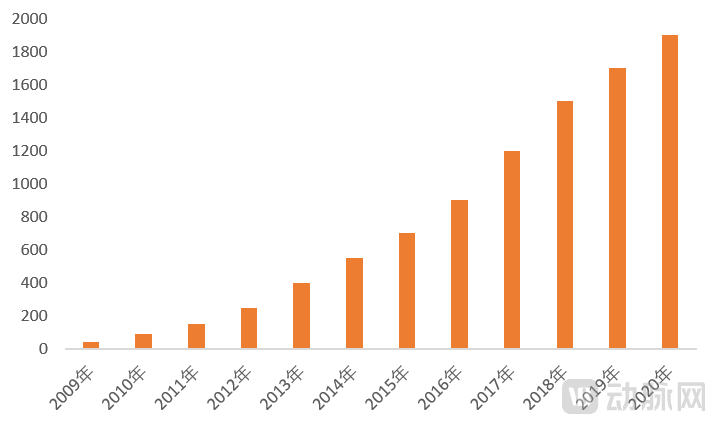
Domestic installed base of production lines increases year by year
However, China’s laboratory automation line market is highly monopolized by foreign companies, with brands such as Roche, Abbott, Beckman, Siemens, and Hitachi accounting for approximately 90% of the market share. This situation stems from the fact that clinical laboratory projects involve more than just the operation of individual instruments; initially, domestic enterprises lacked the scale to undertake large-scale projects like those required by hospital clinical laboratories. Furthermore, most automated lines offered by foreign manufacturers adopt a closed architecture, meaning they can only connect to analyzers of the same brand. Consequently, Roche, Abbott, Beckman, and Siemens entered top-tier (Grade III Class A) hospitals early on and firmly secured their market dominance.
In recent years, with the vigorous implementation of national policies such as tiered diagnosis and treatment and volume-based procurement, primary healthcare institutions have placed increasingly higher demands on testing capabilities and efficiency. Given that primary healthcare institutions prefer analytical instruments and automation lines with high cost-effectiveness and strong compatibility, domestically produced total laboratory automation (TLA) lines are encountering significant development opportunities.
Furthermore, domestic IVD companies are continuously increasing their R&D investment, and their capabilities in developing analytical instruments are steadily strengthening. The domestic laboratory automation line market is witnessing intense competition due to its vast growth potential. IVD enterprises such as Mindray Medical, Autobio Diagnostics, Life Technology, Dirui Medical, Snibe Co., Ltd., YHLO Biotech, Sanomed, and Maccura Biotechnology have all entered the market, with some of their products already adopted by Grade A tertiary hospitals.
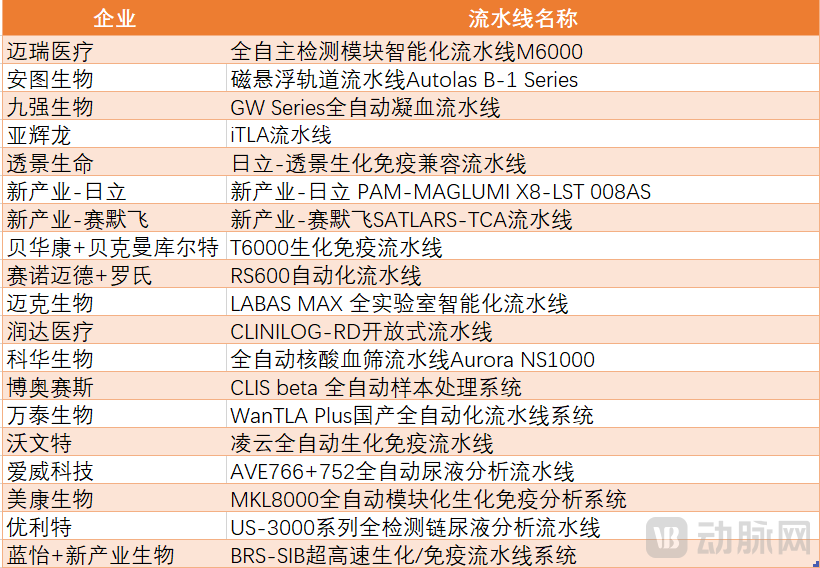
Domestic Brand Layout (Incomplete Statistics)
Start with primary care hospitals; ensure a diverse product portfolio.
Amid fierce competition, how domestic enterprises can enter the market and achieve rapid breakthroughs has become a topic of widespread industry discussion. Autobio Diagnostics Co., Ltd. is the first company in China to provide a full suite of products and services for fully automated laboratory assembly lines, and its development strategy may serve as a reference.
Autobio Diagnostics places great emphasis on multi-category capabilities. The most fundamental modules in an IVD (In Vitro Diagnostics) automation line are clinical chemistry and chemiluminescence immunoassay (CLIA); thus, possessing both clinical chemistry and CLIA products forms the foundation for building such integrated systems. Consequently, as early as 2016, Autobio Diagnostics began strengthening its clinical chemistry capabilities through acquisitions. By acquiring Shengshi Junhui and BioTechon, and leveraging their high-quality clinical chemistry analyzers and comprehensive reagent portfolios, Autobio has significantly boosted the performance of its strong CLIA product line, thereby fully unlocking its growth potential.
In May 2018, Autobio Diagnostics launched the fifth-generation magnetic levitation fully automated track system, Autolas A-1, which integrates biochemistry and immunoassay diagnostics. This milestone made Autobio the first company in China to offer a comprehensive suite of products for fully automated laboratory track systems, filling the gap for domestically produced automated solutions and providing laboratories with more options.
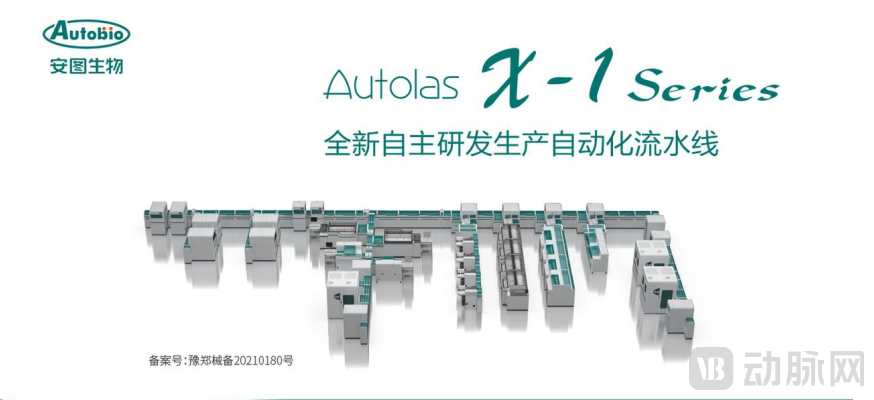
Autobio Diagnostics’ Autolas A-1 Series Automated Laboratory Line. Image source: company official website
Moreover, it is well known that automated laboratory assembly lines typically handle 70% of the testing workload in hospital clinical laboratories. Consequently, top-tier hospitals tend to be relatively cautious in their selection of such systems. Therefore, it is challenging to rapidly penetrate tertiary hospitals during the initial market launch of these assembly lines. However, they are highly attractive to secondary hospitals that cannot meet the minimum purchase volume requirements for imported reagents. Based on this assessment, Autobio Diagnostics Co., Ltd. took the lead in securing a foothold among 2,500 secondary hospitals whose reagent procurement volumes fell below the thresholds set by foreign competitors. After gaining recognition in this niche market, the company gradually expanded its presence into hospitals with higher laboratory testing revenues.
As of December 31, 2021, the Autolas A-1 Series automated laboratory line had achieved a cumulative installation base of 105 units over its five years on the market, with users covering most provinces across China.
As revealed in Autobio Diagnostics’ 2021 annual report and its 2022 semi-annual report, years of sustained increases in R&D investment have enabled the company to establish a comprehensive diagnostic product portfolio centered on automated workflow lines, covering immunodiagnostics, clinical chemistry, microbiology, molecular diagnostics, and coagulation testing. Furthermore, Autobio has formed a dual-core growth strategy driven by both conventional chemiluminescence immunoassay and molecular diagnostic products.
“Customer-Centric”: Open-Assembly Lines Are the Way Forward
"As one of the earliest domestic agents to engage with imported automated assembly line products, Wu Di, founder of Ruizhijie, has deep insights into the limitations of such imported products for medical laboratories in China."
First, automated laboratory lines impose stringent requirements on laboratory conditions and occupy substantial floor space. Second, imported automated lines are prohibitively expensive. In particular, “closed” systems are compatible only with instruments and consumables from the same brand, leaving users with no choice in instrument selection and limited bargaining power for consumables. As a result, hospitals must either procure additional automation systems from other brands or operate newly acquired instruments in standalone mode, which not only consumes valuable laboratory space but also leads to inefficient use of hospital resources.
Constrained by hospital cost-control measures and manufacturers’ own product positioning, laboratory automation lines adapted to the actual conditions of medical laboratories in China should be compatible with testing equipment and reagents from major brands on the market, so as to avoid waste and fully integrate existing laboratory resources.
A customer-centric, decentralized, and open pipeline system represents the true “laboratory-centered” direction of development.
Meanwhile, the implementation of policies such as tiered diagnosis and treatment and centralized procurement has imposed higher demands on the testing capabilities and efficiency of primary healthcare institutions. Coupled with the increasing maturity of domestic equipment technology and the continuous development of third-party medical laboratory services, Chinese-made automated laboratory automation lines have ushered in a period of significant growth, leveraging their advantages of higher cost-effectiveness and greater openness. In this context, fully open laboratory automation systems break through the limitations of traditional closed-platform systems by returning the right to select instruments to clinical laboratories. This empowers laboratories to enhance efficiency, reduce costs, and better serve clinical practice.
YHLO’s iTLA automation line breaks the limitations of traditional closed-platform systems, achieving true open compatibility and enabling departments to flexibly integrate resources.
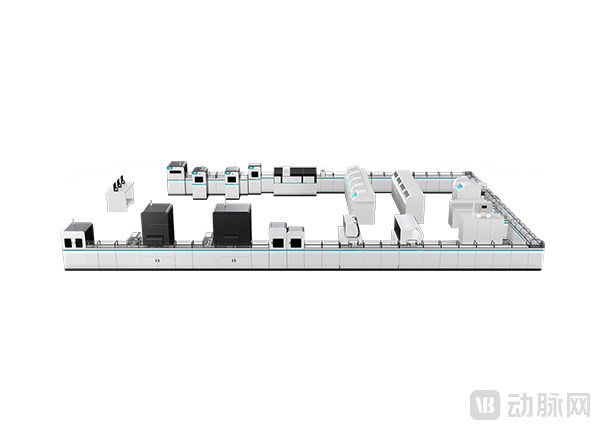
YHLO Launches iTLA Laboratory Automation Line System Image from the Company's Official Website
It employs advanced magnetic levitation transport tracks, significantly reducing sample turnaround time to meet the laboratory’s demands for high speed, high throughput, and automation. This comprehensively enhances operational efficiency by eliminating cumbersome manual tasks such as sample handling, thereby streamlining testing processes and refining precision. As a result, laboratory professionals can devote more time and energy to analyzing and interpreting test results, better serving patients and clinical needs, shortening patient wait times, and acting as a nexus for timely processing and efficient communication.
To date, YHLO has established a comprehensive test menu covering more than 140 registered reagent items in areas such as oncology, hormones, thyroid function, myocardial infarction, anemia, bone metabolism, autoantibodies, TORCH, respiratory viruses, pneumonia, and reproductive health. Coupled with its intelligent automation lines, this portfolio helps further elevate hospital diagnostic and treatment capabilities, strengthen the overall competence of clinical laboratories, and comprehensively enhance the standing and influence of hospital departments within the industry.
Open-Ended Pipeline: Software Is the Focus, and Category Richness Is the Core of Competition
Based on the above analysis, it is difficult for a single manufacturer to meet all testing needs. Hospitals in China often purchase instruments from multiple brands. Taking chemiluminescence immunoassay analyzers as an example, nearly every hospital at the Grade II Class A level or above uses instruments from three or more brands to ensure testing accuracy and control costs.
Therefore, hospitals are in urgent need of open laboratory automation lines compatible with instruments from different manufacturers. In foreign countries, Japan and the United States have already fully adopted open automation lines, which will also become the trend in China’s medical laboratory testing industry.
There are still certain technical barriers to building an open automated assembly line. First, achieving multi-dimensional compatibility at the system level requires resolving hardware interface issues. Interfaces vary significantly across manufacturers in terms of specifications and connection methods, making it challenging to achieve comprehensive compatibility.
More importantly, from a software perspective, integrating a system with devices from different manufacturers imposes high demands on software control and scheduling. Finally, as the most advanced and expensive module on the assembly line, centrifuges equipped with robotic arms for precise rotor positioning and controlled via programmatic operations also represent a significant technical challenge for domestically developed, original technologies in China.
Furthermore, the breadth of the reagent menu is a key factor for hospitals when selecting an automated laboratory workflow, as it helps build core competitiveness.
Generally, a single automated laboratory workflow can cover multiple testing domains, including clinical chemistry, immunoassay, hematology, and coagulation, with clinical chemistry diagnostics accounting for the largest share of hospital testing volume. Therefore, the breadth of the reagent menu offered by the workflow manufacturer—particularly the clinical chemistry reagent menu—is a key consideration for hospitals when adopting such systems.
Accelerated Assembly Line Layout and More Frequent M&A Integration
With the vigorous implementation of national policies such as tiered diagnosis and treatment and volume-based procurement, primary healthcare institutions have developed a strong demand for cost-effective and highly compatible analytical instruments and automation lines, creating an excellent development opportunity for domestically produced total laboratory automation (TLA) systems.
Furthermore, since chemiluminescence immunoassay analyzers installed in TLA (Total Laboratory Automation) pipelines are often closed systems, a hospital’s choice of immunodiagnostic analyzer manufacturer effectively determines its source of reagents and consumables for the coming years.
TLA pipelines are highly exclusive. Miao Yongjun, Chairman of Autobio Diagnostics, stated in an interview: “Automation pipelines represent the general trend and serve as a deep ‘moat.’ Once competitors establish their presence, it becomes difficult for Autobio’s products to gain a foothold in that laboratory.” In other words, automation pipelines will become the strategic high ground for chemiluminescence companies to compete in the future market.
Consequently, domestic manufacturers have been stepping up their strategic deployments. This trend is evident in the annual reports of major IVD companies.
According to the 2022 semi-annual reports of various companies, Mindray Medical is actively promoting its “Mindray Smart Lab” laboratory IT solution. As of June 30, 2022, the system had been installed in nearly 90 hospitals across China, 70% of which were tertiary hospitals, with nearly 30 new installations added in the first half of 2022.
YHLO has accelerated the expansion of its terminal instrument installations. During the reporting period, more than 900 chemiluminescence immunoassay (CLIA) analyzers were installed. As of the end of the reporting period, the cumulative number of CLIA analyzers installed exceeded 5,400 units, with 27 automated laboratory assembly lines installed. The company’s major proprietary products cover more than 3,800 domestic medical institutions, an increase of nearly 350 compared to the end of 2021. Among these, over 940 are Grade A tertiary hospitals, accounting for 56.94% of the total number of Grade A tertiary hospitals nationwide as published by the National Health Commission at the end of 2021.
Maccura shipped over 1,350 large-scale instruments and a total of 67 hematology and clinical chemistry/immunoassay automated lines. During the reporting period, it added more than 1,600 end-user customers and over 50 distributors. In terms of overseas market expansion, Maccura added 56 international distributors, cumulatively covering 112 countries and regions. Maccura’s “8+1” product platform includes: clinical chemistry, immunoassay, hematology, coagulation, urinalysis, molecular diagnostics, blood typing, pathology, and point-of-care testing.
Autobio Diagnostics introduced the first domestically produced automated laboratory workflow system, the Autolas A-1 Series, in 2017, filling the gap for domestic brands in this sector. As of December 31, 2021, a cumulative total of 105 units had been installed, with users covering most provinces across China.
In summary, it is evident that multiple IVD companies have intensified their strategic deployments. However, as centralized procurement accelerates and health insurance cost-containment measures become increasingly stringent, the biochemical diagnostics market has been adversely affected, with limited future growth potential. Consequently, future profitability models are poised to undergo significant changes.
Given the critical role of product portfolios in building competitive advantage within the pipeline market, future collaborations and mergers and acquisitions (M&A) will become more frequent. On one hand, chemiluminescence companies may intensify their acquisition of clinical chemistry assays; on the other hand, clinical chemistry companies will inevitably develop their own chemiluminescence capabilities to cope with intense future market competition.
Based on the above analysis, we have summarized the following points for industry reference.
First, although the tertiary hospital market represents the ultimate vision for future strategic planning, it is characterized by stringent quality requirements and existing automation line deployments. Therefore, a viable approach is to start with secondary and primary care hospitals by initially establishing automated workflows before expanding the product portfolio. Notably, cost-effectiveness is a key priority for secondary hospitals, where greater efficiency and lower costs are major concerns.
Secondly, open modular laboratory automation systems are gaining popularity. Their core advantage lies in breaking away from the closed instrument and reagent ecosystems of traditional automated lines. By enabling automated connectivity across instruments and reagents from different manufacturers, these open systems allow hospitals and laboratories to independently select diverse product combinations and build optimal total laboratory automation (TLA) platform solutions, leveraging the specialized expertise that different manufacturers offer in their respective niche fields.
Taking immunoassays as an example, Roche excels in tumor markers, while Abbott’s infectious disease assays enjoy higher recognition. In clinical chemistry, Hitachi and Beckman Coulter hold a competitive edge. Combining the flagship offerings of each manufacturer enhances the overall competitiveness of laboratory automation lines.
Meanwhile, the core competitiveness of an IVD pipeline lies in the breadth of its product portfolio; thus, building a more comprehensive, full-category offering is a key priority. In light of this, mergers and acquisitions (M&A) and integration will remain a dominant theme in the future. If a company cannot possess both biochemical and chemiluminescence capabilities in-house, it should seek extensive collaborations within the industry. However, careful attention must be paid to the profitability and revenue-sharing models before entering into such partnerships.
Moreover, as the entire industry pursues automation and accelerates its strategic deployments, a trend of hyper-competition is poised to emerge. Innovation remains the central theme; following the adoption of automated production lines, how to implement smart and intelligent upgrades will become the next defining challenge of our era, with production lines evolving beyond mere equipment.
"Flowing water does not compete to be first; it strives to flow endlessly."
References:
Autobio Diagnostics 2022 Semi-Annual Report
Mindray Medical 2022 Semi-Annual Report
The Battle for IVD Assembly Lines Has Already Turned Fierce! -- Med New Youth