

HEARIN.AI Secures Multi-Million RMB Seed Funding to Advance AI-Powered Professional Hearing Aids

HEARIN.AI
AI Hearing Aid R&D, Production, and Sales Company
VCBeat has learned that professional hearing aid brand “HEARIN.AI” has secured a seed funding round of several million RMB, invested by senior executives from the Ping An group. Starting with the concept of full-scenario sound technology, the company is committed to building a natural auditory system. The funds from this round will be used to strengthen product and technological R&D, including hardware development, audio processing, and algorithm technologies.
Hearing Impairment Is Becoming a Focus of Public Attention. According to the World Report on Hearing released by the World Health Organization, one in five people worldwide currently suffers from hearing loss, affecting over 1.5 billion people globally, among whom 430 million have moderate or greater hearing loss in their better ear. Data from market research firm MARKETSANDMARKETS shows that the global hearing aid market size was $7.5 billion in 2021 and is projected to reach $10.2 billion by 2026, with a compound annual growth rate (CAGR) of 6.4%. Within this market, the Asia-Pacific region, particularly China, holds the largest market share. However, the penetration rate of hearing aids varies significantly across different regions worldwide. Currently, the global average penetration rate stands at 17%–18%, exceeding 40% in developed European countries and reaching 30% in the United States, while remaining below 5% in China. Although China has an estimated 300 million individuals with hearing loss, only 3 million actually use hearing aids, leaving 95% of the market demand unmet and indicating substantial room for growth.
The hearing aid market has long been dominated by overseas giants, including Sonova, Demant, GN ReSound (part of GN Store Nord), WS Audiology, and Starkey, with the top six brands accounting for nearly 95% of the market share. In recent years, some domestic Chinese brands have gradually entered the market, primarily targeting the mid-to-low-end segments, but there remains significant room for technological catch-up.
Targeting trends such as an aging population, low market penetration, and consumption upgrades, HEARIN.AI, founded in 2022, provides AI-powered professional hearing aids dedicated to improving the quality of life for individuals with hearing loss.
“Zhu Yi, founder of HEARIN.AI, stated that connections with loved ones are essential to happiness. However, his close bond with his grandmother was hindered by her hearing loss, which impaired their emotional communication—a challenge faced by many individuals with hearing impairment in China. Currently, most hearing aids available on the market vary widely in quality and suffer from issues such as noise interference and poor user experience, failing to meet the true needs of those with hearing loss. Therefore, creating a hearing aid product that delivers superior sound quality and an enhanced user experience has long been his aspiration.”
HEARIN.AI Hearing Aid, launched by HEARIN for individuals with hearing loss, is a professional hearing aid that offers comfortable sound quality, ease of use, online fitting, and upgrade support.
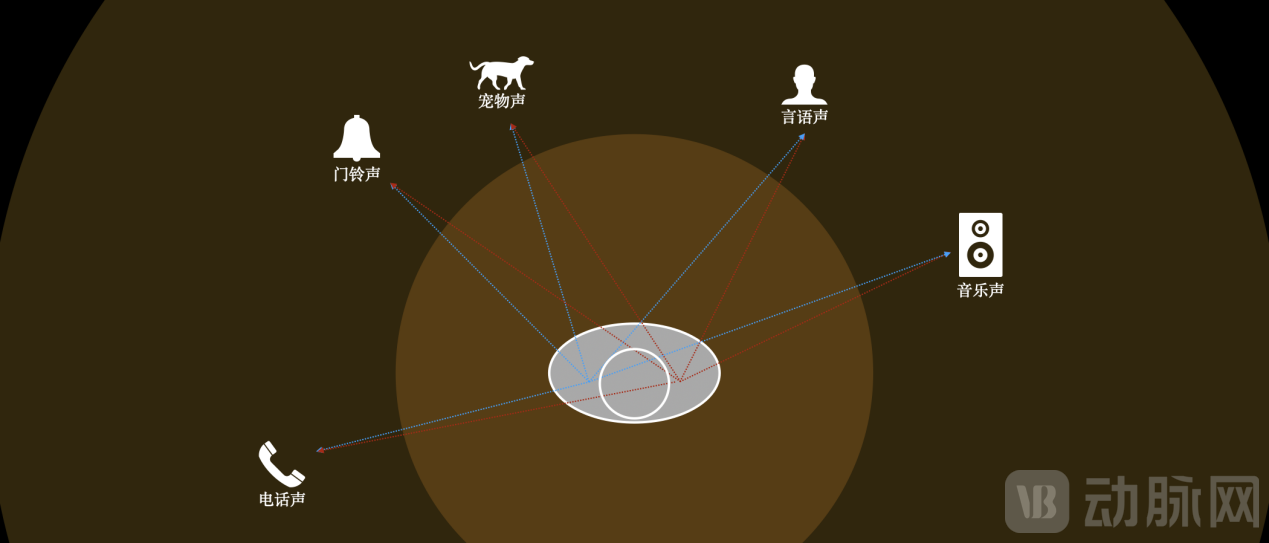
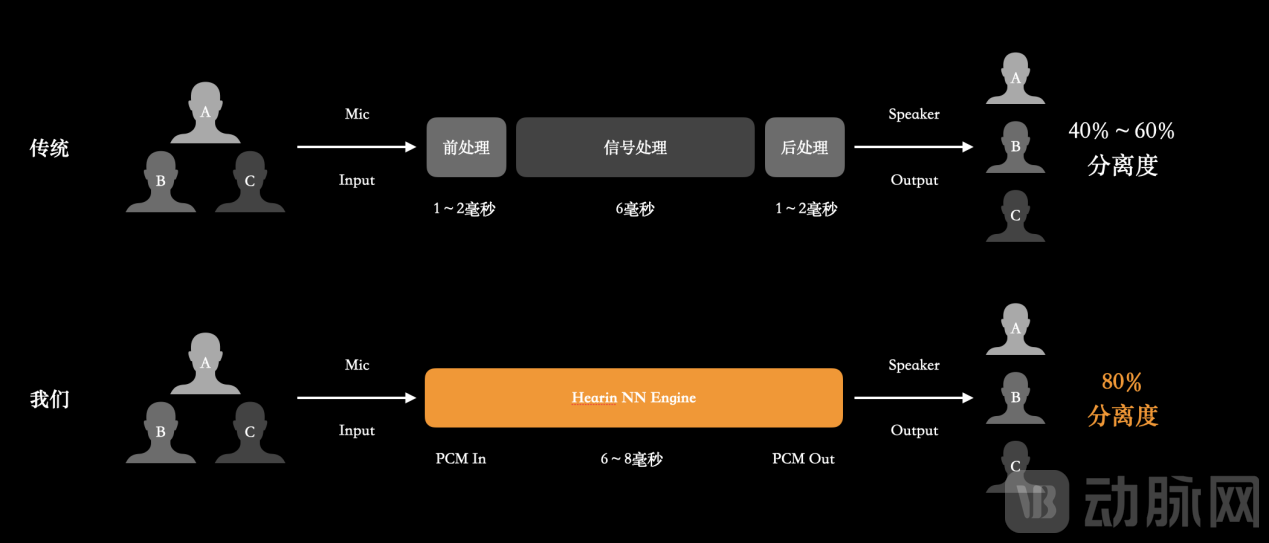
The overseas hearing aid industry started earlier, and domestic brands need to build barriers at the technical level. HEARIN first made breakthroughs in core technologies. HEARIN.AI is committed to creating a natural auditory system, with its overall technology built on deep neural networks, uniquely processing front-end input signals. People hear sounds not with their ears but with their brains; insufficient sound information leads to cognitive decline and dementia. Hearing loss means sensory deprivation, which ultimately affects the brain. Therefore, the natural auditory system not only helps people with hearing impairments hear better but also prevents cognitive degeneration, keeping the brain sharp.Compared to traditional hearing aid technologies that use single artificial rules to classify all sounds into speech and noise, retaining speech and suppressing other sounds based on the clarity of speech and its relationship with noise, HEARIN.AI's natural auditory system uses omnidirectional sound technology to process sounds similarly to how the human brain naturally hears. The HEARIN.AI auditory system continuously scans surrounding sounds for processing, then focuses and locates them, helping individuals with hearing impairments hear what they want to hear clearly and balancedly, providing good hearing compensation for every person with hearing loss. Combined with HEARIN.AI’s self-developed ultra-low intelligent latency audio processing system and collaborative systems across devices, mobile phones, and the cloud, speech intelligibility in noisy environments has improved by over 50%, and voice separation in certain specific scenarios has relatively increased by more than 60%, offering a better auditory experience compared to previous products.
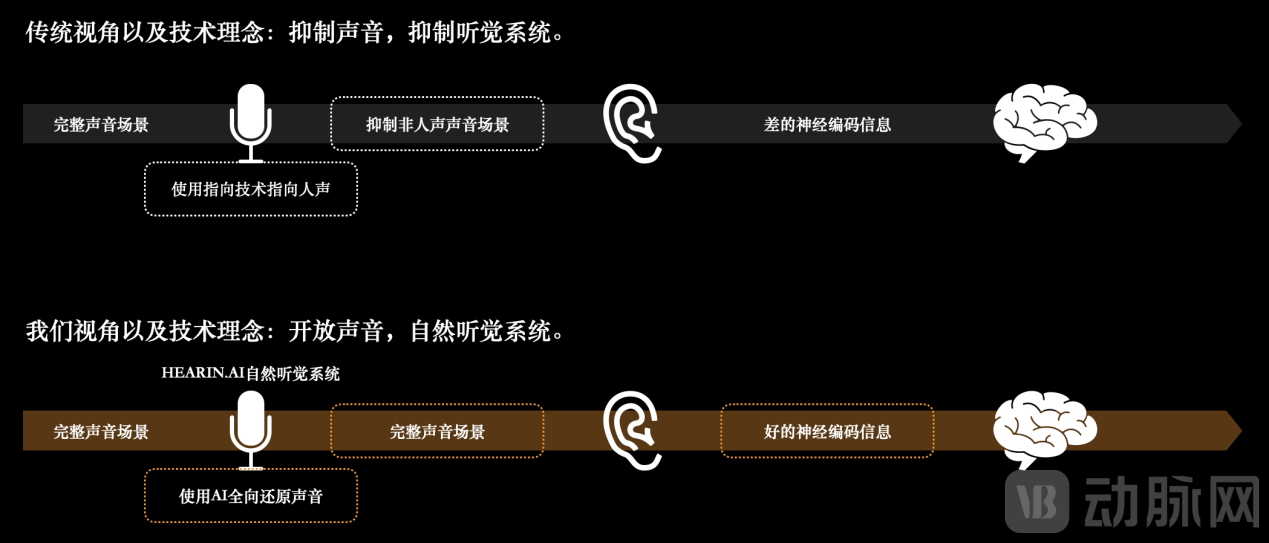
In its early insights into user scenarios, the HEARIN team discovered that speech clarity is the most critical factor in hearing assistance, with quiet and noisy environments being equally important. User preferences vary: older adults and women place greater emphasis on ease of operation, while younger users prioritize speech clarity in noisy settings. Sound quality is also a key concern for individuals with hearing loss. Accordingly, HEARIN has continuously invested in and strengthened its performance in both quiet and noisy environments to enhance the overall user experience.
“Leveraging AI technology to build professional hearing aids, HEARIN aims to make its products intelligent. ‘Traditional hearing aids are more like feature phones, with fixed parameters that cannot be updated. HEARIN seeks to create smart hearing aids that can be upgraded just like today’s smartphones,’ said Zhu Yi.”
In terms of products, HEARIN benchmarks against overseas giants to develop medical-grade hearing aids. Its product lineup will feature three models—Ultimate, Balanced, and Practical—to cater to the diverse needs of specific subgroups with varying degrees of hearing loss. The high-end offerings aim to deliver superior speech intelligibility and greater affordability compared to competing international products, while the entry-level models ensure price competitiveness while addressing common issues prevalent in existing market solutions, such as background noise and feedback suppression.
HEARIN.AI hearing aids have completed preliminary audio acquisition and algorithm processing, establishing the full audio engine pipeline, with mass production expected next year.
Regarding the team, HEARIN.AI’s core members possess extensive industry experience and specialized expertise in product innovation, hearing aid algorithm development, acoustic design, audio hardware, and clinical audiology. CEO Zhu Yi previously served as a Voice Algorithm Product Expert for Alibaba’s Tmall Genie, bringing over a decade of experience in innovative consumer electronics products spanning hardware, software, and algorithms, and is an inventor on more than 100 patents. Zhang Maolei, Head of Hardware, was an early founding core member and head of the R&D technical team at Gionee Mobile, overseeing the development of over 100 million mobile phones that were successfully deployed through offline channels, helping the brand achieve the top position in the domestic Chinese market. Xiang Changqing, Head of Sales, formerly served as General Manager of OPPO Mobile’s E-commerce Division, where he built OPPO’s e-commerce business from the ground up and managed an e-commerce team of over 400 employees, leveraging his extensive experience in global e-commerce channel sales management.
Regarding future development, Zhu Yi stated that HEARIN.AI is dedicated to natural hearing, spanning product innovation, technological innovation, and psychoacoustics. Centered on the population with hearing loss in China, the company aims to build a natural hearing system to help them hear the voices of their loved ones and enhance their well-being.