

At the Inflection Point of Medical Innovation: The 'Break' and 'Build' Strategy of AstraZeneca CICC Healthcare Fund

AstraZeneca
Cancer Drug Developer
The Age of Discovery for Healthcare Innovation Is Upon Us.
According to a report by PwC, China's healthcare and wellness market has experienced sustained rapid growth over the past eight years, with its overall size now reaching RMB 13 trillion and a compound annual growth rate (CAGR) of 13%, making it the second-largest market globally.
Alongside this surging wave, the amount of venture capital investment in China’s biopharmaceutical sector has continued to rise. According to data from VCBeat, the total financing and investment in China’s healthcare industry reached nearly $10 billion (approximately RMB 64.759 billion) in the first half of 2022, with over 600 financing transactions recorded.
A notable trend has emerged in this process: over the past decade, follow-on innovation in the healthcare industry has nearly run its course, with original innovation taking its place as the focal point in China’s new era of venture capital and private equity.
To capture innovative enterprises with high growth potential, numerous investment institutions have begun adjusting their strategies, moving toward greater specialization and depth. For instance, generalist venture capital firms are actively recruiting professionals from the pharmaceutical industry, small and mid-sized firms are conducting vertical scans of niche sectors, and large pharmaceutical companies are gradually crossing over into the private equity space.
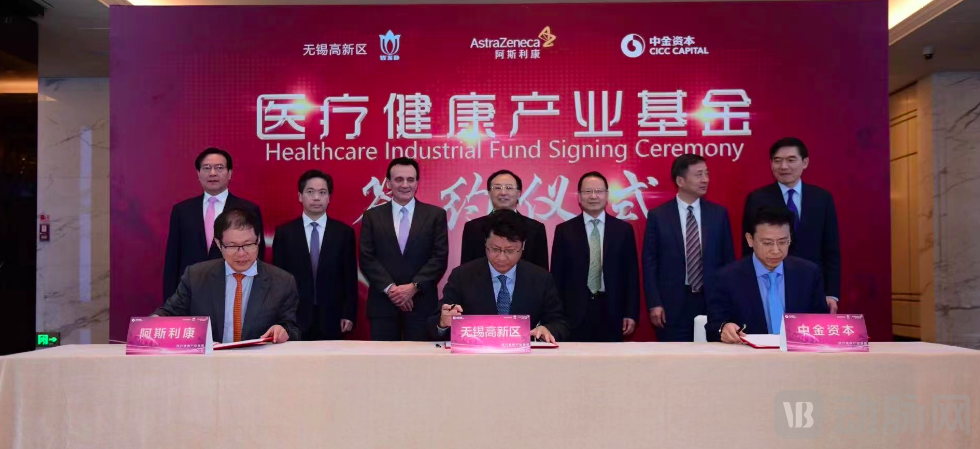
At the 2019 China International Import Expo, AstraZeneca and CICC Capital announced the establishment of a healthcare industry fund
Among them, the AstraZeneca CICC Healthcare Industry Fund (hereinafter referred to as “AstraZeneca CICC”), a healthcare industry fund jointly established by the multinational biopharmaceutical giant AstraZeneca and the star financial institution CICC Capital, has drawn significant attention from the industry.
Beyond the prestige of AstraZeneca and CICC Capital, a more critical factor is the fund’s performance in the two short years since its filing was completed in 2020: it has invested in more than ten innovative healthcare companies, including Abbisko Therapeutics, CytoNiche Biotechnology, T-Carrey Therapeutics, Etopia Pharma, Deepwise Healthcare, ZhiZhong Medical, and Kerui Chi Medical, covering multiple subsectors such as biopharmaceuticals, medical devices, diagnostic services, and digital health. Just this week, the fund also announced that it had led new financing rounds for Rgenta, which is developing oral small-molecule drugs targeting RNA at traditionally “undruggable” targets, and Hugang Zhongke, a preclinical CRO company.
Not only that, but amidst this year’s “fundraising winter,” AstraZeneca CICC has still gained the trust of LPs against the trend. On November 12, at the Second Zhejiang Digital Medical and Health Industry Hangzhou Summit, AstraZeneca CICC announced that its Hangzhou Fund had officially completed filing, with total assets under management exceeding RMB 3 billion. At the recently concluded China International Import Expo (CIIE), AstraZeneca CICC also announced the signing of a strategic cooperation letter of intent for its newly established Qingdao Fund.
How Did AstraZeneca CICC Capital Gain Rapid Momentum? What Are Its Investment Logic and Strategy? Why Has It Earned LP Trust Amid Market Headwinds? In response to these questions, VCBeat conducted an in-depth dialogue with Wang Lei, Global Executive Vice President of AstraZeneca, President of International Business and China.
In the past year or two, “scientist” has become a high-frequency term in the healthcare sector, leading to widespread headlines such as “VCs fiercely compete for scientist-founders” and “VCs crowd around university professors.” Behind this phenomenon lies the rise of China’s healthcare innovation forces.
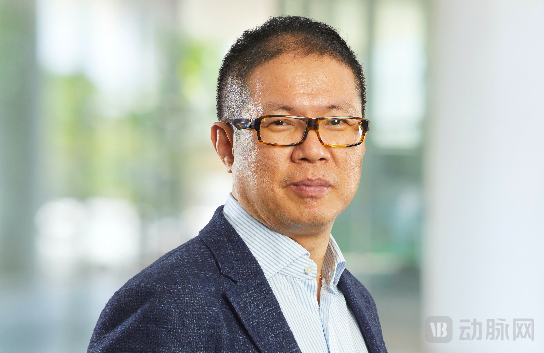
Lei Wang, Executive Vice President of AstraZeneca, President of International Business and China
Wang Lei corroborated this trend with his own observations: “A single college’s laboratory building may now house dozens of labs, and the principal investigators are predominantly heavyweight overseas-returnee scholars and experts. They have accumulated a wealth of valuable research achievements in their respective fields of expertise and are now bringing these accomplishments to China.”
This is no accident; rather, it signals that China’s medical innovation has entered a phase demanding “genuine innovation.” Industries follow development cycles, and so does innovation. Against the backdrop of an entrepreneurial era characterized by the large-scale integration of internet technology into healthcare and the dominant theme of “domestic substitution,” the low-hanging fruits have largely been harvested. What remains are hard nuts to crack, and future opportunities will undoubtedly belong to those who possess frontier achievements rooted in original innovative technologies.
Therefore, policies are increasingly favoring scientists, and research institutions are continuously “unshackling” them to provide the optimal environment for innovation and translation. Wang Lei deeply resonates with this trend: “Such favorable opportunities for innovation were not created by us alone, but by the nation and the scientific community. As medical institutions and clinical research bases deepen their engagement, our clinical capabilities continue to improve. Meanwhile, China’s accession to the ICH and the National Medical Products Administration’s accelerated approval processes in recent years have enabled innovative drugs to reach the market more rapidly. Additionally, the booming capital market is providing more financing channels for innovative technologies.”
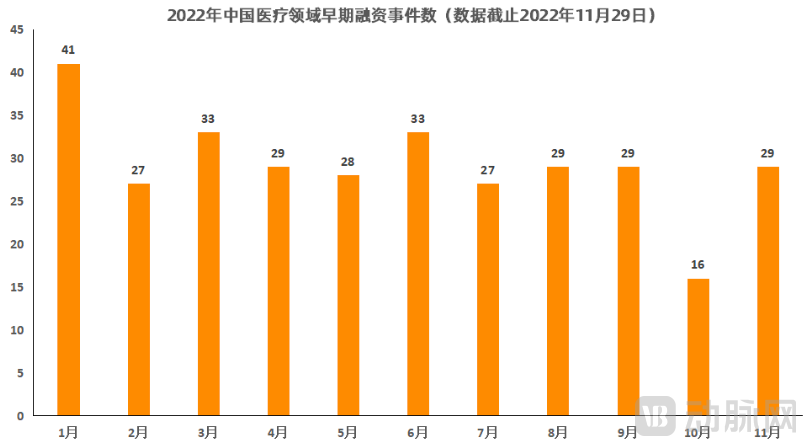
Early-Stage Financing in China's Healthcare Sector in 2022
As a key component of the healthcare industry, investment institutions are also being swept up in this wave of medical innovation. According to statistics from the VCBeat Orange Database, as of October 1, 2022, there had been 321 early-stage financing and investment events in China’s healthcare sector, with total funding exceeding RMB 10 billion. A total of 200 investment firms participated in these deals, underscoring the strong appeal of early-stage innovative healthcare projects.
Undoubtedly, the present era represents the golden age of medical innovation; yet opportunities coexist with challenges, as startups and investment institutions each face their own unique hurdles in extending their reach into innovation. In other words, as medical innovation enters a new cycle, it is imposing new demands on the industry.
Only innovative projects that possess genuine original technologies and address substantial market opportunities are more likely to stand out in the early-stage market. This logic also imposes specific requirements on investment institutions rooted in the medical innovation sector. First, they must refine their core competencies in early-stage healthcare investment, primarily focusing on how to identify high-quality investment targets and how to better empower and support the growth of portfolio companies. Second, they need to select the right “tracks,” meaning they should anchor their investments in sectors with significant value, large market sizes, strong corporate profitability, and high growth potential. Finally, they must choose the right “racers.” From a broad perspective, this involves evaluating three key dimensions: the level of innovation, commercial prospects, and the likelihood of future success.
This aligns closely with what Wang Lei described in the interview as “genuine innovation, genuine science,” meaning that companies truly possess innovative technologies and have verifiable scientific data. Wang Lei candidly stated that China’s healthcare market is currently undergoing a process of “deflating bubbles” and readjustment, which is also a journey of continuous progress amid twists and turns, with a pace that is indeed not slow. While the state is currently encouraging innovation, this is a process that requires gradual strategic planning starting now. This means that when we look at the healthcare innovation market, we should adopt a longer-term perspective, complemented by creative logic.
Under the spotlight, medical innovation has captured widespread attention, while competition continues to intensify. In this era, pharmaceutical giants must safeguard their technological barriers and maintain periodic expansion to preserve their competitive edge. Consequently, leading enterprises are increasingly inclined to pursue cross-sector investments leveraging their asset advantages.
In this regard, AstraZeneca CICC shares similarities with industry-led funds in the market, but its investment details and ultimate objectives are distinctive.
Currently, AstraZeneca’s investment focus spans two sectors: pharmaceuticals and non-pharmaceuticals. To fall within AstraZeneca’s radar, companies must meet a series of stringent criteria. In an interview, Wang Lei summarized his investment logic into the following five points:
First, look at the “people.” In startups, the leader is a critical reference factor, as they need to guide the team in executing focused breakthroughs. If a small startup has three or four therapeutic areas and seven, eight, or nine projects in its pipeline, such excessive diversification usually indicates the absence of a qualified leader.
“Science is highly complex. We place greater value on those who persevere to see a project through to completion. The most impactful publications are those that best integrate with clinical practice within the therapeutic area. It is not enough to possess scientific knowledge alone; one must also master technical expertise, as an inability to translate findings into practical applications renders the work futile due to a lack of clinical understanding.”
Secondly, data analysis is essential, grounded in rigorous science. Backed by thousands of scientists within the global AstraZeneca network, the fund effectively has access to a comprehensive library of cutting-edge medical knowledge. Leveraging scientific insights and repeated validation, the fund not only relies on literature and data when evaluating investment opportunities but also conducts laboratory experiments to verify the scientific validity of target companies. This approach is founded on a deep understanding of science.
Third, the company’s innovativeness and alignment with AstraZeneca’s global pipeline will be considered. The fund will only consider investing in target companies that can outperform AstraZeneca in speed and quality, or achieve best-in-class status within their respective fields.
Fourth is whether it can empower enterprises. Wang Lei mentioned that the fund will not consider projects that cannot provide more help and empowerment after investment.
Finally, companies invested in by the fund must possess internationalization potential. Companies backed by AstraZeneca CICC Investment are innovating not only for China but also for the world. Wang Lei pointed out that the fund’s goal is to enable Chinese innovations to benefit people worldwide and all of humanity. “We are also willing to leverage AstraZeneca’s global network to assist portfolio companies in expanding overseas.”
Critical Requirement: Shaping the Prudent and Long-Term Investment Style of the AstraZeneca-CICC FundAt a time when most healthcare funds have adopted a passive stance, the AstraZeneca-CICC Fund continues to make cautious investments. Over the past year, multiple companies—including Gaoguang Pharmaceuticals, Keruichi Medical, Tiankeya, Yueer Genomics, Anxuyuan, Yunjian Medicine, Rgenta, and Shanghai-Hong Kong Zhongke—have joined the fund’s ecosystem. For the AstraZeneca-CICC Fund, which has been formally established for only one year, such achievements are truly commendable. However, this also raises key questions: How can AstraZeneca empower its portfolio companies? And how can it earn the trust of its limited partners (LPs)?
"Based on Needs, Walking Side by Side with Enterprises"
Similar to other industrial capital investors, most projects invested in by the AstraZeneca CICC Fund involve partnerships that predate the actual investment. In other words, mutual recognition between the enterprise and the investor was established prior to the completion of the transaction.
Yue'er Genomics is a technology-innovation-driven global genomics company, possessing multiple revolutionary molecular diagnostic technologies that can reduce sequencing costs across all NGS platforms by over 98% and increase the sensitivity of qPCR, Sanger, and nanopore sequencing by more than 100-fold.
In June this year, the fund completed its investment in Yueer Genomics. He Ling, Head of Non-Pharmaceutical Investments at AstraZeneca CICC, recalled the investment experience with Yueer Genomics. “Yueer Genomics placed significant emphasis on our industrial fund attributes and was particularly eager to engage in R&D collaborations. At that time, they were in the process of upgrading their existing business to focus on oncology. We had the capability to introduce them to a broader range of pipelines and assist in the development of downstream oncology products. This happens to be an area where AstraZeneca excels.”
“To be honest, our team is relatively ‘light’ in terms of value-added support, as we do not have a dedicated incubation team. However, leveraging our deep industry insights, we can pinpoint the most critical pain points of our portfolio companies and mobilize AstraZeneca’s global and China-based industrial resources to empower them. For instance, with non-pharmaceutical companies such as Zhizhong and Deepwise, we have facilitated tripartite collaborations among these companies, AstraZeneca, and relevant hospital departments through AstraZeneca’s network in China. This supports the in-hospital implementation of their projects and provides expert resources and scientific advice for application scenarios,” He Ling told VCBeat.
Not long ago, Yueer Genomics announced the signing of a licensing and product development agreement with Bio-Rad, a global leader in clinical diagnostics. Under this agreement, Bio-Rad will obtain exclusive rights to Yueer Genomics’ allele enrichment technology for the development of multiplex digital PCR reagents. Cibioman is also exploring global collaborations. It can be said that AstraZeneca has effectively accelerated the industrialization process of its portfolio companies.
Beyond industrial empowerment, AstraZeneca CICC rarely intervenes excessively in the management of its portfolio companies.
“Anxuyuan is a long-read gene sequencing platform company we invested in last year. Upon learning that they were interested in understanding future globalization strategies for their enterprise, we facilitated an introduction to the relevant market head at AstraZeneca responsible for managing developing countries. In our regular communications, we also continuously monitor the company’s progress and, when needed, engage in strategic discussions with them to support the development of products that truly meet clinical and research needs.” This was He Ling’s response when asked about their daily management approach.
“This may well define our fund’s style. We do not seize opportunities to pressure companies into formulating specific strategies; rather, we stand alongside them as they navigate challenges and difficulties, recognizing that both parties are engaged in an ongoing process of learning.”
As the inaugural practice of integrating industry and finance between a multinational pharmaceutical company and a leading investment bank, AstraZeneca and CICC have established clear divisions of labor at the execution level to maximize their respective strengths. The CICC team empowers portfolio companies in their growth phase through expertise in financial and banking services. As China’s leading investment bank, CICC possesses comprehensive capital market resources, enabling it to provide full-cycle financial advisory services for corporate development. Additionally, CICC can tailor IPO strategies for portfolio companies well in advance, offering long-term pre-IPO guidance.
“In Wang Lei’s view, ‘Our partnership is highly complementary: CICC provides support in capital operations, while we complement each other in industry and science. I believe the combination of AstraZeneca and CICC is attractive to talent; neither AstraZeneca alone nor CICC alone would suffice, but together they form a perfect match.’”
Backed by the resources and ecosystems of AstraZeneca and CICC Capital, the fund’s empowerment capabilities span the entire industry chain—from R&D and clinical development to commercialization—while also providing financial support such as investment and financing, secondary market advisory, and IPO planning. This constitutes truly comprehensive, end-to-end acceleration support grounded in actual needs.
How Does AstraZeneca CICC Empower LPs?
As both an industrial capital investor and a market-oriented fund, AstraZeneca CICC also requires limited partners (LPs) as its cornerstone. This also means that the fund faces the same question of “what kind of relationship to establish with LPs.”
During the interview, Wang Lei provided a comprehensive answer to this question. He stated, “If portfolio companies can collaborate closely with local governments across China and secure favorable policy support, they will be able to make greater contributions to the local economy. Therefore, we aim to partner with government-guided funds in various regions. Local governments seek to attract high-quality industries and value our professional expertise. This represents a mutual empowerment between us and government limited partners (LPs). As they may lack sufficient scientific talent and evaluation capabilities, we work together with them to address these gaps.”
On the other hand, AstraZeneca CICC also welcomes industry peers and ecosystem partners to become Limited Partners (LPs) of AstraZeneca. They can enter AstraZeneca’s ecosystem by investing in our funds, thereby uncovering more opportunities for collaboration and further development.
Although effective investment logic can help an institution achieve substantial returns, for AstraZeneca, the value of its fund extends beyond short-term gains; it lies more in how its investment portfolio supports the entire ecosystem and even broader pharmaceutical innovation.
As a distinctive player in the wave of medical innovation, AstraZeneca has been deeply cultivating the healthcare innovation market since its entry into China in 1993. In terms of R&D innovation, AstraZeneca invests approximately USD 10 billion globally each year in research and development. In 2021, the company’s fourth global R&D center was officially established in Shanghai, further building a healthcare innovation ecosystem matrix in the Chinese market.
Meanwhile, after several years of development, the innovative “troika” comprising the China Center for Intelligent Healthcare Innovation (CCiC), the International Campus for Life Sciences Innovation (iCampus), and the AstraZeneca-CICC Medical Industry Fund has taken shape. A nationwide collaborative life sciences innovation ecosystem network has also begun to emerge.
As a vital component of AstraZeneca’s medical innovation ecosystem, the positioning of AstraZeneca CICC is rooted in the principle of “originating from the industry and serving the industry.” By leveraging capital to connect with the industry and mobilizing resources to empower it, AstraZeneca CICC aims to activate the joint innovation ecosystem of AstraZeneca and CICC Capital through industrial exchange and interaction, thereby driving further upgrading and expansion of the pharmaceutical innovation ecosystem.
Currently, AstraZeneca CICC has completed the filing for capital raising of its regional funds in Hangzhou and Wuxi. Wang Lei stated, “Innovation in China cannot originate from just one city. We will gradually implement regional funds in more cities to identify more innovative enterprises and introduce them to suitable development regions. At the same time, we will leverage the industrial advantages and resources of these regions to promote the incubation of innovative achievements and empower the commercialization of these enterprises.”
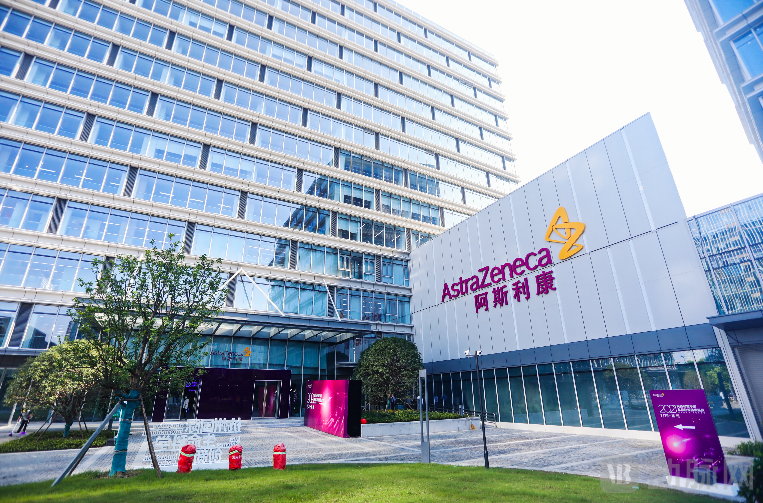
AstraZeneca Eastern Regional Headquarters
Where Is AstraZeneca CICC Headed in the Future?
In an interview, Wang Lei stated that during its nearly 30 years in the Chinese market, AstraZeneca has been committed to ensuring that patients in China have simultaneous access to world-class innovative medicines, but this is still not enough. The purpose of the fund is to further uncover Chinese innovations, enabling patients worldwide to benefit from new drugs developed in China. Our goal and mission at AstraZeneca CICC are to help Chinese innovations continuously reach the global market.
In 1993, AstraZeneca entered the Chinese market as a multinational corporation. Today, leveraging the AstraZeneca CICC Healthcare Industry Fund, AstraZeneca is fostering strategic partnerships through investment to help Chinese innovative enterprises expand into overseas markets.
This time, AstraZeneca will act more aggressively and with greater resolve.