

DeepZee Tech Breaks Through the Ultrasound Market with AI-Enabled Portable Imaging, Reaching Nearly 10,000 Primary Care Institutions
Ultrasound is a high-volume market with up to 2 billion annual examinations. However, due to the unique characteristics of ultrasound diagnostics, the high-value niche of “compact medical imaging + AI-assisted remote diagnosis” has remained relatively under the radar within the AI medical imaging sector.
Unlike the static images produced by CT and MRI, ultrasound diagnosis requires the acquisition of dynamic images from multiple planes for real-time assessment. The data generated by ultrasound examinations not only add a temporal dimension to the two-dimensional data typical of CT and DR, but also contain a large number of frames lacking diagnostic value. Consequently, AI must evaluate the clinical relevance of each frame within this dynamic context and identify the key diagnostic planes at specific moments through comparative analysis, thereby enabling effective image interpretation.
The high technical barriers and the lack of standardized training data have resulted in very few enterprises focusing on research into “miniaturized medical imaging + AI-assisted remote diagnosis,” with only a handful of startups venturing into this field. However, in terms of population coverage and real-world demand, the market prospects for “miniaturized medical imaging + AI-assisted remote diagnosis” offer immense potential, with extremely high untapped value.
Shanghai Shenzhi Information Technology Co., Ltd. (hereinafter referred to as “Shenzhi Tech”) is one of the earliest enterprises to integrate artificial intelligence with remote-assisted diagnosis into ultrasound screening and diagnosis, leveraging advancements in artificial intelligence, big data, and application scenarios.
Leveraging in-depth understanding of the ultrasound sector, as well as mastery of AI-assisted analysis for dynamic medical imaging and a comprehensive suite of underlying algorithms.Since its official establishment in late 2018, Shenzhi Technology has spent only two years to build an algorithmic model imaging database covering more than ten categories and over 30 diseases, as well as a cloud-based ultrasound imaging center, enabling AI-assisted ultrasound diagnosis for more than 20 conditions. The company has also obtained or applied for more than 150 domestic and international patents in the fields of ultrasound hardware, artificial intelligence systems, chips, and cloud computing.
Shenzhi Technology, which has frequently made breakthroughs in the field of miniaturized ultrasound,Having fully completed the product transformation to version 1.0, it has begun to rapidly iterate and self-evolve from in-house software development (version 2.0) and deep hardware integration toward an integrated software-hardware ecosystem model (version 3.0), whileLaunch the Kuaima Smart Medical Imaging Healthcare Service Platform.
As an early explorer of the value in the miniaturized ultrasound sector, what attempts and breakthroughs has Shenzhi Technology made in recent years? VCBeat has attempted to outline these developments to provide reference for the growth of the “miniaturized medical imaging + AI-assisted remote diagnosis” sector.
As previously mentioned, “miniaturized medical imaging + AI-assisted remote diagnosis” is a high-value sector with significant technical barriers. Therefore, to integrate AI into ultrasound screening and diagnosis, companies must possess capabilities in underlying technology development (such as artificial intelligence algorithms), hardware refinement, and market demand insight. Only by mastering these two core competencies can companies address the two critical questions for the R&D of “miniaturized medical imaging + AI-assisted remote diagnosis” products: how to better acquire images and how to better analyze them.
As a company dedicated toAs an enterprise providing high-performance, comprehensive, and intelligent healthcare solutions for the primary medical and health service system, Shenzhi Technology has always adhered to empowering primary healthcare with artificial intelligence technology.. From its inception, the company set the development goal of “making products affordable for users and easy to use for those unfamiliar with them,” and conducted explorations across multiple dimensions, including technology and application scenarios, centered on this objective. This laid the foundation for the subsequent large-scale deployment of its products and the expansion of its product lines.
From a technical perspective, companies are approaching the issue from two aspects: artificial intelligence, big data, and usage scenarios.First, leverage artificial intelligence to enhance image quality. Assisted by big data and deep learning, low-resolution raw ultrasound images are processed to optimize imaging, enabling intelligent segmentation and precise measurement of lesions. This assists primary care physicians in rapidly achieving accurate diagnoses with the support of ultrasound systems, thereby lowering the threshold for ultrasound technology adoption. Second, starting from usage scenarios and leveraging existing technical capabilities, a standardized portable ultrasound operation workflow is developed to meet the needs of primary healthcare institutions, with continuous optimization of the entire solution. Finally, these two components are integrated to truly empower primary healthcare.
“WeNot merely providing an ultrasound AI software, but integrating hardware and software into a unified solution. By applying AI to the raw data acquired by imaging equipment, we fundamentally transform the imaging devices themselves, overhaul the entire imaging workflow, and redefine the physicians’ diagnostic workflow.Ultimately, enable the product to be more effectively implemented in its intended use scenarios.“Shenzhi Technology said.”
Guided by this understanding and informed by its observations of the pain points faced by clinical and primary healthcare institutions, Shenzhi Technology has been continuously upgrading its software and hardware capabilities.By integrating software and hardware, a comprehensive contract fulfillment and commercial service system has been established around primary healthcare institutions, providing them with more complete solutions. This has enabled the development of application scenario solutions for over twenty disease types, including breast and thyroid conditions.. This further reduces product costs, ultimately optimizing the operational efficiency of primary healthcare services and expanding profit margins and utilization rates in the primary care market.and collaborate with leading enterprises such as GE and China Resources Pharmaceutical Commercial Group to jointly expand product channels, build an ecosystem, and unlock greater value across diverse scenarios.
It is reported that,Shenzhi Technology has extended this strategic philosophy and technical capability from ultrasound equipment to other medical imaging devices.We have successfully developed a 0.05 Tesla MRI system, representing the lowest magnetic field strength currently achieved worldwide, thereby addressing the long-standing requirement for shielded rooms that has persisted in MRI technology for the past five to six decades. Relevant findings from this achievement have been published in Nature Communications and have received widespread recognition from experts and scholars.
The advancement of technological R&D, coupled with Shenzhi Technology’s deep commitment to intelligent hardware and software, has significantly enhanced the performance of its product applications while continuously reducing product costs. This has further optimized the operational efficiency of primary healthcare services and improved the economic benefits of its products. AndShenzhi Technology has also accelerated its commercialization efforts, with its products and services now covering nearly 10,000 primary healthcare institutions.
Why choose the primary healthcare setting? Shenzhi Technology told VCBeat: “From a macro perspective, AI’s empowerment of ultrasound is similar to that in other departments, primarily focusing on improving accuracy and diagnostic efficiency. However, the difference lies inUltrasound has a broad application base in primary healthcare settings. In addition to large hospitals, China’s healthcare system includes nearly 900,000 primary care institutions.Given the high reliance of ultrasound diagnosis on physicians’ experience, it is particularly challenging to rapidly expand supply-side capacity. Training primary-care physicians to become specialized sonologists requires substantial time and effort.Empowering primary healthcare with miniaturized ultrasound devices is undoubtedly a viable path.。”
Based on in-depth exploration of primary healthcare institutions, Shenzhi Technology has discoveredPrimary healthcare institutions do not lack hardware and equipment; rather, they are deficient in service delivery and diagnostic capabilities, as well as comprehensive solutions. Therefore, enterprises believe that empowering primary care should primarily rely on medical devices. Equipping primary care physicians with simple, user-friendly devices is key to improving diagnostic and treatment efficiency in the short term and resolving structural contradictions in the healthcare system.
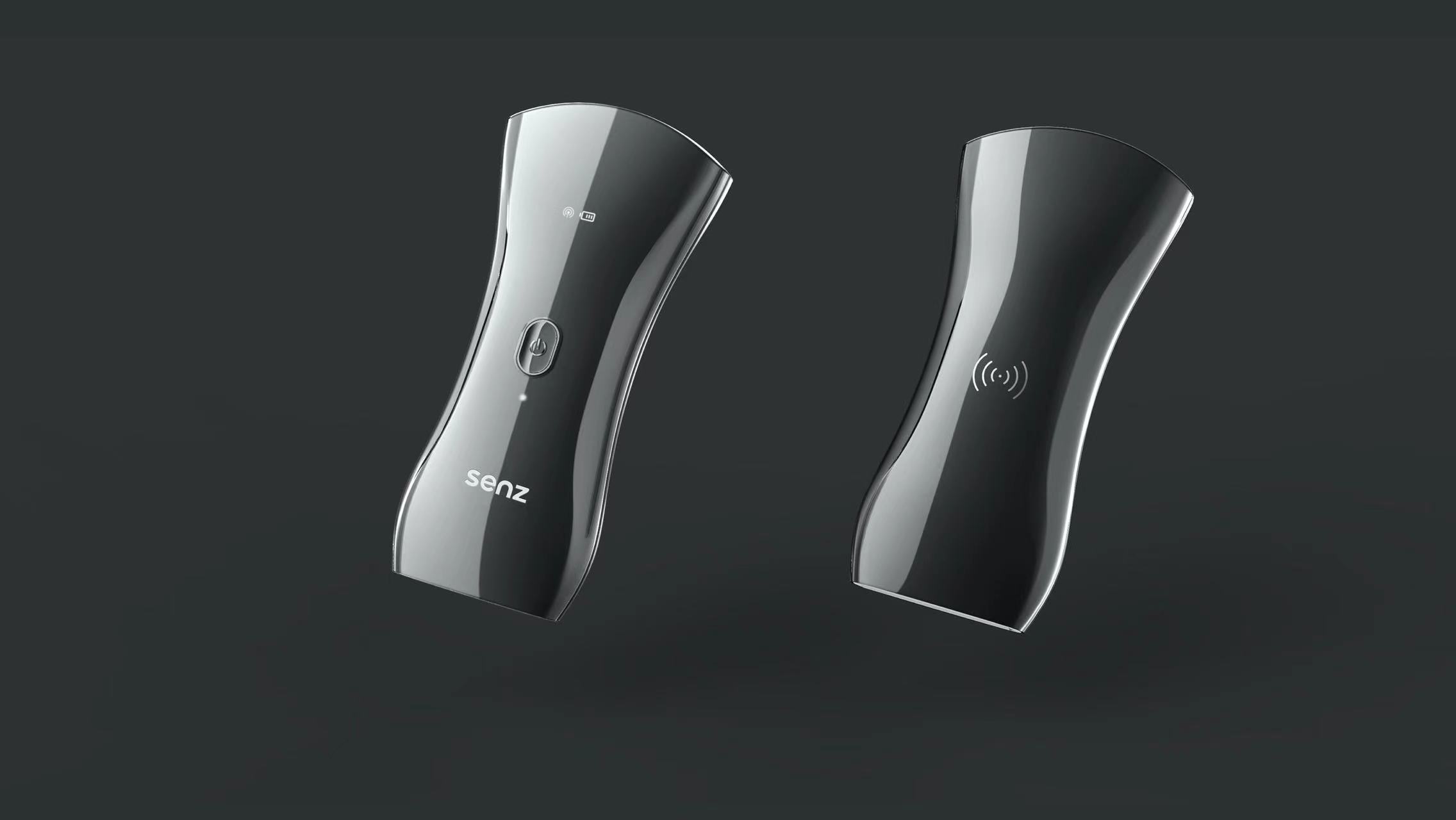
Miniaturized ultrasound, with its prominent cost advantages and portability for ease of use, can effectively achieve this goal.Shenzhen Shenzhi Technology recognized this development trend from its inception and, guided by this direction, has continuously improved multiple dimensions, including its business model, technology, fulfillment system, and on-ground service system.Provide integrated digital health services that combine “compact medical devices, AI-assisted diagnosis, remote diagnosis, and medical services” to meet diverse healthcare needs and empower primary healthcare institutions.
Specifically, Shenzhi Technology establishes channel entry points by equipping front-end hardware devices with algorithms and software modules that possess fully independent intellectual property rights, thereby enabling training for physicians on operational procedures and scanning techniques. Meanwhile, it has established a certification system to prevent misdiagnosis when products are used on patients. Regarding the diagnosis and treatment process, Shenzhi Technology uploads dynamic videos generated during clinical encounters to cloud servers to provide auxiliary recommendations for physicians. These recommendations are then integrated with remote diagnostic support functions from internet hospitals to generate electronic reports containing definitive conclusions.
It is reported that,This medical service system comprises over 100 radiologists, enabling a 2-minute screening and a 10-minute report turnaround, thereby further enhancing the diagnostic accuracy and efficiency of primary healthcare institutions.
Artificial Intelligence (AI) is a technology that has grown alongside people’s expectations. Over decades of ups and downs, despite facing skepticism, this technology has now taken root in every aspect of healthcare, driving comprehensive innovation across medical-related processes and becoming as pervasive as internet technology.
Before entering the new time cycle, participants in the “miniaturized medical imaging + AI-assisted remote diagnosis” industry still need to undertake two key initiatives. First, while expanding the range of diseases covered by their products, they should broaden their market scope to encompass scenarios such as in-hospital treatment and general health and wellness, thereby exploring greater possibilities for artificial intelligence. Second, they should establish extensive collaborations with enterprises to rapidly expand the application of AI through integrated hardware and software solutions. At the same time, they must achieve deep scenario-specific integration and deliver “closed-loop value” to users within these specific contexts.
Through Shenzhi Technology, we can observe the development dividends that enterprises gain from explorations aligned with this trend. Facing the vast growth potential of “miniaturized medical imaging + AI-assisted remote diagnosis,” continued efforts by industry participants will undoubtedly yield more value-driven solutions in this relatively understated field.