Global Pharma Accelerates AI Agent for Science Deployment: Who Is Defining the Next-Generation R&D Paradigm?

GSK China
Pharmaceutical Manufacturer
StoneWise
AI-Driven Drug Discovery Company

When the industry is still discussing “AIWhen it comes to "whether R&D efficiency can be changed," multinational pharmaceutical companies have already provided a more certain answer.
At the beginning of the year, GSK China andAIBiotechnology CompanyNoetikReach a five-year cooperation to5000Million-dollar upfront funding and recent milestone payments to gain access to the latter's two cancer models.
At almost the same time, Eli Lilly andAIPharmaceutical Large Model CompanyChai DiscoveryJoin hands to gain access to its core platformChai 1AndChai 2The right to use, and jointly create a unique early drug discovery and development model for Eli Lilly.
On the surface, these still appear to be ordinary collaborations, but a closer examination reveals —
The core of these collaborations is no longer traditional software procurement, but ratherAILarge models, as important infrastructure, are integrated into pharmaceutical companies' R&D platforms.
This change is quietly rewriting the pharmaceuticals industry.
Nowadays, large pharmaceutical companies andAIA long-term and shared partnership has been formed between the companies. Through continuous industrial synergy, data integration, and technological iteration, both parties have truly become a research and development community.
Against this backdrop, the mindset of global pharmaceutical companies is also changing.An increasing number of companies are becoming more open, starting to collaborate on computing power platforms, hardware platforms,AITechnology platform companies, jointly build a completeAI for ScienceEcology.
There is no doubt that this also places higher demands on the companies involved, requiring not only technical capabilities but also the ability to implement in real-world scenarios. More importantly, they must be able to coordinate and integrate within a complex ecosystem.
As the global industry accelerates its evolution, landmark practical implementations have also begun to emerge in the Chinese market.
Recently, StoneWise, Huawei Technologies Co.,Ltd., and Huakun Zhenyu officially reached a strategic-level ecological cooperation, and made a significant release.AIPharmaceutical Research Joint Solution.
This solution integrates Huawei's top computing power technology base, Huakun Zhenyu hardware platform, and StoneWise’s small molecule drug design platform, building a complete solution from underlying computing power to upper-level intelligent applications for drug research and development.
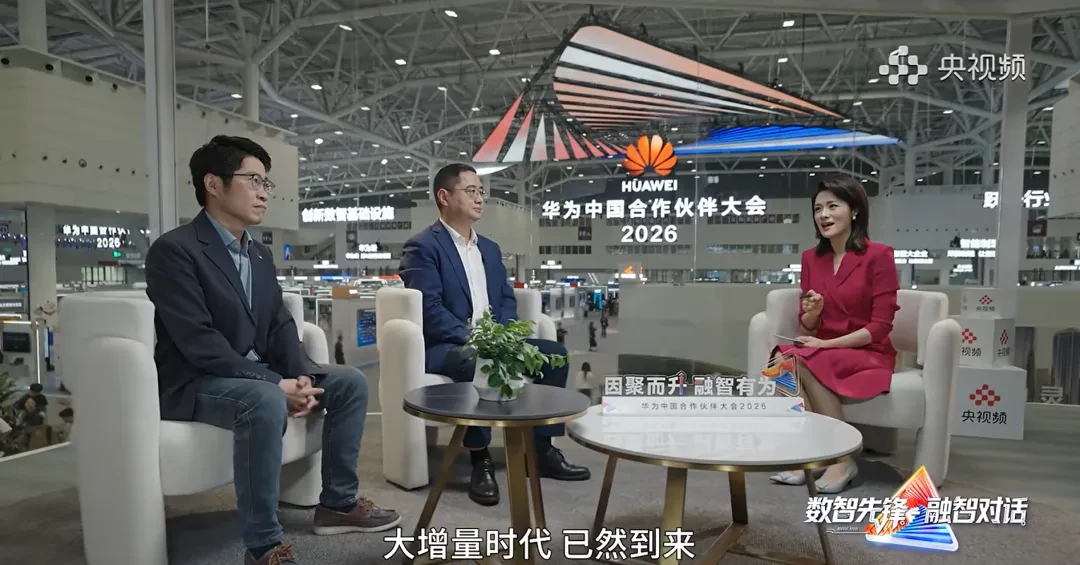
Figure: StoneWise and Huawei jointly participate in the CCTV.com interview program "New Intelligence Living Room"
If the previous moves by multinational pharmaceutical companies represented a global trend, this three-party collaboration signifies that this important direction is being led into substantive implementation by pioneers in the Chinese market.

AI Agent for Science, The Future is Now
After years of development,AI for Science(AI4S) is approaching a critical turning point.
Early-stageAI4SMore is toAIAs an auxiliary tool to improve the efficiency of researchers.Nowadays, the emergence of intelligent agents has led toAISolve scientific problems and gradually move towardsAISolve scientific problems like a scientist.
A representative case comes from a non-profit research institute in the United States.FutureHouse. Its developed scientific research intelligence agent RobinRobin, in just a short period of10Within a week, independently discovered a treatment for dry age-related macular degeneration (AMD) Potential therapies.
The reason why this case has drawn attention is not the result itself, but rather the possibility it demonstrates:AIBegin to possess the ability for independent scientific exploration and decision-making.
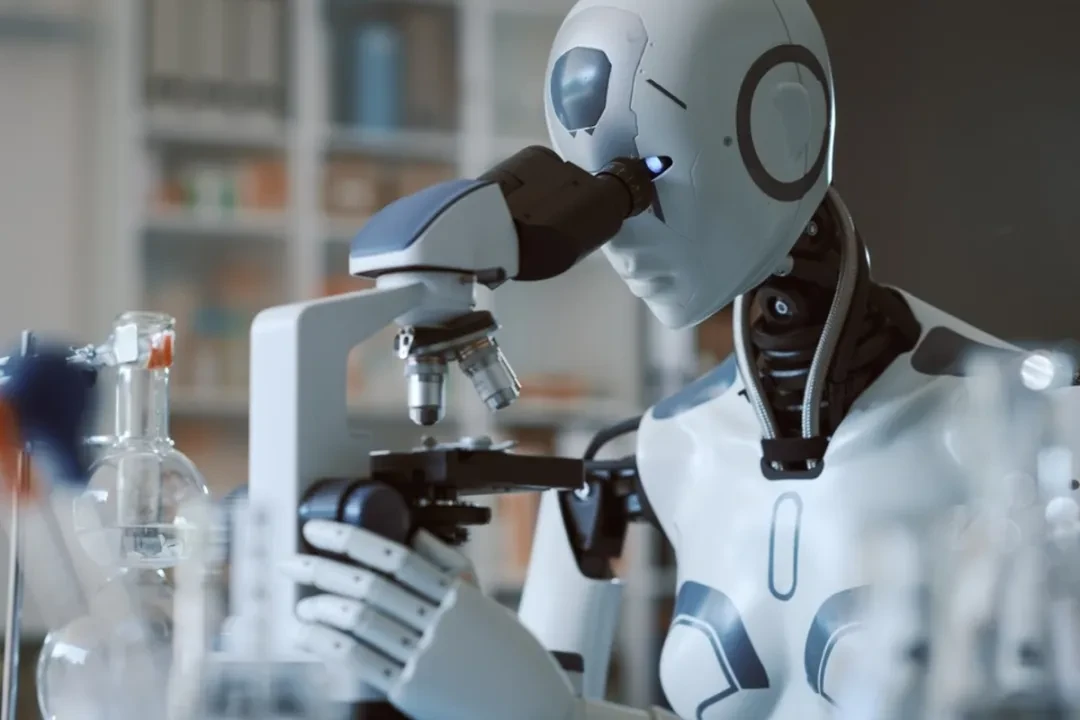
From this perspective,AI Agent for ScienceThe emergence of ___ marks the official entry of the industry into ___. “Agent-Driven Scientific Research” Era.
This trend is also continuously evidenced by the actions of multinational pharmaceutical companies.
The landmark event is that pharmaceutical giant Eli Lilly and AI giant NVIDIA announced their investment.10 Billion USD, Co-buildAIJoint Innovation Lab, one of the core objectives is to develop proprietary solutions for drug research and development.AILarge Model, Building an Intelligent R&D Closed-loop Process.
More convincing is that multinational pharmaceutical companies have started to directly acquireAI AgentInternalized capabilities as core competitiveness.
2026Year1In the month, AstraZeneca announced the acquisitionModella AI, this Boston-based biomedicineAIThe company's multimodal foundation model andAIFully Integrated into Its Oncology R&D System。
Just last week,Global pharmaceutical giant Merck & Co. and Google Cloud have reached a deal lasting at least ten years, with a total value of up to10Strategic cooperation agreement worth billions of dollars, this is the largest single deal in Merck's history.AITechnology Investment.
However, when we focus on the core scenario of drug research and development,A key question emerges:Can simple tool invocation and general scientific research agents support real drug development?
The answer is not optimistic.
Drug discovery, especially small molecule drug discovery, is an extremely complex systems engineering process. It is not about achieving the best in a single metric but rather continuously balancing multiple dimensions such as activity, toxicity, stability, and synthetic accessibility.
This means that the research and development process is a continuous dynamic optimization problem, rather than a one-time calculation.
Simple tool invocation or scientific research agents, due to a lack of fundamental understanding of medicinal chemistry, structural biology, and pharmacology, struggle to make reliable judgments during multi-round optimization processes.
For example, the aboveRobinThe scientific research agent successfully proved thatAI The possibility of autonomous scientific exploration, but strictly speaking, it only completes the early drug线索挖掘 and theoretical solutions.
It has neither completed the evaluation of drug-likeness nor addressed the core issues of toxicity, efficacy, and safety in real drug development.
For this reason, no matter how strong a single model is, it can only solve one of these aspects and is unlikely to ultimately be transformed into a drug.
This is alsoAI Agent for ScienceThe inevitable reason for its emergence. It is not just a one-time result-producing tool, but a system capable of continuous decision-making built by integrating multiple models, various data sources, and experimental feedback.
This means,AIPharmaceuticals have evolved from model competition to a contest of specialized intelligent agent capabilities.
Whoever can build a vertical domain intelligent agent that truly understands the core logic of drug research and development and possesses end-to-end R&D capabilities is more likely to take the initiative in the next phase.

Global Ecological Reconstruction,AIThe Logic of Pharmaceutical Manufacturing is Being Rewritten
2026Year, withOpenClawA batch of products represented by [specific product], have brought intelligent agents fully into the public eye.
Its emergence demonstrates that intelligent agents are not just a concept, but a practical productivity tool that can be truly implemented. It also provides new inspiration for various vertical fields.
The medical industry is one of the fields where changes are most evident.
Tech giants are accelerating their entry.4Month,OpenAI, AmazonContinuously release life science models and intelligent agents, leveraging general capabilities and platform-based services to enter the drug research and development field.
Looking back at the past year, intelligent agent products in the pharmaceutical track have emerged like mushrooms after rain. From the perspective of the current market landscape, they can generally be categorized into three types.
For exampleHospital Management Agent, focusing on improving the operational efficiency of medical institutions, such as medical record quality control, medication review, patient management and other scenarios; the second category isIntelligent Agent for Medical and Patient Services, mainly forCEnd-user services such as health consultation, medication reminders, and chronic disease management; the third category directly taps into the drug research and development process.R&D Agent。
The first two types of agents mainly serve patients and the pharmaceutical sector in the medical field, optimizing existing processes, and are not closely related to the source innovation stage of drug discovery.
The third type of R&D agents, however, directly enter the most core and highest barrier环节 of the pharmaceutical industry.
A further in-depth observation reveals that the vast majority of players are still concentrated in capabilities such as literature retrieval, molecular screening, and chemical synthesis, addressing efficiency issues in a specific环节.
These capabilities are all very important, but they still share a common limitation — difficult to directly translate into drugs.This is also why the industry still lacks a truly intelligent engine for early drug discovery with full-stack capabilities.
Under this trend,StoneWiseThe strategy is highly forward-looking. It does not stop at the tool level but extends its capabilities to the R&D decision-making system.
StoneWise focuses on the early pharmaceutical R&D scenarios with the highest barriers, creatingIndustryThe First Full-Stack Small Molecule Pharmaceutical Early Research Agent Driven by a Medicinal Chemistry Thinking Chain, as an infrastructure, this intelligent agent is able to assist pharmaceutical companies in securingAI Agent for ScienceThe "entry ticket" for the new ecosystem.
It doesn't just generate molecules; it tries to think like a medicinal chemist.
In the current industry, many modelsAll can generate small molecules with novel structures. But it is impossible to judge whether the drug molecule is feasible in a real R&D environment. This leads to a phenomenon:The model performs well in computational metrics but falls short in real-world R&D scenarios.
The core of StoneWise's intelligent agent lies in its ability to possess the judgment of a medicinal chemist, connecting the entire process from target discovery, molecular design to wet lab validation, truly entering the core of research and development.
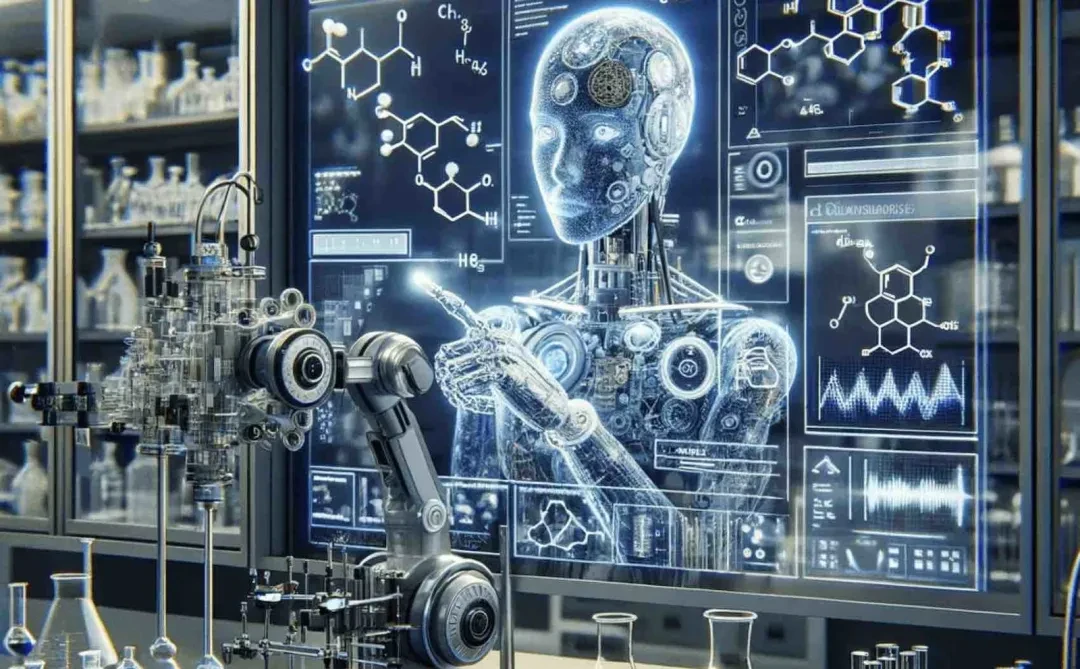
More importantly, this system has formed“AIDesign—Experimental Validation—Data Backflow—Model OptimizationThe complete closed loop. This closed loop is crucial because drug development is not a one-time problem, but a continuous process of trial and error and optimization. StoneWise connects these links, enabling the system to have continuous learning and self-reflection capabilities, rather than being a one-time output tool.
The reason is that it is not based on a general-purpose agent to adapt to drug research and development, but rather, it has created a professional R&D partner with cognitive abilities akin to those of a medicinal chemist, specifically tailored to the scenario of drug R&D.
This native advantage enables it to understand drug development in a way that is closer to real-world scenarios, while also being closely integrated with experimental systems. This allows its agents not only to generate molecules but also to make judgments that are more aligned with practical realities.
But if we take a broader perspective, we will discover another, even more significant trend:Ecosystem is replacing single-point capabilities as the key variable in the industry.
A Truly Usable SetAIThe pharmaceutical research system basically involves four key elements: computing power, data, algorithm models, and experimental validation. These are often dispersed across different organizations and difficult for a single company to complete independently.
Therefore, the collaboration of infrastructure based on ecology has become an irreversible trend.
The international market has provided a clear example. For instance, Sanofi partnered withOpenAI、AIStart-up CompanyFormation BioThree parties collaborate to create a series of top industry models. Currently, the first model for optimizing patient recruitment in clinical trials has been released.AIToolMuse, and apply it in the Phase III clinical trial for multiple sclerosis.
Not only that, but NVIDIA also collaborates with the industry on the computing power level.Recursion、TerryCollaborating with other companies, they have built a vast computing power and model ecosystem; Alphabet, Google's parent companyAlphabetIncubationIsomorphic Lab`, and with`DeepMind Shared Technology Foundation, Streamlining Drug Development Processes.
These practices collectively point in one direction,The industrial division of labor is being redefined.
In the past, pharmaceutical companies,AIApplication companies and computing power companies have relatively clear boundaries, but under the new paradigm, industry boundaries are becoming blurred, with enterprises from all parties deeply coordinating around one research and development system.
It is against this backdrop that the cooperation between Huawei and StoneWise holds unique strategic significance. It is not only a collaboration but also an embodiment of the ecosystem synergy concept in China.AIA pioneering implementation in the pharmaceutical field.
In the past few years, ChinaAIPharmaceutical companies in China continue to make breakthroughs at the technical level and have already developed the ability to compete with international players in some areas. However, at the ecosystem level, particularly in terms of computing power and infrastructure integration, gaps still remain.
This collaboration signifies that China is beginning to address its weaknesses at this level.
Its deeper significance lies in the attempt to build a fully autonomous and deeply collaborative system from底层算力 to upper-layer applications.AIPharmaceutical system. This means that in the future, Chinese pharmaceutical companies may be able to complete tasks in a relatively independent and controllable environment.AIDriven drug discovery.
This is not only an issue of efficiency, but also a matter of industrial security and long-term competitiveness. If this model proves to be successful, it is likely to become not just an isolated case, but an important paradigm for the future of the industry.

Breaking Industry Bottlenecks, ChinaAINew Pathways in Medicine
It can be said that the cooperation between StoneWise, Huawei Technologies Co., Ltd., and Huakun Zhenyu is not a simple business overlap, but an attempt to build a more unified R&D system.
This collaboration is built upon the deep complementarity of the core strengths of each of the three parties.
Nowadays, the pharmaceutical industry has become a strategic new track that Huawei focuses on. According to public reports, Huawei has formed a pharmaceutical team in recent years, led by senior executives of the group, elevating biopharmaceuticals to an industry-level strategic height as important as finance and manufacturing.
Currently, the pharmaceutical industry is in a period of explosive demand for computing power, based on Ascend.AIThrough computing and Kunpeng general computing, Huawei has achieved a leap in efficiency in key life science computing scenarios: successfully reducing the training time for protein structure prediction.30%–35%, in long sequence scenarios, the time reduction can be as high as65%; Not only that, Huawei has also compressed the molecular dynamics simulation scenario from weeks to seconds.
This shows that Huawei's computing power base has irreplaceable core advantages, capable of providing for the industry.AIDevelopment frameworks and other underlying technical supports ensure stable computing power and secure, trustworthy data.
InAIIn the pharmaceutical research joint solution, HuaKun Zhenyu is responsible for building a high-performance computing platform adapted to pharmaceutical scenarios, deeply integrating China-produced computing power with the specific needs of pharmaceutical R&D.。
StoneWise fills a crucial gap in this ecosystem.“Value Creation”One ring.
Different from teams with a traditional pharmaceutical background, its founder andCEOZhou Jielong owns20Years of experience in artificial intelligence algorithms, with a unique engineering perspective on technical path selection.。
This enables the company to buildAIWhen driving the R&D system, more emphasis is placed on systematic capabilities rather than breakthroughs in individual technologies.
Deep Dive into Early-Stage Small Molecule Drug Research8For over a year, StoneWise has deeply understood the value of data and has currently accumulated a vast amount of vertical data in pharmaceutical R&D.Its200Hundred Million+Small molecule library,2Hundred Million+Virtual Compound Library,300w+Massive data assets including electron cloud density libraries and hundreds of millions of dihedral energy torsion data, providing core data support for the development of large pharmaceutical models, molecular design, and intelligent agents for R&D decision-making.
These data also constitute the underlying key assets of StoneWise.
On this basis, the company has builtIndustrial-Grade MultimodalAI 3DLarge molecular generation model, and small molecule drug design platformMolvado,And an intelligent agent for early-stage small-molecule pharmaceutical R&D with autonomous decision-making and closed-loop execution capabilities.MolVortex, starting from the chain of thought of medicinal chemists,Achieve a fully autonomous closed-loop process from understanding needs, generating strategies, to tool scheduling, and iterative optimization.
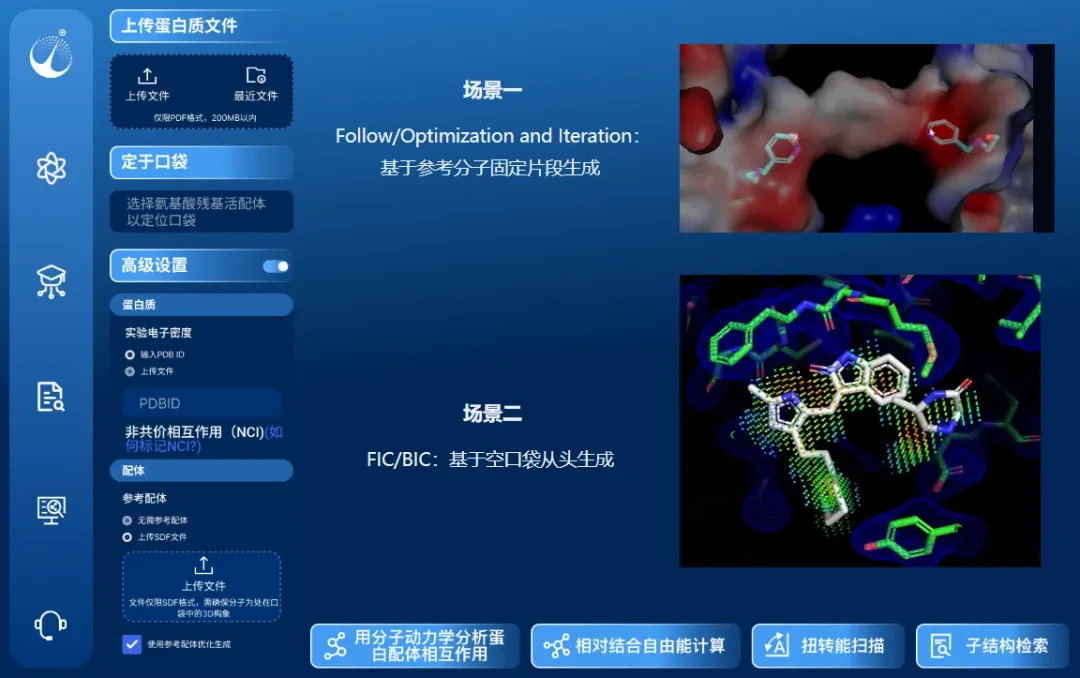
Figure: Multimodal AI 3D Molecular Generation Model & Small Molecule Drug Design Platform MolVado (Source: StoneWise Official Website)
In a previous interview, Zhou Jielong mentioned that a leading pharmaceutical company usedMolvadoLater, only3A brand-new skeleton of Baynarmoer-class active molecules was obtained in months,Which originally required1To3The time has been significantly shortened, and the costs of synthesis and experimentation have also been reduced.80%。
Not only that, but StoneWise's capabilities have not remained confined to case demonstrations; they have already gained industry recognition.
The company has served more than100Domestic and international pharmaceutical companies and research institutions, assisting customers in discovering20Multiple early-stage candidate drugs targeting differentiated mechanisms, with several projects having entered the preclinical and clinical development stages.。
Its partners are widely coveredTakeda, Bayer, Pfizer and other companiesMultinational pharmaceutical enterprises,As well as Qilu Pharmaceutical, Chipscreen Biosciences,Tide PharmaceuticalsLeading innovative pharmaceutical companies in China。
In addition, StoneWise has internally developed10More than ten pipeline projects focused on the two major disease areas of oncology and autoimmune diseases., with R&D efficiency surpassing the industry average.Among which, independently developedHPK1Oral InhibitorSWA1211In2025Year6Received clinical trial approval in both China and the U.S. in the same month,Becoming one of the first in the world to enter the clinical stageAIParticipated in the design ofHPK1Inhibitor.
These achievements have successfully validated StoneWise as a company with strongAIA company with technical genes has deep technical accumulation and full-process implementation capabilities in the early stage of drug development.
These results together indicate one thing: StoneWise has successfully achieved the leap from technology to R&D outcomes.
From a more fundamental perspective, its core barrier is not just the model, but rather the establishment of an industry-rare integration.“AI 3DMolecular Generation Large Model+Wet Lab+Compound Library+Drug PipelineComplete chain. Making it no longer limited to a single tool, but a system that can continuously produce results.
By collaborating with Huawei and Huakun Zhenyu, StoneWise is integrating its capabilities into a larger system, forming a complete solution from computing power to application.
In the long term, its value is not only reflected in a single project but also in becoming a long-term platform partner for pharmaceutical companies.
In the past, drug research and development heavily relied on customized projects, making it difficult to scale up. However, when standardized combinations of underlying computing power and upper-level intelligent agents are formed, there are more opportunities for rapid deployment within enterprises.
The Whole SetAIThe R&D system can quickly adapt to the personalized needs of different pharmaceutical companies and different R&D scenarios, significantly reducing the cost for enterprises to implement.AIThe Threshold and Cost of Pharmaceutical Technology.
In other words, this is expected to establish a new set of R&D infrastructure for the industry. With the transformation of this infrastructure platform, the business logic will also change accordingly.
Technology platforms are no longer just generating revenue through one-time software collaborations. Instead, they can empower through platform and data integration solutions, earning additional project revenue shares and forming stable commercial returns.
This transformation is currentlyAIThe most critical step in the pharmaceutical industry's journey from concept implementation and technology pilot to mature commercial-scale development.
In conclusion
A New RoundAIUnder the wave of technology, the competitive logic in the pharmaceutical R&D industry has undergone a fundamental shift.
Relying solely on model parameters or tools is no longer sufficient for success; ecological integration capabilities and full-stack implementation capabilities have become the core competitiveness of enterprises.
StoneWise has taken the lead in this transformative wave with its forward-looking ecological layout of intelligent agents for small molecule drug research and development.
It does not merely focus on molecular generation capabilities but builds an intelligent agent system around the drug R&D process. This enhancement from individual steps to systematic decision-making is precisely...AI Agent for ScienceThe Core of the Times.
It can be expected that, through in-depth cooperation with Huawei and Huakun Zhenyu, StoneWise will leverage its replicableAIThe ability of pharmaceutical research joint solutions, from China to overseas, accelerates the release of commercial value and truly leads.AI Agent for ScienceThe new ecosystem.
Its scarcity and irreplaceability are being increasingly recognized by more and more pharmaceutical companies: it is not a tool provider, but the ecological core that can truly drive the paradigm shift in R&D.
In the future, with moreAIThe empowered pipeline enters the clinical stage, more partners join innovative R&D, this China-independentAIThe new pharmaceutical paradigm will undoubtedly accelerate the global R&D process of innovative drugs, bringing more breakthrough therapies to patients.
Recommended Reading