

Merxin Files for IPO: Disrupting the $10B+ Inhaler Market with Universal Drug Delivery Platforms
Merxin
Inhaler Device Manufacturer
China is a country with a high prevalence of chronic respiratory diseases, ranking among the highest in terms of mortality and disease burden. In recent years, the number of patients with chronic respiratory diseases has surged sharply, making prevention and control efforts extremely challenging. Taking chronic obstructive pulmonary disease (COPD) as an example, data from a study published in The Lancet in May 2022 show that the number of COPD patients in China has reached 105.8 million, with a prevalence rate of up to 12%, indicating a substantial market demand for medication.
Currently, the primary therapeutic agents for asthma and chronic obstructive pulmonary disease (COPD) are inhaled medications, which are administered via inhalation through the mouth or nose into the lungs to mitigate disease progression.It is characterized by the combination of drug and device, requiring the use of a delivery device for drug inhalation.. Based on dosage form, inhalers are generally classified into nebulized inhalants, metered-dose inhalers (MDIs), dry powder inhalers (DPIs), and soft mist inhalers.
Among them, powder aerosols and aerosols account for nearly 80% of the global market total, whileNebulized inhalants account for 73% of the Chinese market.,Poor drug absorption and portability。Portability of Aerosols and Powder Inhalersis relatively moreHigh; although it entered the domestic market relatively late, it is expected to have significant growth potential in the future.. It is worth noting that,The localization rate of inhaled preparations in China is less than 10%.。
From the perspective of market share, the overseas market for inhalation preparations is highly concentrated and firmly controlled by three major pharmaceutical companies: GSK (UK), Boehringer Ingelheim (Germany), and AstraZeneca (UK). In 2019, these three companies accounted for as much as 69.7% of the market share of inhalation preparations in Chinese hospitals, while domestically produced drugs collectively accounted for less than 15%.
Overall, inhaled formulations represent a unique product category that is nearly monopolized by European and American pharmaceutical companies, leaving substantial room for Chinese pharmaceutical firms to catch up in the future. What challenges do these companies face? How can they accelerate their pace of catching up? In this regard, VCBeat has engaged with manufacturers specializing in the research, development, and production of inhaled formulationsMerxinheld a dialogue with Philippe Rogueda, co-founder of Merxin, to gain insights into Merxin’s perspectives and capabilities.
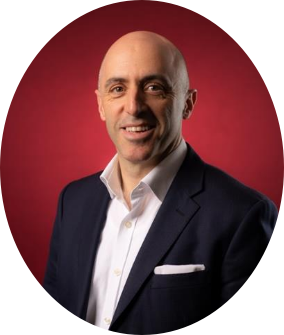
Philippe Rogueda, Co-founder of Merxin
VCBeat: Could you please share your personal journey and the founding background of Merxin?
Philippe: December 8 this year marks the sixth anniversary of Merxin’s founding. Back in 2015, we started from scratch with nothing. I previously served as a drug R&D scientist at major pharmaceutical companies such as AstraZeneca and Novartis. Later, I became an Executive Director at Actavis, overseeing the inhalation formulations division. At that time, we launched a total of 11 projects, ranging from nasal nebulizers to dry powder inhalers and soft mist inhalers.
Ultimately, I decided to leave that company to explore other opportunities, as I gradually realized that what I truly wanted to do was to transform the way inhalers are accessed. I provided the entrepreneurial “spark” for the birth of Merxin, and my partner, Graham Purkins, was the one who ignited the flame; we collaborated very effectively.
Prior to the founding of Merxin, the only way for companies in the industry to obtain dry powder inhalers (DPIs) and soft mist inhalers (SMIs) was to develop them in-house. Everything from design and prototyping to scale-up had to be built from scratch, requiring companies to develop their own devices. This was nearly impossible for both generic pharmaceutical companies and innovative drug developers. Therefore, what Merxin has done is to create universal devices based on existing technologies and expand their intellectual property coverage, making them available for corporate use.
In our fifth year, we helped clients launch Tiogiva, a tiotropium dry powder inhaler (DPI) for the treatment of COPD, which has been marketed in Europe. This product is a generic version of Boehringer Ingelheim’s Spiriva HandiHaler and is imminent to launch in the United States.
Over the past six years, we have launched a total of five products. MRX001 is a generic version of Diskus, MRX002 is an inhaler for formulated pMDIs, MRX003 is a generic version of HandiHaler (now on the market), MRX004 is a generic version of Respimat, and MRX006 is a generic version of Ellipta. I believe we are currently the most advanced and successful inhaler device company in the market. We are the industry’s most advanced developer of soft mist inhalers.
VCBeat: Could you provide an overview of Merxin’s specific situation? What key challenges have you primarily addressed?
Philippe: Merxin’s core business centers on the manufacturing of inhalers for drug delivery. This is evidently a vast market, particularly in China, which has an exceptionally large population of patients with chronic respiratory diseases. Furthermore, pulmonary infections and the COVID-19 pandemic have significantly impacted the overall market. Inhaled formulations are undoubtedly a critical segment of the pharmaceutical industry. Leveraging its inhalers, Merxin has addressed the challenges in this market in an unprecedented manner.
Typically, pharmaceutical companies such as Boehringer Ingelheim, AstraZeneca, GlaxoSmithKline, and Pfizer usually develop their own inhaled drug delivery technologies, keeping both the drug formulations and the delivery devices firmly under their control. What Merxin does isEnable more pharmaceutical companies that lack expertise in device development—whether they are innovative drug R&D enterprises or generic drug manufacturers—to access delivery technologies currently controlled by a few well-funded large pharmaceutical companies.. Currently, Merxin primarily focuses on chronic respiratory diseases and systemic delivery in the field of inhaled drug delivery.
Generally, the bioavailability of orally administered drugs is only about 10%, whereas that of injectable drugs can reach 100% because they enter the bloodstream directly. So, where do inhaled formulations fit in?
The drug utilization rate of inhaled formulations is very, very close to that of injectable drugs, and may even be equally effective. Inhalers can completely replace needles, as inhalation therapy is non-invasive; this is the principle behind inhaled insulin for the treatment of diabetes. Therefore,Inhalation therapy is not only for treating pulmonary diseases, but also serves as an alternative to injectable drugs for systemic delivery into the bloodstream.。
This is the domain in which we operate. Building on this foundation, Merxin offers inhalers, such as dry powder inhalers and soft mist inhalers. What we do isSimplify access to inhalation delivery techniques, thereby enabling inhalationTherapyBecomeAdministrationone of the standard methods for, making it no longer complex, no longer exclusive to anyone, butHigh QualityThis is what we have done.
VCBeat: Your Pharmaceutical Company PartnersThe launched product is now available in the European market. Could you share its advantages and market potential??
Philippe:In the field of inhaled drug delivery, only a few leading products are bestsellers. When we started six years ago, GlaxoSmithKline had a product called Advair Discus, which was the world’s best-selling medication for asthma and COPD. Building on that product, we developed the HandiHaler, which became the second best-selling inhaled medication for asthma and COPD globally, with an annual market value reaching $5 billion. We replicate technologies that have been thoroughly proven effective and widely accepted by physicians and patients, and provide these technologies to the pharmaceutical industry.
When we speak of developing generic drugs, we are not simply manufacturing a substitute; rather, we are making the entire concept of innovative technology accessible to them. All our products have the potential to become flagship offerings for our clients in their respective niche markets, as they are well-accepted by patients and widely recognized by the public. We are not creating a new technology that requires validation and debugging.
Our greatest differentiation lies in the fact that the innovation we bring to the market is ready-to-use equipment.. Most peer companies tend to focus on different segments of various market niches; they either design products without manufacturing them, or require customers to provide their own design drawings for customization. In essence, they are merely contract manufacturers or design firms.
Merxin is different: we design, we develop, and ultimately, we help our customers manufacture, produce, and launch their products.If you have a small-molecule drug but are unsure of its therapeutic application, or if you aim to deliver the drug to the lungs but lack the methodology, you can turn to us for solutions.We provide support throughout the entire process, from development to commercialization, for our clients.

Most companies take 8 to 10 years to launch a product. We do not. We are highly focused on delivery and the quality of our devices. When pharmaceutical companies attempt to launch a product, they encounter numerous obstacles, such as raw materials, formulation, medical devices, clinical trials, regulatory interactions, and more.
What Merxin does, and its advantage, lies in resolving all these issues. We are our clients’ partners; we do not simply provide solutions of uncertain utility, but rather ensure that everything works effectively.This is also why we were able to successfully bring our current product, MRX-03, to market within five years. This speed set an industry record.
VCBeat:It is remarkable to successfully launch a product within five years.What else do you have next?ProductCome out?
Philippe:We actually have four products. On our official website, we only mention MRX003, which is already on the market and is a capsule-based dry powder inhaler. MRX002, our earliest product, is a plastic spacer used for the administration of pressurized metered-dose inhalers. MRX004 is a soft mist inhaler that has achieved strong sales. Our collaboration regarding MRX004 has been highly successful. We are among the most commercially successful companies in the development and sales of soft mist inhalers, holding a leading position in this field.
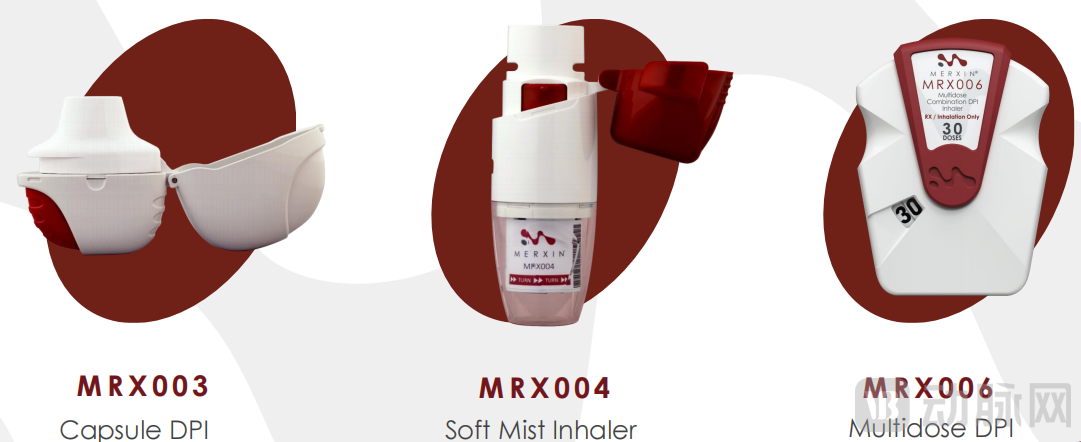
MRX004 is a low-carbon, eco-friendly inhaler that uses no propellants—only water—and requires no power source. Therefore, compared to nebulizers that rely on electricity or batteries, it is one of the most environmentally friendly inhalers currently available.
As an eco-friendly inhaler, it is clearly suitable for specific pulmonary therapies such as asthma and COPD, but can also be used for systemic drug delivery and the treatment of non-pulmonary diseases. In particular, over the past few years, MRX004 has been tested in combination with inactivated viruses for COVID treatment, with medications for various pulmonary infections, and with drugs for central nervous system disorders such as epilepsy. Low-carbon inhalers are highly popular, and MRX004 is certainly poised to be a leading product in the future.
MRX006 is a multi-dose dry powder inhaler and a generic version of Ellipta. As a high-capacity inhaler, MRX006 can hold up to one month’s worth of doses without requiring recharging. Patients do not need to manually load medication into the device, making it easier and safer to use.
VCBeat: What kind of partnership are you aiming to establish? What is your business model?
Philippe:Our collaboration model involves partnering with compound-owning companies at an early stage, typically through licensing agreements based on specific compounds and territories. We also employ tailored collaboration models for different types of partnerships, including those involving originator drugs, generic drugs, and clinical development. As projects progress, we provide inhalers to our partners, thereby mitigating their development risks in terms of both time and capital.
VCBeat: What challenges have you encountered or are currently facing? What do you anticipate will be the most challenging areas in the future?
Philippe:I believe my greatest challenge is achieving sufficiently rapid growth. Our products are highly scarce in the market, and the ability to provide equipment and rapidly deploy it poses the most significant challenge. Further down the line, production also presents challenges. Identifying suitable specialized suppliers on a global scale is difficult, as such suppliers are few. Therefore, finding professional partners capable of growing alongside the market is indeed a highly challenging endeavor.
Another challenge, particularly for Merxin, is that as a European company headquartered in the UK, we have an in-depth understanding of the European and U.S. markets. However, it is difficult for us to enter the Chinese market on our own. This is why we have partnered with Shanbenshi Medical to facilitate our entry into the Chinese market, which we greatly anticipate.
VCBeat: Do you plan to expand your business in China? What kind of partners are you looking for?
Philippe: The types of partnerships we are seeking in China are licensing collaborations based on compounds and specific products, or agency partnerships for manufacturing equipment using Merxin’s technology in China. To be honest, we will not expand independently in China; our company is still too small and needs to grow through collaboration with Chinese partners.
VCBeat: What upcoming breakthroughs in the field of inhalation therapy are you most looking forward to? Or what emerging trends have you observed?
Philippe: I believe antimicrobial therapy will be a significant growth driver for inhaled drug delivery. Another trend is leveraging the lungs as a portal for systemic drug administration. While pulmonary delivery is commonly perceived as acting locally, its potential extends far beyond that. We are observing numerous drugs under development and investigation that are not intended for asthma or COPD, which will propel the advancement of the inhalation therapy industry. Merxin will also be part of this future.
VCBeat:It must be acknowledged that the major players in the entire inhalation therapy industryStillIt is those pharmaceutical companies from Europe and the United States. Chinese pharmaceutical companies still have significant room to catch up in the future.
Philippe: This is why they should partner with us to achieve faster growth. Furthermore, inhalers are not limited to medical applications. Consider nicotine replacement therapy: our inhaler can offer a superior and healthier alternative to e-cigarettes. A more ideal approach is to use our MRX004 soft mist inhaler. We are currently seeking partners to leverage the MRX004 in developing safer, medical-grade devices, which also represents a substantial market opportunity.
VCBeat: It is always exciting to see the emergence of companies like Merxin, and we hope that more collaborations will be reached in the near future. We look forward to seeing Merxin’s inhaler devices manufactured and sold in China.