

Jingli Tech Pioneers Multi-Touchpoint Follow-Up Model to Enable Comprehensive Out-of-Hospital Patient Management
Patient follow-up is a critical yet highly challenging component of the oncology care system.
With the continuous advancement of innovative therapies such as targeted therapy and immunotherapy, the number of cancer patients achieving long-term survival is increasing, making the need for standardized, large-scale, long-term, and systematic follow-up increasingly urgent. However, the characteristics of cancer follow-up—namely its extended duration and complex procedures—render it a long-term and intricate endeavor. Establishing a scientific and effective follow-up system has thus become a focal point of attention across the entire industry.
On November 29, executives from Jingli Technology, Roche Pharmaceuticals, Xunuo Medical, and AbbVie were invited to the VCBeat VB Think Tank Session to exchange insights on building scientific and effective follow-up systems. During the live broadcast, Mr. Yu Junfeng, Vice President of Jingli Technology and Head of the Healthcare Division, shared Jingli Technology’s multi-touchpoint follow-up service model based on the WeCom ecosystem.
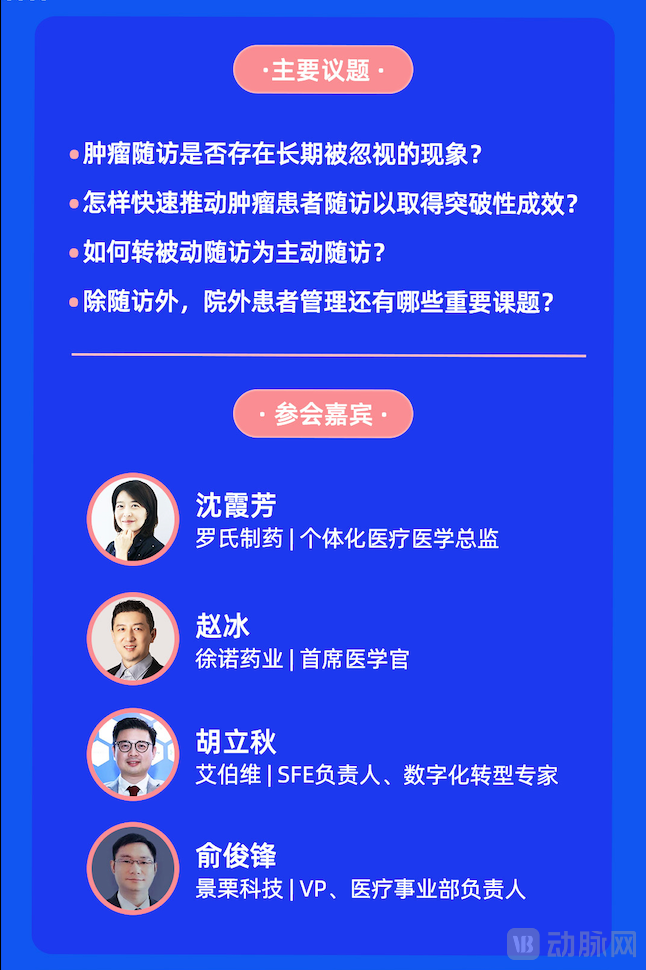
Follow-up refers to an observational method in which hospitals regularly monitor changes in patients’ conditions and provide rehabilitation guidance through telephone calls or other means for those who have previously received care at the hospital. As the primary participants in follow-up, both physicians and patients undoubtedly have strong demands for such services. The live-streamed panelists noted that patient follow-up is also of significant importance to pharmaceutical companies.
From the patient's perspective,Follow-up visits enable the regular and timely communication of changes in a patient’s condition and treatment outcomes to physicians, facilitating targeted therapeutic and rehabilitation recommendations that effectively improve patients’ health status and survival rates. According to Yu Junfeng from Jingli Technology, against the backdrop of the pandemic, follow-up services can also alleviate the inconveniences patients face when traveling to hospitals for examinations, thereby delivering a superior follow-up experience.
From a Physician's Perspective,Out-of-hospital follow-up not only helps physicians understand patients’ health status outside the hospital, enable precise diagnosis and treatment, and improve therapeutic outcomes, but the completeness of patient data also supports physicians in conducting more robust clinical scientific research. Zhao Bing, Chief Medical Officer at Xunuo Pharmaceutical, emphasized that a key goal of cancer treatment is to prolong patient survival, and that physicians’ assessment of progression-free survival (PFS) requires long-term follow-up to validate the effectiveness of treatment regimens.
From the perspective of pharmaceutical companies better serving patients,Patient medication feedback and adherence surveys provide valuable guidance for understanding product indications and promptly adjusting R&D directions. Shen Xiafang, Medical Director of Personalized Medicine at Roche Pharmaceuticals, pointed out that by establishing a patient follow-up system in the field of breast cancer, Roche has extracted insights into disease outcomes from accumulated data, thereby defining its personalized medicine development strategy. Meanwhile, these data feed back into the formulation of systematic follow-up protocols and the development of digital tools, helping physicians manage patients more efficiently.
Hu Liqiu, Head of Sales Force Effectiveness (SFE) at AbbVie and an expert in digital transformation, added: “The trend toward treating cancer as a chronic disease means that patients require follow-up care to help them enhance their understanding of the condition, adopt new lifestyles tailored to their individual circumstances, and receive emotional and psychological support from external sources. The feedback of follow-up data to physicians can bolster their confidence in prescribing medications, thereby enabling them to provide better treatment services to patients. For pharmaceutical companies, follow-up information serves as an early warning system for product development and business operations, while also facilitating personalized support for both patients and physicians, thus benefiting multiple stakeholders.”
Currently, there is strong demand for patient follow-up in the industry, but most follow-ups are limited to satisfaction surveys. What does the entire industry envision as the ideal follow-up model for cancer patients? How can we rapidly advance cancer patient follow-up to achieve breakthrough results?
Shen Xiafang, Medical Director of Personalized Medicine at Roche Pharmaceuticals, believes that follow-up care is a specialized medical service, and a sustainable, fee-based business model could break the current impasse. This model not only ensures that the value contributed by all stakeholders is recognized, but also helps establish standards to safeguard patient data security in a compliant manner, thereby enabling transparent and sustainable follow-up care practices.
Zhao Bing, Chief Medical Officer at Xunuo Pharmaceutical, stated that current patient follow-up faces various challenges stemming from human factors, which cannot be effectively addressed by any single organization, enterprise, or institution alone. He expressed anticipation for the emergence of a digital and intelligent follow-up system that integrates and mobilizes resources from all parties to efficiently meet personalized needs.
Hu Liqiu, Head of SFE at AbbVie and a digital transformation expert, pointed out that effective follow-up care should prioritize patient benefits and experience, demonstrating a deep understanding of patients’ needs. By employing human-centered design and compassionate service, it can provide dynamic diagnosis, treatment, and rehabilitation strategies, guiding patients from passive management to active self-management.
Under industry compliance requirements, pharmaceutical companies typically engage third-party agencies to conduct patient follow-ups. During the discussion, the livestream guest revealed that service providers selected by pharmaceutical companies must meet the following criteria:
Possesses relevant qualification certificates
Extensive experience in industry follow-up services and successful case studies, with tracking of data at a significant scale
With a stable system, team, and partners, it has extensive market coverage.
Tailored Solutions for Different Enterprises and Projects
Equipped with digital tools that support iterative expansion and extended use
Yu Junfeng from Jingli Technology stated that understanding the needs of doctors and pharmaceutical companies, building patient trust, implementing an intelligent follow-up system combined with scientific follow-up strategies, and ensuring strong execution are the core factors driving breakthrough results in the follow-up care of cancer patients.Jingli Technology has developed a multi-touchpoint follow-up model that, through private-domain operations within the WeCom ecosystem and integration with internet hospitals, establishes an information-based closed loop for out-of-hospital patient consultations and rehabilitation. This model has been applied in multiple oncology projects for companies such as AstraZeneca and Viatris, serving over 1.6 million patients and receiving positive market feedback.
Jingli Technology’s multi-touchpoint follow-up model is built upon the Jingli Technology GemLife Intelligent Follow-up Platform. Leveraging the WeChat ecosystem, it integrates the patient-side mini-program, physician-side mini-program, and operational backend. Through private-domain interactive intelligent follow-up services, the model enhances patient experience and adherence during the care journey while effectively reducing follow-up costs.
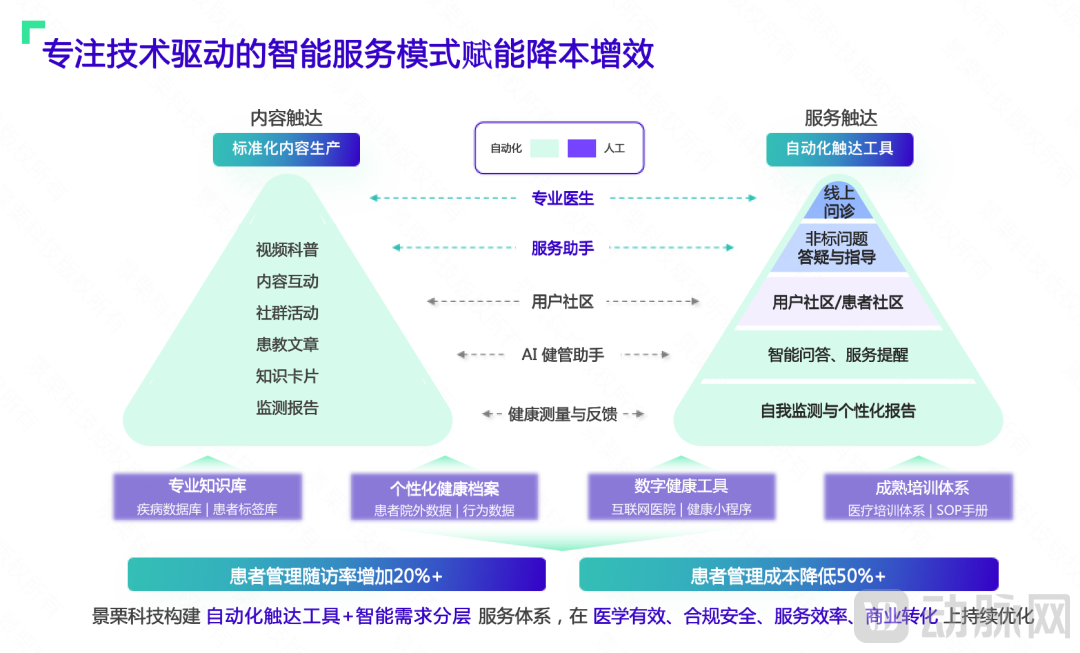
“Multi-touchpoint engagement encompasses two dimensions,” explained Yu Junfeng. “One dimension relates to touchpoints across the patient journey, such as initial consultation, post-operative care, chemotherapy, and rehabilitation. The other pertains to tool-based touchpoints, including phone calls, text messages, surveys, and one-on-one private chats. Different tools can be employed to reach patients for follow-up at various stages of their lifecycle.”
To achieve precise patient outreach and follow-up, the medical services team at Jingli Technology has established a comprehensive patient tagging system, stratified patients into distinct groups, and developed personalized follow-up plans tailored to each patient type. Meanwhile, Jingli Technology leverages brand communities, official WeChat accounts, and WeChat Channels to disseminate disease education and conduct activities such as rehabilitation check-in camps. By providing engaging and empathetic services, the company stimulates patients’ interest in proactive communication, thereby effectively achieving its follow-up objectives.
Taking follow-up visits as an example:
A patient is scheduled to return to the hospital for a follow-up visit on day T. The Jingli Technology assistant will send a message to the patient on “T-7” days, reminding them to register in advance. On “T-2” days, the assistant will remind the patient of the follow-up appointment time and precautions, and send a link for the patient to confirm. If the patient does not respond, reminders will be sent again via voice message or phone call on “T-1” days and on the day of the follow-up visit. On “T+1” days after the follow-up visit, the assistant will confirm with the patient whether the follow-up has been completed. If the patient has completed the follow-up, the assistant will collect relevant data and test reports from the patient according to pre-set scales and perform structured processing.
“We tailor our communication methods and timing to suit different audiences. For instance, we typically collect information on conceptual issues through questionnaires. When scheduling follow-ups, we prioritize midday or evening hours to avoid disrupting patients’ work. For elderly patients, we employ specialized communication approaches to ensure they feel convenience and warmth. It is through comprehensive service pathway design and countless thoughtful details that we convey care and compassion to patients and their families, thereby building deep trust.”
Yu Junfeng revealed that through the daily health management services of the GemLife intelligent follow-up platform and systematic patient education designed based on iCBT (internet-based Cognitive Behaviour Therapy), patients’ understanding of their conditions has significantly improved, with an increasing number of patients shifting from passive to active disease management.
▲ GemLife, Jingli Technology’s Intelligent Follow-up Platform, provides multi-touchpoint follow-up services to effectively improve out-of-hospital patient adherence and health outcomes
While the path of patient follow-up is fraught with uncertainties, it is also replete with possibilities. With the continuous advancement of mobile internet technology, Jingli Technology will collaborate with more industry partners to continuously optimize its products and services, making patient follow-up smarter and more convenient, and delivering higher-quality medical services to patients.