

ATLATL's Expansion into BioBAY Signals a Strategic Shift in China’s Biotech Incubation Ecosystem Amid Industry Downturn
On November 22, following its multi-site expansion in Shanghai, Beijing, Lingang, and Ningbo, ATLATL Innovation Center (hereinafter referred to as “ATLATL” or “Feibiao”) officially opened its Suzhou BioBAY Phase I project—the Suzhou ATLATL International Innovation Center.
To meet the demand of Suzhou-based pharmaceutical companies for professional laboratory services, ATLATL is committed to building high-standard laboratories. It has successively introduced the Charles River Accelerated Drug Development Lab (CRADL), gene-editing technologies from ERS Genomics, and organoid models and platforms from the Organoid Team at the Shanghai Public Health Clinical Center, while also establishing a partnership with GL Ventures.
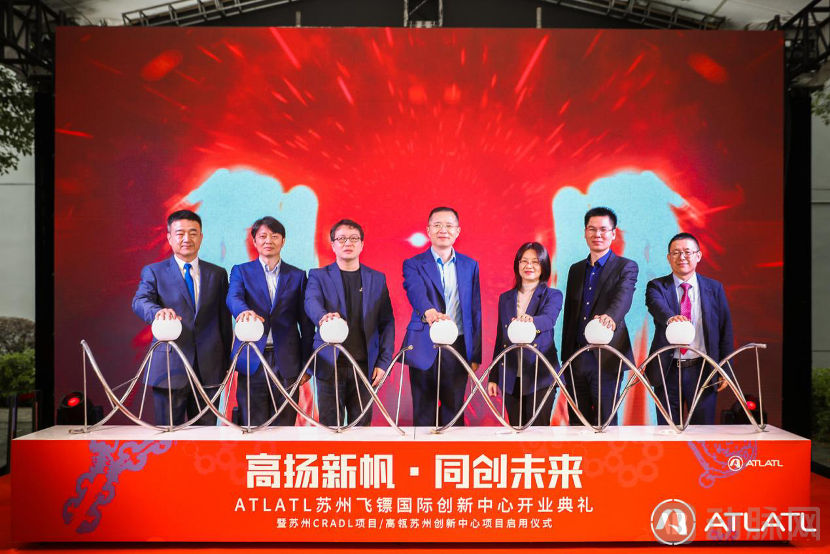
Dart Landing in BioBAY: A Timely Collaboration
Amid the economic downturn and cooling pharmaceutical market, those most concerned are not only innovative enterprises but also industrial parks determined to share risks with them. Among these, Suzhou BioBAY, as a pioneer in China’s innovative drug industry, has drawn significant attention.
Amidst the dynamic evolution of the innovative drug industry over the past 15 years, BioBAY has played a pivotal role in China’s history of pharmaceutical innovation, attracting numerous entrepreneurial talents in biomedicine. As the saying goes, “the duck knows first when the spring river warms,” BioBAY, which was among the first to sense shifts in the market environment, now faces the imperative of devising new strategies to navigate the current market downturn.
How to Extend a Helping Hand to Cash-Strapped Biotechs? Industrial Parks May Pin Some Hopes on Incubation Platforms.At the opening ceremony of Suzhou Feibiao, Ni Qian, Director of the Administrative Committee of Suzhou Industrial Park, stated that with ample funding, companies typically prefer to independently handle all stages from R&D through pilot trials, clinical studies, and commercial production. However, as the industry navigates through a winter cycle, incubators need to play a more significant role. “Government-run incubators have their strengths and weaknesses; it is essential to provide comprehensive services by leveraging complementary platforms such as Feibiao.”
What new concepts has Suzhou Feibiao introduced? What kind of industrial ecosystem will it lead? What implications does it hold for China’s industry incubation system? VCBeat New Medicine provides an in-depth analysis.
50 Million Invested in Building a Multi-Functional Laboratory
The prototype of ATLATL was NEO Innovator, the first shared laboratory founded by Zhu Pengcheng in Boston. Starting with the establishment of the Shanghai Zhangjiang ATLATL Innovation Center in 2017, ATLATL has since opened research centers in Beijing, Shanghai Lingang, Ningbo, and other regions.
Suzhou Feibiao can largely complement the incubation system of Suzhou Industrial Park from the two dimensions of precision and professionalism.
In terms of hardware facilities, Suzhou ATLATL International Innovation Center boasts the density advantage of being “compact yet sophisticated.” Located on the 9th floor of Building B1, BioBAY Phase I, it covers a total area of approximately 3,400 square meters and integrates nearly all the premium technical and experimental conditions available at ATLATL’s Shanghai headquarters, such as Class A R&D laboratory spaces, BSL-2 laboratories, and high-quality office and business areas. In the land-scarce BioBAY Phase I, Suzhou ATLATL makes full use of its limited space to provide enhanced services to tenant companies: animal housing accounts for more than one-fifth of ATLATL’s total area, while tenant company laboratories and office areas occupy over two-thirds of the space.
Building on Feibiao’s distinctive innovation system, Suzhou Feibiao focuses on providing experimental protocols for preclinical projects: it is equipped with a 600-square-meter SPF-grade CRADL animal facility and has introduced cutting-edge organoid models.
Since 2020, the rising prices and shortages of laboratory animals have been a persistent concern within the industry. Instances of “queuing for mice” occur frequently, with wait times of several months or even half a year for a batch of mice being not uncommon. While leading CROs can source mice and non-human primates from various channels or even acquire entire animal breeding facilities, most biotech companies have no choice but to accept their fate and wait in line according to their experimental schedules.
The CRADL project introduced by ATLATL integrates over 70 years of experience in laboratory animal management and facility operations accumulated by Charles River Laboratories in the United States, along with stringent data security controls and standardized processes and protocols, to provide advanced animal testing and validation services to tenant companies and surrounding enterprises.
Coincidentally, scientists at Shenxi Xingsheng told VCBeat New Medicine that upon learning Suzhou Feibiao had introduced Charles River’s animal facility services into its BioBAY Phase I laboratory, they swiftly booked space in Feibiao’s lab to secure early access to mouse resources.
However, animal models have encountered several challenges in recent years: some experiments lack suitable animal models, and there is often a significant discrepancy between data from animal studies and clinical outcomes. The industry has begun to explore the use of organoid models for alternative testing. Suzhou ATLATL has integrated cutting-edge organoid technology platforms by introducing the organoid team from the Shanghai Public Health Clinical Center, as well as institutions and enterprises such as Bozhen Gezhi and Sailada, to jointly promote the construction and development of organoid platforms, providing new solutions for preclinical and clinical alternative research.
It is understood that the organoid platform of the Shanghai Public Health Clinical Center team boasts two key advantages: first, it closely integrates materials science characteristics by developing novel biomaterials to support in vitro organoid induction, thereby establishing a more stable organoid culture system; second, in addition to constructing tumor and normal tissue organoid models, the center’s organoid team provides infectious disease organoid models—a capability lacking in other platforms—thus offering research services for both infectious and non-infectious diseases. With the settlement of several upstream and downstream organoid enterprises, Suzhou ATLATL has initially formed a relatively complete organoid supply chain.
Join BioBAY, Standing on the Shoulders of Giants
In ATLATL’s development plan for its network layout, Suzhou is an indispensable stop.
In the vicinity of BioBAY Phase I, a cluster of industrial parks spans several square kilometers, including Suzhou Creative Industry Park and Ascendas-Suzhou Innovation Park. Why, then, did ATLATL insist on locating in BioBAY, where land is at a premium?
In the development history of BioBAY, it is impossible not to mention the Cold Spring Harbor Asia Center. Standing on the shoulders of “Cold Spring Harbor,” a “Suzhou Bridge” has been built between Suzhou and the world’s top scientists, gathering the most cutting-edge technologies and frontier information in BioBAY, which has influenced the development direction of BioBAY over the past 15 years.
ATLATL joins BioBAY, echoing BioBAY’s earlier decision to bring in Cold Spring Harbor Laboratory—both choices stand on the shoulders of giants.“We are a fruit on the great tree of BioBAY, drawing abundant nutrients from it—extensive government and policy resources—which we will graft onto the companies settled in our park,” Dr. Zhu Pengcheng, founder of ATLATL, told VCBeat New Medicine.
From the perspective of industrial parks, many enterprises are currently undergoing strategic adjustments, such as outsourcing capital-intensive production activities to professional Contract Development and Manufacturing Organizations (CDMOs). The industry is in a phase of renewed division of labor and integration, with increasing specialization in niche segments. Consequently, service-oriented enterprises like Feibiao are expected to receive greater resource allocation for the development of both hard infrastructure and soft services. This approach not only provides indirect support to startups but also serves as a risk buffer for both the industrial parks and the enterprises involved.
So, as the market navigates through its winter, what are the distinctive features of ATLATL’s experimental center established in Suzhou? What industry demands and trends can be discerned from ATLATL’s presence?
Suzhou boasts several key advantages: first, a concentrated biopharmaceutical industry cluster; second, a large pool of scientific and technical talent specializing in pilot-scale scale-up; and third, its strategic geographic location connecting it to Shanghai, Wuxi, Changzhou, and other cities. Therefore, in Zhu Pengcheng’s expectation,Suzhou ATLATL has two core functions: linkage and amplification.
“Suzhou is home to a large cluster of biopharmaceutical companies, along with many professionals specializing in pilot-scale scale-up. Early-stage R&D scientists and technical personnel are also based here, alongside numerous CROs. We can leverage these service resources,” explained Dr. Zhu Pengcheng.
In its strategy for integration and amplification, Suzhou ATLATL has targeted the two core areas mentioned above—the animal experimentation platform and the organoid platform—reflecting ATLATL’s insight into the supply-demand mismatch in China’s current innovative drug industry and future technological trends.
In the current landscape of innovative drug development, first-mover advantage is critical—the faster a company moves, the more likely it is to secure a competitive position. Therefore, biotech firms with limited capital must prioritize two key actions: first, making strategic decisions on pipeline prioritization, whether to license out assets or accelerate their development, and identifying which pipeline can achieve self-sustainability most rapidly; second, optimizing capital allocation to reduce the risk of drug failure. Both of these priorities are closely tied to preclinical research. Suzhou ATLATL has brought vivarium and organoid services to BioBAY, playing a vital role in accelerating molecular validation cycles and improving the success rate of drug development.
Meanwhile, Suzhou is at the forefront of the innovative drug wave, having completed the Innovation 1.0 era. It now urgently requires new concepts and the acceleration and elevation brought by cutting-edge technologies, with organoids representing one such new direction.
Suzhou ATLATL has introduced a host of technologies and enterprises into the organoid field with its new “ecosystem” concept. It has incorporated gene-editing technology from ERS Genomics to accelerate organoid engineering, leveraged the nationally leading organoid team at Shanghai Public Health Clinical Center to provide rare organoid models, and enabled intelligent organoid culture through companies such as Sailada in the upstream and midstream sectors. Meanwhile, as an innovation platform, Suzhou ATLATL provides network support for local organoid enterprises in Suzhou.
Five-Dimensional Incubation Philosophy 2.0: Building an “Industrial Park Within a Park” Corporate Ecosystem
For ATLATL, although this marks its first establishment of a full-dimension organoid service platform in Suzhou, the platform embodies an upgrade to ATLATL’s five-dimensional incubation philosophy.
One year ago, Dr. Zhu Pengcheng told VCBeat that Feibiao’s incubation system can be summarized as a five-dimensional model: establishing shared laboratories to transform asset-heavy biotech R&D into an asset-light operational model; collaborating with internationally renowned instrument companies, CROs, and technology platform companies to establish specialized research centers; building an in-house team of scientists to provide on-site technical support and project management, thereby enabling high-speed innovation; pursuing global R&D collaborations in four key areas—neuroscience, cell therapy, digital biology and bio-computing, and synthetic biology; and directly partnering with prestigious domestic and international research institutions, universities, high-tech industrial parks, and government agencies to create new projects and plan, coordinate, and implement the development, construction, and operation of integrated innovation platforms.
After a year of consolidation, ATLATL has achieved significant progress: First, the ATLATL International Standard Shared Laboratory has initiated its overseas expansion. Second, the construction of specialized core laboratories has completed the transition from equipment specialization to platform specialization. Furthermore, ATLATL’s global Cloud Labs are now capable of delivering remote services, while its modular assembly business model has matured, and the ATLATL Fund has commenced operations.
Therefore, upon its launch, Suzhou ATLATL had already advanced to the 2.0 version of its five-dimensional incubation philosophy: bringing together global partners, fostering close exchange and collaboration among domestic enterprises, and ultimately converging into a complete new ecosystem for the biopharmaceutical industry.
For a long time, biotech companies have aspired to evolve into biopharma enterprises by independently handling R&D, clinical trials, facility construction, manufacturing, and commercialization. However, this mindset is largely a mirage created by an overheated capital market. Drawing on the development experience of the global biopharmaceutical industry, these challenges can be addressed through industrial specialization and reintegration. Shared models and one-stop services can enhance resource efficiency and accelerate corporate growth.
VCBeat has learned that, unlike traditional incubators focused on early-stage projects, ATLATL’s centers in other cities have attracted numerous well-known domestic and international enterprises. In 2018, Boehringer Ingelheim (BI) entered into a comprehensive strategic cooperation agreement with BioDart. BI’s China External Innovation Collaboration Center settled into the ATLATL BioDart Innovation Center in Shanghai Zhangjiang Science City, adopting the first “three-in-one” business model among multinational pharmaceutical companies, integrating Cross-Border Research (RBB), Business Development and Licensing (BD&L), and BioInnovation Venture Fund (BIVF). Through this innovative business model, Boehringer Ingelheim’s China External Innovation Collaboration Center is committed to providing one-stop innovation collaboration solutions for innovators in the biopharmaceutical industry in China and Asia, carrying out comprehensive collaborations ranging from early-stage research and innovation partnerships to strategic investments, and supporting them throughout the entire process to realize their innovative ideas. To date, BioDart has successfully co-hosted three editions of the Boehringer Ingelheim Innovation Challenge with BI, attracting participation from numerous biopharmaceutical innovation projects. Furthermore, earlier this year, the Eli Lilly China Innovation Collaboration Center Zhangjiang Catalyst was officially launched at the ATLATL BioDart Innovation Center in Shanghai Zhangjiang.
Furthermore, ATLATL has established specialized R&D platforms in collaboration with multiple companies, including Danaher, Tecan, and Thermo Fisher. It jointly launched the “Star Start Program” with the Novo Nordisk China R&D Center to identify viable projects for joint incubation. Meanwhile, ATLATL plans to establish innovation R&D centers in Singapore, Europe, and other regions to integrate global resources. By leveraging the strengths of numerous domestic and international partners, ATLATL aims to build a dedicated “aircraft carrier” for Chinese biotech companies’ global expansion, offering a more comprehensive “borrowed ship” strategy for going global.
At Suzhou ATLATL, Dart’s partners also include Perrotein Biotech, which provides cell-free protein purification services; Fangde Menda, which focuses on universal CAR-T therapies; and Hillhouse Ventures, a deep strategic partner of Dart.
Of course, it is not merely about the sharing of hardware equipment; more importantly, it involves the exchange and interoperability of soft services and resources, as well as the sound operation of the ecosystem built upon these factors.
Any scientist who has launched a startup in Kendall Square, hailed as “the most innovative square mile on the planet,” or even any researcher who has been exposed to the atmosphere of foreign innovation ecosystems, will, upon returning to China to start a business, miss to varying degrees the vibrant entrepreneurial ecosystem and the valuable incubation spaces for entrepreneurial exchange they once experienced.
In China, local governments and corporate groups often seek to achieve physical clustering of the biopharmaceutical industry by developing industrial parks, such as the Shanghai Zhangjiang Hi-Tech Park and Suzhou BioBAY. However, highly specialized laboratory facilities, frequent interactions among enterprises, and flexible service models remain particularly scarce.
Building on the five-dimensional incubation philosophy, Suzhou ATLATL embodies ATLATL’s latest vision: fostering an ecosystem for enterprise communication and collaboration within the resource networks of BioBAY, Suzhou, and ATLATL locations nationwide. This ecosystem transcends the geographical constraints of traditional industrial parks, offering a broader scope, more precise target clientele, highly specialized services, and greater flexibility in management and activities.
“Our ecosystem network is not limited to the companies based at Suzhou ATLATL; its focus lies on technological exchange and knowledge collaboration, including joint R&D efforts. Resources from various regions will be integrated, and the value of Suzhou ATLATL will interact with our laboratories in Beijing, Shanghai, and other locations,” emphasized Dr. Zhu Pengcheng.
Dr. Li Jingyu, CEO of Selada, a tenant company, shared that on the morning of the opening ceremony, she had already reached verbal agreements for future collaboration with two or three upstream and downstream enterprises, demonstrating highly efficient communication. The atmosphere at ATLATL closely resembles research institutions or incubation systems in Europe and the United States. It goes beyond merely providing laboratories and space; it functions more like a central server for numerous biotech companies, professionally integrating operational management and R&D resources while fostering interaction and exchange among enterprises.
Armed with a fresh philosophy, ATLATL is exploring new pathways in the current market cycle from its base in Suzhou. Its renewed journey at BioBAY warrants sustained attention from the entire industry.