

Tidetron Biosciences Advances Recombinant Human Type III Collagen into Pilot Scale, Fueling Medical Aesthetics Innovation with Synthetic Biology
Since 2021, synthetic biology has gained increasing momentum, with industry attention continuing to rise, even giving rise to the claim that “synthetic biology can create everything.”
On the one hand, from the perspective of the global landscape, China, the United States, and many developed countries have begun to prioritize synthetic biology as a key technology. On the other hand, driven by strong national policy advocacy, buzzwords such as “bioeconomy,” “energy conservation and emission reduction,” and “dual carbon goals” have frequently emerged. Synthetic biology, demonstrating significant potential in the synthesis of rare materials and the replacement of traditional fossil-based raw materials, has also entered a period of rapid development.
As an emerging force in the scientific community, synthetic biology is advancing rapidly and has demonstrated broad application prospects in fields such as medical aesthetics, pharmaceuticals, materials, agriculture, environment, and health.
In the medical aesthetics sector, upstream raw material production relies heavily on animal- and plant-derived sources or chemical compounds, posing challenges in scaling up, entailing high costs, and raising safety concerns. The advantages of biosynthesis—namely, high purity, safety, and homology—hold significant practical value for addressing current bottlenecks in expanding the supply of raw materials for medical aesthetics. Breakthroughs in technology and industrialization will undoubtedly unlock greater potential and opportunities for the upstream segment of the medical aesthetics industry.
Among numerous industry participants, TIDE TRON has taken the lead in achieving full-chain technological coverage from research and development to production. With an abundant reserve of raw materials and extensive experience in cutting-edge research, the company currently offers more than 50 products in its portfolio. These include a variety of functional skincare ingredients such as small-molecule peptides, as well as innovative components like recombinant humanized Type III collagen and squalane.
Among these, recombinant humanized type III collagen has achieved a high degree of humanization, structural stability, high purity, and strong hydrophilicity. It is currently in the pilot-scale process amplification stage, with expectations for further improvements in both yield and quality.
Breakthrough in R&D of Recombinant Humanized Type III Collagen, Now Advanced to Pilot-Scale Production Stage
As early as 1981, the global approval of Zyderm, the first bovine collagen implant, marked the dawn of collagen’s application in the medical aesthetics industry. However, despite the early regulatory approval of collagen-based products, their commercialization progressed slowly.
The underlying reasons are that collagen has a complex structure and has traditionally been extracted mainly from animal connective tissues via acid- or enzyme-based methods, which pose risks of zoonotic disease transmission, immune rejection or allergic reactions to xenogeneic collagen, and production capacity constraints, thereby limiting its potential applications and development.
With breakthroughs in genetic engineering and recombinant technology, the development of collagen has reached a turning point. Recombinant collagen, developed through techniques such as gene recombination, cell factory construction, fermentation, and separation and purification, can overcome the pain points associated with immunogenic reactions of animal-derived collagen, offering superior biocompatibility and safety.
According to Zhang Zhiqian, Founder and CEO of TIDE TRON, recombinant humanized collagen encompasses various types, primarily including Type I, Type II, and Type III. Among these, Type III exhibits the most effective reparative properties; however, its development faces certain technical barriers. The key challenges lie in sequence selection and replication, as well as achieving accurate expression and stabilizing its triple-helix structure.

TIDE TRON Founder & CEO Zhang Zhiqian
Through continuous exploration and experimentation, TIDE TRON has selected and evolved the most suitable microbial chassis strains for expression. By leveraging an optimized expression system, the company achieves precise replication and accurate expression of specific sequences, enabling collagen peptide chains to form triple-helix structures that highly restore the natural conformation of human Type III collagen.
On the other hand, the hydrophilicity and moisturizing properties of collagen are key to realizing its core functions; however, most Type III collagen products currently available on the market demonstrate only moderate performance in this regard. By selecting specific hydroxylases, TIDE TRON has stabilized the structure of recombinant humanized Type III collagen while further increasing its degree of hydroxylation, thereby enhancing its moisturizing efficacy.
Furthermore, while recombinant humanized type III collagen products currently available on the market are predominantly short-chain variants, TIDE TRON can synthesize both short- and long-chain proteins of varying lengths through precise design and regulate their expression as needed to meet diverse customer product requirements.
Whether in academia or industry, the synthesis of recombinant humanized type III collagen remains a cutting-edge challenge requiring continuous R&D investment. The technical difficulties are substantial, and large-scale mass production continues to be a widespread pain point within the sector. TIDE TRON’s R&D journey for its collagen synthesis project can aptly be described as “forged through countless trials,” during which it encountered numerous thorny issues.
For instance, challenges include the high prevalence of repetitive gene sequences that complicate synthesis, the abundance of rare amino acids leading to low expression levels, and the selection of appropriate expression systems for hydroxylases. By constructing countless engineered bacterial strains, we gradually overcame these obstacles one by one, ultimately identifying the optimal chassis microorganism and fermentation control system for collagen expression.
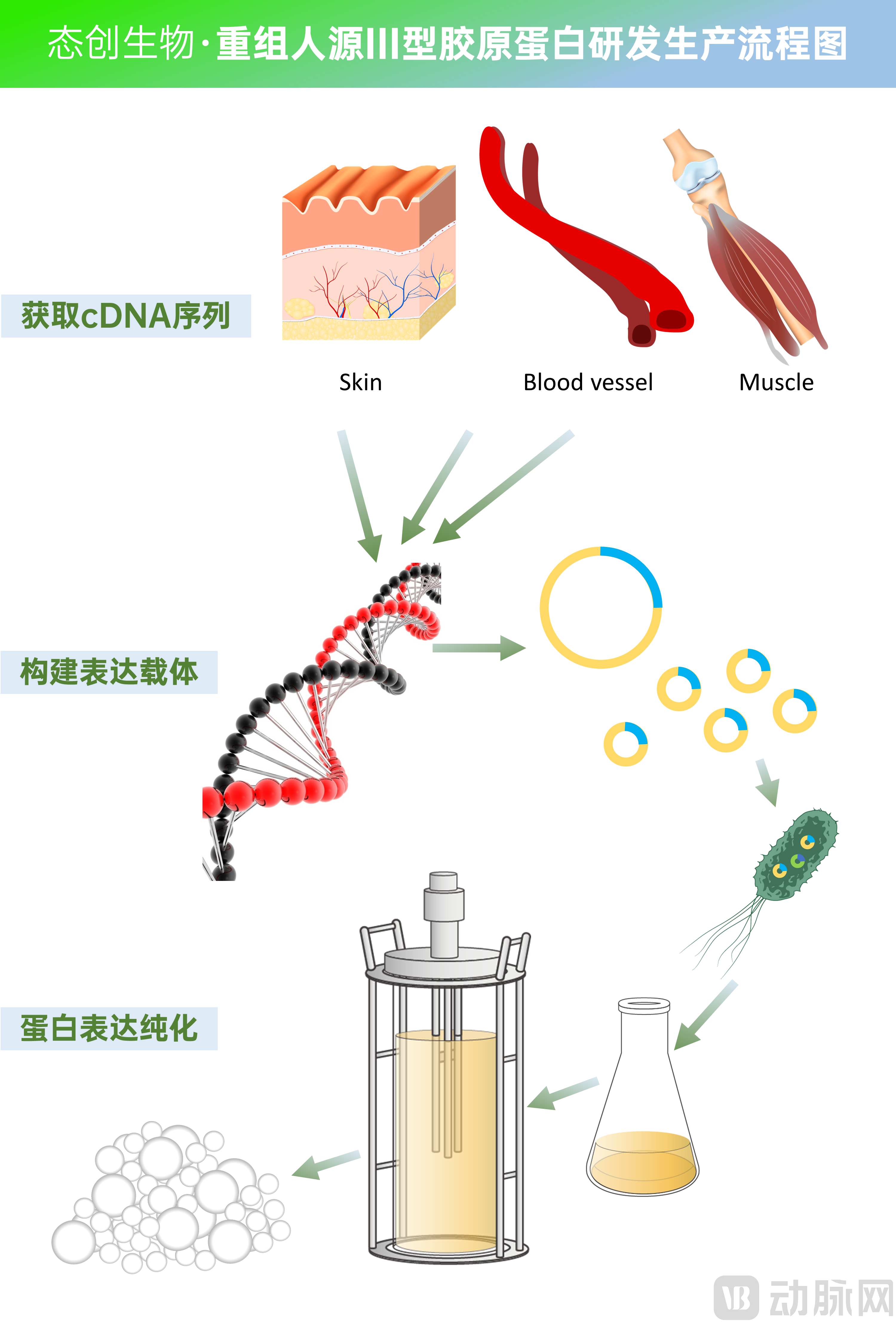
TIDE TRON Type III Collagen R&D and Production Process
It is understood that the project has completed R&D at the small-scale trial stage and has successfully obtained the target substance—recombinant humanized type III collagen. The product exhibits a high degree of humanization, structural stability, high purity, and strong hydrophilicity. Currently, it is entering the pilot-scale process amplification stage, with expectations for further improvements in both yield and quality.
Full-Chain Technological Coverage from R&D to Production: Continuous Expansion of Applications for the Multi-Material Mass Production Platform
As synthetic biology expands vertically into various sectors, industrialization becomes an inevitable challenge that must be addressed. Specifically, two fundamental underlying issues need to be resolved.
The first challenge is large-scale mass production, which requires companies to possess robust foundational technologies and the capability to rapidly translate synthetic biology R&D achievements into industrial and commercial applications.
Based on this, TIDE TRON positions itself as a platform-based company. By establishing a comprehensive technological framework that integrates upstream component and strain libraries, midstream mutation and screening platforms, and downstream scale-up processes, it enables the rapid transition from synthetic feasibility to mass production, thereby enhancing the yield and efficiency of substance synthesis.
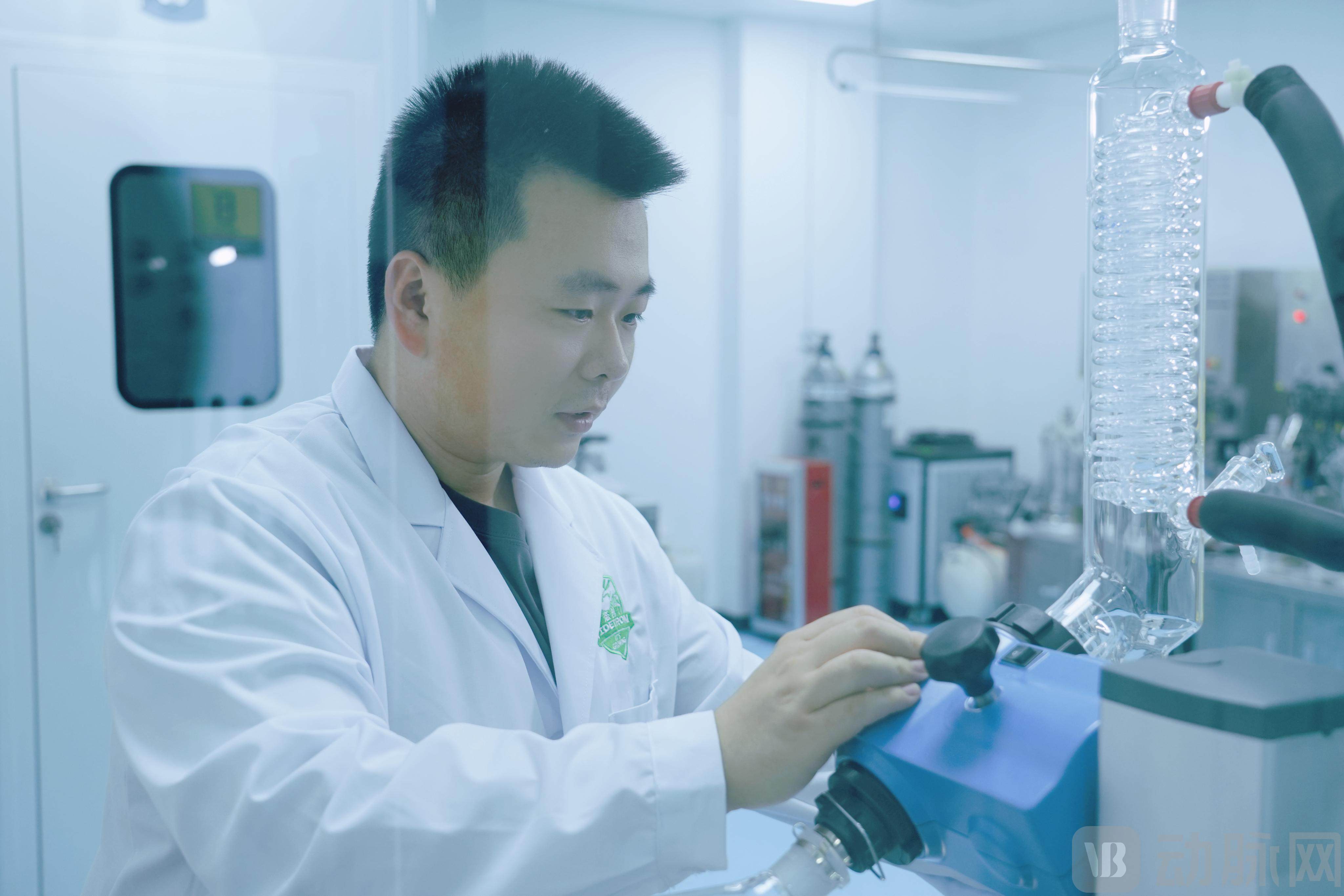
Working Photos from Zhang Zhiqian’s Laboratory
Among these, the company’s proprietary Tidetron Altra platform strain library and component library have achieved absolute breakthroughs in mass production and universality. Leveraging a high-throughput screening platform with a throughput of up to 10^9 per day—3–4 orders of magnitude faster than traditional screening methods (10^(5–6) per day)—the screening time has been reduced from several years to just a few months, enabling rapid innovation and iteration.
Meanwhile, TIDE TRON collaborates with leading domestic research teams, leveraging gene-editing tools such as CRISPR-Cas and advanced high-throughput screening technologies. By integrating microfluidics with directed evolution, the company achieves green mass production through intelligent fermentation. Its self-owned manufacturing facilities offer customized production services, with an annual capacity exceeding 10,000 metric tons.
For example, in collaboration with Nanjing Tech University on the succinic acid project, the company has largely completed the entire mass production process by leveraging its multi-product mass production platform. The costs are controllable and competitive compared to traditional petroleum-based materials.
Secondly, product selection undoubtedly poses a significant challenge for synthetic biology companies. In this regard, Zhang Zhiqian stated that TIDE TRON previously prioritized the development of products with higher value-added and relatively smaller mass-production scales, thereby rapidly achieving the transition from production to mass manufacturing and market commercialization.
From this perspective, the skincare sector has relatively low barriers to entry and enables rapid commercialization, making it an ideal entry point for TIDE TRON. According to reports, TIDE TRON has taken the lead in achieving large-scale production of thirty cosmetic and skincare-related ingredients, including small-molecule peptides and erythritol. Currently, TIDE TRON is the company that has leveraged synthetic biology to introduce the largest number of raw materials into the medical aesthetics and skincare sectors.
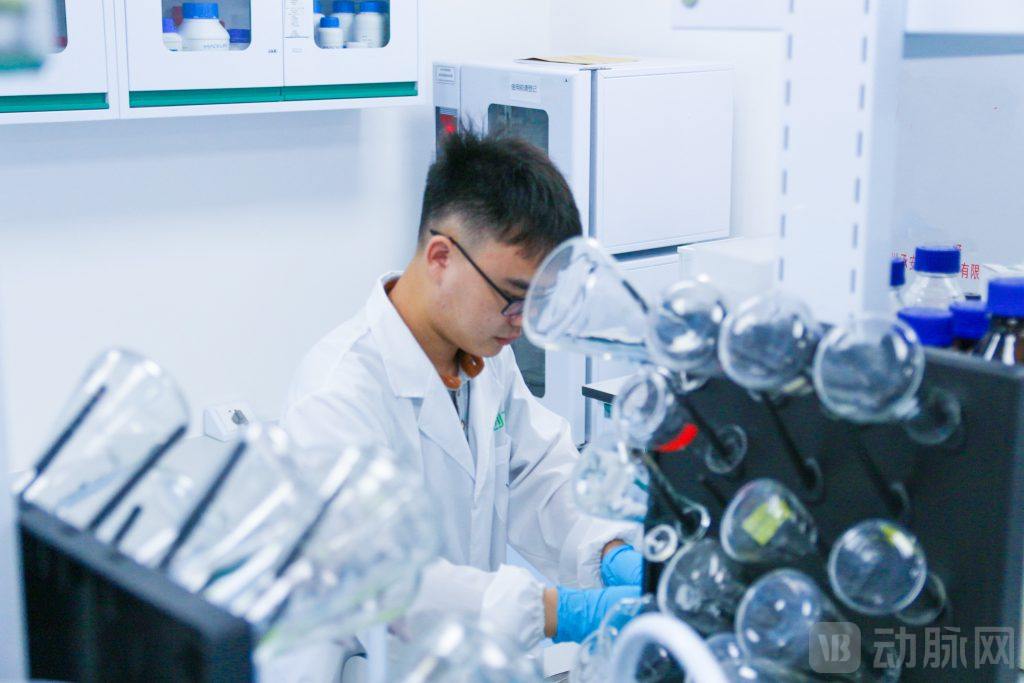
TIDE TRON Laboratory Image
Based on its prior exploration and accumulation, TIDE TRON has also evolved its product selection logic, which now focuses on two main aspects: high-value materials and bulk materials that permeate various facets of daily life. The company aims to truly impact everyone’s everyday life through synthetic biology.
Currently, TIDE TRON’s product portfolio is divided into four major segments: first, the beauty and personal care sector; second, the food sector, primarily focusing on additives such as sugar substitutes, sweeteners, and acidulants; third, the medical sector, which enters the market with diagnostic products that can rapidly replace traditional chemical manufacturing methods and improve detection accuracy; and fourth, agriculture and bulk commodities.
“The four major segments each account for one-quarter of total revenue. The company has evolved from initially relying solely on high-value materials in the beauty and skincare sector to establishing a relatively stable revenue portfolio that includes bulk commodity materials,” said Zhang Zhiqian.
The Synthetic Biology Boom Has Arrived, Unlocking New Possibilities for Medical Aesthetics
Overall, synthetic biology has demonstrated immense potential and broad application prospects in the medical aesthetics sector, positioning it to become a new growth engine for the industry.
Currently, TIDE TRON has completed the transition from exploring peptide technologies to applications in beauty and personal care, and will continue to deepen its presence in the medical aesthetics sector.
“Compared to the beauty and personal care sector, the medical aesthetics and medical fields impose stricter requirements on product efficacy, safety, substance purity, and relevant certifications. Leveraging our prior accumulation of thirty beauty and personal care ingredients, we have established a peptide synthesis production line capable of producing pharmaceutical intermediates and other materials, thereby enabling us to deepen our strategic presence in the medical aesthetics sector,” said Zhang Zhiqian.
In the medical aesthetics sector, TIDE TRON primarily focuses on enhancing efficacy and substituting rare materials. Regarding efficacy enhancement, traditional methods such as chemical synthesis, plant extraction, and conventional fermentation mainly consider modifications at the structural level of the substances themselves. In contrast, synthetic biology enables genetic-level engineering, delivering superior efficacy and higher efficiency. In terms of substituting rare materials, synthetic biology allows production volumes and methods to break free from geographical and species-specific constraints, representing a promising application area for this technology.
In the healthcare sector, the company will enter high-value, well-recognized niche medical markets from the perspective of active pharmaceutical ingredients (APIs) and pharmaceutical intermediates, focusing on scaling up mass production and expanding product variety.
Looking ahead, TIDE TRON aims to leverage synthetic biology to transform every aspect of human life, scaling more materials from laboratory synthesis to mass production and commercialization, thereby enabling synthetic biology to replace traditional material manufacturing.
“We have always believed that the future will be an era where biomanufacturing is the primary mode of production. We hope TIDE TRON can become a cornerstone force in this age of biomanufacturing,” said Zhang Zhiqian.