

HETANG Ventures Files IPO Prospectus: A Dedicated 'External CEO' in Hard-Tech Medical Innovation

LOTUS LAKE CAPITAL
Investment Institutions in the Field of Technological Innovation
In the field of investment in the commercialization of scientific and technological achievements, TusPark Ventures is a distinctive entity.
TusPark Ventures was restructured and established in 2014 against the strategic backdrop of promoting the commercialization of scientific and technological achievements at Tsinghua University. It focuses on investing in enterprises with high barriers to entry, core hard technologies, and original innovation capabilities, while distinguishing itself through its expertise in incubating and investing in university-born technological innovations. After years of dedicated efforts, TusPark Ventures has extended its experience in incubating university technological achievements to other universities and clinical experts at top-tier hospitals.
TusPark Ventures deeply understands that science and technology are the primary productive forces, and innovation is the foremost driver of development. It has strategically focused its investments on universities and research institutions represented by Tsinghua University, as well as hospitals, systematically investing in a portfolio of projects led by expert professors featuring core hard-tech innovations. Whether measured by the number of projects achieving commercialization of scientific and technological achievements or by investment returns, TusPark Ventures ranks among the top-tier firms in the industry.
Currently, TusPark Ventures has issued six funds, with assets under management exceeding RMB 3 billion.The annualized IRR of all managed funds exceeds 35%, with several funds achieving an annualized IRR of over 50%.Among nearly 70 investment projects, close to 50 are medical innovation initiatives, the vast majority of which have grown into leaders in their respective niche markets and achieved multiple “firsts” in China and even globally. In the area of incubating technological achievements within its specialized investment segment, TusPark Ventures has laid out a portfolio of nearly 30 technology transfer projects from universities and hospitals.
In 2022, TusPark Ventures entered a boom year for IPOs, with more than ten of its portfolio companies having gone public or preparing to file for listings. Within just the two-month period from November to December, two consecutive companies achieved IPOs.
Behind these fruitful results lies the positive feedback from TusPark Ventures’ consistent strategy of making significant early-stage investments and providing ongoing support. In all of TusPark Ventures’ investment cases, more than 50% of the projects were engaged during their startup and incubation phases. Specializing in angel investment and incubation, TusPark Ventures participates at the seed and early stages of company formation. Moreover, many projects have been supported since their inception within laboratory settings, accompanying core teams step by step as they transition toward commercialization.
From the perspective of the sectors in which the portfolio companies operate,TusPark Ventures focuses primarily on the biopharmaceutical and medical device sectors infused with “hard tech.” It adheres to a strategy of investing in innovative technologies—specifically, products that are at the international or domestic forefront, feature high entry barriers, address strong market demand, and follow a technology-driven growth logic. By leveraging these high barriers to build competitive advantages, TusPark Ventures aims to capitalize on the broader trend of innovation and technological upgrading in China’s medical product industry.
For instance, in the field of medical devices, portfolio companies of TusPark Ventures have achieved numerous “firsts” in China: Core Medical, incubated as an angel investment, developed the world’s smallest magnetically levitated artificial heart; Weiweisi, also incubated through angel investment, developed China’s first wearable cardioverter defibrillator; Sinanfu, which received multiple rounds of additional funding, developed China’s first digital PCR system; and Huahe Ruibo, established through the commercialization of clinical expertise from Peking Union Medical College Hospital, obtained China’s first registration certificate for a knee joint surgical robot in January 2022.
In the selection of investment targets, TusPark Ventures adheres to“The Two Firsts”: the first and only in China, prioritizing technologies that are absolutely innovative both in China and globally.
TusPark Ventures identifies potential entrepreneurs with technological innovations from universities, research institutes, and laboratories of top-tier hospitals, assisting them in the commercialization of scientific and technological achievements. However, this commercialization is a complex systemic engineering endeavor. As technologies move from the laboratory to the market, companies at different stages exhibit distinct characteristics and needs. Such variability presents a considerable challenge for investors.
As a standout player in the field, how does TusPark Ventures navigate the uncertainties inherent in this process? And how does it provide deep, hands-on support to innovative enterprises throughout their “zero-to-one” journey? To address these questions, VCBeat conducted an interview with TusPark Ventures.
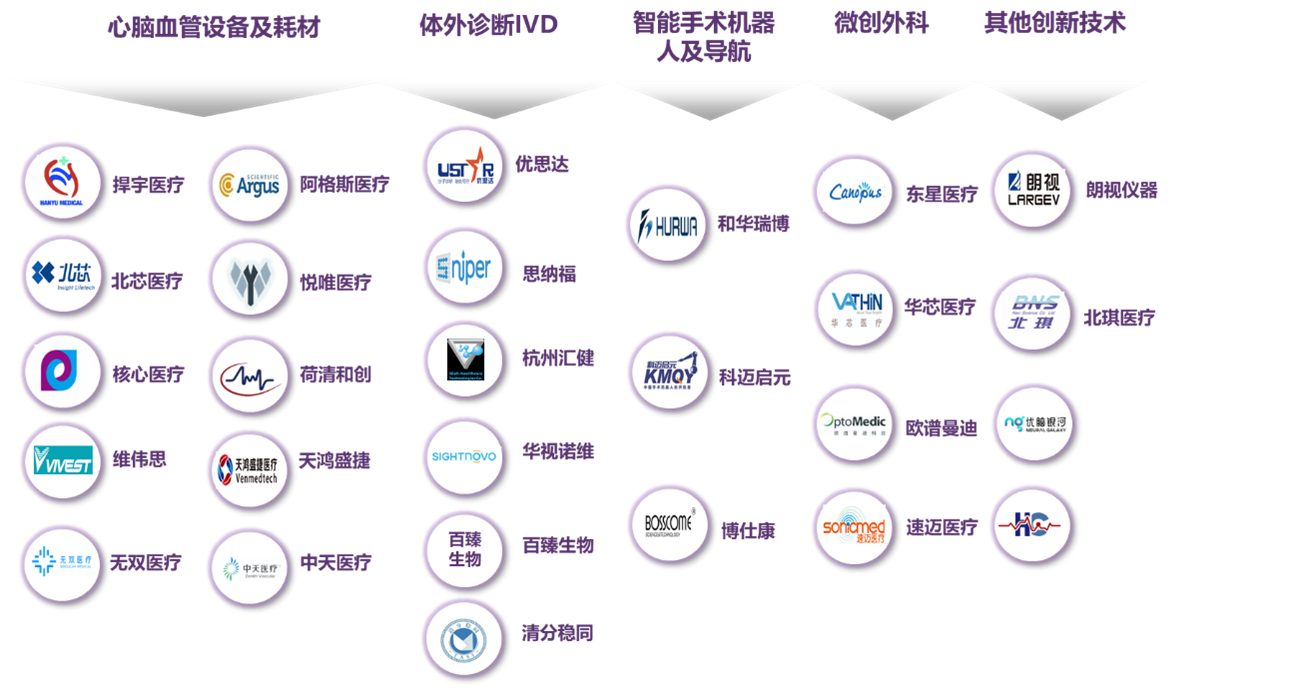
TusPark Ventures Medical Investment Portfolio - Medical Devices
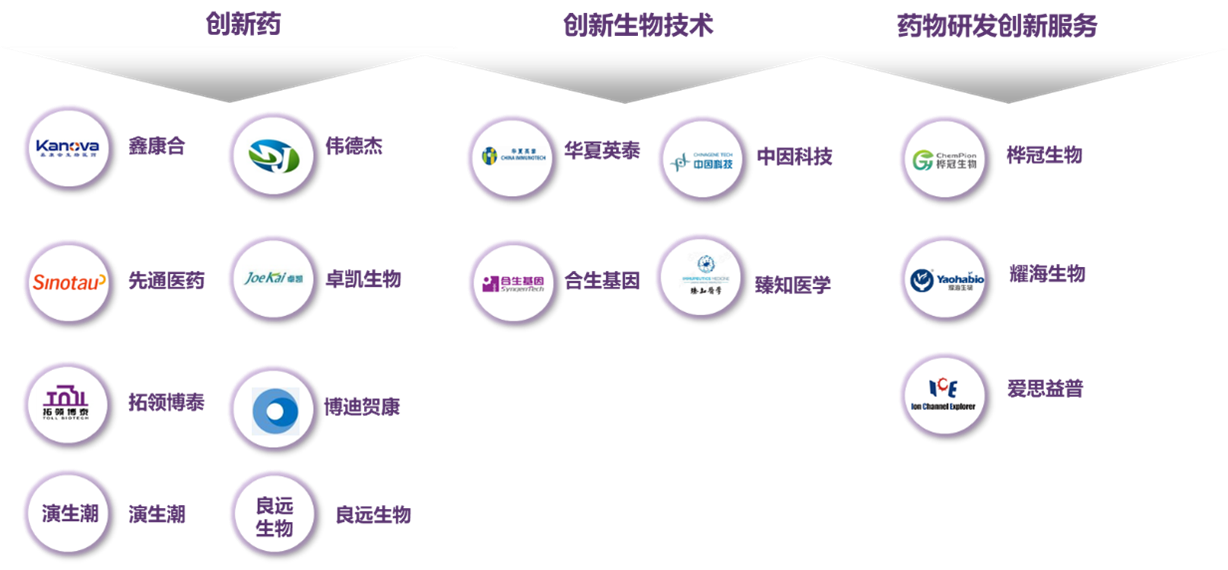
TusPark Ventures Healthcare Investment Portfolio - Biopharmaceuticals
TusPark Ventures’ investment logic, which focuses on hard technology and features the commercialization of academic research achievements, is an inevitable outcome resulting from the convergence of multiple factors.
First, China has entered a market opportunity phase with a focus on the development of "hard tech."As China boasts robust infrastructure and economic conditions, enhancing its appeal to top global talent, the policy mechanisms for technological innovation are poised for a breakthrough. Technological innovation has become a top priority in the 14th Five-Year Plan, giving rise to a large number of technology-driven and innovative enterprises. Aligning with policy trends and the spirit of the times, these companies are accelerating the process of “domestic substitution.” In this context, domestic brand enterprises require professional incubation and angel investment support to strengthen their ability to integrate technological and clinical resources.
TusPark Ventures has long been systematically positioning itself to capture the systemic opportunities arising from technological iterations in the healthcare sector, adopting a top-down approach to proactively invest in key niche segments. For instance, within the medical device sector, TusPark Ventures has invested in nearly 40 companies, covering niche areas such as cardiovascular health, minimally invasive surgery and robotics, and in vitro diagnostics (IVD), among whichPrioritizing Cardiovascular Disease as the Core Strategic Focus, it has now achieved comprehensive coverage of high-value sectors characterized by substantial market potential and rapid technological iteration, including the diagnosis and treatment of coronary heart disease, valvular heart disease, heart failure, electrophysiology, and rhythm management.
When TusPark Ventures first entered the biopharmaceutical sector, it did not choose the then-hot generic drug track, but instead proactively focused its investments onOriginal Innovative Drugs and Novel Therapies, now covering innovative drugs such as small-molecule drugs, antibody drugs, and radiopharmaceuticals; innovative biotechnologies including cell therapy and gene therapy; and drug R&D innovation services based on emerging technologies and market demands.
Next, leverage the resources of universities and hospitals to empower the establishment of a proactive incubation platform for "medical-engineering integration."Leveraging its “dual advantages” in academic and hospital clinical resources, TusPark Ventures has established a platform for deep integration of medicine and engineering. On one hand, it draws on the engineering disciplines of Tsinghua University, which possess innovation capabilities that are leading domestically and even globally, to provide the “engineering” foundation for this integration. On the other hand, it connects with top-tier Grade A tertiary hospitals, leveraging their profound understanding of clinical needs, awareness of global trends in innovative technologies, and clinical resources to cultivate the “medical” soil for such collaboration. In contrast to the “passive financial investment” model adopted by other investment firms, TusPark Ventures has advanced into the “Active Incubation 2.0” stage.
Vascular Interventional Innovation Enterprise Heqing HechuangThis is a typical example incubated by TusPark Ventures through its medical-engineering integration model. Heqing Hechuang originated from the research achievements of a professor in the Department of Mechanical Engineering at Tsinghua University. With the support of TusPark Ventures, it successfully aligned with clinical needs, facilitated technological translation and implementation, and established China’s first and internationally leading ultrasound thrombolysis technology platform.
Prior to the establishment of Heqing Hechuang, TusPark Ventures had already initiated in-depth incubation efforts, assisting in the recruitment of an operations head with extensive experience in the medical device industry. This enabled the company to establish a professional triad of R&D, clinical affairs, and operations from its inception, along with a rational and effective operational management structure and development plan. Within less than six months of its founding, Heqing Hechuang completed the R&D, animal trials, and production preparations for its first vascular intervention thrombectomy system. The product demonstrated significant thrombus removal efficacy in trials and is about to undergo type testing; it features a broader range of indications, higher thrombectomy efficiency, and enhanced safety. The R&D for the second product, an interventional thrombolysis system for pulmonary embolism, as well as related thrombectomy devices, has also been completed, reflecting the company’s rapid growth trajectory.
Founded by a team of experts in cardiac surgeryYuewei Medical, an Innovative Medical Device Company, is a typical example of closely integrating clinical needs with engineering technology. Yuewei Medical is developing innovative devices for the entire diagnosis and treatment process of coronary heart disease, covering quality control systems for cardiac surgery, surgical instruments, and an interventional left ventricular assist system for treating acute heart failure. With the support of TusPark Ventures, clinical needs from the frontline and strong design and R&D concepts have led to in-depth collaboration with technical teams from Tsinghua University and the Chinese Academy of Sciences. Currently, the R&D of the company’s product lines is progressing smoothly, and the first product has entered the type testing phase.
Dai Chen, Managing Director of TusPark VenturesIt was stated: “Under the proactive incubation model integrating medicine and engineering, TusPark Ventures is no longer a passive participant in the existing landscape. Instead, it leverages scientists’ strengths and existing resources to proactively help and guide them in securing other essential resources required for commercial translation, and jointly establishes companies on this basis. The integration of ‘medicine’ and ‘engineering’ has moved beyond superficial advisory consulting; clinical needs and technical implementation permeate the entire product design process, achieving deep integration and mutual reliance. Enterprises incubated under this model possess relatively comprehensive capabilities from inception, enabling them to develop and produce products that truly meet clinical needs while offering technological advantages.”
“The ‘fund investment + incubation’ post-investment empowerment system is the top priority in TusPark Ventures’ strategic layout. ‘In the early stages of a company, we often serve as an interim CEO, helping them build their team and connect with resources. Once the company gradually develops independent expansion capabilities, we step back,’ said Dai Chen.”
Qiu Qing, Managing Director of TusPark Ventures“It is often the case that we begin providing services to enterprises even before investment transactions are closed.” For all angel incubation projects, TusPark Ventures provides in-depth incubation services, encompassing comprehensive and tailored support ranging from industrial assistance, operational infrastructure, and talent acquisition to capital operations.
Huaxia Yingtai, an Innovative Cell Therapy EnterpriseHuaxia Yingtai is a startup incubated by TusPark Ventures from the laboratory stage. Following extensive discussions and planning with Professor Lin Xin, an internationally renowned molecular immunologist at Tsinghua University School of Medicine, and his team, TusPark Ventures established Huaxia Yingtai in 2018 to focus on the development of innovative gene-engineered cell therapy products. In July 2022, Huaxia Yingtai completed its Series B+ financing round, securing its position among the leading companies in the cell therapy sector.
Qiu Qing recalled that in the less than one year since Huaxia Yingtai was established, TusPark Ventures devoted significant time and effort to two key initiatives: first, empowering the company with internal resources, such as leveraging its professional network to identify a suitable head of CMC cell production, while its legal, finance, and other departments effectively served as Huaxia Yingtai’s “part-time team”; second, facilitating connections to external resources. “For instance, due to the specialized nature of the company’s operations, there were stringent requirements for factory buildings and production workshops. We accompanied the team in searching for suitable industrial parks, negotiating details such as settlement policies, and ultimately coordinated multi-party resources to secure an appropriate site.”
In addition to providing intensive post-investment services for projects involving the commercialization of scientific and technological achievements, TusPark Ventures continues to commit comprehensive resources to angel incubation projects founded by industry veterans.
Core HealthcareIt is a well-known enterprise in the industry specializing in the research and development of artificial heart product series. The company’s “ultra-compact magnetically levitated centrifugal artificial heart” is the smallest magnetically levitated centrifugal artificial heart globally and possesses fully independent intellectual property rights. Recently, Core Medical has attracted extensive attention from both the clinical and industrial communities because its product achieved the first successful implantation in China for children with end-stage heart failure, as well as successful weaning from mechanical support post-assistance. In 2019, the company received exclusive angel-round investment and incubation from TusPark Ventures.
TusPark Ventures provided comprehensive support during the company’s early stages, ranging from formulating capital utilization plans and defining key milestones to handling recruitment, implementing employee equity incentive programs, and establishing corporate governance. Acting as the company’s “right-hand man,” TusPark Ventures enabled the completion of equipment procurement, GMP workshop construction, and prototype delivery within just six months, along with the timely submission of type-testing applications. The standardized governance and management structure established at the outset laid a solid foundation for the company’s subsequent rapid growth. Throughout multiple subsequent financing rounds, TusPark Ventures consistently provided resources and professional support, ensuring smooth fundraising processes and the healthy development of the business.
Specializing in the Monitoring and Treatment of Malignant Cardiac ArrhythmiasWeiweisi Medical, and is also an enterprise incubated by TusPark Ventures at the angel stage. It developed China’s first wearable cardioverter defibrillator (WCD) and was included in the National Special Approval Procedure for Innovative Medical Devices. In 2022, the sales volume of its semi-automatic automated external defibrillators (AEDs) ranked among the top three domestic brands.
In 2019, when the founder of ViVes Medical first conceived the idea of starting a business, TusPark Ventures immediately engaged in discussions with him regarding the entrepreneurial direction and plans for establishing the company. At the onset of the COVID-19 pandemic in early 2020, TusPark Ventures provided angel-round funding to ViVes Medical. From equity structure design and division of labor within the founding team, to site selection, daily standardized governance, and talent acquisition, the director appointed by TusPark Ventures and the two founders of ViVes Medical formed a resolute and highly efficient “iron triangle,” driving and safeguarding the startup’s rapid development. Whenever significant matters arose, the company’s founders would promptly consult with TusPark Ventures.
“TusPark Ventures is not only our angel investor but also akin to our co-founding partner,” stated the founder of Viwise.
The wave of domestic substitution in China’s healthcare sector is accelerating, with significant strides even being made toward first-in-class innovations. The high barriers to entry and innovative nature of “hard tech” will undoubtedly enhance the long-term vitality and growth potential of China’s medical industry. Consequently, biopharmaceuticals and medical devices infused with “hard tech” are naturally garnering greater attention.
Meanwhile, from a national perspective, innovation has been placed at the core of China’s modernization drive. As of the third quarter of 2022, China had introduced 51 policies to facilitate the commercialization of scientific and technological achievements, covering three key elements: talent, technology, and capital. Moreover, as the proportion of basic research expenditure in total R&D investment continues to rise, China is poised to enter a favorable window for reaping dividends from the industrialization of frontier technologies.
From these two perspectives, TusPark Ventures’ focus on translating academic research outcomes and its emphasis on hard technology align closely with national policy directions. By providing long-term, patient support and critical post-investment assistance to high-potential, high-value enterprises, TusPark Ventures not only fosters mutual success between investors and companies but also contributes to advancing the translation of scientific research achievements in China’s healthcare sector.
Looking ahead, TusPark Ventures will continue to adhere to its investment focus on "hard tech."In the biopharmaceutical sector, we will focus on opportunities in niche areas such as cell and gene therapy and nucleic acid drugs. In the medical device sector, TusPark Ventures will continue to prioritize technological iteration opportunities in cardiovascular disease, minimally invasive surgery, and in vitro diagnostics (IVD), while also monitoring innovative technologies in ophthalmology, respiratory care, and dentistry.
Currently, a new generation of entrepreneurs is navigating significant market challenges by focusing on clinical pain points and overcoming critical technological bottlenecks. Through innovative products and services, they are committed to transforming the established landscape of healthcare. “For innovative enterprises, 2022 was not a particularly optimistic year. However, in times of uncertain trends, the patience to diligently and quietly focus on doing one thing well becomes even more precious,” said Qiu Qing.
As an entrepreneur pursuing technological innovation and scaling new technical heights, you must maintain a broad industry perspective and keen insight, acting as a visionary strategist with lofty aspirations. At the same time, you must assess the situation prudently, taking into account market demands and corporate development pathways, while executing with agility through iterative progress—thereby becoming a grounded and pragmatic doer.
In this process, TusPark Ventures is also willing to invest more time in researching, holding, and accompanying these enterprises as they grow. This long-term persistence and trust stem from their thorough rational judgment and risk awareness, as well as their steadfast courage and integrity.