

Shunde Technology Launches China's First II-Lead ECG-Enabled Smart Toilet Seat for Digital Health Management
Since 2015, smart toilets in China have emerged in large numbers, ushering in an era of “rapid growth” for Chinese sanitary ware brands. Chinese-made smart toilets have undergone rapid iterative upgrades, ranging from temperature control and washing functions to odor prevention and sterilization. As consumer demand continues to rise, expectations for smart toilets have shifted beyond mere functional improvements to fulfilling higher-level lifestyle needs—health.
As of now, the penetration rate of smart toilets in China remains relatively low. According to a white paper released by the China Household Electrical Appliances Association at the end of 2021, the market penetration rate of smart toilets in China was approximately 5%. However, with the accelerating aging of the population and rapid economic growth, there will be greater potential for demand expansion in the smart toilet sector.
In the past two years, an increasing number of domestic and international sanitary ware and technology companies have targeted home health monitoring and chronic disease management for the elderly, using smart toilets as the primary device. Imaginative entrepreneurs have integrated healthcare with smart toilet scenarios, creating devices capable of monitoring users’ health and invigorating the previously lukewarm health management market.
However, the ensuing problem is that,Are the test results provided by smart toilets accurate? Are there any time constraints for testing? Is the operation convenient for the elderly? Are the generated intelligent analysis reports reliable? What unique advantages do they offer compared to other testing methods?
“Population aging is one of the major trends in our society. As we age, we two founders also face health-related issues such as elevated blood pressure and rising blood glucose levels, which brought health management devices into our focus,” said co-founder Lu Dunya.
According to the bulletin of the Seventh National Population Census, China’s population aged 65 and above reached 191 million in 2020, accounting for 13.5% of the total population; the number of people aged 80 and above reached 36.6 million, marking China’s entry into a deeply aging society. The health issues of the elderly have become one of the major challenges urgently needing improvement in this era.
The "Report on Cardiovascular Health and Diseases in China 2021" shows that the prevalence of cardiovascular and cerebrovascular diseases in China continues to rise, with approximately 330 million people currently affected. Over the past 15 years, the overall mortality rate from cardiovascular and cerebrovascular diseases in China has increased by 48.06%, with population aging being the primary driver of this increase. Additionally, a report from Zhongyan Network points out that the incidence of cardiovascular and cerebrovascular diseases among the elderly in China is as high as 30%, making it the leading cause of death among older adults.
Cardiovascular and cerebrovascular diseases are typical chronic conditions, with 80% of cardiovascular cases being preventable. Health management in daily life, through regular examinations such as electrocardiogram (ECG) monitoring, can effectively reduce disease incidence and slow disease progression.
Research data from the U.S. Centers for Disease Control and Prevention (CDC) indicate that sitting down on or standing up from a toilet are hazardous actions for adults aged 65 and older, with even higher risks for those aged 85 and above. Furthermore, multiple studies have shown that the bathroom is a high-risk location for cardiovascular and cerebrovascular events.
“For ordinary users, we always face compliance issues when trying on wearable devices, and”The bathroom is a scene that will not be avoided,Natural contact between the body and the device during use,Basic Conditions for Monitoring.” said Lu Dunya.
“Ten years ago, I was an avid follower of pulse wave conduction technology and chip technology, attending the annual Consumer Electronics Show (CES) in the United States. In 2016, I noticed a Korean startup at the conference that was experimenting with new technologies on toilet seats. Since then, my focus has gradually shifted to this area,” said founder Zhang Beizhan.
Before entering the field of health management, Zhang Beizhan worked inOver Two DecadesElectronic Technology DevelopmentIn 2009, Zhang Beizhan founded Zhancheng Electronics, focusing on the research and development, production, and sales of analog and digital LCD TV mainboards, professional monitor mainboards, digital set-top boxes, and related products.
Initially, Zhang Beizhan attempted to invest in the development of blood pressure testing products, but the outcomes were less than ideal. After the company was established in 2018, Zhang Beizhan’s team, deeply committed to advancing blood pressure monitoring, leaned toward developing cuffless blood pressure testing technology. Through comprehensive research and extensive engagement with various sectors of society, they realized that expanding their perspective to apply this technology to toilet seats could lead to unexpected and innovative breakthroughs.
After overcoming the technical challenges associated with cushion-style Lead II ECG monitoring, Zhang Beizhan participated in the formulation of special requirements for electric bidets by the China Standards Association in 2022. Starting from electronic technology and applying it to the field of health management, Zhang Beizhan has devoted half his life’s efforts to this endeavor.
After five years of dedicated research and development, Shunde Technology has developed the HDCS (Health Data Cloud Service), an intelligent ECG monitoring cushion.Monitors changes in heart rate, body temperature, blood oxygen saturation, and body fat percentage; features voice-activated emergency alerts and health report generation.,Capable of Outputting Lead II Electrocardiogram (ECG) on Smart Toilets, suitable for daily monitoring in healthy individuals, patients diagnosed with cardiovascular and cerebrovascular diseases, postoperative rehabilitation, and other populations.
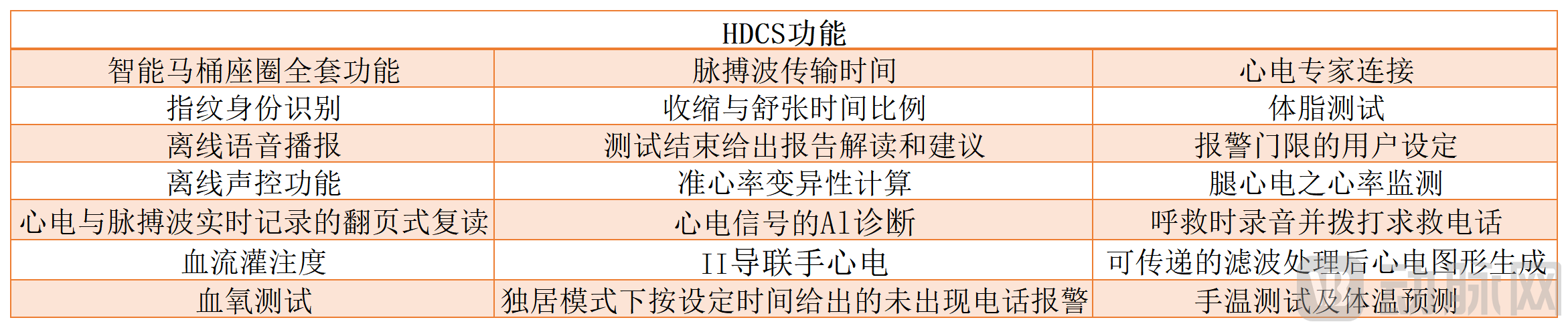
For health management devices, accuracy is paramount.Accuracy in measurement becomes the primary consideration for users. HDCS employs medical-grade Lead II for testing. Unlike conventional smart wearable devices that test using Lead I between the hands,Lead II is the limb lead with the richest information, serving as the optimal site for identifying P waves representing atrial depolarization. It is the only limb lead capable of definitively distinguishing sinus rhythm and also exhibits a certain degree of sensitivity to inferior wall myocardial ischemia.
The larger the contact area between the metal plate and the skin, the lower the initial impedance on dry skin, and the shorter the equilibration time for ECG electrode hydration. Therefore, compared with wristband-type devices, ultra-large electrodes installed on seat cushions offer a significant advantage in signal-to-noise ratio, enabling the output of medical-grade electrocardiograms and more accurate detection of abnormalities.
Secondly,Consider the issue of convenience. For middle-aged and elderly individuals, learning new technologies is not an easy task. HDCS eliminates unnecessary operational steps; users simply need to go to the restroom and sit on the toilet90 Seconds of Sitting Still, vital signs can be measured. The toilet seat is equipped with sensors that can capture physiological data indicative of heart disease, blood pressure abnormalities, or arrhythmias, including medical-grade (Lead II) electrocardiogram (ECG), heart rate, and blood oxygen saturation.
Finally, we also need toConsiderations on the Credibility of Health Reports. Shunde TechnologyConnected to multiple third-party remote monitoring centers, integrating AI monitoring with expert physician diagnostic services to generate health reports by analyzing user data and provide timely health alerts to users.
Furthermore, to meet the needs of different usage scenarios, Shunde Technology has implemented two key enhancements: first, it has added fingerprint recognition to distinguish between different users, facilitating shared use by multiple family members; second, it has developed a companion app that enables functions such as data query, anomaly alerts, trend analysis, historical data review, intelligent analytics, expert consultation, monitoring reports, and health recommendations.
“For me, this is perhaps the most serious endeavor I have ever undertaken in technology development. I have poured all the experience I have accumulated over the past two decades into this venture—into this health-focused cause,” said Zhang Beizhan emotionally. To test the product, Shunde Technology has long installed HDCS systems in its restrooms, continuously refining the product by collecting usage data from company employees.
Healthcare and health are always closely intertwined. For a long time in the past, it was widely believed that “health equals the absence of disease,” and accessing medical services was the most common approach to maintaining health. It can be said that,Healthcare is the final moat of health.
As living standards continue to rise, people’s demand for a healthy lifestyle has become increasingly strong. The preference to avoid hospital visits whenever possible necessitates continuous improvement in health management capabilities. Therefore, prevention has become the core essence of health management.
“Our mission is to bring medical devices into the home. There have already been many successful examples, from thermometers to blood pressure monitors,” said Zhang Beizhan. For these now-successful home-use medical devices, the primary requirement is their medical-grade quality, before considering their adaptation to the home environment.
Medical functionality has become one of the key “bottleneck” technologies determining whether smart toilets can qualify as medical devices. “During product development, we have access to a wide range of medical scenarios, including hospitals and eldercare facilities, and we leverage information provided by these healthcare institutions to guide our product development,” said Lu Dunya. Currently, Shunde Technology’s HDCS is striving to obtain a Class II medical device license within two years.
“The biggest difference between health and medical care lies in the level of urgency. Medical care is highly urgent, whereas health is not as pressing.”Health is often viewed as optional by some individuals. As people age, the importance of health factors in their lives gradually increases. Healthcare represents an inelastic demand, whereas efforts to maintain health do not yield immediate results and may not always be effective.Zhang Beizhan stated when discussing the pain points of the health industry.
“We believe our products have a significant impact on health, but users may not necessarily be aware of this. Any industry requires a period of development in its early stages before a social consensus can be formed. I believe this is not just the effort of a single enterprise, but requires the joint participation of stakeholders at all levels,” added Zhang Beizhan.
In November 2022, Shunde Technology’s product Kangnaixin was introduced into Shanghai Zegu Nursing Home, a subsidiary of Sinopharm Health and Elderly Care. As the product moves toward home-based adoption, applications in elderly care settings have become Shunde Technology’s entry point for penetrating the market. “It will take a considerable amount of time for the market to fully recognize the importance of health management. We hope that more enterprises, health and elderly care institutions, and physicians will join us in this endeavor,”The cushion device can also integrate more categories of health management..” said Lu Dunya.
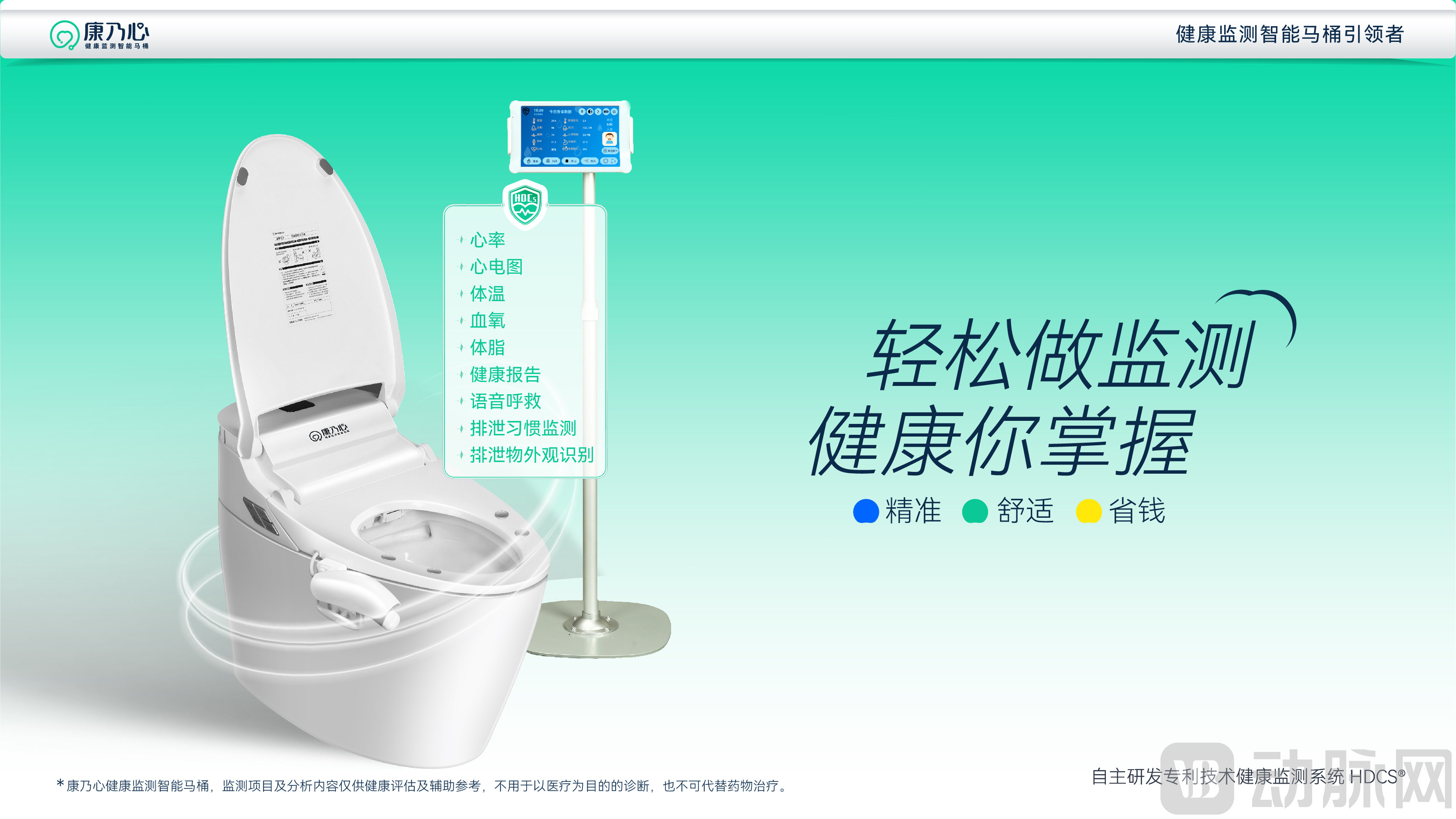
Kangnaixin Image source: Shunde Information
In the first half of 2022, Shunde Technology was incubated by Yanxitang, a national-level incubator, and launched its product, the Kangnaixin Smart Toilet, in the fourth quarter of 2022. Looking ahead, Shunde Technology will continue to develop a series of products to meet the needs of users at different levels, lower the barrier to product replacement, and make large-scale adoption in households possible. “We already have the capability; we must act now and get more people using our products as soon as possible,” said Zhang Beizhan resolutely.