

How Can the Medical Aesthetics Industry Achieve Explosive Growth Amid Current Challenges?

Puncture Robotic
Medical Robot Developer
Amid the boom of the “appearance economy,” the medical aesthetics industry is thriving, as evidenced by data that offers a glimpse into its热度.
According to the latest research report from Great Wall Guorui Securities Research Institute, China's medical aesthetics market has achieved a compound annual growth rate (CAGR) of over 20%, making it one of the fastest-growing markets globally. The market size in China is projected to exceed RMB 300 billion in 2024.
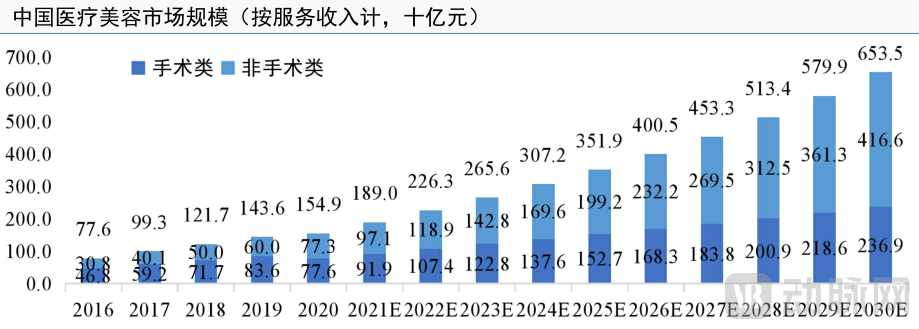 ▲ Image source: Great Wall Guorui Securities Research Institute
However, amid its rapid development, the medical aesthetics industry faces significant challenges: issues such as “pending regulatory compliance,” “difficulty in customer acquisition,” “scarcity of high-quality physicians,” and “low net profit margins” have become persistent pain points for medical aesthetics service providers.
Behind the Booming Market, the Medical Aesthetics Industry Is Plagued by Criticism: How to Break Through Has Become a Key Issue for the Industry Today.
China's medical aesthetics industry still has significant growth potential.
According to Frost & Sullivan data, South Korea’s medical aesthetics penetration rate stood at 20.5% in 2019, ranking first globally, while China’s penetration rate was only 3.6%. Projections indicate that China’s medical aesthetics penetration rate will reach 4.5% by 2023, indicating substantial room for growth overall.
“The market pie” is tempting, attracting numerous companies to enter the fray.VCBeat searched the keyword “medical aesthetics clinic” on Qichacha and found that there are more than 20,000 clinics established within the past year, not including medical aesthetics hospitals that expand their scale annually.
“The medical aesthetics industry has consistently seen demand from consumers, but long-standing non-compliance within the sector is a major cause of the current myriad of issues.“Li Bin, Chairman of United Rieger, told VCBeat.
VCBeat has observed that the first major chaos in the industry is the proliferation of “illegal medical aesthetic” institutions. According to the White Paper on Insights into China’s Medical Aesthetics Industry (2020), approximately 100,000 people suffer injuries or disabilities each year due to illegal medical aesthetic procedures.
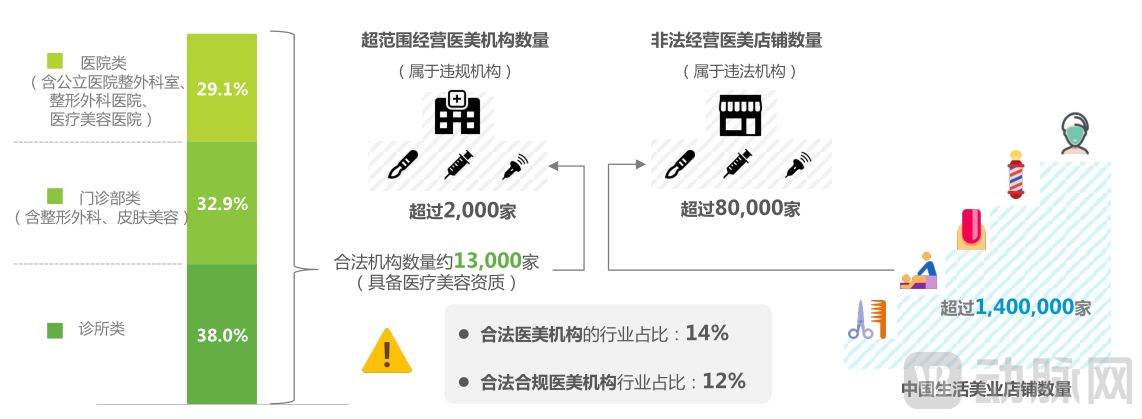 ▲ Number of Illegal Medical Aesthetic Institutions in China Source: "White Paper on Insights into China's Medical Aesthetics Industry (2020)"
In addition, the medical aesthetics market is flooded with numerous smuggled and counterfeit products, severely infringing upon the rights and interests of consumers seeking aesthetic treatments.Taking minimally invasive aesthetic procedures as an example, according to public research conducted by the Chinese Association of Plastics and Aesthetics, 70% of hyaluronic acid and botulinum toxin products sold in the domestic market are counterfeit or smuggled goods. These issues have severely impacted the long-term, healthy development of the medical aesthetics industry.
How Severe Are Compliance Issues? Statistical data from the China Consumers Association shows that during the ten-year period since the rise of China’s medical aesthetics industry, there have been nearly 20,000 complaints annually regarding disfigurement caused by cosmetic surgery and aesthetic treatments. This amounts to approximately 200,000 cases of facial disfigurement over the decade. A significant proportion of these incidents were caused by non-professional practitioners.
Additionally, the difficulty in customer acquisition and high marketing costs have become another major bottleneck hindering industry development.In response, Li Yong, Vice President of Chengdu Badachu Medical Aesthetic Hospital, stated: “Many people believe that the medical aesthetics industry is ‘highly profitable,’ yet the financial performance of most institutions reveals only ‘slim margins.’ This indicates that medical aesthetic institutions are misallocating their funds. The reasons are excessively high customer acquisition costs and insufficiently refined management of controllable costs.”
This is corroborated by data. According to Frost & Sullivan, by 2021, the average customer acquisition cost for medical aesthetic institutions had risen to RMB 3,000–5,000, with many such providers finding themselves trapped in a predicament characterized by high input, low conversion rates, and slow transaction cycles.
For the aforementioned reasons,The Medical Aesthetics Industry Sounds the Alarm: In Recent Years, Regulatory Authorities Have Repeatedly Issued Documents to Rectify the Sector, with Intensifying Momentum.For example, in 2021, in addition to the continuous promotion of special rectification campaigns by the National Health Commission and other ministries, the State Administration for Market Regulation also issued the *Guidelines for Law Enforcement on Medical Aesthetic Advertising*, the strictest regulatory document on medical aesthetic advertising in history, imposing constraints on the industry from multiple aspects.
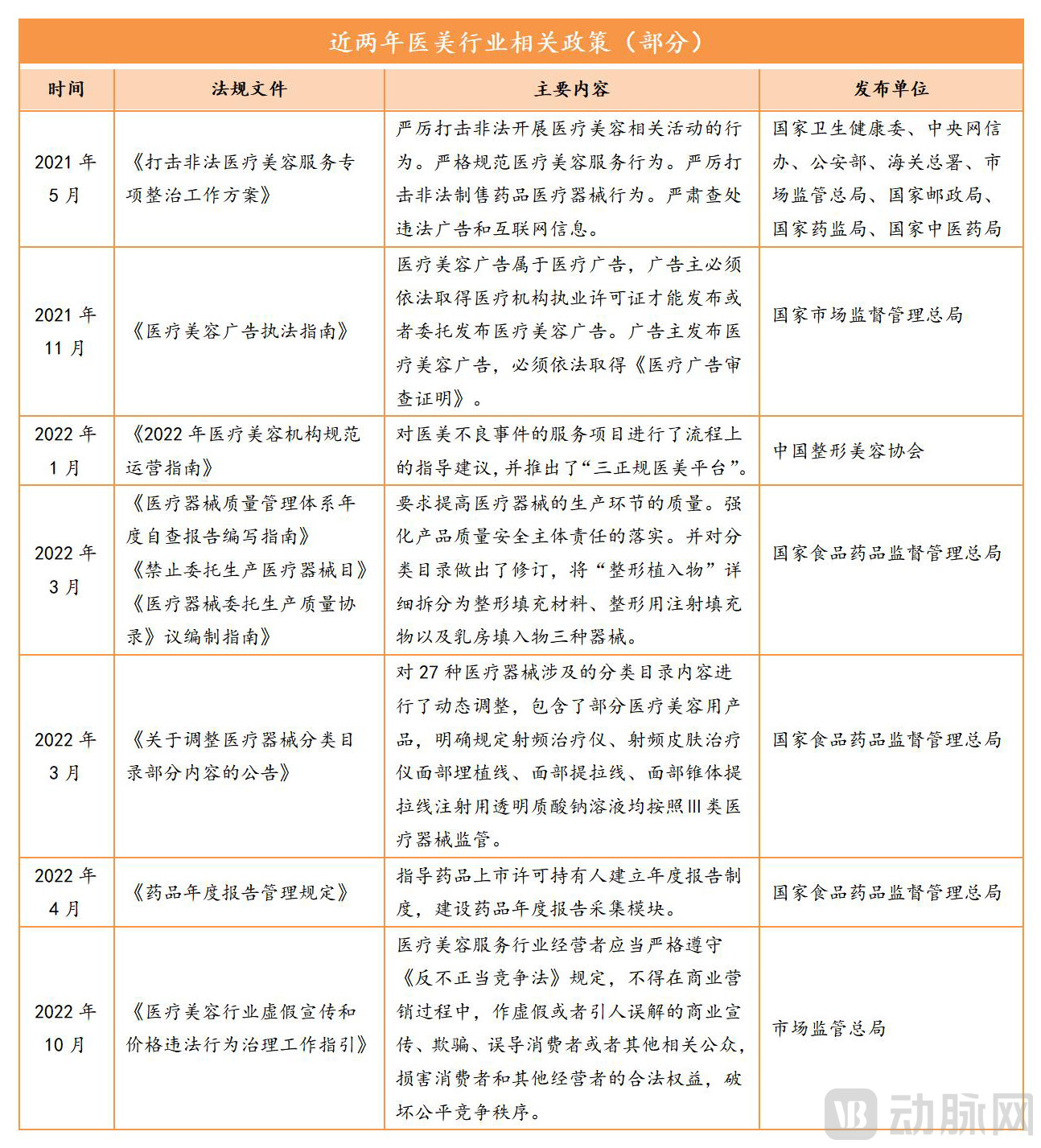
▲Compiled by VCBeat from various government websites
However, for the industry to shift toward healthy development, relying solely on regulatory oversight is insufficient; it is even more critical for the medical aesthetics industry itself to undergo transformation and upgrading.
How can the medical aesthetics industry itself achieve a breakthrough and break through the current impasse?
Multiple industry insiders told VCBeat,In addition to strengthening industry self-regulation, there are two main pathways: one is business model innovation, and the other is promoting technological advancement.
This stems from the fact that many challenges currently facing the medical aesthetics industry—such as price wars, deceptive marketing, and difficulties in customer acquisition—are driven by the high degree of similarity among institutions in their operational models and business philosophies, coupled with a neglect of quality improvement and efficiency enhancement. Furthermore, many institutions remain stuck in competition at the product level rather than competing on product added value, resulting in low value creation, insufficient user appeal, and weak customer stickiness.
In other words, the key to the long-term sustainability of medical aesthetic institutions lies in providing higher value-added services or products to beauty seekers and improving operational efficiency. This can be achieved through business model innovation or by driving technological advancement.
From the perspective of business model innovation, the medical aesthetics industry has made some attempts in recent years.“From what I have observed so far, first, some medical aesthetics institutions are experimenting with a ‘central hospital plus satellite clinics’ model; second, some are focusing on clinic operations within a specific niche market and expanding them into chain operations across regions; third, some are adopting a ‘lightweight’ approach, whereby certain medical aesthetics institutions reduce the number of SKUs, leverage smaller premises, and lower costs to concentrate on their core businesses,” said Li Yong, Vice President of Chengdu Badachu Medical Aesthetics Hospital, in an interview with VCBeat.
United Rieger has adopted a business model of physician-led joint entrepreneurship, wherein the legal representative or actual operator of the medical institution must be a licensed physician, who also bears responsibility for treatment outcomes. This approach offers dual benefits: it helps prevent overtreatment while enhancing physicians’ autonomy, enabling them to develop more rational diagnostic and treatment plans for aesthetic patients based on long-term considerations.
Mylike Group has simultaneously pursued another strategic avenue. “As a comprehensive medical aesthetics institution, we have been expanding into the niche field of hair transplantation in recent years, thereby providing more solutions for beauty seekers,” stated Dr. Diao Yongfeng, Dean of Mylike Group. He noted that female clients frequently seek treatments for hairline concerns, such as excessively high or unnaturally rigid hairlines. “Some female patients are left with scars along the hairline after undergoing facelift surgery; we can use hair transplantation to conceal these scarred areas.”These demands are inherently convertible, largely resolving the challenge of customer acquisition and boosting Mylike’s revenue and profitability. Additionally, the hair transplant market continues to expand, offering significant growth potential.”
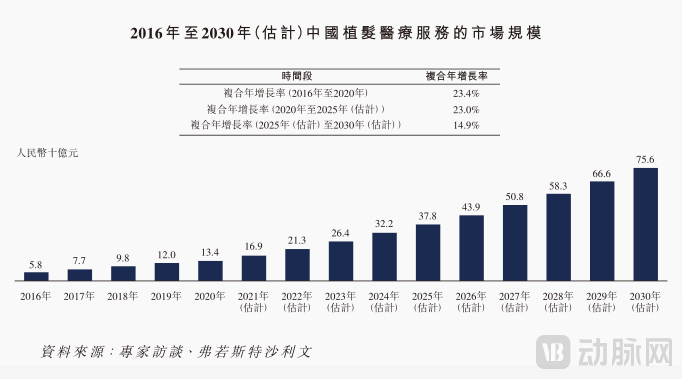 ▲ Market Size of Hair Transplant Medical Services. Source: Yonghe Medical’s Prospectus
Similarly, in the hair transplantation segment of the medical aesthetics industry, the concept of full-lifecycle hair health management (encompassing transplantation, treatment, and maintenance) has been increasingly adopted by hair restoration institutions in recent times. Relevant companies, including Biliansheng, Yonghe Medical, and Boshiyuan, have all made strategic moves in this area and achieved certain successes.
Taking Yonghe Medical as an example, the company is accelerating its layout in two core business segments: professional hair transplantation and medical hair care and maintenance. In addition to its existing hair transplant services, Yonghe Medical has established “Steynson Medical Hair Health Centers” within each of its hair transplant institutions using a “store-in-store” model, providing patients with diagnostic and therapeutic services as well as customized hair care and maintenance solutions. This integrated model of hair transplantation, care, and maintenance has facilitated bidirectional synergy and conversion between hair transplant and hair stabilization services, expanded revenue scale, and alleviated, to some extent, the challenge of customer acquisition.
In summary,Leading medical aesthetics companies are continuously strengthening their business models, enabling them to stand out more rapidly from intense competition.
Of course, many industry experts also believe that model iteration involves reorganizing and optimizing the existing stock, while technological innovation will drive the industry’s transformative breakthrough by expanding future incremental growth.
Therefore, while accelerating business model innovation, the industry must also ensure that technological advancements proceed in tandem. Consumers of medical aesthetics have reached a certain level of maturity in their understanding, needs, and consumption habits, leading to increasingly diversified demands for medical aesthetic products and services.In the face of an intricate market environment and increasingly fierce competition, how upstream manufacturers and medical aesthetics service providers can accurately discern the core needs of consumers and establish robust trust will be the key to winning in the medical aesthetics market in the next cycle.
Technological innovations often drive substantial growth in market expansion. In the medical aesthetics industry, the emergence of materials and devices such as hyaluronic acid, botulinum toxin, and Thermage has provided significant impetus to the rapid development of non-surgical medical aesthetics.
Although different products employ distinct technologies, their development shares a common essence: a profound understanding and insight into the needs of aesthetic seekers, more personalized professional procedures by physicians, the delivery of value through technology, and the enhancement of outcomes and experiences for aesthetic seekers.
“Over the next five to ten years, I believe(Medical Aesthetics Industry) The driving force is not demand but the upstream sector; the true drivers of development are materials and technology.“Mingfeng Capital previously told VCBeat.
Professor Yang Rongya, Vice President of the Chinese Association of Plastics and Aesthetics and President-Elect of the Medical Aesthetics Branch of the Chinese Medical Association, stated in an interview with the SoYoung Data Yanjiuyuan that technologies represented by photoelectric devices have made significant strides in the medical aesthetics industry. These technologies have replaced many traditional, labor-intensive, and time-consuming manual techniques performed by physicians, yielding remarkable results alongside the industry’s rapid development.
Therefore, paying attention to emerging technological innovations holds significant reference value for participants and investors deeply involved in the medical aesthetics industry.After all, these new technologies, devices, and materials are highly likely to drive another wave of explosive growth in the medical aesthetics industry.
During VCBeat’s extensive interviews, tissue regeneration materials and surgical robots emerged as two sub-sectors that received frequent attention from respondents.
Let's first look at tissue regeneration materials, whose development has been quite rapid.Specifically, regenerative aesthetic medicine achieves the repair and reshaping of human appearance, morphology, and function by repairing, replacing, or regenerating human cells and tissues in combination with aesthetic medical techniques, thereby attaining harmony and enhancement among aesthetics, medicine, and human form and function. Tissue regeneration materials constitute a critical component of regenerative aesthetic medicine.
Compared with hyaluronic acid, tissue regenerative materials offer more natural and longer-lasting filling effects, with their safety well validated. In terms of progress in this field, three medical aesthetic dermal filler products for wrinkle reduction based on tissue regenerative materials have been approved for market launch in China: Ellansé (polycaprolactone) under Huadong Medicine, AestheFill (polylactic acid) developed by Sinboma, and Ru Bai Angel (poly-L-lactic acid) under Imeik.
Turning to surgical robots, the industry has high expectations for them.The reason lies in the fact that the emergence of surgical robots has, to a certain extent, resolved many challenges associated with surgical procedures. These systems offer minimal invasiveness, high precision, and improved therapeutic outcomes, while effectively reducing surgeons’ fatigue and enhancing the stability of surgical maneuvers. Furthermore, surgical robots help alleviate the critical shortage of highly skilled physicians, a major challenge facing the medical aesthetics industry.
However, it is worth noting that surgical robots are currently more widely applied in the field of serious medical care, whereas medical aesthetics falls under consumer healthcare. These two markets pose different challenges for entering companies. In light of this, Zhang Qiang, Director at Legend Capital, told VCBeat that teams need to possess certain transferable capabilities—such as market understanding and technological accumulation—to adapt to the demands of different markets.
In practical applications, South Korea’s medical aesthetics industry has been actively deploying these technologies. It is understood that there is substantial demand for minimally invasive procedures in South Korean society. The surgical market in South Korea often places a significant premium on the ability to conceal scars or relocate them from visible areas, an area where Intuitive Surgical’s fourth-generation da Vinci SP system excels. Data indicates that the da Vinci SP systems currently deployed in South Korea have the highest utilization rate globally among SP machines.
It is worth mentioning that,In the niche field of hair transplantation within medical aesthetics, surgical robots have also been deployed.“The role of hair transplant robots is actually to assist physicians in performing surgery, making the procedure more convenient and precise,” Professor Wu Wenyu, Director of the Hair Transplant Center at Huashan Hospital Affiliated to Fudan University, told VCBeat. “Therefore, to evaluate whether a hair transplant robot is excellent, one should consider three factors: first, the success rate of hair follicle extraction; second, the ease of operation; and third, the machine’s response speed during the surgical procedure.”
As one of the earliest users of hair transplant surgical robots in China, Professor Wu Wenyu believes that current hair transplant surgical robots are too expensive, and data from imported equipment is transmitted abroad. Therefore, domestic substitution is not only necessary but also a major trend. In this process, technological innovation should focus on two dimensions: functional R&D innovation (high quality) and enhancement of real value (cost-effectiveness).
VCBeat has learned that innovative enterprises have entered the hair transplant surgery sector in China and achieved notable success. For instance, Puncture Robotic, a surgical robotics company that secured tens of millions of yuan in Series A financing this October, currently focuses its core commercial products on tumor intervention and medical aesthetics.
Currently, Puncture Robotic has launched a hair transplantation robot. This robot can significantly reduce overall surgical time, improve surgical efficiency, achieve standardization of procedures, and enhance surgical outcomes. Broadly speaking, for medical institutions, it increases the return on investment per unit, effectively reduces surgical time, boosts patient turnover rates, and expands institutional revenue. For medical staff, it reduces repetitive labor, lowers work intensity, and shortens the learning curve. For patients, it ensures more stable and standardized surgical quality, delivers superior therapeutic effects, and shortens the recovery period. This product has already established strategic partnerships with numerous hair transplantation and medical aesthetics chain brands.
It is reported that this product has completed extensive clinical validation and may become the first hair transplantation robot approved in China. This achievement is underpinned by Puncture Robotic’s profound technological “DNA”: incubated by the Harbin Institute of Technology’s robotics system, the company has accumulated over a decade of expertise in robotics technology, which supports its technology transfer and the expansion into additional clinical diagnostic and therapeutic procedures. Among its core technologies, Puncture Robotic’s self-developed robotic drive and control technology, along with its integrated hand-eye coordination technology, offer unique underlying competitive advantages compared to competitors.
“For specialized clinical scenarios, we have accumulated extensive clinical experience and developed targeted, commercially viable products,” Zhang Zhaodong, founder of Puncture Robotic, told VCBeat. In terms of application promotion, Puncture Robotic has established a learning platform for the hair transplantation industry and, in collaboration with the Chinese Association of Plastics and Aesthetics and other academic alliances, is jointly training talent for the future deployment of hair transplantation robots.
However, for technologically innovative products to achieve industrialization, a robust business model must also be established.Puncture Robotic’s strategic approach begins with co-building disciplines with public hospitals and expanding into overseas markets, thereby strengthening collaboration with global experts. The second step involves empowering medical aesthetic institutions by deeply integrating into their procedural scenarios, thus providing clients with new growth drivers.
Moreover, Puncture Robotic is actively deploying a comprehensive end-to-end solution for hair restoration, covering all stages from consultation, pre-operative, intra-operative, to post-operative care, ensuring aesthetic outcomes through standardized diagnosis and treatment. This portfolio includes numerous innovative devices such as the 3D Hair Transplant Design Workstation, intelligent dermatoscopes, and ergonomic hair transplant chairs.
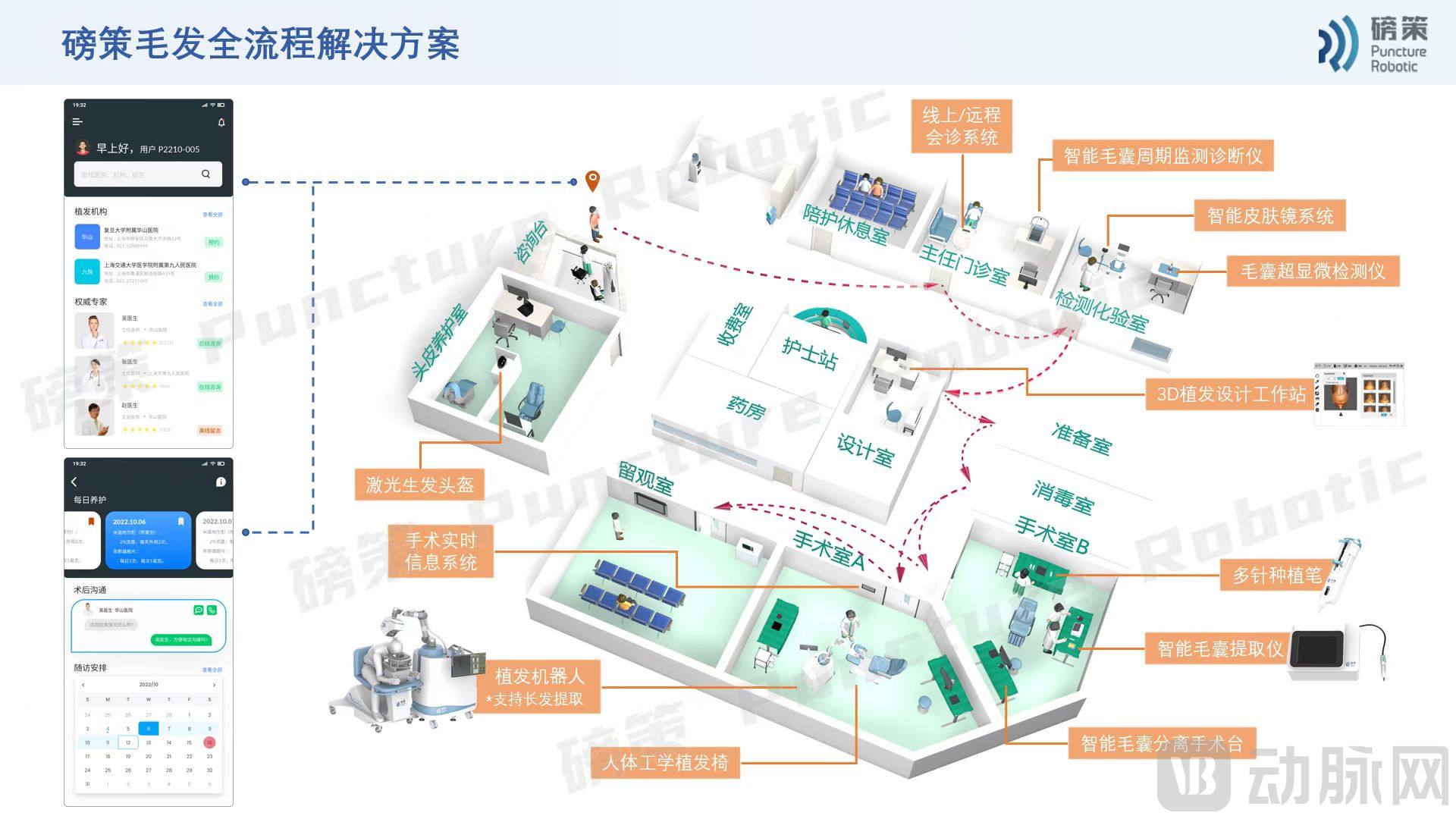 ▲ Puncture Robotic’s End-to-End Hair Management Solution. Image provided by the company.
“Robots are, in essence, tools; they only generate value when applied to specific fields.“Zhang Zhaodong, founder of Puncture Robotic, stated that ‘Puncture Robotic focuses on “precision,” which encompasses two dimensions: first, efficiency, meaning improved efficiency and reduced costs; second, effectiveness, meaning enhanced efficacy, improved safety, and procedural consistency. This is our original intention in entering the hair transplantation field. Moving forward, we will deepen our presence in the hair transplantation sector by collaborating with more professional medical institutions, benefiting more patients through standardized clinical procedures.’”
Certainly,The wave of rapid growth in innovative enterprises will also bring new opportunities to the venture capital industry.For investment institutions, how can they determine whether a technology-driven enterprise is of high quality and successfully bet on it?
In response, Wang Dong, a partner at Jin Yu Mao Wu, told VCBeat: “This year, we have invested in multiple companies within the medical aesthetics consumption sector. Our perspective is that medical aesthetics consumption integrates three attributes: healthcare, health, and consumerism. First, enterprises must possess sufficient technical barriers and achieve technological breakthroughs. Taking domestically produced substitute products as an example, it is essential to assess whether Chinese companies’ technologies offer genuine breakthroughs. The clinical manifestation of such breakthroughs includes optimized functionality, more pronounced efficacy, and greater ease of use. Second, medical aesthetics products or procedures must be premised on medical-grade standards; they must apply for and obtain relevant medical device registration certificates, undergo clinical trials and validation, and demonstrate safety and efficacy to consumers. Third, enterprises must establish substantial talent barriers. Teams developing medical aesthetics consumption equipment are composite and interdisciplinary, requiring expertise not only in medicine but also in engineering design, and even in marketing operations.”
In summary, although the medical aesthetics industry currently faces numerous challenges, market participants are actively seeking solutions and have already achieved certain results, thereby accumulating momentum for subsequent explosive growth in the market.
As a sector with sustained high prosperity, demand for medical aesthetics continues to grow.
On the one hand, under stringent industry regulation, there will be some short-term impact; however, in the medium to long term, non-compliant institutions and products will be gradually cleared out, enhancing industry compliance. Consequently, supply-side concentration will rise rapidly, consumer trust will be strengthened, and market bubbles will be deflated.
On the other hand, industry players continue to drive model innovation and technological advancement, bringing more incremental growth to the sector and meeting ever-growing demand.
More importantly, as the industry moves toward standardization, regulatory policies are being intensified for the medical aesthetics sector.For instance, this July, the Shenzhen Municipal Development and Reform Commission rolled out three major policies, including measures to encourage the development of the medical aesthetics and cosmetics industries and to actively build Shenzhen into a “Capital of Medical Aesthetics.” These signals have played a positive role in promoting the healthy, long-term development of the entire medical aesthetics industry chain, rebuilding consumer confidence, and driving the benign expansion of the industry’s scale.
Following the trend, niche segments within the medical aesthetics industry are also poised to enter a period of rapid growth.Taking hair transplantation as an example, driven by the rise of the “appearance economy” and the “hair care economy,” demand-side penetration is gradually increasing. Coupled with a shifting user demographic that now encompasses not only men but also a growing number of female aesthetic seekers, the market is exhibiting rapid growth momentum. On the supply side, continuous advancements in hair transplantation technology have significantly improved surgical outcomes and patient experience. Meanwhile, the increasing number of medical aesthetic hospitals and specialized hair transplant clinics entering this field has markedly enhanced service accessibility. This indicates that medical aesthetic service providers specializing in hair transplantation, along with their upstream product suppliers, will enjoy substantial growth potential.
Therefore, by staying attuned to market shifts and positioning themselves strategically in advance, companies across the medical aesthetics ecosystem will be well-placed to seize first-mover advantages during the industry’s impending boom. In this process, enterprises that consistently accumulate expertise and strive for innovation are poised to reap the most substantial rewards.
Special Acknowledgments:
Puncture Robotic Founder Zhang Zhaodong
Deputy Director of Chengdu Badachu Medical Aesthetic Hospital, Li Yong
Wu Wenyu, Director of the Hair Transplantation Center at Huashan Hospital Affiliated to Fudan University
Jin Yu Mao Wu Partner Wang Dong
Li Bin, Chairman of United Rieger
Zhang Qiang, Director of Legend Capital
Diao Yongfeng, Dean of Mylike Group
(Listed in alphabetical order by the pinyin of the first character)