

CLE·2022 International Brain Science Summit Successfully Concludes: Advancing Cognitive Health Through Digital Innovation
Dementia is drawing widespread societal attention.
By the end of the 14th Five-Year Plan period, China’s population aged 60 and above is projected to exceed 300 million, with approximately one-quarter at risk of cognitive impairment, representing a substantially large demographic. Once affected, annual care costs can reach as high as RMB 150,000, imposing long-term economic and caregiving burdens on individuals and families.
Cognitive disorders are also characterized by an irreversible disease course, a tendency to be overlooked in the early stages, the absence of curative pharmacological treatments, and significant gaps in care coverage. Meanwhile, awareness rates, consultation rates, and assessment rates for these conditions remain low.
Therefore, early screening, diagnosis, and intervention for cognitive impairment disorders hold immense value, both in terms of patient benefits and health economics. However, due to the limitations of traditional screening and intervention methods, digital proactive prevention systems for cognitive impairment have become virtually the “only” clinically accepted effective measure.
On December 3, 2022, the “CLE·2022 International Brain Science Summit,” hosted by the National Clinical Research Center for Geriatric Diseases, West China Hospital of Sichuan University, and the Digital Therapeutics Professional Committee of the China Association for Medical Devices Industry, and co-organized by Boosten Technology, VCBeat, and the Shanghai Institute of Medical Device Testing, was successfully held.
The summit invited experts and scholars from the global field of brain science to deliver insightful presentations on clinical research of diseases and the application of innovative technologies, with a particular focus on how toDriven by Technology, Fostering Cross-Border Integration,Active dialogue was held on achieving “early screening,” “early diagnosis,” and “early intervention” for cognitive impairment disorders. The conference attracted tens of thousands of views and online participants, drawing widespread attention from stakeholders across industries, including enterprises, investors, universities, hospitals, and research institutes.

The morning session of the summit primarily focused on clinical research into Alzheimer’s disease (AD) and frontotemporal dementia (FTD).Mr. Wang Shihao, Director of the Office of the Public Welfare Action Project on Elderly Education under the China Aging Development Foundation, and Former Deputy Inspector at the Department of Grassroots Political Power and Community Governance, Ministry of Civil Affairs, andConference Chair, Professor Zhou Dong, Director of the Department of Neurology, West China Hospital, Sichuan UniversityDeliver the opening remarks.
Professor Zhou Dong pointed out, “Continuously strengthening the application of innovative technologies and promoting multidisciplinary exchanges can enhance our capabilities for early screening of difficult and complex diseases, improve diagnostic precision and optimize treatment plans, ultimately benefiting more patients. We hope that the CLE Summit will provide colleagues in the field with more opportunities for exchange, and that, with the support of cognitive technology, more researchers and clinicians will achieve significant research breakthroughs, thereby further advancing the prevention and control of brain disorders.”
Subsequently, in the international clinical research on AD, the United StatesProfessor Clara Li, Alzheimer’s Disease Research Center, Icahn School of Medicine at Mount Sinai HospitalShe shared her research work and progress on cognitive function assessment among older Chinese Americans. She noted that while the Chinese American population is substantial, their participation rate in clinical trials for dementia remains relatively low, and many screening tools designed for Western populations are not applicable to this group. Current priorities include accelerating clinical trial recruitment within this community and identifying culturally and linguistically valid tools for detection, assessment, and intervention. Currently, Professor Clara’s team is actively collaborating with the Boston Brain Science Research Center to explore the use of assistive technologies to address this challenge.
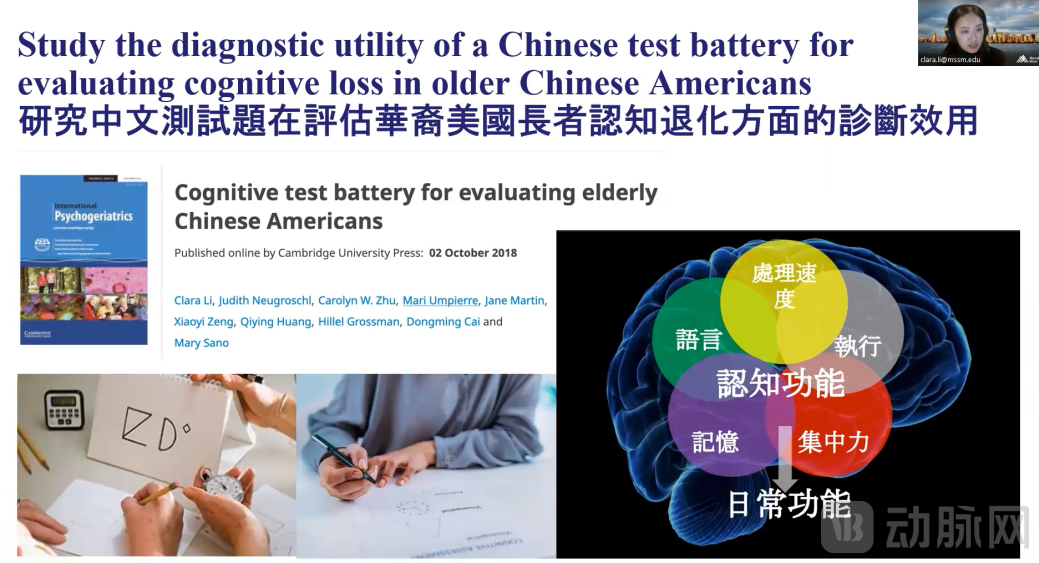 CLE International Brain Science Summit: Insights Shared by Professor Clara Li
In terms of domestic AD cohort studies,Professor Guo Qihao, Shanghai Sixth People’s Hospital Affiliated to Shanghai Jiao Tong UniversityA summary of achievements was presented regarding the establishment of a preclinical cohort for Alzheimer’s disease. Professor Guo stated that the initial construction of a preclinical AD cohort comprising 2,163 cases with comprehensive testing indicators (including Aβ-PET) has been completed. In the next phase, in addition to continuing to expand the sample size and conduct long-term follow-up, efforts will be made to explore and develop cognitive assessment tools associated with Aβ-PET positivity and disease progression, thereby facilitating early diagnosis and evaluation of treatment efficacy.
Professor Guan Yihui, PET Center, Huashan Hospital Affiliated to Fudan University; Professor Xu Jun, Beijing Tiantan Hospital Affiliated to Capital Medical University, delivered excellent presentations based on their respective teams’ research and applications of PET molecular imaging and blood protein biomarkers in the diagnosis of Alzheimer’s disease (AD), thereby providing additional research insights for the early diagnosis of cognitive impairment.
In his report, Professor Xu Jun also elaborated on his perspectives regarding the prospects for early prevention of Alzheimer’s disease and accessible intervention strategies. He emphasized that disease management must shift from a historical focus on improving individual patient symptoms and reducing disability rates to a proactive approach centered on maintaining population-wide brain health and preventing brain disorders, thereby achieving longitudinal, full-process disease management. In the areas of early disease detection and early intervention, Bostem Technology will continue to participate in relevant research projects and cohort studies, working alongside experts to advance the refinement of diagnostic and therapeutic systems for these conditions.
In the Frontier Research Sharing Section on Frontotemporal Dementia,Jonathan Rohrer, Professor at University College London and Chair of the International Frontotemporal Dementia ConsortiumHe delivered a keynote address, expressing his hope to leverage the collaboration of the Frontotemporal Dementia Prevention International (FPI) alliance to link global familial FTD cohorts, establish an internationally shared database, explore research on digital biomarkers, and promote innovative therapies for the treatment of FTD.
Professor Chen Qin, West China Hospital of Sichuan UniversityAs the Principal Investigator (PI) of the FPI China Cohort, he shared China’s research progress in familial frontotemporal dementia through multimodal studies encompassing genetics, imaging biomarkers, and fluid biomarkers.
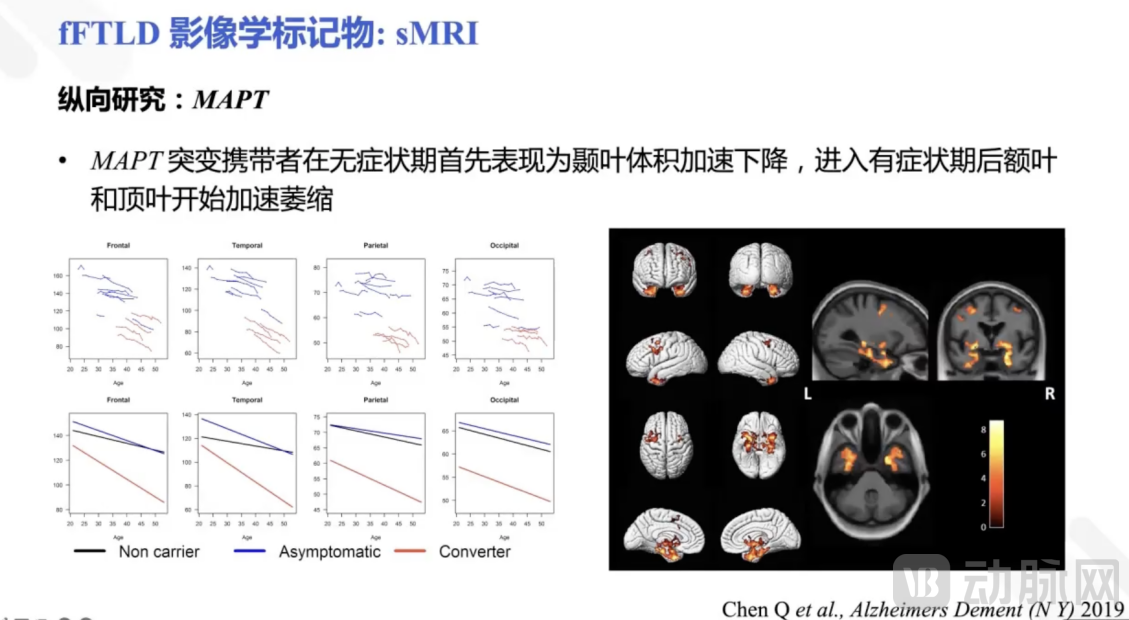 CLE International Brain Science Summit: Insights Shared by Professor Chen Qin
As the leading expert in China, Professor Chen Qin, in collaboration with experts and professors from six institutions including Xuanwu Hospital of Capital Medical University and Xiangya Hospital of Central South University, established the Chinese Familial Frontotemporal Lobar Degeneration Collaboration (CFFC) to align with international efforts in frontotemporal dementia cohort studies and database development. During the establishment of this Chinese cohort, the CFFC invited Bostone as a technical support partner to innovatively incorporate digital biomarker research into the cohort study, jointly exploring the value of speech-based digital biomarkers in the early diagnosis of frontotemporal dementia.
The afternoon session of the summit primarily focused on the application and future development of cognitive technologies.Kate Swaffer, Co-founder of Dementia Alliance InternationalandLiu Chongsheng, Secretary-General of the Digital Therapeutics Professional Committee, China Association for Medical Devices IndustryDelivered the opening remarks.
Keynote Speech Session,Professor Dong Birong, National Clinical Research Center for Geriatric Diseases (West China Hospital, Sichuan University)andProfessor Fan Li, National Clinical Research Center for Geriatric Diseases (Chinese PLA General Hospital)Presentations were delivered on “Community-Based Early Screening for Cognitive Disorders and Talent Development: A Preliminary Exploration of West China’s Age-Friendly Cognitive Practices” and “Building a Specialized Workforce for the Prevention and Treatment of Cognitive Disorders,” focusing respectively on community-based early screening for cognitive disorders in the elderly and specialized talent development.
Professor Dong pointed out that comprehensive control of disease risks in the population with mild cognitive impairment (MCI) is of great significance for the diagnosis and treatment of dementia. To fully implement social-level prevention and control, it is necessary to build on prior experience while effectively leveraging “digital tools.”
She further stated, “The National Clinical Research Center for Geriatric Diseases (West China Hospital, Sichuan University) and Bositen Technology have jointly established the National Joint Laboratory for Digital Therapeutics in Geriatric Cognitive Disorders this November. This is the first joint laboratory for digital therapeutics in China. We hope to leverage the laboratory’s research outcomes to develop digital technologies for early screening and non-pharmacological interventions for various types of geriatric cognitive impairment, generate evidence-based data by combining clinical and real-world study approaches, and accelerate the translation of related scientific and technological achievements into applications both within and outside healthcare institutions.”
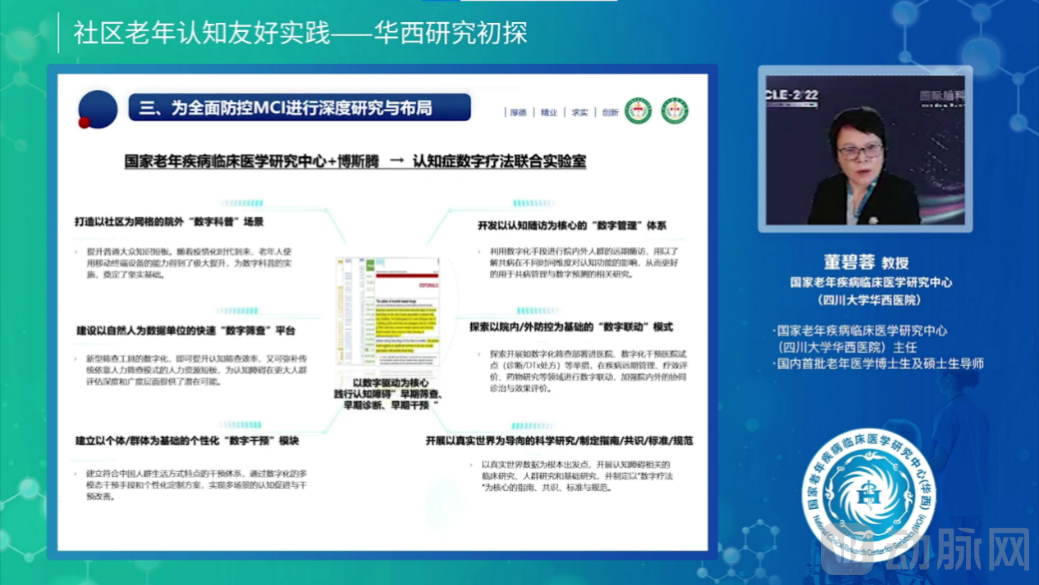 Sharing by Professor Bi Rong Dong at the CLE International Brain Science Summit
In terms of technology empowerment,Cao Zhiyi, Product Director of iFlytek HealthcareShared iFlytek Healthcare’s latest advancements in AI, its multimodal data-based early screening system for cognitive impairment, and AI-enabled end-to-end patient management.Dou Ruigang, Executive Secretary-General of the Tencent Public Welfare Charity Foundation and Head of the Tencent Silver Tech Lab, introducing the background behind the establishment of Tencent’s Sustainable Social Value Business Group and the objectives of the Tencent Silver Tech Lab, while sharing insights drawn from applying internet-centric thinking to expand health education scenarios for the elderly, as well as profound perspectives on AI-enabled early disease prevention.
During the “Live Dialogue” session with Bossten, Mr. Dou Ruigang stated that discussions are currently underway with Bossten regarding game-based digital therapeutics. The aim is to integrate capabilities in gaming and social networking with medical intervention outcomes, thereby promoting science popularization and early screening, enhancing adherence to and efficacy of interventions, and achieving the prevention and treatment of cognitive impairment.
Finally,Chen Nan, Co-founder of Bositeng TechnologyDelivered a keynote presentation titled “Cognitive Technologies Empowering the Prevention and Treatment of Cognitive Impairment” and summarized Bositen’s phased achievements in technological innovation and application. Currently, Bositen has established a digital, end-to-end proactive prevention system for cognitive impairment, encompassing public education, early screening, intervention, and a green-channel referral pathway to tertiary Grade A hospitals. Moving forward, the company will further leverage the technical advantages of speech-based digital biomarkers to accelerate the translation of research into practice in areas such as early subtyping of mild cognitive impairment (MCI) and intelligent speech training engines, while enhancing exchange and collaboration with domestic and international experts on the clinical diagnostic value of multimodal behavioral data.
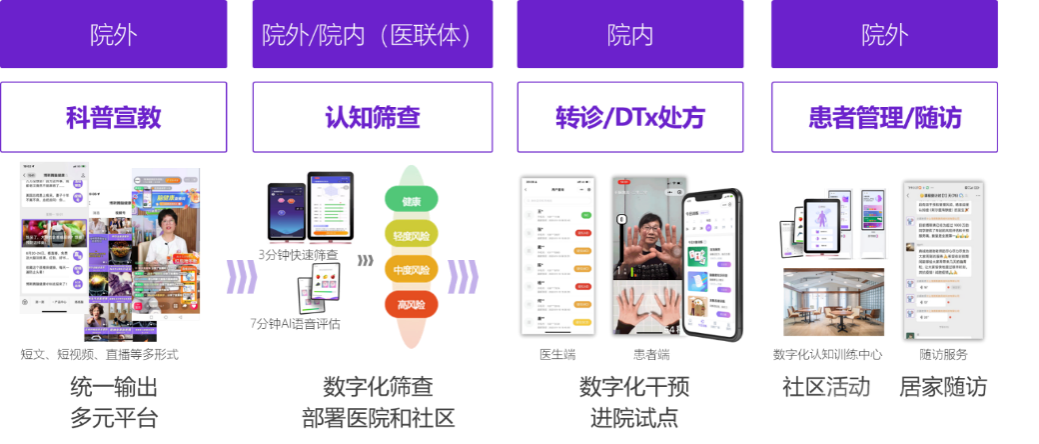
With this, the CLE·2022 International Brain Science Summit has successfully concluded. Amid the rapid development of the brain science healthcare industry and the continuous evolution of cutting-edge technologies, only by embracing trends and pursuing innovation can we unlock the greater potential of cognitive technology.
AnnualCLEInternational Brain Science Summit, aiming toBuildSustainable Development in the Field of Brain Science、An Open and Inclusive International Platform to Promote Exchange and Integration in Academia, Technology, and Industry. We look forward to more breakthroughs in brain science research emerging with the support of cognitive technology, thereby advancing the prevention and treatment of brain disorders.