

Da Vinci Hits a Wall: Where Is the Surgical Robotics Industry Headed?
As the most commercially successful surgical robotics company globally, Intuitive Surgical owns the da Vinci Surgical System, known as the “Hand of God.” Leveraging thousands of patents, it has monopolized the global market for laparoscopic surgical robots for nearly two decades. Its revenue grew from $27 million in 2000 to $5.71 billion in 2021, while its stock price once surged by 184-fold, a remarkable growth trajectory that once made it highly sought after by investors.
However, since 2022, Intuitive Surgical has encountered a growth bottleneck, with its stock price sliding from a high of $360 to a low of $180. Although its performance began to recover in the third quarter, the market remains divided on its future prospects. As the leading player in the surgical robotics niche, Intuitive Surgical has a profound understanding of the current situation and has made strategic moves through external investments. Perhaps these investments offer insights into Intuitive Surgical’s thinking on the future trajectory of the surgical robotics sector.
Stock prices reflect a company's operational performance to some extent, and Intuitive Surgical is no exception.
In June 2000, Intuitive Surgical made its debut on the NASDAQ. At that time, the market remained highly skeptical of the company, and its stock price continued to decline amid patent litigation lawsuits over the following two years. In 2003, the average share price was just $1.56, well below the initial public offering (IPO) price of $2.69. By 2021, Intuitive Surgical’s stock price had reached a high of $365, with a market capitalization exceeding $70 billion. This means that if someone had purchased 100 shares for $156 in 2003 and sold them 18 years later, that investment would have grown to $36,000.
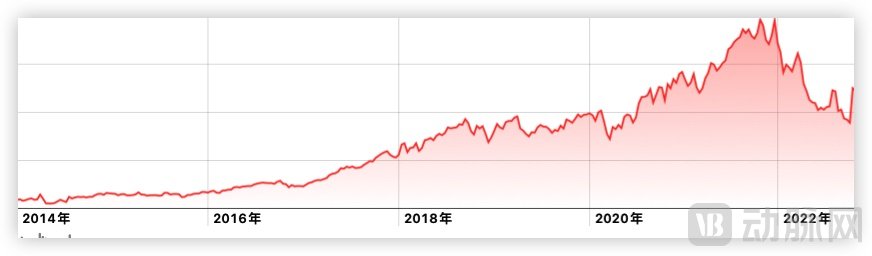
Intuitive Surgical's Stock Price Trend
However, by 2022, Intuitive Surgical’s stock price had dropped to as low as $180, less than half of its peak value, all due to slowing growth.
After a period of explosive growth, it is inevitable for an innovative enterprise to experience slowing sales as its original market approaches saturation.
As early as 2019, investment bank Piper Jaffray conducted a survey on the use of the da Vinci system among 1,912 U.S. hospitals and 7,312 physicians, finding that 71% of hospitals with at least 1,000 beds had already adopted the da Vinci robotic surgical system. “From a negative perspective, Intuitive Surgical’s penetration in medium-to-large hospitals is already sufficiently saturated, making it increasingly difficult to boost sales,” Piper Jaffray wrote in its report.
Subsequent operating performance also appeared to corroborate the Piper Jaffray report. Beginning in the fourth quarter of 2020, Intuitive Surgical’s sales began to decelerate, with only 326 systems sold during that quarter, half of which were trade-ins by existing customers, marking a slowdown in the company’s years-long high growth trajectory.
Meanwhile, Intuitive Surgical’s prized “equipment + consumables” business model has come under market scrutiny. In response, the company launched an “Extended Use Program” in European and American markets, increasing the permitted number of uses for certain commonly used instruments from the previous 10 to 12–18. While this measure reduces hospitals’ usage costs, it has adversely affected Intuitive Surgical’s revenue.
On the other hand, the previously soaring stock prices lured various capital players to continuously enter the market, bringing numerous competitors into the niche sector of surgical robots. For instance, Medtronic’s Hugo robot is used for urological and gynecological surgeries, while Johnson & Johnson entered the competition by acquiring Auris Health for $3.4 billion.
In the Chinese market, numerous companies are also preparing to challenge the dominance of the da Vinci system. The names of MicroPort MedBot and Weigao Surgical Robot even appeared as competitors in Intuitive Surgical’s 2021 annual report.
For Intuitive Surgical, mounting competition from all fronts has compelled it to rethink its future strategic layout. As the industry leader, the company has already established an ecosystem; its next priority is to further enrich this ecosystem to meet future challenges. To this end, it founded Intuitive Ventures, its venture capital arm. Before examining how Intuitive Surgical is positioning itself for the future, we must first review its current status.
As Intuitive Surgical’s flagship product, the timing of the da Vinci system’s launch and its business model will not be elaborated upon here; instead, we focus solely on an analysis of Intuitive Surgical’s patent portfolio surrounding the core technologies of surgical robots. As of the end of 2021, Intuitive Surgical held approximately 4,200 granted patents and had 2,100 pending patent applications.
These patents largely determine the product competitiveness of their surgical robots. Although a product’s commercialization capability encompasses pricing, sales, after-sales service, insurance coverage, and internationalization, its core competitiveness still lies in outstanding product strength, including capabilities in clinical comparison, product iteration, and indication development.
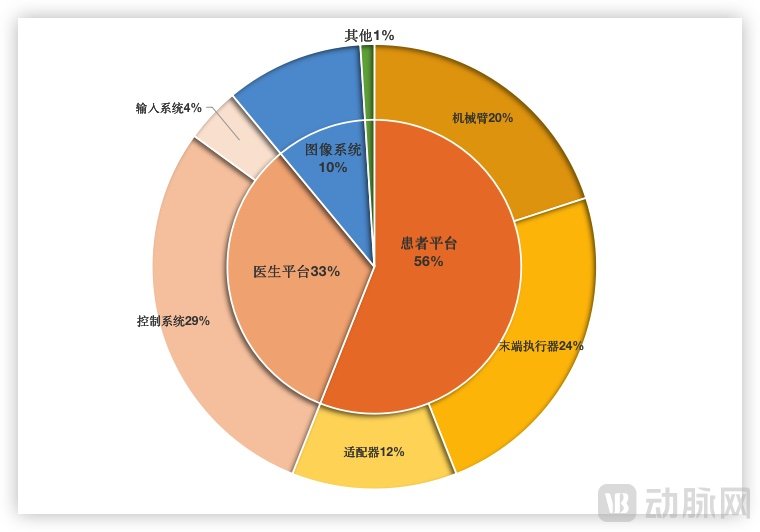
Intuitive Surgical Patent Classification, with data sourced from patent databases such as CNABS and CNTXT
Intuitive Surgical’s patents in the field of surgical robots are primarily concentrated in laparoscopic surgical robots. A broad classification of approximately 1,400 patent applications filed by Intuitive Surgical in this area reveals that the company has established comprehensive coverage across three main branches centered on its core technologies: the patient-side platform system, the surgeon-side platform system, and the imaging system. Among these, the patient-side platform system, which directly interacts with the patient, is the company’s R&D focus, accounting for 56% of its patent applications.
The patient-side platform system is primarily divided into two branches: the robotic arm and the surgical instruments (i.e., end effectors). Intuitive Surgical has maintained a relatively balanced patent portfolio across these two branches. The branch with a more extensive patent layout, namely surgical instruments, mainly involves surgical instrument design, identification and coupling of surgical instruments, and degrees of freedom in surgical instrument joints.
The physician platform serves as the surgeon’s console, enabling remote control of surgical instruments on the patient-side platform via input devices. Intuitive Surgical’s patent portfolio in this domain primarily focuses on design improvements to input devices (such as hand controllers and foot pedals) to enhance operational flexibility, comfort, and safety, as well as on providing haptic feedback to improve tactile sensation and achieve precise manipulation.
Furthermore, a key component of surgical robot systems is the imaging system. It provides dual-channel video capture and display capabilities for three-dimensional visible light images, offering surgeons a stereoscopic view. Intuitive Surgical’s patent portfolio in the area of imaging systems primarily covers imaging techniques and user interface designs to facilitate physicians’ access to information and interactive processing.
In addition to the hardware, the software suite accompanying the da Vinci system cannot be overlooked. With four major upgrades to the da Vinci surgical robot, the software has evolved into Da Vinci OS4. Beyond managing communication among the three modular components, this software provides simulation-based training capabilities, enabling surgeons to achieve proficiency in its operation. Furthermore, Da Vinci OS4 offers decision-support information during surgical procedures, thereby enhancing intraoperative assistance for surgeons.
From a patent perspective, Intuitive Surgical, as a pioneer in the surgical robotics industry, has leveraged its original research advantages to comprehensively arrange patents around its own technologies and products, thereby constructing a robust self-protective patent network. However, under U.S. law, the term of patent protection is 20 years, and Intuitive Surgical’s patents have been gradually expiring since 2017. As the core patents for the da Vinci Surgical System continue to expire, this will provide more market entrants in the robotics sector with development opportunities and technical references. Nevertheless, how should Intuitive Surgical itself build new competitive moats?
From the perspective of product portfolio, Intuitive Surgical’s main products include the da Vinci laparoscopic surgical robot and the Ion endoluminal surgical robot. The Ion system received FDA clearance in February 2019 for minimally invasive biopsy of deep lung tissue.
In this field, however, the Ion system does not enjoy the same first-mover advantage as the da Vinci system. Competitors to Intuitive Surgical include Johnson & Johnson, which acquired Monarch, a robotic system for lung biopsy, for $5.75 billion, and Olympus, which purchased Veran Medical Technologies, an interventional pulmonology company, for $340 million.
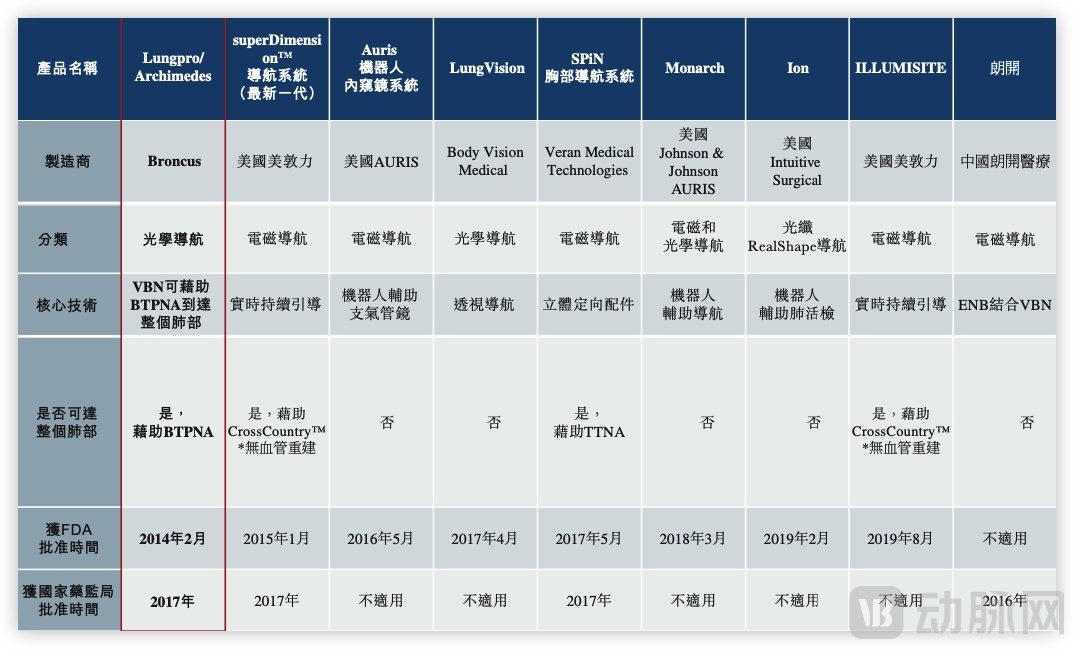
Ion and Its Competitors. Source: Broncus Medical’s Prospectus
As can also be seen from Broncus Medical’s 2021 prospectus, competition in this field is quite intense. Even in China, although the Ion system has passed the review by the National Medical Products Administration (NMPA) and been approved to enter the Special Review Procedure for Innovative Medical Devices, multiple companies—including Broncus Medical, Longhe Medical, MicroPort MedBot, Jingfeng Medical, Langkai Medical, Puli Medical, and Qiaojie Li Medical Robot—are already developing related products, making the future market landscape uncertain.
Although the da Vinci Surgical System has a broad range of indications, applicable across general surgery, gynecology and obstetrics, cardiothoracic surgery, and head and neck surgery, Ion, as the company’s second product, has yet to reach the level of success achieved by da Vinci. From the perspective of product portfolio strategy, this combination appears somewhat thin; particularly when looking ahead from a future-oriented standpoint, Intuitive Surgical’s product lineup seems to be lacking certain elements.
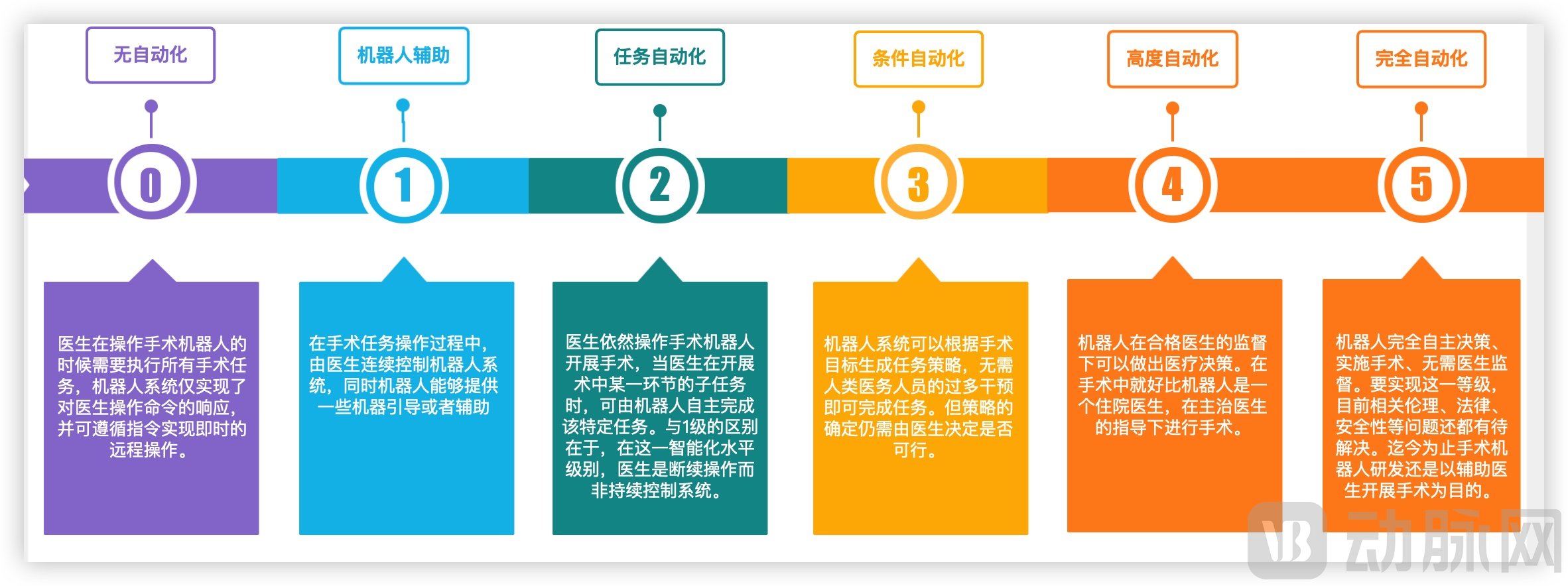
Classification of Automation Levels in Medical Robotics, from “Medical robotics—Regulatory, ethical, and legal considerations for increasing levels of autonomy”
Science Robotics, a subsidiary journal of Science, once published an article titled “Medical robotics—Regulatory, ethical, and legal considerations for increasing levels of autonomy.” The article focused on the issue of grading automation in medical robots and defined six levels of automation for medical robots. In terms of trends, surgical robots are also developing towards automation and intelligence, reducing the need for manual operation by doctors.
Currently, only a few surgical robots have reached Level 1 automation, while the da Vinci system remains at Level 0. With advancements in technology and artificial intelligence, greater expectations are being placed on the intelligence of surgical robots. Level 2 automated surgical robots are becoming a key target for numerous research teams. For instance, Johns Hopkins University and the Children’s National Hospital in the United States have jointly developed a supervised autonomous soft-tissue surgical robot. This system can autonomously perform suturing at locations designated by the surgeon, who retains the ability to intervene when necessary.
Although the ultimate goal of surgical robots is to transition from an auxiliary role to that of the primary operator, progress must be made step by step. At present, surgical robots should integrate preoperative and intraoperative imaging to further enhance surgical precision. Meanwhile, by incorporating augmented reality visualization technology, they enable surgeons to achieve precise positioning and manipulation through the fusion of multi-sensory feedback—including shape, position, and haptic information—thereby facilitating easier completion of surgical procedures. Looking ahead, it is also essential to lay the foundation for future development by establishing a digital ecosystem centered on artificial intelligence, leveraging large-scale datasets of medical images and electronic health records to build machine learning models.
Against this backdrop of industry development, it becomes easier to understand Intuitive Surgical’s investment strategy.
As an industry leader, Intuitive Surgical’s investment intentions are not easily discernible under the spotlight of its star product, the da Vinci system. However, a different perspective may emerge by shifting focus to its competitors.
Johnson & Johnson has not been in the field of interventional surgical robots for long, but it has initially formed a layout through mergers and acquisitions. For example, by acquiring Auris Health, founded by Dr. Frederic Moll, one of the founders of Intuitive Surgical, J&J obtained a lung surgery robot; by acquiring the French company Orthotaxy, J&J used its technology to develop the VELYS orthopedic surgery robot; and it is also developing the Ottava laparoscopic surgery robot.
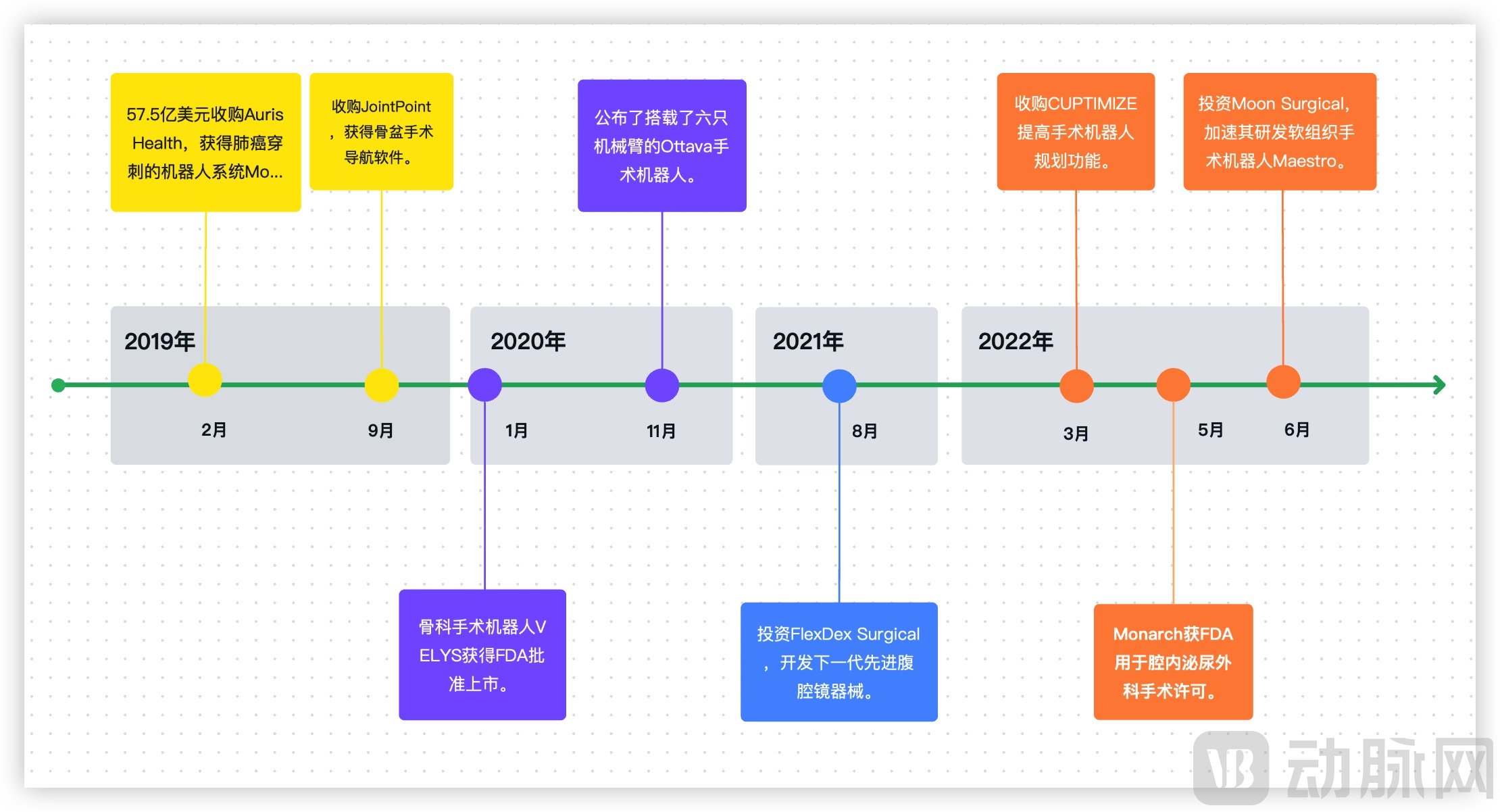
Johnson & Johnson's Key Strategic Layout in the Surgical Robotics Field, Based on Public Information
Among these, the VELYS platform best exemplifies Johnson & Johnson’s strategic layout in surgical robotics. In addition to its existing technologies, Johnson & Johnson has continuously expanded its indications through acquisitions, spanning from knee arthroplasty to hip surgery, artificial ball-and-socket joints, and JointPoint’s pelvic surgical navigation software. This suite of products constitutes Johnson & Johnson’s orthopedic surgical ecosystem.
Of course, the data technology capabilities provided by Verb Surgical, which Johnson & Johnson acquired from Google’s life sciences division Verily, are also indispensable. With these capabilities, Johnson & Johnson can build a comprehensive surgical platform that encompasses data analysis and monitoring throughout the entire treatment cycle—preoperative, intraoperative, and postoperative—rather than being confined solely to the operating room. Furthermore, this data system will not only be applied within the VELYS platform but will also be integrated into the future Ottava system.
We can observe that Johnson & Johnson is pursuing a strategy in the surgical robotics field centered on data-driven approaches and the integration of multiple solutions to create a generalized platform, while simultaneously exploring cutting-edge devices on the R&D front. With Johnson & Johnson as a reference point, we may find it easier to understand Intuitive Surgical’s investment choices. Judging from Intuitive Surgical’s investments, the application of data will become an indispensable component of surgical robotics in the future; four out of its seven investments have been focused on data applications.
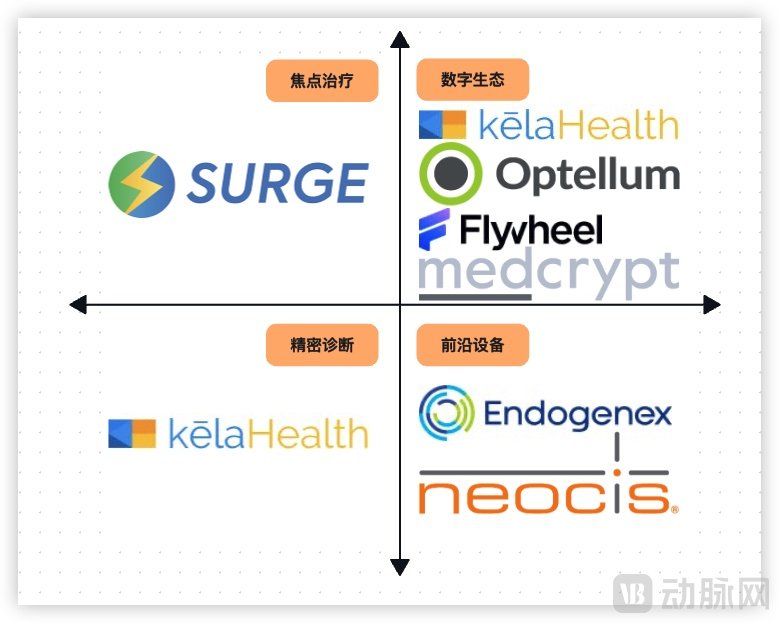
Intuitive Surgical's Investment Matrix
Optellum
Optellum is an AI-driven medical technology company based in Oxford, UK, specializing in the development of artificial intelligence platforms for early lung cancer diagnosis. This platform primarily provides AI-powered clinical decision support for lung cancer management, helping physicians identify and monitor high-risk patients and assist in diagnosis, thereby enabling patients to initiate treatment more promptly. It is the first and only company to have received FDA clearance, EU CE-MDR certification, and UK UKCA marking for its software platform, Virtual Nodule Clinic.
KelaHealth
KelaHealth is dedicated to building an intelligent surgical platform that provides risk prediction and recommends interventions for nine major categories of intraoperative complications during the perioperative period, thereby enhancing the quality of surgical care and clinical practice. The KelaHealth platform’s models are developed based on big data and can be tailored to meet the specific needs of different hospitals.
Flywheel
Flywheel is a biomedical research data platform for medical imaging and related data. It automatically acquires, categorizes, and analyzes data from multiple sources, including radiological images, digital pathology slides, electronic health records, and diagnostic tests, ultimately generating ready-to-use standardized datasets for researchers and developers. Previously, significant time and effort were required to locate, curate, and organize data—a process that was not only labor-intensive and time-consuming but also prone to errors. The emergence of Flywheel has enhanced the efficiency of data utilization.
MedCrypt
MedCrypt is a company that provides data security services for medical devices. Its SaaS-based data protection system for medical devices prevents cyberattacks and unauthorized access. The system is compatible with a wide range of medical devices, such as medical imaging equipment, cardiac pacemakers, and surgical robots.
For Intuitive Surgical, more than half of its investments have been allocated toDigital EcosystemIn terms of strategic development, this also signals the industry leader’s outlook on future growth. Whether it is leveraging Optellum’s technology to enhance the competitiveness of its Ion robotic system, integrating KelaHealth to support patients throughout the entire perioperative period, or harnessing Flywheel’s capabilities to unlock deeper value from medical imaging, Intuitive Surgical aims to build a comprehensive surgical platform that delivers value across preoperative, intraoperative, and postoperative stages, rather than merely providing a standalone surgical tool.
In addition to building a digital ecosystem, Intuitive Surgical is also highly interested in focused therapeutic solutions. For instance, while surgery is the standard treatment for most patients with solid tumors, more than 40% of patients experience recurrence within five years postoperatively. Recurrence and metastasis account for 90% of cancer-related deaths, which is associated with surgery-induced immunosuppression. SURGE, a company invested in by Intuitive Surgical, is developing immunotherapies that can be directly injected into the tumor resection site (intraoperative immunotherapy). This approach aims to reprogram the body’s response to surgery from immunosuppressive to immunostimulatory, thereby triggering the patient’s immune system to destroy local and distant residual cancer cells, reducing recurrence rates and improving survival. In other words, at some point in the future, surgical robots will not merely perform tumor resections but will also administer immunotherapy during the surgical procedure.
Investing in Neocis targets the dental sector. Neocis’s Yomi is the first and only FDA-approved surgical robot system in dentistry. Since its launch, the Yomi robot has been used in over 20,000 implant surgeries and nearly 1,000 full-arch restoration procedures.
Notably, Neocis’s software product, YomiPlan Go, has received FDA 510(k) clearance. It is a software-based workflow that visualizes patients’ anatomical structures, enabling clinicians to determine the ideal position and angle for implant placement using drill guides, followed by robot-guided surgery. In the YomiPlan Go mode, clinical surgical planning does not require CT scans, thereby simplifying the preoperative preparation process. For physicians, this rapid and flexible workflow resembles freehand surgery, while robotic assistance ensures procedural precision.
In the fertile ground of the United States, which is highly conducive to the development of dentistry, the oral healthcare services market exceeds $150 billion, with nearly two-thirds of the population holding some form of dental insurance, highlighting the immense scale of the opportunity. Neocis has targeted the field of dental robotics—a sector with strong demand but limited competition—making its prospects promising. Perhaps Intuitive Surgical sees in Neocis a reflection of its own early days.
Overall, Intuitive Surgical, which built its success on technology, aims to remain at the forefront of technological transformation. Its interests extend beyond surgical robotics to encompass disease prevention and even non-surgical therapeutic approaches. Nevertheless, based on its investment activities over the past year or so, Intuitive Surgical’s primary focus remains on medical devices and digital tools that can be integrated into its existing ecosystem.
In fact, it is not just Intuitive Surgical; its competitors, such as Medtronic and Johnson & Johnson Medical, are following the same path. The next decade may well be characterized by the convergent development of various medical technologies, with digital tools, biotechnology, and medical devices intersecting. Although practical considerations—such as product registration, insurance reimbursement, and regulatory policies—must be taken into account, the market launch of new devices featuring high levels of technological integration is far from out of reach. Those who strategically position themselves early and possess the capability to operate and integrate across technological domains will be poised to capture the value created by this convergence.