

WeDoctor Launches National Home Healthcare Security Platform in Response to CMA Internet Medicine Branch Initiative
With the recent optimization of epidemic prevention and control policies, China is currently experiencing a peak in COVID-19 cases. Recently, the Internet Medicine Branch of the China International Exchange and Promotion Association for Medical and Healthcare (hereinafter referred to as the “Internet Medicine Branch”) has called upon social forces to leverage internet and digital technologies to provide home-based medical security for people across China.
In response to the initiative of the Internet Medicine Branch, WeDoctor, a digital healthcare platform, together with its affiliated internet hospitals and the Sanming Procurement Alliance, swiftly launched the “National Home-Based Healthcare Security Platform.” This platform leverages the convenience and efficiency of internet-based medical services, pools expert physician resources, and ensures smooth pharmaceutical supply chains. It provides online medical, insurance, and pharmaceutical services to patients with mild COVID-19, chronic diseases, and common illnesses, thereby meeting the public’s healthcare needs under the “new normal” of epidemic prevention and control.
On the day of its launch, the platform also prominently released the “Guidelines for Home Recovery of COVID-19 Patients,” authored by the Internet Medicine Branch. The lead author was Professor Lu Hongzhou, Director of the WHO Collaborating Centre for Training and Research on Clinical Diagnosis and Treatment of Emerging Infectious Diseases, Member of the National Expert Committee on Disease Prevention and Control, President of Shenzhen Third People’s Hospital, Fellow of the American Academy of Microbiology, and Vice Chairman of the Internet Medicine Branch of the China Medical Promotion Association. These guidelines provide scientific advice on issues of public concern, including nucleic acid testing, daily protective measures, medical consultation and medication for COVID-19, and home-based recovery, thereby jointly strengthening the health defense line.
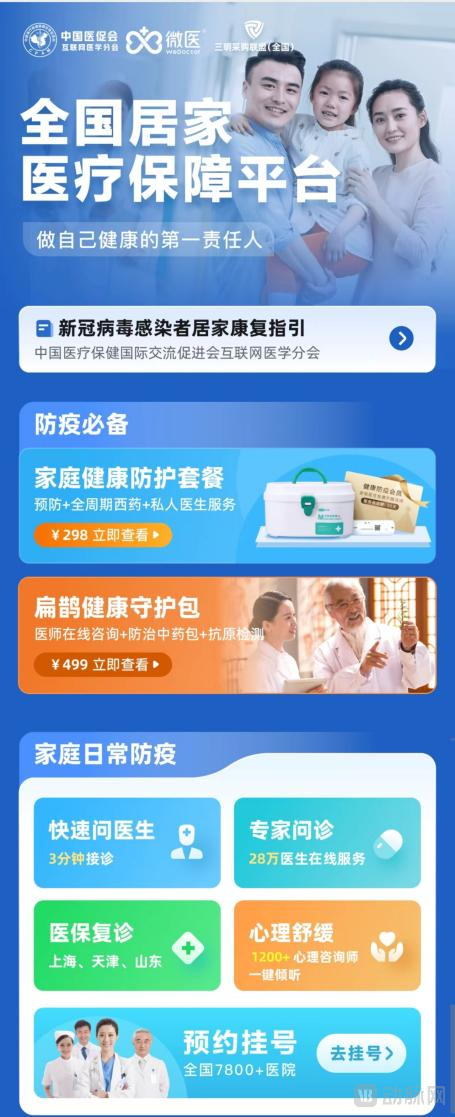
(Figure | The platform provides professional guidance for patients with mild COVID-19 and other common diseases)
On December 7, the Joint Prevention and Control Mechanism of the State Council issued the "Notice on Further Optimizing COVID-19 Prevention and Control Measures." As regions across China accelerated the implementation of these optimized measures, public demand for home-based medical and health services became increasingly prominent. Key issues drawing significant social attention included home rehabilitation for asymptomatic individuals and those with mild cases, follow-up consultations and medication access for patients with severe or chronic conditions, and health maintenance for vulnerable groups such as the elderly, infants, young children, and pregnant or postpartum women.
Currently, “Internet + Healthcare” has become a crucial means of addressing the public’s challenges in accessing medical care. The Notice on the Work Plan for Tiered Diagnosis and Treatment of COVID-19 Based on Medical Consortia, issued by the Comprehensive Group of the State Council’s Joint Prevention and Control Mechanism, emphasizes leveraging the convenience and efficiency of internet-based medical services. It calls for the active use of information platforms and technological tools—such as internet hospitals, online diagnosis and treatment platforms, and official new media platforms—to conduct online health assessments, provide home-based health guidance, deliver health education, and offer psychological counseling, while also providing internet-based diagnosis and treatment services along with home delivery of prescribed medications.
The Internet Medicine Branch is a subsidiary organization under the Chinese Medical Doctor Promotion Association. Since its establishment, it has continuously explored new technologies, methods, and models in internet healthcare and digital healthcare in the new era. It actively participates in the formulation of national policies related to internet healthcare and consistently contributes to the healthy development of emerging business formats in this field.
To better leverage the positive role of internet-based healthcare in the new context, the Internet Medicine Branch calls on medical institutions across China, experts and scholars in public health, internet healthcare practitioners, pharmaceutical supply platforms, and other social forces to provide home-based healthcare security for people nationwide through internet and digital means. This initiative aims to address, to the greatest extent possible, urgent needs such as self-prevention and monitoring, health science popularization, supply assurance, and psychological guidance.
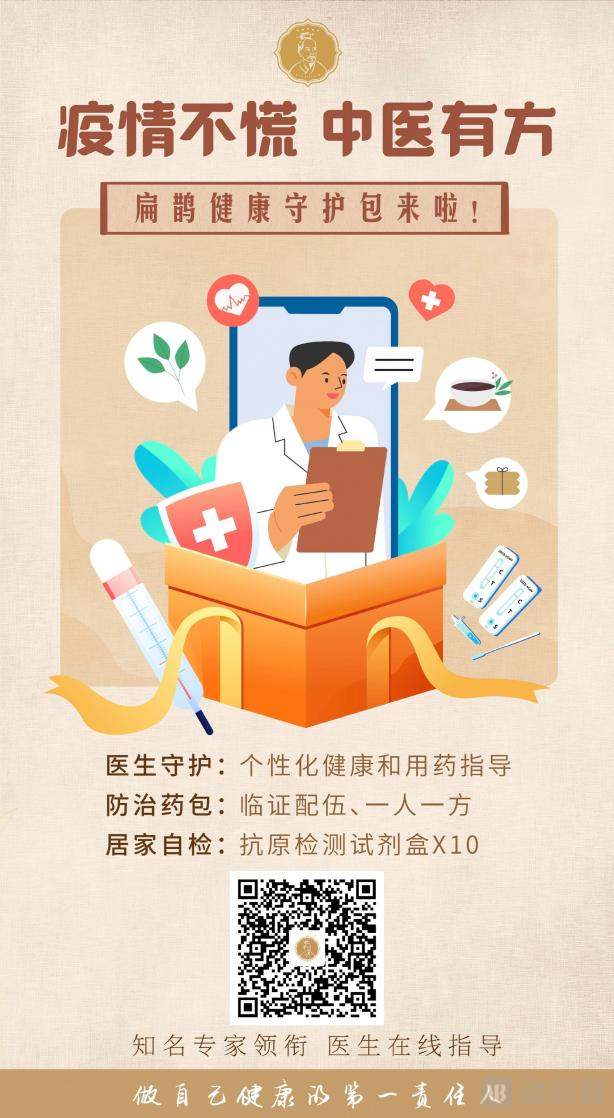
(Figure | The "Bianque Health Guardian Package" provides considerate, professional, and practical home-based TCM health services)
As China’s largest digital healthcare service platform, WeDoctor has taken the lead in responding to the call from the Internet Medicine Branch. Its internet hospitals in Tianjin, Shandong, Shanghai, and other regions, along with institutions such as the Bianque Internet Hospital of Traditional Chinese Medicine, have collaborated with experts and physicians nationwide to rapidly launch the “National Home-Based Healthcare Support Platform.” Users can conveniently access the platform by logging into the “WeDoctor App” or via the menu bars of the “WeDoctor” or “WeDoctor Health” WeChat official accounts.
Through the platform, the public can conveniently schedule appointments and connect with 280,000 doctors nationwide at the click of a button, accessing services such as health consultations, medication guidance, and online follow-up visits. With response times as fast as three minutes, the platform also supports online medical insurance settlement and home delivery of medications in select regions, thereby reducing the risk of cross-infection associated with offline visits.
The platform has launched a dedicated psychological support section, fully leveraging its resources of specialists in psychology and psychiatry to provide psychological counseling, emotional support, and mental health management. It has also organized authoritative experts to develop daily epidemic prevention guidelines, offering guidance on home self-testing, isolation treatment, protective measures for the elderly and children, and the use of commonly stocked household anti-epidemic medications, thereby empowering individuals to take primary responsibility for their own and their families’ health.
Notably, the platform has invited renowned experts from across China to lead a team of traditional Chinese medicine (TCM) practitioners in launching the “Bian Que Health Guardian Package.” This comprehensive product and service bundle combines “online consultations with professional physicians,” “complimentary preventive and therapeutic herbal packs,” and “antigen testing” to provide considerate, professional, and practical at-home health protection. The preventive and therapeutic TCM packs included in the “Bian Que Health Guardian Package” were scientifically formulated by TCM experts based on the Diagnosis and Treatment Protocol for Novel Coronavirus Pneumonia (Trial Version 9). Taking into account current viral prevalence and the trend toward milder symptoms, the experts developed a 3-day preventive formula and a 5-day therapeutic formula, achieving “syndrome-based compatibility and personalized prescriptions.” Additionally, the platform simultaneously launched the “Family Health Protection Package,” which includes online physician consultation services and protective supplies such as COVID-19 test kits, daily protective items, and epidemic prevention medications, thereby providing a one-stop solution for the public’s at-home needs for medical care, medication, testing, and nursing.
“Current COVID-19 prevention and control efforts are entering a new phase. In response to the public’s urgent healthcare needs, it is essential to further deepen the application of internet technologies in the medical field. By fostering synergy between ‘online and offline’ services, we can provide the public with safe, reliable, affordable, and convenient healthcare services,” stated Professor Lu Hongzhou. He emphasized that while safeguarding people’s lives and health, providing scientifically sound and effective guidance on epidemic prevention and alleviating current public anxiety are integral aspects of leveraging digitalization to upgrade healthcare service models.