

Interview with Zhong Boyu of Taili Biopharma: Differentiated Innovation by Targeting the 'Undruggable'
Tyligand Bioscience
Small Molecule and Antibody-Drug Conjugate Developer
For innovative small-molecule drugs, a relatively mature sector, how to achieve differentiation amidst competition is a question that all companies entering this field must continuously and deeply contemplate.
Taili Biotechnology is a small-molecule innovative pharmaceutical company with independent insights into innovation and differentiation. It focuses on discovering and developing highly accessible small-molecule cancer therapies to address drug resistance in refractory tumors such as lung cancer, pancreatic cancer, and triple-negative breast cancer.
2018 marked a golden era for the development of China’s biopharmaceutical industry. Over the subsequent four years, we witnessed the rise of innovative modalities such as large-molecule therapies, gene therapy, and cell therapy. However, Taili Biotechnology did not follow the trend; instead, it directly targeted the seemingly highly competitive small-molecule sector. By maintaining its independent approach and dedicating four years to focused refinement, the company has gradually distinguished itself.
What Gives Taili Biotechnology the Confidence to Focus on Innovative Small-Molecule Drugs? Where Does Its Technological Innovation Stem From, and How Does It Achieve Differentiated Positioning? Recently, VCBeat’s New Medicine sector spoke with Dr. Zhong Boyu, Co-founder of Taili Biotechnology.
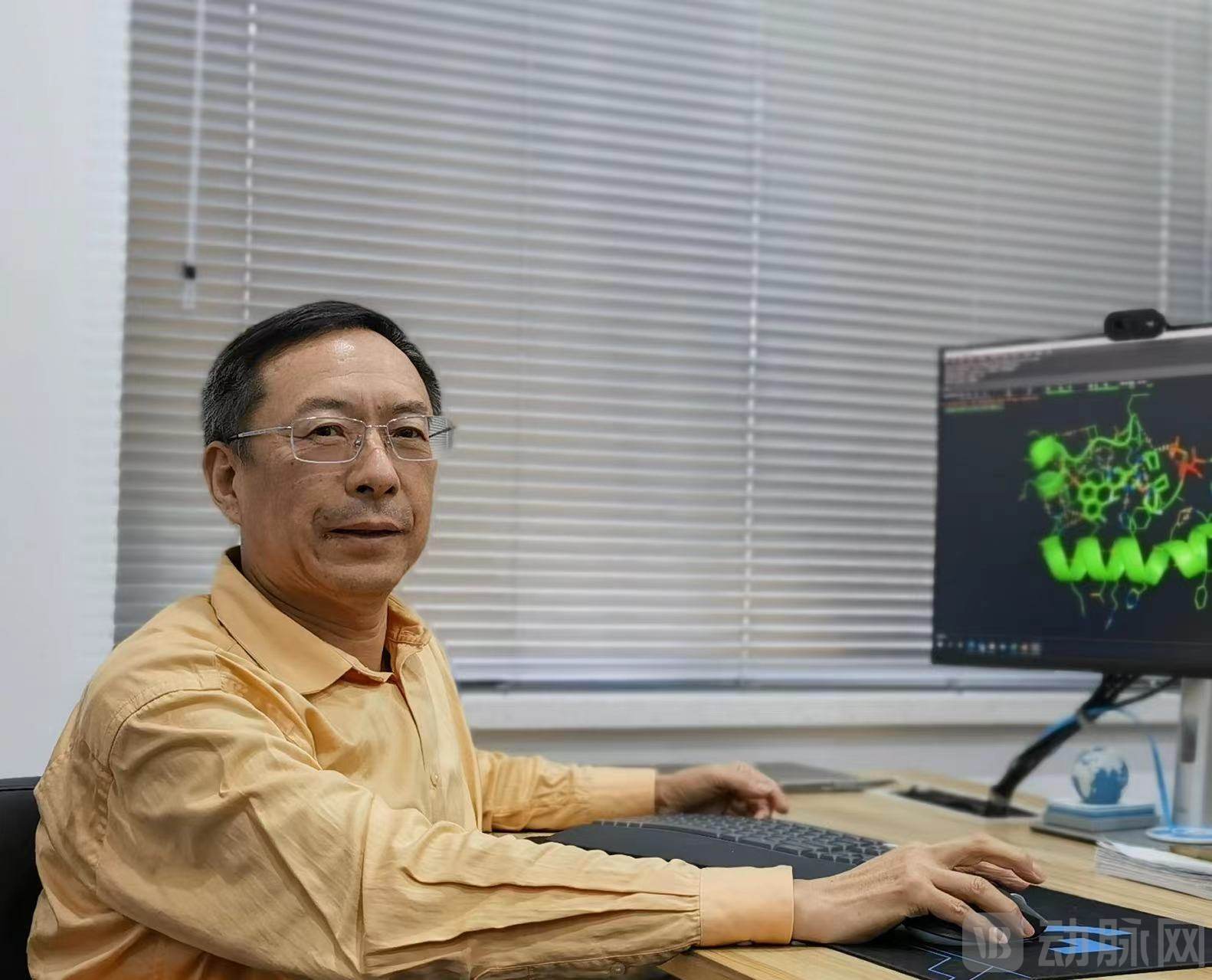
Zhong Boyu, Co-founder and CSO of Taili Biotechnology
After several years of new product research and development at Sinopec, Zhong Boyu discovered a strong interest in structurally complex drug molecules, prompting him to pursue graduate studies in the United States in 1991. Initially, he had the privilege of studying under the renowned glycochemist Professor Roger W. Binkley at Cleveland State University, where he applied coupled gas chromatography–mass spectrometry (GC-MS) to investigate the unique reactions of carbohydrates. In 1993, he joined the research group of Professor Richard B. Silverman, a luminary in medicinal chemistry at Northwestern University. There, he pioneered the use of tools such as protein–drug conjugates, polymer–drug conjugates, protein degradation technologies, multifunctional molecules, and isotopic labeling to explore the mechanisms of action of nervous system drugs. From 1998 to 2000, under the guidance of Professor Andrew G. Myers, a master of organic synthesis, Zhong completed the final component of his professional training in medicinal chemistry at the California Institute of Technology and Harvard University, thereby establishing a solid foundation in the synthesis of challenging molecules.
Before co-founding Taili Biotechnology, Zhong Boyu and Zhang Yantao met at the multinational pharmaceutical company Eli Lilly. In 2000, after completing his postdoctoral training at Harvard University, Zhong joined Eli Lilly to engage in new drug research and development. Initially, he was responsible for utilizing high-throughput combinatorial chemistry platforms to identify initial active compounds targeting drug targets. Later, he focused on the R&D of novel kinase inhibitors for oncology. Immersed in Eli Lilly’s robust scientific culture, he gained comprehensive knowledge and technical mastery across all aspects of new drug development, including computational chemistry, tumor biology, structural biology, drug metabolism, toxicology, and formulation.
At that time, Zhang Yantao, who had been engaged in chemical process design at Eli Lilly’s R&D headquarters for several years, began to oversee the company’s collaborations with Chinese research institutions. In 2002, he represented Eli Lilly in leading the establishment of Kaotuozhe Chemistry, one of the earliest CRO companies in Zhangjiang (later renamed ChemPartner).
Previously, the two had deep respect for each other’s expertise in their respective fields, and their communication grew increasingly substantial due to the close collaboration between the CMC process department and early compound optimization. After the establishment of Trailblazer Chemistry, there was an urgent need for on-site guidance from senior medicinal chemists to train employees and improve efficiency. Zhong Boyu was dispatched by the company several times to Zhangjiang for short-term assignments, where he helped cultivate a large cohort of young chemical talent.
Zhong Boyu and Zhang Yantao followed different career paths, yet they accumulated complementary experiences in distinct ways, laying a solid foundation for the establishment of Taili Biotechnology.Zhang Yantao has remained with Eli Lilly, participating in the management of the company’s global R&D pipeline.Led the CMC design and industrialization of multiple new drugs, responsible for collaborations with Chinese CMOs, andUltimately becomingFounding Managing Director of Eli Lilly China R&D Center, and Chief Scientist of the Small Molecule Design and Development Department.
Zhong Bo Yu ZeSpent 10 years at Eli Lilly and advanced two molecules into clinical developmentSubsequently, he joined the CRO company CrownBio in 2010 and served as Vice President of Medicinal Chemistry. Leveraging his unique insights, he established a comprehensive modern drug discovery and development process in China—from the identification of initial hit compounds to the selection of clinical candidates—despite the challenging conditions prevalent in the country at that time.Led the molecular design and preclinical development of five projects, including bozitinib.In 2014, he joined the U.S. startup ImmuneSensor Therapeutics as Chief Scientist, collaborating with renowned immunologist and cGAS discoverer, Academician James Chen of UT Southwestern Medical Center, to explore the functional regulation of proteins in the STING signaling pathway for the treatment of cancer and autoimmune diseases. Later, Zhong Boyu was invited to join Gan & Lee Pharmaceuticals as Vice President of Chemical Drug R&D. This marked his completion of a career transition from international pharmaceutical companies to CROs and then to leading new drug development at domestic pharmaceutical firms, thereby honing his resilient and practical leadership skills.
Traveling between China and the United States,Zhong Boyu has accumulated over 20 years of multinational experience in the research and development of novel anti-tumor drugs. Eight chemical molecules designed by him have entered clinical trials. Among them, bozitinib, a cMET inhibitor spearheaded by his R&D efforts and named after him, is advancing the most rapidly.It is currently the most selective cMET kinase inhibitor, has reached Phase III clinical trials, and is poised for imminent approval of its New Drug Application (NDA) in the United States. Meanwhile, this drug has been included in the Breakthrough Therapy designation in China, with its NDA recently submitted to the Center for Drug Evaluation (CDE), where it is benefiting from priority review.
Whether leading R&D at a pharmaceutical company or a CRO, Zhong Boyu has always been exploring more effective approaches to discovering novel small-molecule drugs. After witnessing the breakthrough development of China’s biopharmaceutical industry, his intention to launch a startup became even clearer.
In 2018, coinciding with Zhang Yantao’s early retirement from Eli Lilly, he was filled with interest and enthusiasm for building a novel drug R&D platform characterized by a distinct approach and a lean, agile structure. Recognizing that finding a medicinal chemist with a sustained track record of success in drug development—like his old friend Zhong Boyu—was even more difficult than finding a giant panda, the two co-founded Taili Biotechnology.
Leveraging the founders’ extensive experience in small-molecule development, Taili Biotechnology was established with a clear focus on differentiated molecular design. By targeting mechanisms of tumor drug resistance, the company is dedicated to developing highly accessible small-molecule cancer therapies.
In Zhong Boyu’s view, their joint entrepreneurial journey was a natural and inevitable process that emerged organically over time. Their complementary professional backgrounds have infused Taili Biotechnology with an innovative DNA, fueling its growth.
Both chemists, they are proficient in all aspects and processes from compound optimization to IND filing. In terms of professional division,Zhong Boyu focuses on R&D, with extensive experience in the discovery, design, and development of drug molecules, while Zhang Yantao specializes in project initiation and pipeline management, molecular design, CMC process development, and external collaborations.In terms of resource connections, the two individuals have been deeply engaged in new drug R&D both domestically and internationally for many years, cultivating a broad network of senior scientific researchers and gaining profound insights into the capabilities, potential, and accessibility of ecosystem resources.
“However, our division of labor is not rigidly defined; rather, we each have our own areas of focus. Many decisions are made through joint consultation. At times, one of us will finish the other’s sentences, while at other moments, our intellectual clashes lead to sudden insights.” Zhong Boyu and Zhang Yantao have developed a tacit understanding in managing their roles during the growth of Taili Biotechnology, allowing them to leverage their respective strengths while seamlessly complementing each other.
The technology for small molecules is mature, with low barriers to entry and intense competition within the same target. It is very difficult to generate differentiated data among molecules in the preclinical stage, yet this is what the industry needs most.
Fortunately, the two founders have extensive experience and have learned from many past missteps. Building on technological innovation and centered on the principle of “Be different,” they rigorously evaluate multiple dimensions from the very inception of each project, including clinical needs, competitive landscape, their own technological advantages, and the scientific rationale underlying the target.
Supported by this rigorous project initiation strategy, Taili Biotechnology has taken the lead in launching two promising product pipelines—TSN084 and TSN222—with rapid clinical progress.
TSN084 is a multi-kinase inhibitor that targets CDK8/19 and several other kinases closely associated with tumor proliferation and immune evasion.Apart from Taili Biotechnology’s TSN084, only one other CDK8/19 inhibitor has entered clinical trials globally: Ryvu Therapeutics’ RVU120.
What are the differentiating features of TSN084? According to Zhong Boyu, RVU120 is a single-target inhibitor; in comparison, TSN084The most important feature is its resistance to drug-resistant mutations.In inhibiting multiple pathways involved in tumor growth and immune evasion, TSN084 targets not only CDK8/19 but also pathways such as cMET, FLT, and NTRK. Amid the prevailing trend in kinase inhibitor research shifting toward highly selective agents, TSN084’s favorable tolerability and its capacity to launch a multi-targeted, multifaceted attack on tumors hold the promise of unlocking significant market potential across broad pan-tumor indications.
Taili Biotechnology has extended the differentiated innovation of TSN084 to TSN222, a global first-in-class bifunctional tumor immune agonist.
Zhong Boyu mentioned,TSN222, through its bispecific focus, is dedicated to addressing the issue of limited durability of efficacy associated with traditional immune agonists.“Currently, all small-molecule immune agonists that have entered clinical trials globally function as single-agent activators of the innate immune system, and their efficacy has been less than ideal. Taili Biotechnology has adopted a dual-functional approach: it not only activates interferon production but also achieves selective tumor killing through the sequential release of toxins. This mechanism helps establish durable T-cell immune memory, thereby controlling the development, growth, and metastasis of distant and newly emerging tumors, enabling sustainable cancer immunotherapy and overcoming the limitations in clinical efficacy.”
Differentiated Pipeline Strategy: Does It End Here? In its conversation with Zhong Boyu, VCBeat New Medicine sensed Taili’s greater ambition—focusing on phosphatases, long considered undruggable.
Currently, phosphatases are regarded as an urgent area for development in small-molecule innovative drugs, with enormous potential but poor druggability. However, no phosphatase-targeting drug has been marketed globally, and the few candidates entering clinical studies are all focused on allosteric inhibition mechanisms with high structural similarity, highlighting the significant challenges in drug development.
This highlights the influence of another co-founder of Taili Biotechnology, Zhang Zhongyin.Professor Zhang Zhongyin is the Chair of the Department of Medicinal Chemistry and Molecular Pharmacology at Purdue University and the Director of the Purdue Center for Drug Discovery. He isA leading authority in the global field of protein phosphatase research, ranking first worldwide in both the number of publications and citations in the relevant PTP field.Leveraging its collaboration with Purdue University and the scientific research strength of Professor Zhang Zhongyin’s team, Taili Biotechnology has established a protein phosphorylation molecular regulation technology platform to further optimize its differentiation strategy.
“Developing ligands for phosphatases into drugs demands exceptionally high standards in molecular design and synthesis. Leveraging our team’s insights into structural biology and signaling pathways, Taili Biotechnology demonstrates unique ingenuity in molecular design. Furthermore, we possess globally leading expertise in synthetic chemistry. The complexity of molecular synthesis serves as a rare competitive barrier for us, as easily synthesized molecules are often the most prone to intense market competition.” In Zhong Boyu’s view, the development of the two core pipelines, TSN084 and TSN222, has laid a solid material and scientific foundation for Taili Biotechnology to deeply engage in the precise and multi-dimensional regulation of biomolecular phosphorylation levels.
Since its establishment in 2018, Taili Biotechnology has gradually built core competencies centered on in-house design and manufacturing.
In terms of technology, we have a multifunctional drug molecule design and development platform, including compound molecular design and synthesis, as well as process development. Especially for some high-difficulty drug molecules, Taili can quickly develop suitable process scale-up paths and provide multiple druggability solutions.
In terms of project management,Taili Biotechnology places great emphasis on the speed of drug development,Through a series of innovative initiatives, the speed and quality of preclinical research have been pushed to the limit. Taking TSN084 as an example, after receiving IND approval from the U.S. FDA in October 2021, it obtained IND approval from China’s CDE just three months later, and completed the first patient dosing in the United States within less than two months thereafter.
In addition to focusing on efficiency,Taili Biotechnology also maintains strict fund management.In Zhong Boyu’s view, making efficient use of every “bullet” provided by investors is not only a demonstration of responsibility toward investors and the foundation for earning their trust, but also an opportunity to challenge the team’s creativity and managerial capabilities. “Building on our previous two rounds of financing, we have established a team of more than 60 people,Facilitated the US and China clinical trial applications for three in-house developed projects; secured Chinese rights to a Phase II investigational drug from an overseas clinical trial through collaboration; entered into an ADC partnership with Qide Medicine; and completed the renovation of a 4,500-square-meter laboratory and production facility.”
Discussing the collaboration with Qide Pharma, Zhong Boyu noted that amid the current surge in popularity of ADC therapies, most efforts have been concentrated on modifications to linkers and antibodies, while payload options remain limited to a handful of long-established toxins.Taili Biotechnology took approximately three months to identify a molecule with independent intellectual property rights and strong druggability, and proceeded with process scale-up.Complementing Qide Medicine’s industry-leading, unique conjugation technology has accelerated the completion of subsequent experimental work. This not only demonstrates Taili Biotechnology’s innovative capabilities but also highlights the advantages of organically integrating process development with compound optimization.
With over two decades of experience in innovative drug R&D, Zhong Boyu has gained a profound and objective understanding of the challenges inherent in this field. “Failure is commonplace in pharmaceutical development; however, ensuring that failures occur early to pave the way for success requires experience, resilience, and creativity. Traditional Chinese culture often emphasizes that even without merit, one’s hard work should be acknowledged. Yet in the realm of new drug development, there are only two outcomes: success or failure, with no recognition given merely to effort. Only by positioning the goal of scientific research as the pursuit of truth rather than short-term successes can we develop medicines that withstand the test of time and ultimately achieve success.”
With a clear understanding of new drug development, Taili Biotechnology remains firmly focused on its core competencies, upholding the principles of “focused innovation” and “enhanced efficiency,” even amid the current capital winter. Regarding future plans, Zhong Boyu stated, “There are still many visionary and value-oriented investors seeking opportunities, albeit with higher standards. We have laid a solid foundation for development. As our pipeline advances into the clinical stage, we must continue to optimize capital allocation, apply more rigorous and in-depth considerations to project initiation, consistently identify and address unmet clinical needs, and accumulate high-value core R&D assets.”