

Collaborating for a Better Future: ColinBrain and National Clinical Research Center for Geriatric Diseases Establish Joint Laboratory
Entering the 21st century, China’s population aging has become increasingly characterized by a large base, rapid pace, urban-rural and regional disparities, and a heavy burden of response. Driven by this broader demographic trend, China has placed growing emphasis on the development of geriatrics. Disease prevention among the elderly has emerged as a critical issue affecting public welfare and a pressing social need, making it imperative to advance geriatric medicine and vigorously promote health management for the elderly.
Recently, the 2022 Academic Summit of the National Clinical Research Center for Geriatric Diseases and the 12th Jinsha International Forum on Geriatrics, hosted by the National Clinical Research Center for Geriatric Diseases (West China Hospital, Sichuan University), were successfully held. Collinbrai was invited to attend the event. At the opening ceremony of the summit, the “Joint Laboratory for the Co-construction of a Geriatric Medicine Information Platform,” jointly established by both parties, was officially unveiled.
Professor Dong Birong, Director of the National Clinical Research Center for Geriatric Diseases (West China Hospital, Sichuan University), stated that she hopes both parties will take the official unveiling of the laboratory as an opportunity to jointly promote the implementation and execution of research projects, enhance the standard of laboratory development, and strive to co-establish a first-class geriatric medicine information platform, thereby contributing to the advancement of health management for geriatric diseases.
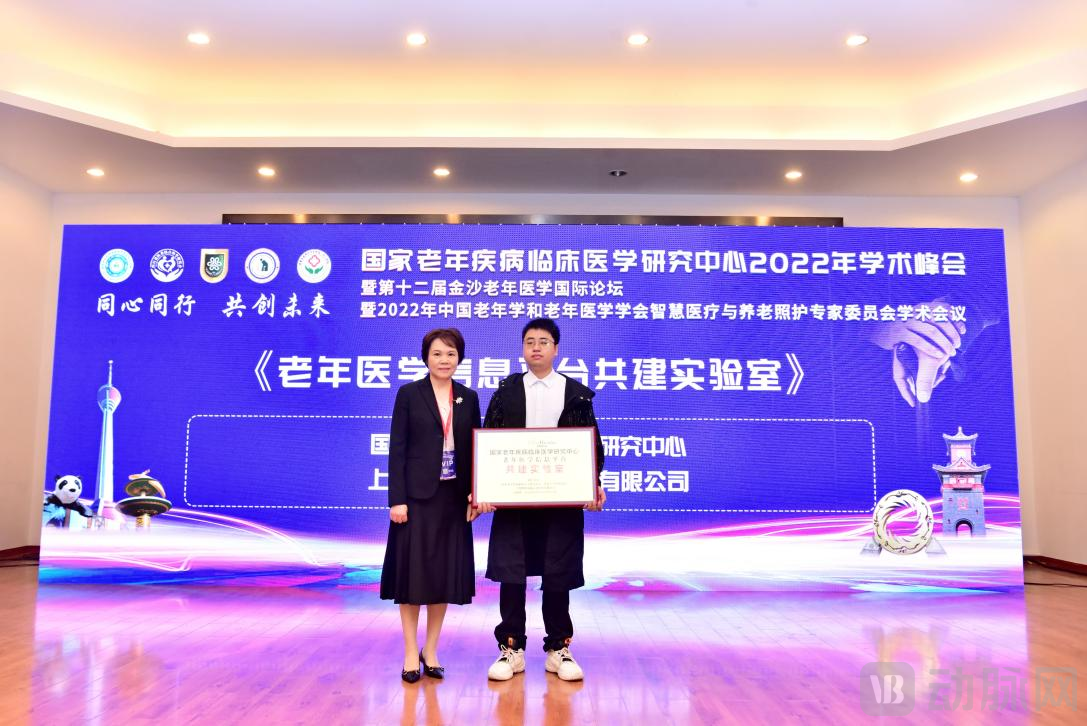 Professor Dong Birong Awarded the Plaque to the “Joint Laboratory for Geriatric Medicine Information Platform”
In 2016, the National Clinical Research Center for Geriatric Diseases (West China Hospital, Sichuan University) was approved for establishment. As the only national-level clinical research platform for geriatric diseases in western China, it is tasked with conducting basic and clinical research on age-related diseases. Patient-centered, the center focuses on researching the mechanisms of aging and anti-aging interventions, developing integrated medical and elderly care systems along with wellness frameworks, establishing early warning and prevention strategies for disability and dementia, and promoting the application of research findings in the management of multimorbidity and medication safety among older adults.
Against this backdrop, the National Clinical Research Center for Geriatric Diseases (West China Hospital, Sichuan University) has partnered with Collibra to establish a Joint Laboratory for the Geriatrics Information Platform. This initiative aims to comprehensively implement the “Healthy China” strategy and actively respond to the national strategy on population aging. With scientific research as its core foundation, the partnership will foster collaborative breakthroughs and mutual reinforcement to jointly explore the construction of a big data platform for geriatrics. Building on this foundation, the two parties will cooperate in developing clinical research applications, constructing high-quality clinical medical research databases, predicting and warning of disease risks, enabling clinical decision support, and advancing artificial intelligence technologies, thereby continuously deepening and broadening the scope of their collaboration.
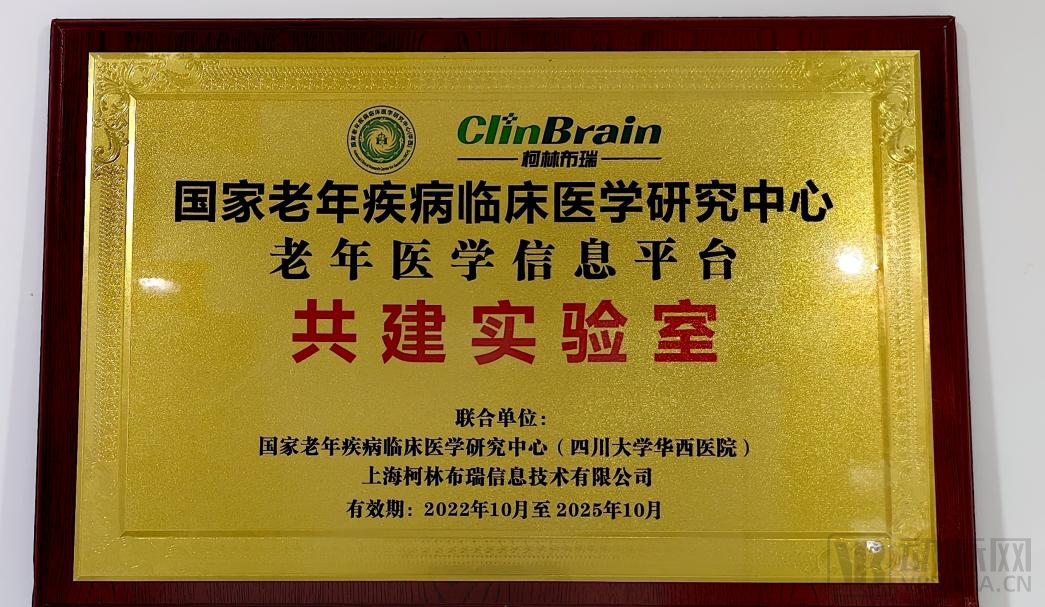 National Clinical Research Center for Geriatric Diseases (West China Hospital, Sichuan University) – ColinBri Joint Laboratory
Data accumulation cannot be achieved overnight; collaborative co-development between hospitals and vendors is also of paramount importance.
In particular, geriatrics in China is a vital discipline with a unique patient population. Older patients often present with multimorbidity, polypharmacy, and a high risk of disability and dementia. These characteristics, coupled with the complexity and specificity involved in constructing clinical research databases for older adults, pose significant challenges to the development of geriatrics as a discipline.
Addressing the bottlenecks in constructing geriatric medical research databases, the National Clinical Research Center for Geriatric Diseases (West China Hospital, Sichuan University) has proposed targeted measures to establish a big data platform for geriatric diseases through digitalization and intelligent technologies. This initiative holds significant importance for the development of geriatrics. By establishing a scientific research database at the Geriatric Disease Center and conducting multi-center studies, the National Clinical Research Center for Geriatric Diseases aims to enhance its research capabilities and comprehensive strength. Furthermore, it will collaborate with units within the collaborative innovation network and related joint laboratories to carry out more in-depth and representative clinical studies. These efforts will strengthen the research capacity of collaborative innovation network units and promote the development of geriatric medicine as a discipline, thereby providing a scientific basis for decision-making in the prevention and control of major geriatric diseases.
As a leading domestic expert in medical big data, ColinBrain has previously undertaken the construction of West China Hospital’s Big Data Integration and Application Platform, achieving significant results in areas such as data sharing within medical consortia, medical research, and terminology database development.
In 2019, the National Clinical Research Center for Geriatric Diseases (West China Hospital, Sichuan University) formally commenced the development of a big data platform for geriatric diseases in collaboration with Collibra. This initiative encompasses the construction of supporting platforms for research databases, including clinical research databases for common geriatric conditions, a multi-center clinical research data management system for older adults, a data acquisition system, a research data quality monitoring and control system, a statistical analysis system, and a full-process specimen management system. Regarding the establishment of large-scale research cohorts, there are currently 11 cohort studies underway. The regions involved in the promotion and application primarily include Nyingchi, Chongqing, Xiamen, Xinjiang, Hainan, Shiyan, Nanjing, Chenzhou, Kunming, and multiple prefecture-level cities in Sichuan Province, with 145 collaborative innovation network units participating in the research.
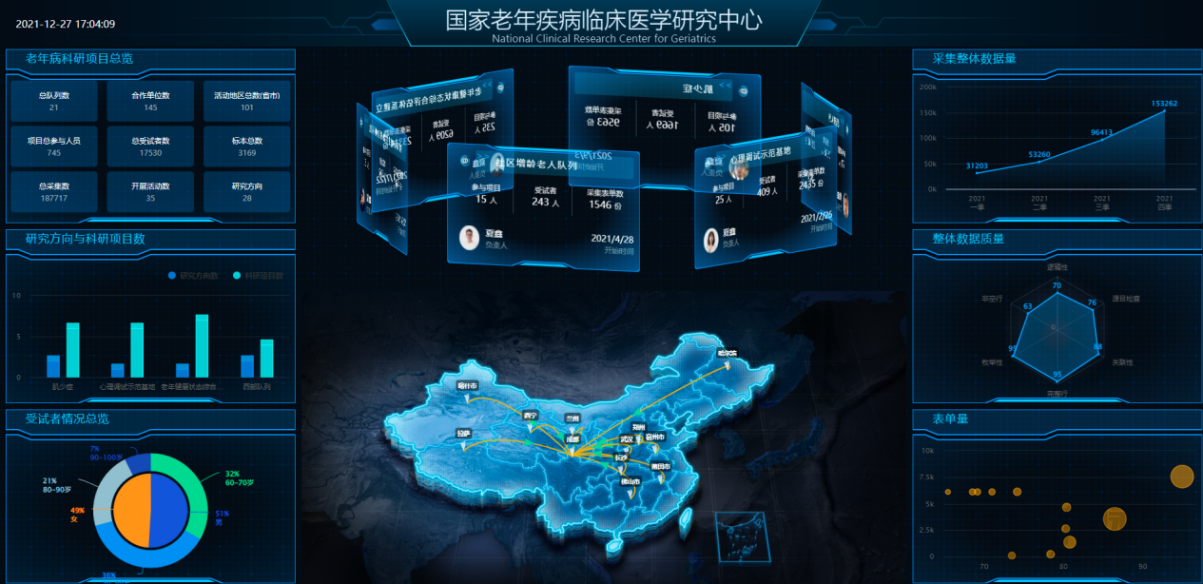 National Clinical Research Center for Geriatric Diseases (West China Hospital, Sichuan University) Big Data Platform for Geriatrics
Construction of the Geriatric Medicine Big Data Platform by the National Clinical Research Center for Geriatric Diseases (West China Hospital, Sichuan University) has currently accumulated data covering physical signs, diagnosis and treatment, and biological specimens from 24,688 elderly individuals in the general population, laying a solid data foundation for various types of research. All these achievements rely on the support of the following core product technologies.
First, establish a central clinical research database that includes a basic repository of geriatric cases, disease-specific thematic repositories with classified feature tags, and functionalities for data search and visualization. By employing various data collection methods, aggregate all relevant data, including population epidemiological data, specimen data, clinical diagnosis and treatment data, laboratory and imaging test results, and medical record data. During this process, implement data governance through standardization, structuring, and tagging to build a highly available geriatric clinical research data center that supports diverse scientific research application scenarios. Furthermore, provide specialized disease-specific databases for geriatric case data across different conditions, ensuring precise alignment with clinical needs from model construction to system presentation, thereby offering robust support throughout the entire clinical research workflow.
① Scientific Research Big Data Search Engine: Enables rapid data retrieval and precise identification of patient cohorts and datasets. It supports complex, multi-criteria searches across heterogeneous big data sources, including fuzzy search, exact match, synonym expansion, logical expression queries, secondary filtering of results, and authorized export, thereby significantly enhancing the efficiency and flexibility of disease-specific cohort construction.
② Scientific Research Project Management System: Develop a module for multi-center elderly case data collection and management, enabling personalized research protocol design. Featuring autonomous and flexible form configuration, the system integrates with the scientific research data center to achieve automated data extraction. It provides functionalities including subject management, research form management, follow-up activity management, research team member management, role assignment and permission management, and scientific research data usage management.
③ Follow-up Platform: Establishes an information channel between researchers and study participants. It allows for customized follow-up protocols and forms, supports multiple follow-up methods, and meets diverse follow-up needs.
④ Research Data Quality Control: A data quality control system is provided for the entire research process to address data-related issues such as inaccuracies and significant biases that may hinder the progress of research projects. Control is primarily exercised across three stages: pre-event, during-event, and post-event. In the pre-event stage, data entry is regulated through form-based rules to ensure accurate data capture. During the event, automated backend programs monitor the quality of data collection in real time. In the post-event stage, an effective data modification mechanism enables the verification and correction of problematic data.
⑤ NLP-Based Structured Data Platform: Structures various text-based data, including electronic medical records (EMRs) and examination reports. By leveraging techniques such as tokenization, semantic understanding, deep learning, and knowledge graphs, the platform performs “post-structuring” on unstructured data from West China Hospital, transforming EMRs and examination reports into usable structured data to support clinical research and data mining.
⑥ Statistical Analysis Platform: Seamlessly integrates with clinical research systems, follow-up platforms, and other interfaces, offering over forty statistical methods. It ensures that data remains within the hospital environment while providing high-quality, efficient data analysis tools to achieve a closed-loop workflow for the entire research process.
By establishing a big data platform for geriatric diseases, strengthening scientific research on a series of strategic issues and key areas in the prevention and treatment of such conditions, we have comprehensively elevated the academic standards of geriatrics. This initiative holds significant importance for scientifically addressing population aging and improving the health status of older adults, and will make greater contributions to the field of geriatrics in Sichuan Province and across China.