

Koya Medical Technologies Builds a Long-Term AI-Powered Digital Healthcare Ecosystem
Keya Medical
International AI Medical Technology Service Provider
The transformation of medical AI enterprises began gradually in 2020. After the frenzy of AI investment subsided, the surviving strong companies solidified their leading positions in the industry and progressively built comprehensive digital healthcare ecosystems empowered by AI across all dimensions.
Keya Medical, a leading enterprise in medical AI, is at the forefront of this transformation wave.
Over the past five years, the company has secured more than 180 patents, published over 400 articles in key industry journals, and deployed its AI products in 1,100 hospitals. Looking ahead, it has outlined three strategic plans for its future development.
First, we will horizontally expand around the AI-based coronary physiological function assessment tool “DeepVessel FFR” to build an intelligent, full-course management system for coronary heart disease. By leveraging AI to optimize key stages—including examination, planning, surgery, and follow-up—we aim to create a closed-loop ecosystem within this specialized niche.
Second, starting from the coronary artery product line, replicate the mature intelligent management system for the entire disease course across multiple departments, including cardiology, neurology, pulmonology, and radiology, and rapidly deploy production lines in the most commercially mature field of assisted diagnosis.
Third, expanding from in-house AI services to cloud-based AI services, partnering with leading cloud computing technology companies such as Alibaba, JD.com, and Microsoft China, to empower primary healthcare institutions most in need of resource support through “Cloud + AI.”
The three strategies collectively map out Keya Medical’s AI growth trajectory, helping the company maintain its leading position. However, macro-level logic fails to capture the value underlying this trajectory or reveal the secrets hidden in the company’s operational details. Therefore, a detailed analysis of each strategic path is necessary.
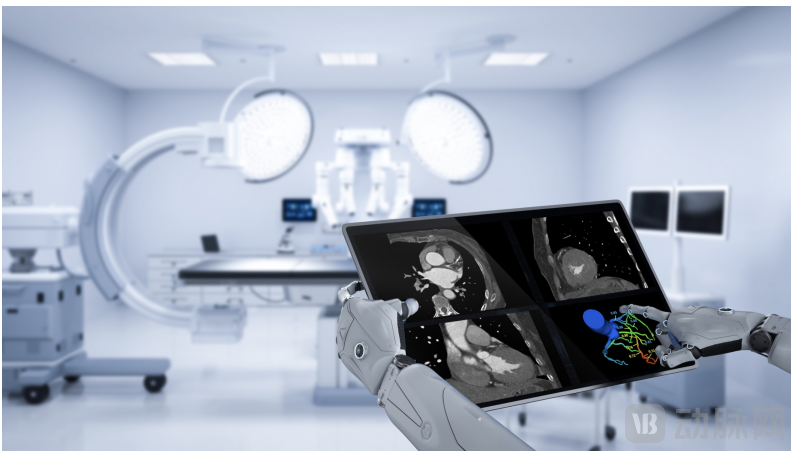
Keya Medical’s core product, “DeepVessel FFR,” is the first deep learning-based artificial intelligence product in China to receive Class III certification from the National Medical Products Administration (NMPA). Unlike mainstream imaging AI applications at the time, this AI system is designed for assessing coronary physiological function, enabling rapid determination of whether coronary stenosis leads to myocardial ischemia.
According to standard clinical pathways, patients with suspected coronary artery disease (CAD) should initially undergo coronary computed tomography angiography (CCTA) for screening. Only those who test positive on CCTA should proceed to further invasive evaluations, such as invasive coronary angiography (ICA) and fractional flow reserve (FFR) measurement, followed by percutaneous coronary intervention (PCI) if indicated. However, using CCTA-based anatomical stenosis assessment alone for initial screening has limited accuracy: more than 70% of patients who screen positive on CCTA do not actually have functional ischemia. For these patients, invasive diagnostic procedures and treatments not only increase medical risks and patient burden but also result in the wasteful use of healthcare resources.
“DeepVessel FFR” provides hospitals with a novel non-invasive diagnostic approach that even experienced physicians cannot offer. By enabling CT-FFR assessment using non-invasive CTA, it eliminates the need for secondary examinations, avoids additional harm to patients, and removes the necessity for invasive coronary angiography in the catheterization laboratory. This effectively reduces medical expenses for patients (according to data from Frost & Sullivan, saving approximately RMB 7,000 per patient). In its review announcement, the National Medical Products Administration stated that the product delivers “significant economic and social benefits.”
 Keya Medical DeepVessel FFR
Keya Medical’s differentiated strategic choices have enabled it to avoid homogeneous competition and facilitated its early entry into the commercialization phase. As of this September, “DeepVessel FFR” has obtained pricing approval in 11 provinces, including Beijing, Hebei, Shandong, Zhejiang, and Jiangsu, driving a multi-fold increase in revenue. This pace is at least one year faster than that of the vast majority of medical AI companies.
Once the market for FFR series products, the pricing approval process, and their clinical value gained market recognition, numerous competitors accelerated their regulatory review and approval processes, rapidly intensifying domestic competition. At this juncture, Keya Medical’s earlier efforts in global market access began to yield results.
In April this year, DeepVessel FFR obtained U.S. Food and Drug Administration (FDA) 510(k) clearance and was officially launched in the U.S. market, becoming the world’s first CT-FFR product to hold triple certifications from China’s NMPA (January 2020), the EU CE mark (August 2018), and the U.S. FDA. This signifies that Keya Medical has expanded its previously regional commercial development to a global scale, further differentiating itself from competitors.
Although the combined CT-FFR markets in China, the European Union, and the United States are substantial in size, relying on a single product line exposes a company to various risks, such as displacement by new technologies, slower-than-expected commercialization, and failure to capture market share. As the economic adage goes, “Don’t put all your eggs in one basket.” After securing market access for its medical AI solutions in China, Keya Medical shifted its strategy and incorporated product line expansion into its planning.
The “Outline of the Healthy China 2030 Plan” centers on people’s health, aiming to achieve an average life expectancy of 79 years by 2030. The “14th Five-Year Plan for National Health Informatization” seeks to establish a comprehensive system of health and medical big data resources, promote the integrated and innovative development of digital health, and build an “Internet + Healthcare” service system. Both initiatives place significant demands on residents’ health. In this process, society requires reliable life science technologies as well as information and management solutions that cover the entire patient care journey.
Aligning with policy demands, Keya Medical has built a “Diagnosis-Treatment-Follow-up” system centered on screening, diagnosis, treatment, and follow-up, establishing a comprehensive solution for managing patients’ entire cardiovascular care journey. Within this system, Keya Medical has not only developed AI-assisted diagnostic tools but also secured medical devices such as shockwave balloons. This enables the standardization and optimization of the entire clinical workflow, providing physicians with more efficient working methods and enhancing the patient healthcare experience.
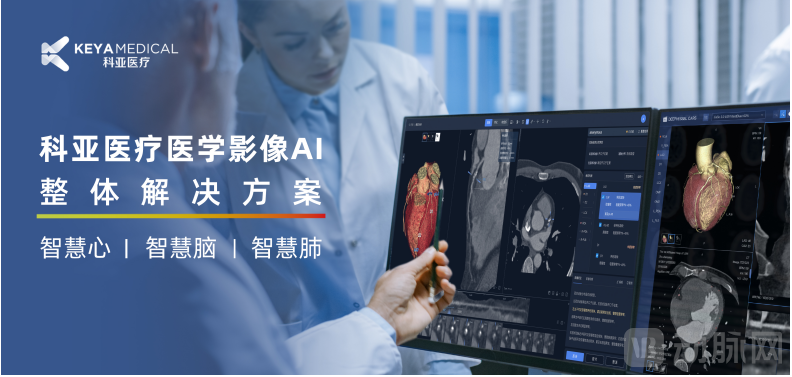
After completing the development of its end-to-end cardiovascular product portfolio, Keya Medical set out to extend its AI capabilities to other clinical scenarios. Leveraging its existing experience in training AI models for cerebrovascular and cardiovascular applications and conducting clinical trials, the company developed “DeepVessel Analytics.” In a short period, it transferred its “diagnosis-treatment-follow-up” framework from CT-FFR to other organs, including the brain and lungs, thereby restructuring its offerings into three product series: “Smart Heart,” “Smart Brain,” and “Smart Lung.”
Keya Medical’s Comprehensive AI Solution for Medical Imaging
The Zhihuixin series leverages artificial intelligence to analyze coronary CTA, fully automating coronary reconstruction, 3D visualization, lesion detection, and film layout for printing, while generating structured reports. This reduces post-processing time per case from the traditional 30 minutes to under 5 minutes, significantly enhancing clinical diagnostic efficiency.
The SmartBrain product series comprises three core functional modules: intelligent assisted diagnosis for head and neck vasculature, intelligent assisted diagnosis for intracerebral hemorrhage, and intelligent assisted diagnosis for cerebral perfusion. By applying deep learning technology to the detection and quantitative analysis of vascular anomalies, aneurysms, plaques, and stenosis; the localization and precise quantitative analysis of intracerebral hemorrhage lesions; and the assessment of cerebral tissue perfusion parameters, the system facilitates the assisted diagnosis of various head and neck diseases. This approach renders the diagnostic process intelligent, structured, and automated, providing clinicians with an accurate, efficient, and convenient assisted diagnostic tool.
The Smart Lung series deeply integrates artificial intelligence technology. By analyzing a single non-contrast chest CT scan, it delivers four core functional modules: AI-assisted diagnosis of pulmonary nodules, AI-assisted diagnosis of pneumonia, AI-assisted analysis of ribs, and intelligent assessment of non-gated calcium scoring. This solution maximizes workflow efficiency, alleviates physicians’ workload, and significantly reduces misdiagnosis and missed diagnosis rates. Additionally, it provides structured, customizable reports to meet the needs of various scenarios, including departmental management and clinical practice.
The development of three major product series under the “Diagnosis-Treatment-Follow-up” framework has empowered Keya Medical to assist in the health management of hundreds of millions of chronic disease patients in China, further expanding the reach of its AI capabilities and providing strong support for the Healthy China initiative.
At this juncture, Keya Medical has completed the first half of its journey toward AI-driven scalability. However, to effectively implement chronic disease management capabilities, it must facilitate the transition from tertiary hospitals to primary care settings, delivering AI solutions to the populations who need them most.
Compared to tertiary hospitals with ample human resources and advanced equipment, primary healthcare facilities clearly stand to benefit more from the empowerment of medical artificial intelligence (AI). However, mainstream AI solutions are currently designed for single diseases. Given that primary healthcare focuses on general practice and preventive screening, these facilities struggle to bear the high costs associated with acquiring such AI technologies.
Against this backdrop, while addressing the challenges facing primary healthcare institutions, Keya Medical did not limit its approach to AI product design or tailor-made artificial intelligence solutions for primary care. Instead, it bet on the growing trend of building county-level medical consortia, integrating technologies such as 5G, AI, cloud computing, and the Internet of Things (IoT) to create an imaging cloud platform for higher-tier hospitals within these consortia, enabling centralized processing of imaging data generated by primary healthcare facilities in the region.
Empowered by the platform, Keya Medical’s initiative has broken down information barriers among regional imaging systems, promoting the sharing of medical resources, optimizing diagnostic and treatment pathways, and improving diagnostic efficiency. This enables a vast number of primary healthcare institutions to obtain precise assessments of patients’ conditions within minutes, thereby implementing the concepts of “predicting disease before onset” and “preventing disease before occurrence” at the grassroots level.
The migration of AI to the cloud has also significantly expanded the reach and service depth of medical AI. Today, patients in remote suburban areas can access image analysis results provided by senior physicians through cloud-based imaging platforms at primary healthcare facilities, and retrieve their health data anytime via mobile phones. Based on this model, Keya Medical is positioned to extend its service scope through the platform in the future, ultimately facilitating chronic disease management for patients.
Looking at the overall development of Keya Medical, it has taken a proactive approach in almost every aspect, including review and approval, financing, price access, global ecosystem expansion, and regional imaging cloud construction. It seems to have the ability to foresee the development prospects of medical AI.
Yet the material world relies on logic. Each well-founded decision reflects the company’s profound understanding of clinical needs and the evolution of China’s healthcare policies.
The healthcare IT industry, which shares similarities with medical AI, has long been adept at interpreting policies and forecasting product development trends. However, the AI sector, still in its growth and awareness-building stages, sees practitioners focusing more on R&D centered around physicians’ needs. Few companies, unlike Keya Medical, prioritize hospital demands shaped by policy directives.
In grasping the key trends of the industry, Keya Medical’s clear logic serves as a valuable reference for other enterprises. After all, healthcare is a sector heavily influenced by policy and characterized by strong cyclical patterns. As smart healthcare becomes central to hospital development, those who are prepared first will gain a competitive edge in the large-scale expansion of medical AI.