

HRS 2026: Medtronic’s Sphere-9 Catheter Receives FDA Breakthrough Designation for VT Ablation, Affera Platform Achieves New Clinical Milestones

Medtronic
Medical Device Manufacturer


Innovation in tools for ventricular tachycardia (VT) ablation has long lagged behind the growing clinical demand. On April 25, 2026, Medtronic announced three major milestones for its Affera platform at the annual meeting of the Heart Rhythm Society (HRS) in Chicago.
FDA Grants Sphere-9 Catheter Breakthrough Device Designation for VT Treatment and Approves Its Pivotal IDE Trial in the U.S. Interim Results from the VT Early Feasibility Study Show 65.5% of Patients Treated with the Sphere-9 Catheter Ablation Were Free from VT Recurrence at 6 Months.
Moreover, the Sphere-360 catheter (received CE certification in January 2026) has shown positive data in atrial fibrillation ablation – subgroup analysis of patients with the left common pulmonary vein demonstrated 100% lesion durability, with highly consistent performance across different anatomical structures. The Conquer-AF study has also completed the enrollment of its first patient, evaluating the safety and efficacy of the Sphere-9 catheter in patients with recurrent atrial fibrillation.
1. Affera Platform Overview: Dual-Energy Strategy from "One-Size-Fits-All" to "Precision-Guided"
1.1 Technical Core: Why Can a Catheter Be a Powerful Tool for Two Tracks?
The core component of the Sphere-9 catheter is a 9mm compressible grid ablation electrode located at the tip of the nitinol cage, which contains nine micro-thermocouples for real-time temperature monitoring. The catheter’s 8.5Fr profile allows for the complete process of mapping, ablation, and validation to be performed through a single transseptal puncture without the need for catheter exchange. To achieve comprehensive coverage of large target areas in VT, the Sphere-9 catheter is equipped with both RF and PFA dual-energy options – RF ablation can create lesions wider than 19mm, while PFA ablation produces lesions wider than 17mm, far surpassing the efficiency of traditional point-by-point ablation. This provides a significant advantage in treating VT, a type of arrhythmia characterized by large areas, multiple substrates, and deep origins.
3D Ablation Demonstration
1.2 Strategic Significance of Dual-Energy Design
RF: The Safety Baseline for ValidationThe Sphere-9 catheter was launched with a strong RF ablation heritage, and the SPHERE Per-AF trial has been published in the high-impact journal *Nature Medicine*, validating the safety and efficacy of the Sphere-9 catheter in atrial fibrillation.
PFA: The New Generation's Core Barrier。Medtronic is not only the first company in the industry to commercialize PFA (the PulseSelect system received FDA approval in December 2023), but also the only electrophysiology giant currently owning dual PFA systems (PulseSelect + Affera). As a single-shot ablation solution, PulseSelect can deliver a circular discharge along the pulmonary vein ostium in one go, quickly achieving pulmonary vein isolation; while the Sphere-9 catheter, with its wide-area focal ablation capability, is more suitable for highly customized complex atrial fibrillation and VT ablations. Together, they form a "single-shot ablation + focal ablation" product portfolio, covering the full spectrum of needs from standard atrial fibrillation to complex arrhythmias.
Strategic Flexibility of Dual-Energy Switch:As the long-term safety data of PFA technology gradually accumulates, the acceptance and trust of doctors in PFA will continue to increase. The dual-energy design enables doctors to ensure surgical safety by applying the mature RF technology at the current stage, while also preparing in advance for the scaled application of new technologies.
II. The "Tool Shortage" in VT Ablation: Why This Breakthrough Is So Urgent
2.1 Clinical Dilemmas in VT Treatment
Ventricular Tachycardia: A Rapid and Potentially Fatal Arrhythmia
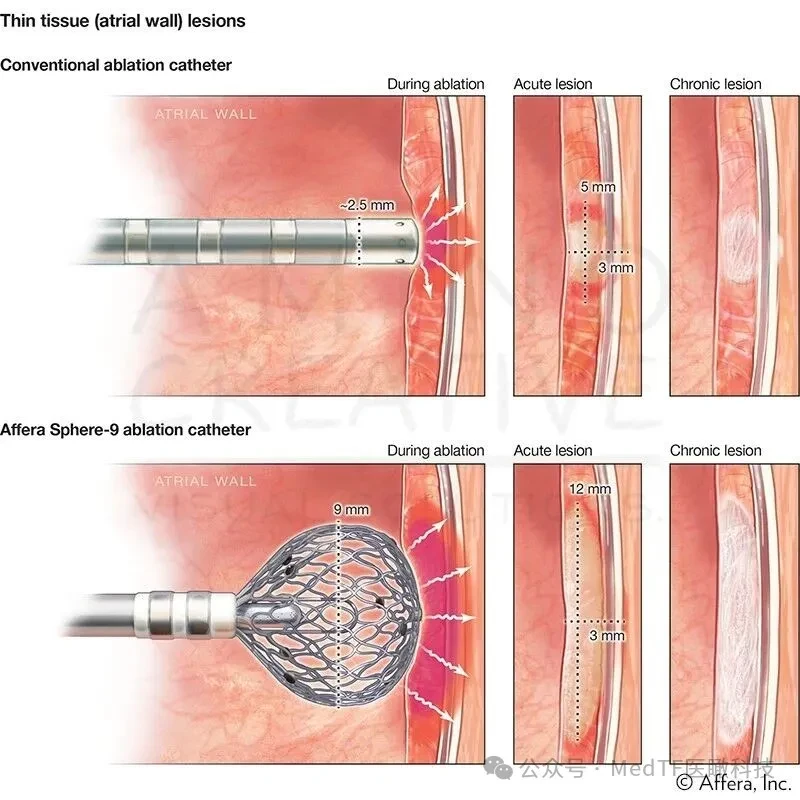
Figure 1.Conventional Ablation Catheter andSphere-9 Catheter PairSchematic Diagram of Thin Tissue (Atrial Wall) Lesion Work
2.2 Logic of Breakthrough Designation
FDA Grants Sphere-9 Catheter Breakthrough Device Designation for VT Treatment Based on Positive Interim Data from Ongoing EFS, Addressing Significant Clinical Gap in VT Field. "There is an urgent need for better VT tools that are safe, effective, and improve procedural efficiency, so it is encouraging to see the sustained efficacy of the Affera mapping and ablation system and Sphere-9 catheter at six months in ischemic patients," said Dr. Vivek Reddy, Director of Cardiac Arrhythmia Services at Mount Sinai. "Moving this research forward into an IDE trial and expanding the patient population to non-ischemic patients is a positive next step for those with VT."
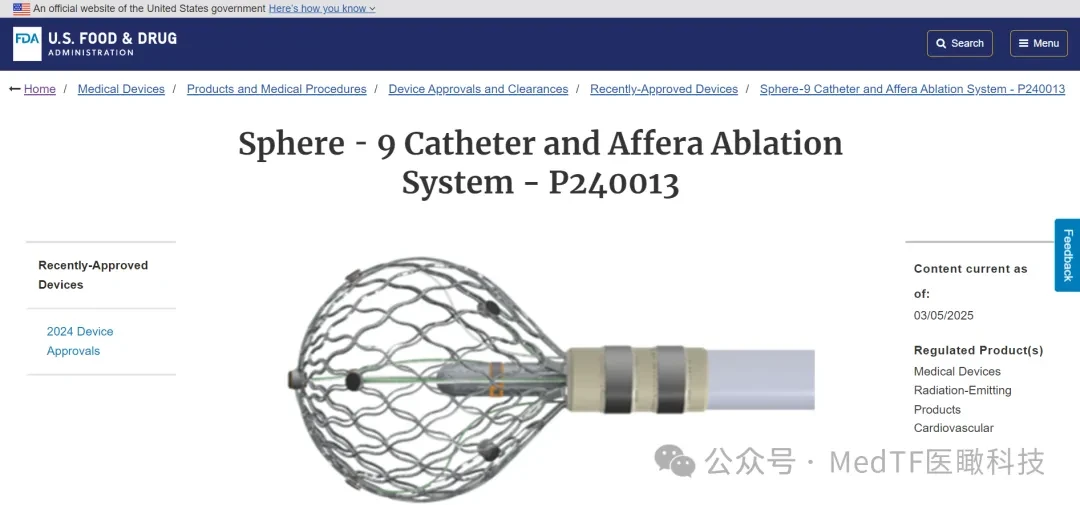
Figure 2. FDA Breakthrough Designation
3. Sphere-9 Catheter: The First Appearance of VT Clinical Data
At HRS 2026, Medtronic announced the 6-month interim results of the ongoing early feasibility study for VT in the form of the latest breakthrough clinical trial. The study enrolled participants across multiple centers in the United States, performing Sphere-9 catheter ablation on patients with recurrent monomorphic VT post-myocardial infarction, with follow-up extending to 6 months post-ablation. Key findings showed:
65.5% of patients were free from VT recurrence at 6 months.。This data indicates that the Sphere-9 catheter has demonstrated clinically meaningful sustained efficacy in patients with ischemic cardiomyopathy VT.
Balancing Safety and Effectiveness。The study met the pre-specified safety endpoints, with no unexpected safety signals reported, while also validating the ablation capabilities of the Sphere-9 catheter in the larger and more complex target area of VT.
From Ischemic to Non-Ischemic: Future Pathways in Study Design。Current research has demonstrated the clinical feasibility of the Sphere-9 catheter in patients with ischemic VT, and the research team plans to expand the patient population to include those with non-ischemic VT. The global incidence of VT caused by heart failure and cardiomyopathy continues to rise, which will significantly expand the potential treated population.
To date, the Sphere-9 catheter has been approved in the United States, Europe, Australia, and Japan for indications such as atrial fibrillation, but it has not been approved for the treatment of VT in any region. The Breakthrough Device Designation and the pivotal IDE trial for FDA approval will be regulatory milestones on the path to a VT indication, with clinical evidence still being accumulated.
4. Sphere-360: Dual Validation of Anatomical Adaptability and Lesion Durability
In a new subgroup analysis of atrial fibrillation ablation in patients with left common pulmonary vein (LCPV), the Sphere-360 catheter demonstrated 100% lesion durability, maintaining high consistency across different patient anatomies. The left common pulmonary vein is recognized as a "technical challenge zone" in atrial fibrillation ablation, characterized by significant anatomical variation, deep pathways, and difficulty in achieving continuous transmural lesions, which can lead to pulmonary vein reconnection and postoperative recurrence. The Sphere-360 catheter’s 34mm expandable nitinol cage tip design adapts automatically to different patient PV anatomies, ensuring uniform energy delivery without the need for catheter rotation, thereby guaranteeing 100% lesion durability in any anatomical configuration.
Previously reported durability data showed that 98% of veins and 93% of patients met the lesion durability criteria at 75 days post-ablation. Sphere-360 obtained CE certification in January 2026 and was launched in Europe, with the U.S. IDE study (Horizon 360) commencing in March. Global commercialization and clinical evidence are being accumulated simultaneously.
5. Conquer-AF Study: Targeting the "Unmet Need" of Recurrence After Atrial Fibrillation Ablation
Conquer-AF is a prospective, multicenter, interventional, non-randomized study designed to evaluate the safety and efficacy of the Sphere-9 catheter in patients with paroxysmal or persistent atrial fibrillation that recurs after previous ablation treatment. The study is enrolling patients simultaneously in the United States, Europe, and Australia, marking a critical step in the expansion of the Affera platform’s indications from "first ablation" to "repeat ablation."
Approximately 50% of patients treated with antiarrhythmic drugs or catheter ablation experience recurrence of atrial fibrillation and require a second surgery. Previous ablation scars, anatomical changes, left atrial enlargement, and other factors significantly increase the complexity of the procedure, making recurrent cases typically more challenging than first-time ablations. The Sphere-9 catheter, with its dual-energy options and 9mm large grid-tip design, is capable of achieving wider and more effectiveThe ability to achieve transmural injury holds promise for better outcomes in patients with recurrent atrial fibrillation. The initiation of the Conquer-AF study provides aA vast but under-evidenced clinical field provides a standardized research framework.
Future Outlook
From the advancement of the VT pivotal IDE trial, to the validation of Sphere-360 lesion durability data, and onto the Conquer-AF study covering the entire disease management process from initial ablation to repeat ablation — Medtronic is building a comprehensive and deeply layered product pipeline in the electrophysiology field, targeting the encirclement of the two core markets: atrial fibrillation and ventricular tachycardia. The execution of the FDA-approved pivotal IDE trial, the accumulation of long-term follow-up data, and whether these efforts can ultimately translate into guideline recommendations will be the litmus test for this electrophysiology "aircraft carrier" to truly dominate the ventricular tachycardia blue ocean market.

? Click to view more exciting content
AI+ICE=Carto 3 Johnson & Johnson Upgraded High-Precision AI Intracardiac Echocardiography Imaging
Special Micro Sutures for Robotic Surgery Launched! Global Robotic Ecosystem Chain Closed Loop
Copyright and Disclaimer: MedTF aims to build an academic communication and media platform. The copyright of the information in the article belongs to the holder, and we only provide the service of transmitting information. If there is any infringement, please contact us to delete it.