

OPPO Embraces a Serious Approach to Digital Health with OHealth H1 and Long-Term Strategic Commitment

OPPO
Intelligent Terminal and Mobile Internet Service Provider
Another tech company is leveraging its capabilities to empower healthcare!
Just yesterday (December 14), OPPO held its annual OPPO INNO DAY 2022, a showcase dedicated to its technological achievements. Centered on the theme “Goodness Begets All Things,” the event unveiled major new products, including chips and intelligent cloud services. Among them, OPPO’s first smart concept product designed for household users—the OHealth H1 Home Smart Health Monitor—has sparked widespread attention and discussion across the industry (hereinafter referred to as “H1”). Meanwhile, the conference summarized the development of OPPO’s health business in recent years and outlined a blueprint for its future health initiatives. This demonstrates OPPO’s serious commitment to establishing a long-term presence in the health sector, positioning it as a core, enduring strategic priority.
It is not uncommon for tech companies to venture into the health sector. As a latecomer, how will OPPO leverage its technical capabilities in both hardware and software to enter the health field, establish differentiated advantages over other tech firms, and carve out its own unique path?
It is hardly surprising that technology companies are expanding their business scopes into the health sector. As socioeconomic standards continue to rise, public health awareness has become increasingly pronounced. Meanwhile, advances in medical care and technology have steadily increased life expectancy, further accelerating population aging and significantly boosting demand in the healthcare market. To meet this substantial demand for health services, the government has been formulating corresponding policies. In 2016, China released the Outline of the “Healthy China 2030” Plan, followed by a series of healthcare reform policies aimed at improving public health and emphasizing the nationwide promotion of the concept of comprehensive health. The report to the 20th National Congress of the Communist Party of China further called for advancing the “Healthy China” initiative, underscoring the strategic priority of safeguarding people’s health.
Driven by all these factors, the healthcare market has maintained rapid growth for many years. The "Healthy China 2030" Planning Outline, which serves as the overarching framework for China’s health and wellness initiatives, sets specific targets for the market size of the broader health sector, aiming to reach a total market scale of RMB 16 trillion for the health service industry by 2030. On a global scale, statistics from ResearchAndMarkets indicate that the global digital health market reached USD 289 billion in 2021, with an estimated market size of USD 347.2 billion in 2022. The market is projected to surge to USD 881 billion by 2027, representing a five-year compound annual growth rate (CAGR) of 20.14%.
For technology companies, a market of such vast scale that has maintained sustained high-speed growth over the long term is undeniably highly attractive. Meanwhile, the healthcare industry indeed requires the tech sector’s expertise in digital technologies to empower and enhance healthcare services.
In recent years, the healthcare industry has been striving to achieve digitalization and intelligence. For instance, digital technologies enable physicians to access patient health records and historical diagnostic data more conveniently, reducing redundant tests and facilitating effective decision-making. By significantly enhancing the overall experience for both providers and patients, digital technologies can also mine and analyze patient data, aid in the identification of various diseases, and lower healthcare costs. Consequently, an increasing number of technology companies are entering the healthcare sector. Among them, Apple stands out as one of the most successful. As early as 2014, Apple launched HealthKit, a mobile health application platform, thereby opening the door to the healthcare field. Subsequently, Apple released ResearchKit and CareKit to expand its footprint in healthcare, aiming to transform the iPhone into a personal hub for all medical information. Following the launch of the Apple Watch, this wearable device penetrated the core aspects of healthcare by monitoring various health metrics, gradually becoming the centerpiece of Apple’s healthcare ecosystem. Apple has continuously strengthened its healthcare strategy around the Apple Watch—to date, it has secured three FDA clearances for medical devices. This has established the Apple Watch as a leading player in the wearable health device market.
Yet behind Apple’s success lies the repeated setbacks faced by other tech companies in the healthcare sector. For instance, IBM invested heavily in Watson Health for many years without tangible results, ultimately abandoning the initiative. Google Health underwent significant business restructuring after years of uncertainty. Even Amazon, which has not yet given up, has been repeatedly adjusting its health strategy, wavering between in-house development, outsourcing, and acquisitions, before eventually starting from scratch.
These cases all demonstrate that the integration of technology companies with healthcare is not as straightforward as one might imagine. The good news, however, is that these pioneers have also provided valuable experience and lessons for those who follow. This is precisely what is meant by the saying, “The waves behind drive on those before; in this fleeting world, new people replace the old.”
OPPO, which has always maintained a low profile, is one of the “new waves.”
As one of the top five global smartphone vendors by shipment volume, OPPO entered the health sector as early as 2020. In March 2020, OPPO launched its first wearable smart device, the OPPO Watch, which enables 24-hour heart rate monitoring, alerts for abnormal heart rates, and activity tracking. Starting with fitness features has been a conventional pathway for many technology brands to enter the health market.
Since then, the health business has been accorded a position of paramount importance within OPPO. If the company were likened to an individual, health would constitute “OPPO’s lifelong mission,” demanding serious and diligent attention.
Obtaining medical device certification demonstrates OPPO’s serious commitment to health. In September 2020, the OPPO Watch ECG, a smartwatch equipped with continuous ECG monitoring capabilities, received Class II Medical Device Certification from the National Medical Products Administration (NMPA), marking OPPO’s first medical device certification. Its single-lead ECG continuous monitoring feature displays users’ electrocardiogram waveforms and provides paid in-depth interpretations by experts as well as free algorithm-based analysis for users in need. Additionally, it offers routine health monitoring functions such as heart rate detection, sleep tracking, sedentary reminders, breathing exercises for stress relief, and menstrual cycle management.
OPPO’s early forays into wearable devices helped the company clarify its positioning and identify its core strengths. Building on these advantages and aligning them with its strategic planning, OPPO promptly embarked on a more differentiated path.
In early 2021, OPPO began establishing its Health Lab and appointed Dr. Zizijing Zeng, who previously led sensor product design and R&D for the Apple Watch at Apple and brings 15 years of experience in the health sector, as the head of the lab. He assembled a multidisciplinary health team comprising experts in health algorithms, sensors, data science, and biomedicine. Leveraging these core disciplines—algorithms, sensors, data science, and biomedical engineering—OPPO built a product and technology platform for its health initiatives, with implementation pathways encompassing both software applications and hardware devices.
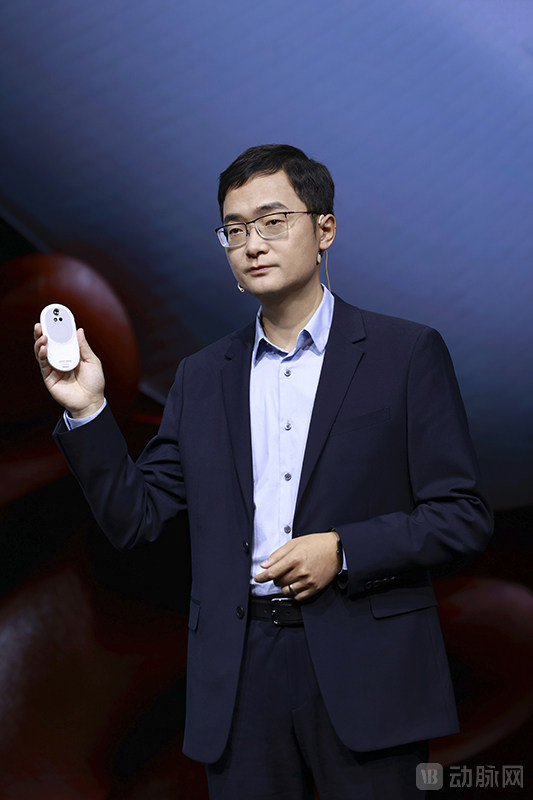
Dr. Zijing Zeng, Assistant Vice President of OPPO and Head of the Health Lab
“In terms of software, we have the Health app, with numerous applications integrated into the OPPO Health Research Kit. On the hardware front, in addition to our existing smartwatches and fitness bands, as well as the recently announced OHealth H1 concept product—a home-based intelligent health monitoring device—we will soon launch TWS earbuds with health-related features. For smartphones, beyond the already available heart rate monitoring, new health-focused functionalities will be added early next year.”
“Through software and hardware, we will conduct in-depth specialization in cardiovascular health, physical activity, sleep, hypertension, diabetes, telemedicine, and other areas, aiming to provide users with comprehensive health services, promote the adoption of healthy lifestyles, and advance the development of preventive healthcare,” added Dr. Zeng Zijing.
In 2022, the OPPO Health Lab released its self-developed OPPO Sense.®Exercise and Health Algorithms, Integrated into the OPPO Watch 3. It encompasses the Cardio cardiovascular health assessment, Fitness exercise algorithm engine, and Sleep sleep health technology system, providing users with a range of differentiated health monitoring features, including adult sinus rhythm analysis, atrial fibrillation alerts, all-day heart rate monitoring, timely irregular heartbeat notifications, vascular health measurement, continuous blood oxygen monitoring, high-altitude hypoxemia warnings, and multidimensional snoring risk assessment.
The newly released OHealth H1 provides users with medical-grade precision in vital signs measurement, supporting six major functions: body temperature, electrocardiogram (ECG), heart rate, blood oxygen saturation, cardiopulmonary auscultation, and sleep monitoring. Additionally, through the companion app, users can comprehensively record and manage health data for themselves and their family members, while also providing reliable, medical-grade vital signs data to support online medical consultations.

OPPO OHealth H1 Home Smart Health Monitor
Notably, the H1’s capability for auscultation and measurement of cardiopulmonary sounds represents a significant product innovation. The stethoscope is the most commonly used medical device, primarily aiding in the assessment of pulmonary pathology. Under normal conditions, adults breathe approximately 12–20 times per minute. As airflow passes through bronchi of varying diameters at different levels, the resulting respiratory sounds exhibit distinct characteristics in intensity and quality.
With the aid of a stethoscope, physicians can detect diminished or absent breath sounds caused by conditions such as obstructive emphysema, pneumothorax, and pleural effusion, as well as prolonged expiratory breath sounds associated with bronchitis and asthma. In cases of pleural inflammation or exudation, physicians may also auscultate a pleural friction rub. Furthermore, the stethoscope assists in the identification of cardiac diseases. Cardiac auscultation primarily involves the assessment of heart rate, heart rhythm, heart sounds, and murmurs.
Currently, innovative companies abroad are exploring the use of artificial intelligence algorithms to detect respiratory sounds, thereby enabling rapid identification of patients with COVID-19; however, this undoubtedly imposes extremely high requirements on the signal accuracy of the devices.
OHealth H1 utilizes a proprietary electronic stethoscope that employs piezoelectric ceramic sensors as its acoustic pickup component. Its precision significantly surpasses that of traditional stethoscopes commonly available on the market, which typically feature metal diaphragms or PU/PE film membranes. Compared to mainstream remote medical stethoscopes in international markets, it delivers superior signal quality and a flatter frequency response curve, enabling the acquisition of more accurate and clear cardiopulmonary sounds for precise user health data collection.
The H1’s sleep monitoring function is equally innovative. Equipped with a high-precision inertial measurement unit (IMU) that features both low noise levels and high accuracy, it can better detect subtle physiological vibration signals. By simply placing the H1 within 20 cm of the pillow, it can detect cardiac vibration waves transmitted through the mattress while the user is lying still, thereby enabling heart rate measurement.
Snore monitoring analyzes acoustic fluctuations during sleep and employs snore-detection algorithms to comprehensively monitor and localize respiratory issues throughout the night. By integrating multi-dimensional data with advanced algorithmic analysis, it ultimately achieves contactless, non-intrusive sleep monitoring.
In terms of other functionalities, the H1 also holds a leading advantage. The H1 is equipped with stainless steel electrodes that are larger in surface area than those found in typical wearable devices, enabling higher-precision electrocardiogram (ECG) measurements. Regarding the accuracy of arrhythmia alerts, the H1 outperforms other wearable devices currently on the market, both in overall metrics and in the sensitivity and specificity for individual arrhythmia types. For atrial fibrillation (AFib) detection, its performance is comparable to that of static ECG machines. For blood oxygen measurement, the H1 adopts a photoplethysmography (PPG)-based solution using the finger as the measurement site to determine blood oxygen saturation. It achieves accuracy equivalent to that of mainstream medical pulse oximeters and can serve as a basis for medical diagnosis.
Notably, as a key vehicle for OPPO’s future health initiatives, the H1 will also integrate with Andes Intelligent Cloud, which was unveiled at the same Future Technology Conference. Leveraging Andes Intelligent Cloud’s capabilities in data storage, transmission, and management, the H1 enables seamless data interoperability between the user-facing app and the physician portal, thereby delivering services to household users or patients, physicians/medical assistants, health managers, and healthcare institutions.
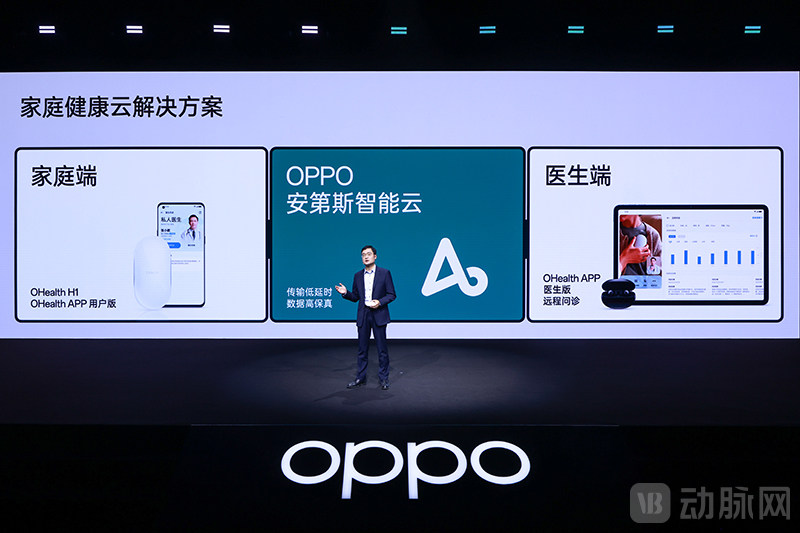
H1 will integrate with Andes Intelligent Cloud
On the user side, vital sign monitoring data for multiple family members can be tracked and managed over the long term within the app. Users can also connect specific models of Omron blood pressure monitors, which are OPPO ecosystem partners, to enable long-term management of blood pressure measurement data. In the future, the app will provide core services such as health assessment and screening (AI + human review), AI-assisted diagnosis and treatment, out-of-hospital home health management, telemedicine, and emergency medical assistance.
On the healthcare service side, with user authorization, medical professionals can remotely interpret users’ health data via a specially developed physician-facing mobile app, providing more professional medical advice and services. For instance, users can upload high-precision respiratory sound data collected by the H1 device to the cloud, enabling physicians to perform remote auscultation and make diagnostic assessments, thereby eliminating the inconvenience of hospital visits for patients.
Furthermore, data requiring continuous monitoring, such as body temperature, blood oxygen levels, and sleep patterns, can be accumulated in the cloud, enabling physicians to review historical records via a mobile application. This sustained data accumulation facilitates the construction of comprehensive user profiles on the cloud platform, thereby providing users with enhanced guidance on lifestyle and medical care.
OPPO will also leverage its ecosystem capabilities to collaborate with multiple parties in building a comprehensive health ecosystem. Currently, OPPO has established in-depth collaborations with professional medical institutions such as Fuwai Hospital of the Chinese Academy of Medical Sciences, Beijing Tsinghua Changgung Hospital, and Nanfang Hospital; it has jointly established innovation research laboratories with academic institutions including Tsinghua University, Peking University Health Science Center, and Beijing Sport University. Additionally, OPPO has entered into a strategic partnership with Omron, a global leading health service provider. In August 2022, OPPO joined the National Cardiovascular Disease Expert Committee and the Professional Committee on Healthy Lifestyle Medicine.
It is evident that the H1’s greatest strength lies in combining the advantages of wearable devices and home medical equipment into a single product. This integration results in a device that is both minimalist and powerful, meeting the precision requirements of medical-grade standards. Compared to wearable devices such as smartwatches, the H1 can accommodate more advanced sensors to achieve medical-grade accuracy. In contrast to various home medical devices, it enables the integration and management of multi-vital-sign monitoring data, thereby delivering intelligent and diversified healthcare services. Currently, there are no similar products to the H1 in the Chinese market. Compared with home multi-vital-sign measurement devices available in overseas markets, the H1 offers superior ease of use and measurement accuracy. Furthermore, by leveraging telemedicine capabilities from professional hospitals, it provides users with professional clinical insights, medical support, and care techniques.
During the discussion, Dr. Zeng Zijing expressed his expectations for H1: “It is a multifunctional vital signs monitoring device. We aim to develop it into a product that integrates with software and intelligent cloud connectivity, serving as a central hub for home health management.”
Dr. Zeng Zijing introduced the application scenarios of H1 to VCBeat. For consumers, H1 provides enhanced services by connecting them with premium medical resources. For instance, through partnerships with top-tier (Grade 3A) hospitals such as Nanfang Hospital, H1 facilitates access to these medical resources for users and offers a hardware-plus-paid-service subscription model.
For healthcare institutions, the H1 offers telemedicine solutions. Empowered by the Andes Intelligent Cloud, it provides open service capabilities and user health record management functionalities for hospital internal systems, enabling physicians to better deliver remote medical consultations, post-diagnosis follow-ups, and medication management services through these systems. Furthermore, in the broader market, OPPO is exploring collaborations with insurance providers, telecom operators, and other partners to co-develop customized solutions for various vertical scenarios.
Dr. Zeng Zijing stated that in its future plans, OPPO will bring AI-assisted diagnosis and treatment, along with more professional sensors and algorithms, from specialized fields into everyday applications and users’ homes, benefiting a broader user base. OPPO will also integrate more professional medical resources to deliver greater value to users, enabling more people to access expert healthcare services and improving the efficiency of health management. VCBeat believes that OPPO’s approach—starting with wearable devices and exploring based on its own practical circumstances—has naturally led to innovation in the H1 series, precisely reflecting its strengths in hard-core technological capabilities.
First, in terms of product design and user experience, smartphone companies represented by OPPO place great emphasis on user experience.
In terms of product design, the OHealth H1 combines humanistic care with pragmatism. Its appearance resembles a compact mouse, and its curved design ensures a comfortable grip for users. Regarding user experience, the H1 prioritizes operational simplicity, allowing users to complete all functions within a single interface. The interaction methods are designed to align as closely as possible with user habits, significantly enhancing the product’s ease of use.
Secondly, OPPO’s quarterly shipments of smartphones and IoT products consistently exceed ten million units. This substantial volume has established OPPO’s scale and partnership advantages within the industrial ecosystem, enabling H1 to readily leverage these ecosystem capabilities to integrate a wide array of advanced sensor components.
Finally, amidst intense competition, OPPO has developed robust in-house R&D capabilities, becoming one of the few domestic manufacturers with self-developed chip technology.
Dr. Zeng Zijing also revealed to VCBeat that all sensors in the H1 will achieve medical-grade precision, and 3–4 of its six major functions will be submitted for Class II medical device registration. The product will enter trial production next year, with iterative delivery of the app and telemedicine solutions completed. It is scheduled for official market launch at the end of next year, following completion of the medical certification process and clinical trials. Subsequently, it will be promoted internationally, seeking approval from the U.S. FDA and European CE marking.
Before OPPO, many tech companies ventured into the blue ocean market of health, but their outcomes were less than ideal. The root cause lay in underestimating the complexity and seriousness of healthcare, failing to effectively address the pain points of the medical and health industry. OPPO is pursuing a serious and professional approach to health, treating it as a lifelong commitment and dedicating efforts to resolving these critical issues. This is undoubtedly the right path forward.
Historically, healthcare has been predominantly hospital-centric, making it difficult to achieve proactive prevention, home-based management, and post-diagnosis follow-up for chronic conditions such as cardiovascular, cerebrovascular, and respiratory diseases. H1 aims to help users cultivate “healthy lifestyles” through a model combining medical-grade precision monitoring, professional data management, and telemedicine. This approach seeks to transform reactive healthcare into preventive care, establish a trustworthy home health management center for users, and align with current industry trends.
Furthermore, leveraging its technological advantages, H1 is committed to addressing several critical pain points in the healthcare sector: the lack of personal vital signs monitoring data and insufficient accuracy; high barriers to accessing professional medical resources, resulting in poor user experience; and a lack of intelligent technical means, which hinders the digitalization of personal health management and timely connectivity with professional medical resources.
OPPO’s lifelong commitment to health appears to be on the right track and is worth anticipating. We also hope that more technology companies will draw lessons from this approach, delivering professional and convenient health products to users.