

Fourth State Medicine Leverages Space-Derived Plasma Technology for 99.9% Bacterial Elimination and Files IPO Prospectus
Fourth State(4SM)
--
During the COVID-19 pandemic and in the post-reopening era, increasing attention has been devoted to removing airborne viral aerosols and eliminating various bacteria, fungi, and viruses from the air, so as to reduce the risk of airborne transmission and safeguard respiratory health and environmental safety.
Plasma, often referred to as the fourth state of matter, is a state of ionized gas. The free electrons in plasma possess high energy, enabling them to break down molecules such as O₂ and N₂. Meanwhile, the heavier particles in plasma remain at temperatures close to those of ambient living environments. These unique physicochemical properties make cold atmospheric plasma (CAP) generated at atmospheric pressure a potent antimicrobial agent.
Antimicrobial research on cold atmospheric plasma (CAP) typically focuses on biomedical applications, with some studies further proposing industrial uses (e.g., for food packaging materials). Once generated via electrical charging, CAP achieves sterilization using only air and can penetrate all areas and surfaces. Such “cold plasma” generators can precisely control the concentration of active oxygen, capturing odor molecules from toxic compounds such as viruses, bacteria, formaldehyde, and total volatile organic compounds (TVOCs) in the air by releasing high-purity active oxygen.
Fourth State Medicine Ltd (hereinafter referred to as Fourth State) leverages such plasma equipment and ozone to achieve automated, continuous surface disinfection, replacing manual cleaning and disposable disinfectants. However, disinfection and sterilization represent only the tip of the iceberg in terms of the technology’s broad application scenarios.
Fourth State was founded in 2013 by Thomas Harle and Thomas Frame, with its headquarters located in Surrey, UK. Recognizing that air plasma could facilitate the healing of chronic wounds and serve as a minimally invasive treatment in the aesthetic industry, they assembled a team to develop a widely accessible plasma technology.
Fourth State developed air plasma technology to make the biochemical benefits of RONS (reactive oxygen and nitrogen species) accessible anytime and anywhere through air and electricity.
Air plasma technology is built on decades of cutting-edge space technology research by Fourth State (4SM).
Prior to developing Fourth State’s products, the Fourth State team researched next-generation small satellites at the Surrey Space Centre and designed plasma thrusters for space propulsion. During this period, inspired by research in plasma medicine and agriculture, the Fourth State team realized that they could apply space engineering technologies to terrestrial applications.
Fourth State (4SM) used modern rapid prototyping technology to create its first “dual plasma” device, which can be used to prevent bacterial proliferation.
Fourth State has patented its air plasma technology. Its Nebulaskin “dual-plasma” system for aesthetic treatments provides clinical assessments and practical recommendations, and can also be used to demonstrate the efficacy of air plasma technology in preventing the transmission of Pseudomonas and Staphylococcus in vitro.
Currently, Fourth State (4SM) is collaborating with clinicians and academic experts specializing in dermatology and wound healing research. Funded by the British Skin Foundation and MedCity’s “Collaborate to Innovate” programme, the initiative aims to develop treatments for chronic wounds.
“Cold Atmospheric Plasma” (CAP) is a type of plasma generated at normal atmospheric pressure with a temperature close to room temperature. It can sterilize, promote the healing of skin wounds, and inhibit cancer cell growth. This is primarily because plasma can produce biologically active reactive oxygen and nitrogen species (RONS), which include ozone, nitric oxide, and nitrogen dioxide.
CAP is typically used in the form of handheld “pens” or “applicators,” which exposes the plasma to the surrounding environment and the treatment target.
Generally, it is difficult to manually apply cold atmospheric plasma (CAP) on broad or irregular surfaces. Furthermore, open-air operation allows air or contaminants to interfere with the plasma, posing risks of exposure to high voltage, electromagnetic interference, and inhalation of waste gases containing reactive oxygen and nitrogen species (RONS). Some devices also require bulky compressed inert gas cylinders (e.g., helium, argon) for operation.
Addressing the limitations of existing devices in RONS delivery, Fourth State plasma technology generates adjustable quantities of RONS in situ using only air (nitrogen and oxygen molecules) and electricity, requiring fewer components and packaging.
Ozone (O₃) serves as a potent oxidizing agent with chemical applications, capable of decomposing odor molecules and other organic compounds in air and wastewater. Fourth State’s air plasma technology generates high-concentration ozone, maximizing disinfection and sterilization efficacy while minimizing both total ozone production and plasma power requirements.
Nitric oxide (NO) exhibits antibacterial, vasoregulatory, immunomodulatory, tissue (regenerative) growth-promoting, and neurotransmissive properties. Fourth State’s products offer optimized performance and convenience compared to traditional compressed gas cylinders and chemical NO donors.
Nitrogen dioxide (NO₂) is a strong oxidant and chemical free radical that can be used for sterilization of low-temperature medical devices. However, NO₂ is an air pollutant generated by internal combustion engines and poses risks to respiratory health.
Fourth State’s products provide more stable and precise NO₂ concentrations to mitigate the adverse effects associated with NO₂ use.
Fourth State’s primary business is providing customers with ModuNOx OEM solutions and selling NOx lab R&D products.
ModuNOx OEM solutions encompass the technologies, components, and support services within modular air plasma equipment, providing users with customized OEM solutions. ModuNOx OEM solutions meet customers’ needs for rapid integration of air plasma technology and facilitate new product development. ModuNOx components are certified under the ISO 9001:2015 quality management system, ensuring high-quality, large-scale production in the United Kingdom, and are suitable for diverse integration applications, including enclosures, airflow management, and interfaces.
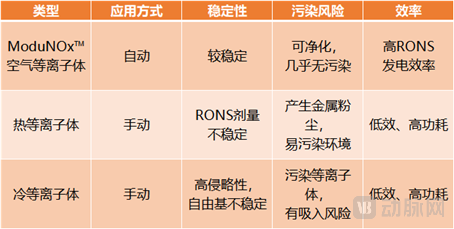
In addition to the ModuNOx air plasma technology, Fourth State also offers thermal argon plasma generators for minimally invasive cosmetic procedures involving skin surface resurfacing and tightening. This technology has advanced to the prototype stage, and its feasibility has been preliminarily validated by several plastic surgeons on Harley Street in the UK.
NOxlab R&D products encapsulate ModuNOx components into fully integrated, user-friendly laboratory devices to accelerate research and innovation in the following areas: ozone, nitric oxide, nitrogen dioxide, reactive oxygen species (ROS), reactive nitrogen species (RNS), free radicals, redox biology, cold atmospheric plasma (CAP), and plasma-activated water or other liquids.
NOxLab’s RONS generator is portable, features low maintenance costs, incorporates interlock devices, has no special storage requirements, and can automatically and rapidly deliver gas.
The efficacy of NOxLab in areas such as antimicrobial activity, preservation of biological activity, and chemical applications has been independently validated by academic institutions, corporations, and national laboratories. The purity of reactive oxygen and nitrogen species (RONS) generated by NOxLab devices with various configurations has also been verified by the UK’s National Physical Laboratory (NPL) and Innovate UK’s Analyzers for Innovators (A4I) program.
RONS are currently applied in disinfection, healthcare, and bioprocess engineering. They also offer benefits for chemical applications, such as water treatment, modification of material properties, fertilizer production, and semiconductor manufacturing.
Currently, NOx lab’s R&D products have been adopted by multiple universities. The University of Hull (in collaboration with the British Skin Foundation, the National Biofilms Innovation Centre, and Innovate UK), Queen Mary University of London (MedCity), the University of Surrey, and Cardiff University are utilizing these products for microbiological research, including studies on wound healing, food processing, and hard-surface disinfection. These research projects are funded by the National Biofilms Innovation Centre (NBIC) and Innovate UK.
For many years, Fourth State has worked closely with the National Physical Laboratory (NPL) and the Surrey Space Centre to investigate the chemical effects of ozone, nitrogen oxides, and RONS. This collaborative project is funded by Innovate UK, the Space Research and Innovation Technology Network (SPRINT), and the EPSRC Impact Acceleration Account.
In collaboration with SPRINT, Fourth State leveraged the space resources of the Surrey Space Centre and its own proprietary technologies to develop a plasma-based wound care solution for the UK and global healthcare sectors. This partnership optimized Fourth State’s existing non-surgical aesthetic treatment product, Nebulaskin, and yielded a breakthrough solution for wound therapy.
Triteq and Fourth State have jointly developed a novel handheld plasma pen. The plasma technology enables non-invasive skin treatments, helping to reduce scar formation.
Fourth State also provides ModuNOx OEM solutions for suppliers in the energy and heavy industry sectors, replacing expensive and impractical compressed NOx gas cylinders.
Fourth State’s products are widely used around the world as alternatives to compressed gas cylinders and chemical donors, helping researchers expand the applications of RONS and deepen our understanding of living systems.
After the National Health Commission confirmed in February 2020 that the novel coronavirus could be transmitted via aerosols, consumer demand for air purifiers with sterilization and disinfection capabilities surged.
According to data from All View Cloud (AVC), the retail sales volume of air disinfectors is expected to exceed RMB 80 million in 2020, representing a year-on-year increase of over 40%. From the corporate perspective, Panasonic and Sharp continue to strengthen their efforts, while Gree has developed its “Hunter” series of air disinfectors. Haier, Yadu, Whirlpool, Hisense, and other companies have also entered the air disinfector market.
Following the gradual easing of pandemic restrictions, the virus continues to spread unchecked through the air, making the continuous disinfection of public areas and enclosed spaces a top priority. Currently, there are relatively few brands and models of air disinfectors available; the market is small and remains in its introductory phase.
Fourth State has extensive experience in large-scale automated disinfection against the novel coronavirus. Fourth State provided OXONOX with a ModuNOx OEM solution, assisting in the development of the Airstair disinfection device to enable a rapid response to the COVID-19 pandemic. Installed on handrails of escalators and elevators in public spaces such as train stations, airports, and retail centers, this device extracts oxygen and nitrogen from the air to generate plasma particles, coating the handrails with an invisible layer of disinfecting particles for automatic and continuous disinfection.
Fourth State (4SM)’s NOx Lab R&D products have been validated in collaborative research with the University of Hull, MedCity, and the University of Surrey, demonstrating the ability to kill and prevent 99.99% of pathogens carrying the novel coronavirus and dangerous bacteria.