

SanChunHui Medical Submits IPO Prospectus for Next-Generation Composite Pulsed Electric Field Ablation System Developed by a Leading Tier-3 Hospital Surgeon
Tumor ablation has become a mainstream technique in oncology, standing alongside surgical resection, radiotherapy, and chemotherapy.
Compared with traditional ablation methods such as radiofrequency, microwave, and argon-helium cryoablation, pulsed field ablation (PFA), based on the irreversible electroporation effect, is considered a disruptive next-generation technology for tumor ablation due to its unique advantages in tissue selectivity and super-electroporation effects.
According to Grand View Research, the global market size for tumor ablation devices and consumables is projected to exceed $2.1 billion in 2025. Currently, approximately 3 million tumor ablation procedures are performed annually in Europe and the United States, whereas China performs only 300,000 such procedures each year. Pulsed field ablation has thoroughly addressed the limitations of traditional tumor ablation techniques, including lack of selectivity, a distinct transitional zone at the tumor margin, and susceptibility to the heat-sink effect. Consequently, it is poised to become the mainstream technology in the fields of tumor and cardiac ablation.
Across the entire market, giants such as Boston Scientific, Johnson & Johnson, and Medtronic have already moved to lay out their related product pipelines, while a number of domestic companies are catching up rapidly, showing strong potential to overtake them on the curve. Established in March 2020,Beijing Sanchunhui Medical Device Co., Ltd. (hereinafter referred to as "Sanchunhui")is a typical representative.

Sanchunhui is a high-tech enterprise based in Zhongguancun, committed to becoming a global leader in the field of pulsed field ablation (PFA) for tumor treatment. Unlike other PFA companies founded by individuals with purely technical backgrounds, Sanchunhui’s founder and core R&D team are all frontline clinical experts from renowned hospitals.

Zhou Dinghua, Dean and Founder of Sanchunhui
Zhou Dinghua, founder of Sanchunhui, has been engaged in clinical surgical practice for over three decades, specializing in the diagnosis and treatment of complex and refractory hepatobiliary and pancreatic diseases. He is proficient in minimally invasive therapies, including laparoscopic surgery, da Vinci robotic surgery, radiofrequency ablation, high-intensity focused ultrasound (HIFU), and tumor treating fields (TTF) ablation for hepatobiliary and pancreatic disorders. Dr. Zhou possesses profound expertise in performing highly challenging surgeries for benign and malignant tumors of the liver, biliary tract, pancreas, and retroperitoneum. He is a renowned clinical expert in hepatobiliary surgery in China. His previous positions include Director of the Hepatobiliary and Gastrointestinal Disease Center of the People's Liberation Army, Medical President of the PLA Rocket Force General Hospital, President of Yanda Hospital Affiliated to Hebei Medical University, and President of the Beijing Economic-Technological Development Area Research-Oriented Oncology Hospital. He has long undertaken consultation duties for the Central Health Care Committee and the Health Care Committee of the Central Military Commission.
Having worked on the clinical frontline for many years and interacting daily with a large number of patients from all over the country, Dr. Zhou Dinghua is deeply aware of their suffering. Guided by compassion and professional integrity, he has been continuously seeking more efficient and widely accessible treatment methods to benefit a greater number of patients.
In 2004, with funding from the National Natural Science Foundation of China, he developed a capsule endoscopy system with independent intellectual property rights and successfully commercialized it. In 2016, he developed a domestically leading prototype for novel composite pulse tumor therapy and continued to conduct animal studies. In 2018, he and his team developed an intelligent bowel sound auscultation and monitoring system, achieving successful industrialization once again. Leveraging his extensive experience in successful entrepreneurial ventures, he founded Sanchunhui in 2020.
“Hippocrates once said that physicians have three tools for healing: the scalpel, medication, and language. This embodies the benevolent spirit of medicine.””Zhou Dinghua smiled and said that the “NanoKnife,” hailed as the premier weapon against tumors, leverages the biological effects of electrical energy. Featuring tissue selectivity and non-thermal ablation, it can efficiently ablate target tissues locally without damaging surrounding tissues and nerves, making it a unique modality in the field of clinical surgical treatment.
However, the “knife” currently in doctors’ hands is still less than satisfactory. Related products still existUneven electric field distribution, cumbersome electrode placement, and inability to ablate large tumors, leading to post-ablationHigh rate of residual tumor and high risk of recurrence...and other issues. This is the situation that doctors find most distressing to witness.
“The happiest moment for a doctor is nothing other than being needed and affirmed by patients.”。"Thus, Zhou Dinghua decided to use clinical solutions as the entry point and innovatively iterate on pulsed electric field tumor ablation products based on physicians' perspectives."
Sanchunhui’s team comprises not only clinical experts like Zhou Dinghua, who have long been engaged in frontline practice, but also engineers with decades of experience in the design and development of medical devices, as well as seasoned entrepreneurs supporting investment and financing activities. With integrated capabilities in equipment R&D and industrialization, the team exemplifies a deep fusion of medicine, engineering, and information technology, as well as industry-academia-research collaboration.
Currently, products related to pulsed field ablation technology approved in China include one imported product and two domestically produced products, with indications covering liver tumors, pancreatic tumors, prostate cancer, and others. Despite the rapid development of these products and their broad expected application prospects, further clinical data are still needed to support the safety and efficacy of their application in this field.
As an emerging application, pulsed field ablation (PFA) technology is currently in the early stages of clinical application and exploration. The primary direction for future development lies in the optimization of treatment parameters and procedural workflows. By developing and introducing treatment planning software that automatically calculates and plans electrode placement and output parameters based on prior imaging findings, more ideal ablation zone morphology can be achieved. With advancements in science and technology and the broader adoption of clinical applications, PFA technology is expected to evolve to encompass additional clinical scenarios, thereby benefiting a larger patient population.
In line with the aforementioned development directions, the highly innovative Sanchunhui team is pursuing a dual-pronged strategy in both hardware and software.
In terms of hardware, Sanchunhui has independently developed and designed“Hua Dao”: A New Generation of Hybrid Nanosecond Pulsed Electric Field Products for Tumor Therapy.
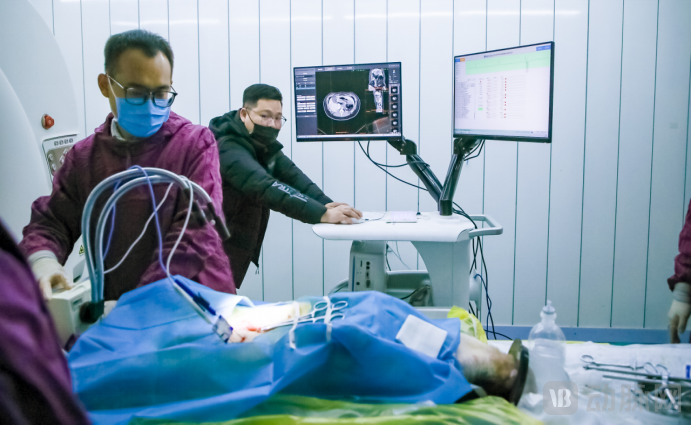
“Huadao” can be used for conformal ablation of complex, large tumors, reducing the tumor residual rate to less than 5%.
This device adoptsComposite Ultra-High Frequency Pulsed Electric Field Technology, achievedBidirectional Nanosecond-Level Sub-Pulse Train Output. Meanwhile, the originalIntelligent Feedback Circuit, which not only resolves the distortion problem caused by uneven distribution in the electric field coverage area but also enhances the effective coverage of the electric field, thereby significantly improving tumor ablation efficiency.
Such improvements are not only reflected in accelerating the originally 90-120 minute surgery to30 MinutesCan be completed domestically. Furthermore, Sanchunhui’s “Hua Dao” can achieve what traditional ablation devices cannot.Tumors larger than 5 cm and those with more complex conditions.
The postoperative tumor residual rate has also been significantly reduced from 15%-30% to5%within, with a tumor inhibition rate exceeding95%, making the overall ablation procedure safer and more thorough.
AI Surgical Planning Operation Platform and Supporting 5D Positioning Guidance Device,
Adding Double Insurance to Tumor Ablation
Currently, most planning systems on the market rely primarily on two-dimensional technology. The treatment process heavily depends on the surgeon’s experience and tactile feedback, which can easily lead to issues such as over-ablation and under-ablation. This reliance on experience also results in a steep learning curve for physicians, making it difficult to promote widespread adoption in primary care hospitals.
Meanwhile, the electrode arrangement for the guidance devices of existing equipment is extremely cumbersome, often taking half an hour and up to an hour, which is time-consuming and labor-intensive. Furthermore, repeated needle insertion can easily cause secondary injuries to patients, such as puncture trauma and bleeding.
Enhancing the standardization and homogenization of ablation procedures, simplifying electrode placement to reduce procedural complexity for physicians and minimize patient harm, has emerged as another innovative breakthrough for Sanchunhui.
Based on massive real-world clinical data and key algorithm training, Sanchunhui has launchedAI Surgical Planning Platform and Supporting 5D Positioning Puncture Guidance Device.
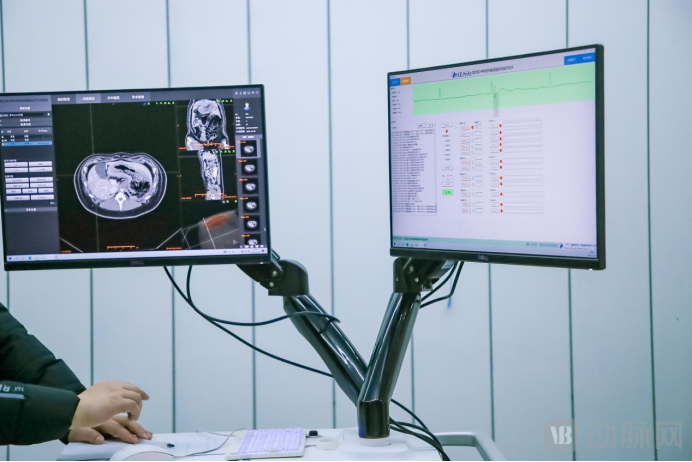
Sanchunhui's Proprietary Real-Time Display
The former covers the entire surgical process, enabling targeted lesion segmentation and reconstruction, needle placement, monitoring of the ablation zone, and evaluation of the actual ablation extent before, during, and after surgery based on the patient’s condition. It is complemented by Sanchunhui’s proprietaryReal-time Display, automatically identifies and delineates tumor regions, assisting physicians in performing ablation more quickly and precisely, thereby improving surgical success rates. For junior physicians and those practicing in primary care hospitals, it enables them to perform ablation procedures more standardly and safely by leveraging the collective expertise of countless specialists.
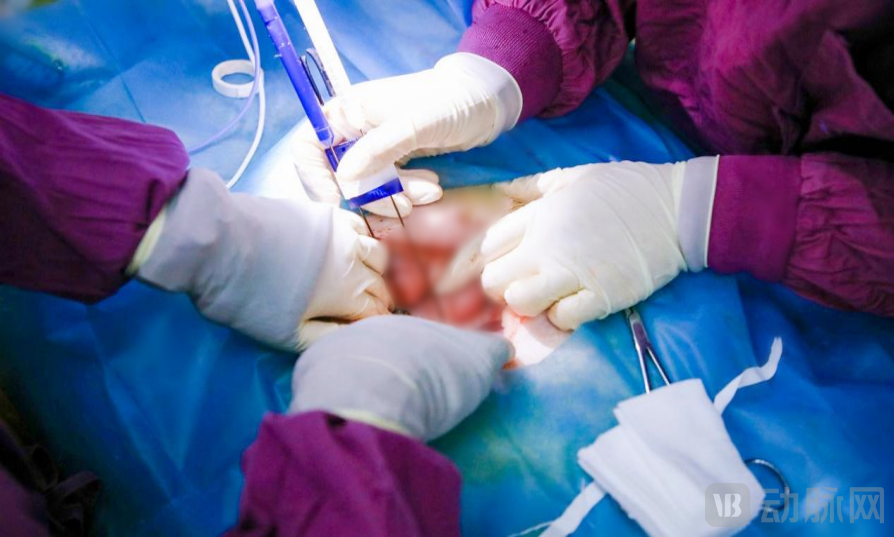
Sanchunhui 5D Positioning Puncture Guidance Device
The latter allows for the configuration of pulsed electric field safety boundaries according to clinical needs, thereby implementing AI-driven surgical planning. It supports multi-needle combined ablation, adapts to lesions of varying shapes, and guides precise targeted needle placement. This approach minimizes patient trauma while reducing the setup time to 30 minutes, facilitating the broader adoption of precision medicine.
It is reported that Sanchunhui’s original, next-generation composite nanosecond pulsed electric field tumor treatment product, “Hua Dao”"Efficacy and safety assessments in animal studies have been completed", and has applied for entry into the National Special Review Procedure for Innovative Medical Devices, with NMPA approval expected in 2023.
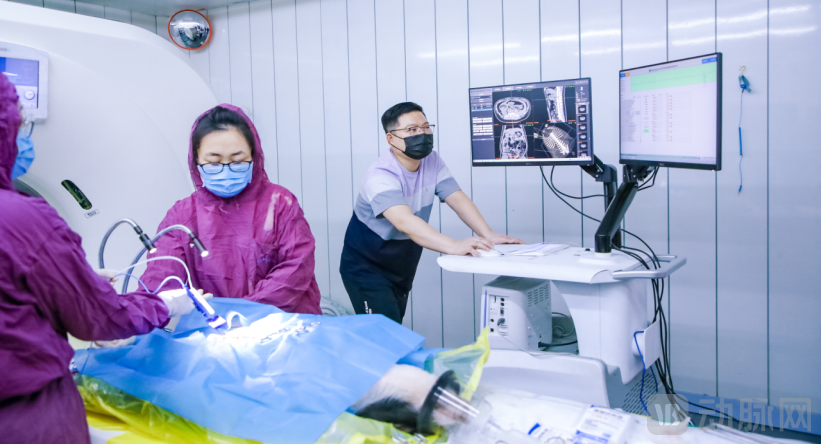
“Hua Dao” has completed the efficacy and safety evaluation in animal experiments
To secure a commanding position in commercialization, Sanchunhui has leveraged its team’s profound academic resources and Beijing’s geographic advantages to focus on hospitals, physicians, and academic promotion. It has established robust academic support through channels such as major professional journals, surgical live-streaming platforms, and professional societies.
Holding Hands TogetherPeking University First Hospital, Peking University People's Hospital, Peking University Cancer Hospitaland other top-tier hospitals, andMajor PI, engage in clinical collaboration. Also withDingxiang Yuan, Haodf Online, AnhealthCollaborate deeply with leading internet healthcare platforms to empower product promotion.
It is worth mentioning that the Sanchunhui Team was also authorized to compile the first monograph on irreversible electroporation in clinical practice, *Irreversible Electroporation in Clinical Practice*.
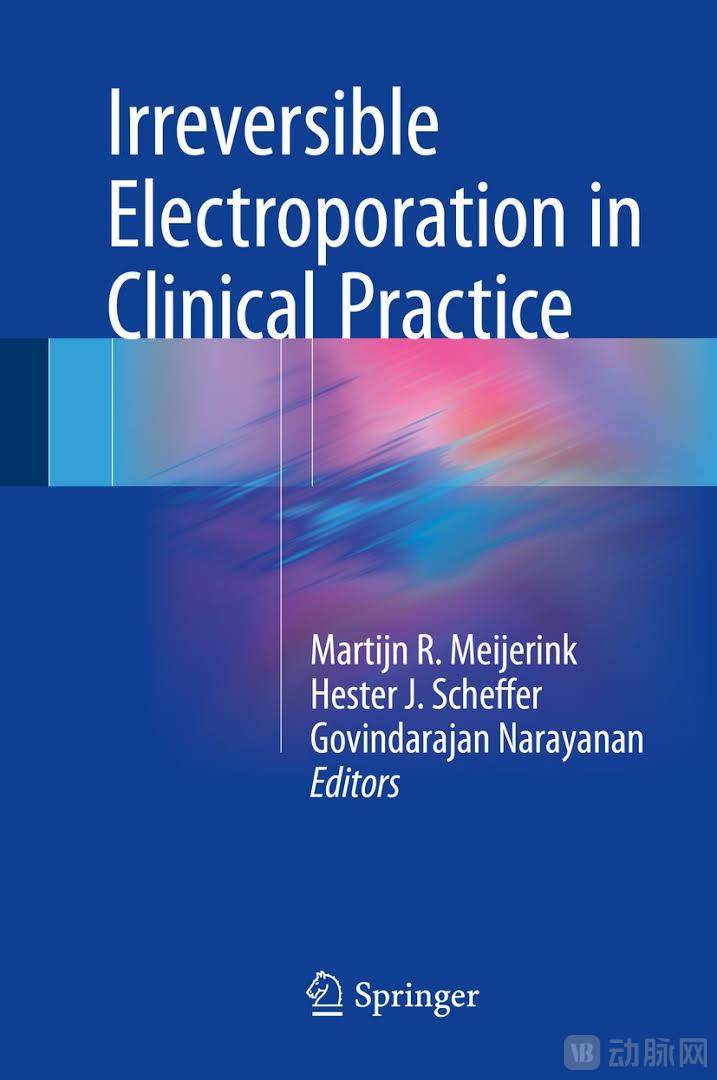
Irreversible Electroporation in Clinical Practice
At the end of the interview, Zhou Dinghua shared his thoughts and suggestions on physician entrepreneurship with VCBeat.
“Before, others came to me with requests; now, I am the one seeking favors.” For physicians embarking on entrepreneurship, the primary and most critical adjustment is bridging this psychological gap. The entrepreneurial journey involves many challenges unimaginable within the established system, requiring founders to possess strong mental resilience.
Secondly, while physicians possess strong clinical acumen, entrepreneurial success in the medical sector demands keen market insight and the discernment to distinguish between sentimental idealism and practical capability. Consequently, young physicians embarking on entrepreneurial ventures may face a more arduous path.
Finally, although a golden age for physician entrepreneurship has arrived, offering boundless possibilities for the future, physicians must exercise discernment before embarking on this journey. They should clearly understand the differences between practicing within and outside the public healthcare system, and ensure that their ventures align with societal, patient, and institutional needs. Once the decision is made, they must act decisively, as the market waits for no one!